On February 12, President Trump announced the repeal of the long-standing scientific finding that greenhouse gases endanger human life, calling it “the single largest deregulatory action in American history.” The action overturns a 2009 EPA determination that served as the legal foundation for numerous federal regulations aimed at limiting greenhouse gas emissions.
Here, environmental law expert Deborah Sivas, JD ’87, the Luke W. Cole Professor of Environmental Law, discusses what the repeal could mean for the future of federal climate regulation, how it may fare in the courts, and why it could signal a broader unraveling of environmental protections.
Pam Karlan: The Environmental Protection Agency has announced it is rescinding the greenhouse gas endangerment finding and the motor vehicle greenhouse gas emission standards under the Clean Air Act. This is a huge deal—and the administration is treating it that way, calling it the largest single deregulatory action in U.S. history, and perhaps in the history of the world. Let’s start with the basics. What is the endangerment finding under the Clean Air Act?
Deborah Sivas: The Clean Air Act passed in 1970 and was originally focused on traditional, local air pollutants. But it also includes a provision addressing emissions from motor vehicles. Under that provision, the EPA must determine whether vehicle emissions “cause or contribute to air pollution which may reasonably be anticipated to endanger public health and welfare.” That’s where the endangerment language comes from.
In 2009, after years of legal and political back-and-forth, the Obama administration issued what’s known as the endangerment finding. It determined that greenhouse gases—including carbon dioxide, methane, and several other pollutants—do in fact endanger public health and welfare. That was the original finding issued in 2009.
Pam Karlan: Once EPA issued the endangerment finding, covering greenhouse gases emitted by vehicles, it created the legal basis for regulating greenhouse gas emissions. And since transportation is a major source of those emissions in the U.S., that led directly to regulation of car and other vehicle emissions, right?

Deborah Sivas: That’s correct. Of course, we’ve had fuel economy standards for decades. But once the endangerment finding was made, then EPA went forward with really accelerating mileage standards, that is higher miles per gallon, as a result of the endangerment finding. In the vehicle sector, that has resulted not only in internal combustion engines that are more efficient, but also the proliferation of alternatives, particularly electric vehicles and hybrids.
Pam Karlan: When Congress passed the Clean Air Act, the focus was largely on traditional pollutants from cars—particulate matter, ozone-forming emissions—the kinds of pollutants that directly harm people when they breathe them in. But greenhouse gases affect public health and welfare in different ways. Can you describe the range of impacts greenhouse gas emissions have beyond direct inhalation?
Deborah Sivas: These impacts are all around us. Outside the current administration, it’s largely undisputed that greenhouse gases are driving climate change in ways that affect all of us. We’re seeing the effects in more frequent and intense hurricanes, more wildfires and more severe wildfire seasons, and sea-level rise. These are broad, systemic harms that affect public health and welfare in ways that are different from the direct effects of breathing in particulate pollution.
Pam Karlan: We now have an administration that, based on the executive summary of the rescission, seems to have three or four different arrows in its quiver. One of them appears to be skepticism about whether climate change is even real.
Deborah Sivas: Yes. There was a proposed rule issued last September that had even more arrows in its quiver. But in this new rule, they’ve narrowed their approach—perhaps because their lawyers decided to focus on what might be most defensible in court.
In the earlier proposal, the administration took on climate science much more directly, and there was significant blowback, particularly over the scientific sources they were relying on. And outside of a small fringe, there’s broad consensus that climate change is happening. In this final rule, they gesture at some of those arguments, but they’re not relying primarily on a direct attack on climate science. Instead, the rescission is much more focused on legal arguments.
Pam Karlan: Their legal argument seems to rest on the idea that when Congress wrote the Clean Air Act, it was focused on the immediate harms of tailpipe pollution. The administration suggests that Congress therefore couldn’t have intended the statute to cover broader, downstream harms linked to greenhouse gases. But today, people are still breathing in “dirty stuff”—it’s just that it takes a few more steps, from tailpipe emissions to greenhouse gases to climate change, and then to impacts like wildfire smoke that poses very real public health risks.
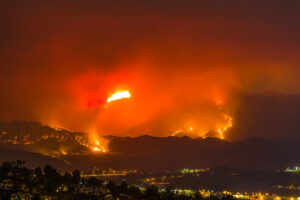
Deborah Sivas: Yes. And there’s a growing body of research known as attribution science that directly links the increasing frequency and intensity of events like wildfires to climate change. So, it may be a two- or three-step chain from tailpipe emissions to greenhouse gases to climate impacts, but the harm is still real—and in many cases, even more severe. I do work in the wildfire space, and these large-scale fires are likely more dangerous to public health than all the smog Los Angeles experienced in the 1970s combined.
Pam Karlan: When you look at the Supreme Court’s recent decisions, two lines of cases seem especially relevant here: the Major Questions Doctrine cases, and the Court’s decision in Loper Bright, which overturned Chevron deference. Can you explain the Major Questions Doctrine: how it developed, and why so much of it has emerged from environmental law cases?
Deborah Sivas: That’s right. Before the endangerment finding was issued in 2009, there was already a major legal fight over whether greenhouse gases were even covered by the Clean Air Act. In Massachusetts v. EPA, the Supreme Court held that greenhouse gases could qualify as pollutants under the statute, and that EPA therefore had to consider whether they endangered public health and welfare. After that decision, the EPA issued the 2009 endangerment finding, initially in the context of vehicle emissions. But once that finding was in place, EPA began looking beyond cars to stationary sources—power plants and industrial facilities—and started developing regulations there as well.
In 2015, the EPA introduced the Clean Power Plan, which aimed to significantly reduce carbon dioxide emissions from power plants. That rule was eventually challenged, and the dispute culminated in the Supreme Court’s decision in West Virginia v. EPA, where the Court sharply limited EPA’s authority and articulated what is now known as the Major Questions Doctrine. The Court essentially said that if Congress intended to give an agency the power to regulate a major portion of the economy, it needed to do so clearly. And because the Clean Air Act was written in 1970, the Court concluded it does not clearly authorize that kind of sweeping regulation.
Pam Karlan: The administration’s argument is essentially that Congress needs to speak more clearly before EPA can regulate in this area. But the Clean Air Act was itself a sweeping statement from Congress that the federal government should ensure clean air—and that it would rely on an expert administrative agency, guided by science and a structured decision-making process, to carry that out. In a sense, that commitment is right there in the statute’s title.
Deborah Sivas: We need you to argue this case when it works its way to the Supreme Court.
Pam Karlan: I want to ask about the Supreme Court’s 2024 decision in Loper Bright, which overturned Chevron deference. Back in 1984, in Chevron v. NRDC, the Court held that when a statute is ambiguous, courts should defer to an agency’s reasonable interpretation rather than substitute their own. But in Loper Bright, the Court rejected that approach. So at the end of the day, doesn’t Loper Bright mean that courts, not the EPA, are ultimately going to decide this issue?
Deborah Sivas: That’s a good way to think about how Loper Bright applies here. The Court said there is one best interpretation of a statute, and it’s the courts—not the agency—that get to decide what that is. The EPA will argue that there is a single correct interpretation. It’s worth remembering that during the Bush administration, the EPA took the position that the Clean Air Act did not cover greenhouse gas emissions. But the Supreme Court rejected that view in Massachusetts v. EPA.
Now, the administration will use Loper Bright to argue that there is one best interpretation—and that the Court should reconsider what it said in Massachusetts v. EPA. That’s clearly where this is headed: back to the Supreme Court. And of course, we have a very different Court than we did 20 years ago. I think opponents of climate regulation believe they may be able to get that decision reversed, especially given how willing the Court has been to roll back major precedents.
Pam Karlan: There seem to be two main ways to challenge what EPA has done. One is procedural: arguing that the agency failed to follow the required process, including taking public comment and adequately responding to it. The other is substantive: arguing that the rescission itself is arbitrary and capricious and not supported by the evidence. How do you see those two arguments playing out as this decision is challenged on appeal?
Deborah Sivas: I do think there are procedural weaknesses here that could be litigated. My guess is that procedural challenges will be one strand of the early strategy and that they could potentially delay the rule from taking effect. Challengers may then ultimately move to the substantive issues. At the same time, I suspect EPA will try to push this quickly through the courts and get it to the Supreme Court as fast as possible, potentially even through the shadow docket, in order to put the substantive question front and center and get a definitive ruling.
Pam Karlan: You said that there is a broad scientific consensus that greenhouse gases drive climate change, with real downstream effects—wildfires, extreme heat, and other harms. Is there meaningful disagreement among mainstream climate scientists about that, as opposed to fringe voices the administration may be relying on?
Deborah Sivas: There’s not meaningful disagreement among mainstream scientists. I think that’s why the EPA has largely backed away from making a direct scientific case, though they haven’t abandoned it entirely. Instead, they’re putting most of their weight on legal arguments. Their main fallback argument focuses on the transportation sector, since that’s where the original endangerment finding began. The EPA is essentially claiming that even if the U.S. fully decarbonized transportation, it would not have a “material” impact on global climate change. But “material impact” isn’t the legal standard in the Clean Air Act. The statute asks whether emissions “cause or contribute” to air pollution that endangers public health and welfare. The EPA is trying to redefine that standard by pointing out that one sector in one country may not, by itself, change the global trajectory.
Pam Karlan: I want to turn to the part the administration is emphasizing most publicly: the rollback of fleet efficiency standards. What happens when those rules are eliminated?
Deborah Sivas: I don’t think they’re going to eliminate those standards entirely. This is more about reducing how stringent they are. Fuel economy standards have been in place for decades, but they became much more aggressive starting around 2017. That tightening was intended to push consumers and automakers toward alternatives to the internal combustion engine.
What this rule is likely to do is significantly lower those standards, rather than abolish them. And in my view, it would reinforce what we’re already seeing under this administration: a broader backlash against electrification of the transportation sector, particularly electric vehicles.
Pam Karlan: Is this going to have any effect on California’s rules? California has its own set of rules that seem designed to move us away from internal combustion cars over the next decade or so.
Deborah Sivas: It could. The Clean Air Act allows California to adopt more stringent emissions standards, but only if EPA grants what’s known as a waiver. Over the years, EPA has issued a series of those waivers. One recent waiver was rolled back through the Congressional Review Act, meaning it was undone by an act of Congress. That rollback is now being challenged in court. But if the waiver is effectively dead, at least for now, California would no longer have federal authority to move forward with its own standards independently. That raises a further question: whether the Clean Air Act would otherwise preempt California from setting its own rules.
Pam Karlan: If greenhouse gases aren’t covered by the Clean Air Act, then Congress hasn’t preempted states from regulating them. And in that case, the federal government wouldn’t have the authority to stop states like California from adopting their own greenhouse gas standards.
Deborah Sivas: Yes, that’s the argument. And it’s all going to play out in the courts over the next couple of years. Another agency also comes into play here: the National Highway Traffic Safety Administration, which regulates fuel economy standards. But those rules were designed around the efficiency of internal combustion engines—miles per gallon. California’s standards, by contrast, are based on greenhouse gas emissions, which is a different regulatory framework.
How those two systems interact—and whether federal law preempts California’s approach—will likely be a major issue in future legal challenges.
Pam Karlan: Do you see the administration making similar moves across the board, rolling back the science and regulations that have improved environmental conditions in other areas, like water quality?
Deborah Sivas: If this rollback of the endangerment finding holds, it could eliminate Clean Air Act regulation of greenhouse gas emissions not just from vehicles, but also from major industrial sources: power plants, methane emissions from oil and gas operations, and more.
We are seeing rollbacks across environmental law more broadly. The administration has significantly weakened the National Environmental Policy Act, which traditionally required federal agencies to evaluate environmental impacts and consider alternatives, reducing both transparency and public participation. We’re also seeing efforts to narrow Clean Water Act protections by restricting the definition of “waters of the United States,” with major implications for wetlands and pollution control. And the administration is proposing changes to Endangered Species Act regulations that could weaken protection against harm to species.
So yes, this appears to be part of a much broader deregulatory push across multiple sectors.
Deborah Sivas is the Luke W. Cole Professor of Environmental Law at Stanford Law School and a professor at the Stanford Doerr School of Sustainability. She directs the Environmental and Natural Resources Law and Policy Program, co-directs the Environmental Law Clinic, and is a senior fellow at the Stanford Woods Institute for the Environment.