
Dr Christopher Browne from Compassion in World Farming highlights a significant yet often overlooked issue: the substantial amounts of human-edible grains that are fed to livestock rather than used for human consumption
When we think of food waste, most of us picture the obvious: uneaten leftovers, misshapen vegetables, or supermarket surplus.
Yet our new analysis shows that the biggest food waste of all is happening before food even reaches our plates – in factory farms.
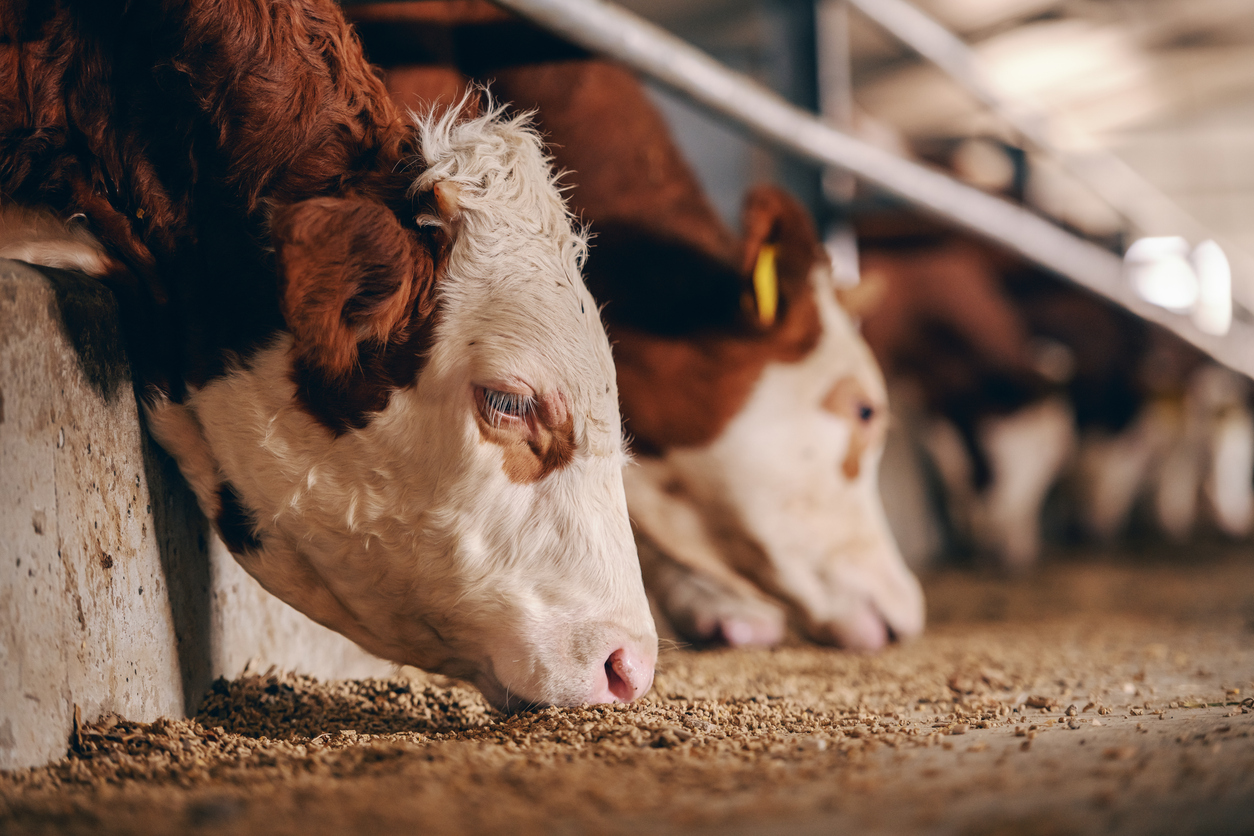
Every year, 766 million tonnes of human-edible grains are grown to feed farmed animals instead of people. Most of those calories never make it back to us: for every 100 calories of grain fed to livestock, we get only 3-25 calories in meat, milk, or eggs.
That’s an enormous loss — one that quietly undermines food security, fuels climate change, and squanders the resources we need most. All while millions of people go hungry every year.
Redirecting that grain for human consumption and switching to regenerative farming, with animals fed on products humans can’t eat, such as pasture, by-products, and properly treated unavoidable food waste, we could feed an extra two billion people every year.
It’s time we called this what it is: the world’s biggest form of food waste.
Factory farming: the waste we don’t see
Our new report, Food Not Feed, shines a light on this problem that rarely enters food-waste conversations. While households, retailers, and restaurants all play their part, the waste generated through feeding animals human-edible crops globally is greater than any other form of food waste.
In the EU, for example, 125 million tonnes of grain are wasted each year by being fed to livestock – more than double the 59 million tonnes of conventional food waste from homes and shops. In the UK alone, 8.3 million tonnes of grain are used as feed each year — almost matching the country’s total household and retail food waste (10.7 million tonnes in 2021). And in the US, 66 million tonnes of food is thrown away, while 160 million tonnes of grain is wasted as animal feed.
We are in a system that takes food we could eat and turns it into something far less efficient.
A drain on land, water, and the climate
The environmental cost is staggering.
If we stopped feeding human-edible crops to animals, 175 million hectares of arable land could be freed up, an area almost the size of Mexico. That land could instead grow fruit, vegetables, and grains for people, or be restored to nature.
Feed production is also a leading driver of deforestation and climate emissions. In intensive chicken farming, up to 91% of emissions come from feed production and the land used to grow it.
Water is another casualty. Feed production was expected to expand by 16.7 million tonnes in 2024, which would require 6,880 billion litres of water, that’s enough to fill 2.7 million Olympic swimming pools.
In short, every tonne of grain fed to animals represents not just lost food, but lost land, lost water, and lost climate stability.
Why this matters for governments
In an era of rising food prices, hunger, and climate stress, this is not a marginal issue – it’s a central one. Tackling feed waste could be one of the most effective levers we have to create a fairer, greener, and more humane food system.
Governments worldwide have committed to reducing food waste as part of the UN Sustainable Development Goals. Yet official definitions of food waste rarely include the losses hidden within animal feed. That means a massive portion of our food-system inefficiency is invisible in policy.
If we want to build resilient, sustainable food systems, we need to change our definition of waste and recognise that feeding animals human food is part of the problem.
A new ‘food-first’ approach
As we set out in our Food Not Feed report, government and policymakers who are serious about sustainable food systems and climate commitments must widen their lens and confront this issue.
Our report offers a clear roadmap for change.
- Recognise feed inefficiency as food waste. Governments should include feed use in national food-waste metrics and reduction targets.
- Reform subsidies and incentives. Redirect public funds away from growing grain and soy for feed, and towards crops for human consumption and sustainable pasture livestock systems.
- Lead by example through public procurement.Schools, hospitals, and government canteens can adopt ‘food-first’ menus which prioritise plant-based meals and animal products from high-welfare systems.
- Support dietary change. Public health and environmental campaigns can help shift consumption towards more plant-rich diets, a win for people, animals, and the planet.
These steps are about rebalancing how we use our resources, ensuring animals are raised in ways that complement sustainable food production rather than compete with it.
Imagine the impact: millions of tonnes of grain redirected to feed people, vast areas of land restored to nature, and farming systems designed around efficiency and compassion, rather than waste and excess.
Feeding people, not factory farms
Every field of wheat, every drop of water we waste on inefficient feed systems is a missed opportunity to nourish people and protect the planet.
Suppose governments give this issue the attention it deserves. In that case, we may finally bridge the gap to sustainable agriculture and a food-secure future, while also helping us reach our climate goals.
Because the truth is simple: we can’t afford to keep feeding animals human food while millions go hungry.
It’s time to put people, animals, and the planet first. It’s time to choose food, not feed.