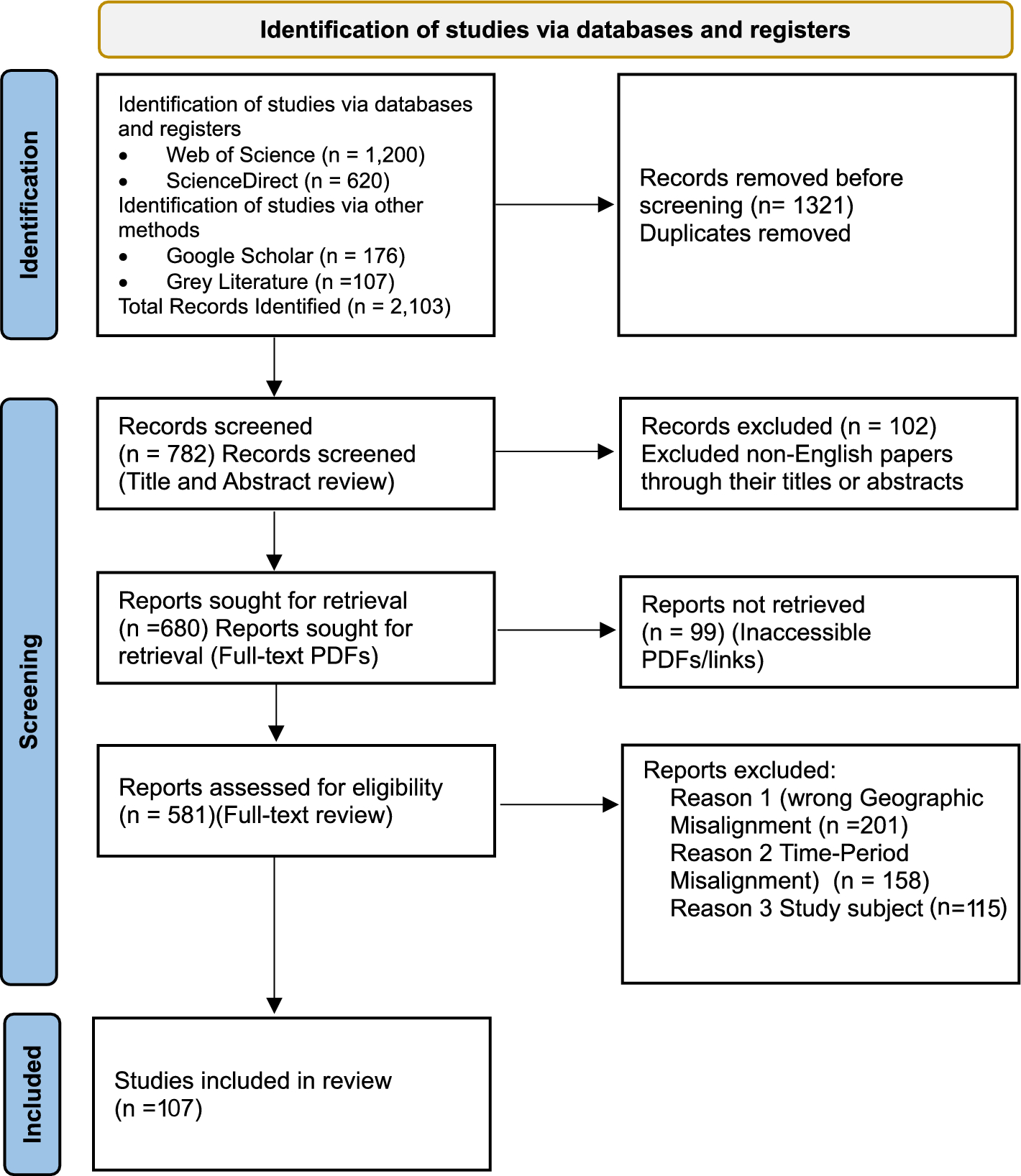
The systematic review identified that plastic waste entrepreneurs across Africa have transitioned from traditional waste management to innovative, revenue-generating circular economy (CE) models. As summarized in Table 3, these models comprise three primary archetypes: construction-material upcycling, consumer product innovation, and circular logistics.
3.1 Upcycling into construction and infrastructure materials
The predominant business model identified in the literature is the conversion of plastic waste into durable construction materials [28,29,30,31,32,33,34,35,36,37,38]. This approach effectively addresses environmental pollution while simultaneously targeting regional housing and infrastructure shortages in Africa [39, 40]. Specifically, several entrepreneurs including Gjenge Makers, Ramtsilo Manufacturing, In-Situ Civil Works, and Eco Hub utilized plastic-sand composite models [30, 32, 34]. These innovations involved shredding, melting, and mixing plastic waste with sand or additives to produce high-strength paving blocks, tiles, and eco-bricks [37, 38].
Complementary models focused on synthetic timber and lumber production, where post-consumer plastics were processed into fencing poles and construction lumber [28, 29]. Key innovators, such as EcoPost and EcoAct Tanzania, demonstrated the viability of these plastic-based composites as durable, weather-resistant alternatives to traditional timber, thereby reducing deforestation pressures [31, 33, 35, 36]
3.2 Consumer product innovation and manufacturing
Several entrepreneurs adopted models that transformed plastic waste into specialized consumer goods through thermal and textile processing. For instance, institutional equipment models as exemplified by Green Industry Plast (GIP-Togo) demonstrated a diversified approach that utilized conversion machinery to produce school whiteboards alongside recycled bricks [41, 42]. In a distinct application of textile repurposing, Repurpose Schoolbags in South Africa converted low-grade plastic bags into durable, waterproof fabrics via heat pressing [43, 44]. These schoolbags are uniquely integrated with solar panels and portable lanterns, providing off-grid study light for students [45, 46]. This model illustrates a high-value manufacturing cycle that addresses environmental waste while fulfilling socio-educational needs by providing sustainable equipment to local communities [47,48,49,50].
3.3 Circular logistics and collection systems
The success of circular economy initiatives frequently hinged on innovative collection strategies that secured the supply chain. A notable logistics model, exemplified by Wecyclers in Nigeria, utilized bicycles to bridge the gap between urban waste generation and processing centers, ensuring a consistent supply of raw materials for the circular value chain [9, 51,52,53].
3.4 Environmental benefits of plastic waste entrepreneurs
Several entrepreneurs demonstrated significant environmental impact through waste diversion and resource-efficient manufacturing. Gjenge Makers (Kenya) recycled over 20 tonnes of plastic waste, specifically utilizing high-density polyethylene (HDPE), low-density polyethylene (LDPE), and polypropylene (PP) [30, 38]. In Southern Africa, Ramtsilo Manufacturing (South Africa) and In-Situ Civil Works (Botswana) pioneered plastic-sand composite models to produce durable masonry [34]. These construction-based models significantly reduced environmental footprints by diverting diverse plastic resins from landfills and utilizing manufacturing processes that consumed substantially less water than conventional cement-based methods [37, 54].
The review further highlighted significant conservation impacts from lumber and logistics models. EcoPost (Kenya) recycled over 3 million kilograms of plastic waste, saving 850 acres of forest through the production of environmentally friendly plastic furniture [28, 55]. The company’s plastic lumber technology facilitated rapid recycling with low electricity consumption, enhancing both energy and cost-efficiency. Similarly, EcoAct Tanzania produced durable plastic timber from post-consumer waste as a sustainable, termite-resistant alternative to wood [31, 33]. In the logistics sector, Wecyclers (Nigeria) collected nearly 3,000 metric tonnes of recyclable materials by utilizing a zero-emission transportation model centered on cargo bicycles [51, 52].
3.5 Socio-economic benefits of plastic waste entrepreneurs
Plastic waste entrepreneurship across Africa serves as a critical driver for local economic development and social inclusion. Beyond waste management, Gjenge Makers (Kenya) created over 112 direct and indirect employment roles while providing low-cost alternatives to traditional construction materials [30, 38]. Similarly, Ramtsilo Manufacturing (South Africa) generated employment through structured waste collection, sorting, and production programs [34, 54]. In Botswana, In-Situ Civil Works produced bricks with lower permeability and higher durability, offering a more cost-effective maintenance profile than traditional masonry [32].
In the consumer goods and logistics sectors, Repurpose Schoolbags (South Africa) established over 20 vocational positions for tailors and collectors to support underprivileged schools [47, 49]. Wecyclers (Nigeria) formalized waste collection for over 1500 registered households, creating more than 100 jobs through an incentive-based collection model [9, 51]. In Togo, Green Industry Plast focused on the employment of underprivileged women and youth for waste processing [41, 42]. Furthermore, EcoPost (Kenya) supported over 50 direct and 5000 indirect livelihoods for disadvantaged community members [55, 56]. Finally, EcoAct Tanzania pioneered a micro-health insurance system, enabling community members to fund health coverage and medical services through plastic waste collection [31, 57].
3.6 Opportunities and operational challenges faced by plastic waste entrepreneurs
3.6.1 Opportunities for plastic waste entrepreneurs
3.6.1.1 Institutional support and funding
Despite significant opportunities, African plastic waste entrepreneurs face systemic barriers that impede the scaling of circular models [58, 59]. The review identified a critical funding gap, particularly for micro, small, and medium-sized enterprises (MSMEs), which often lack the collateral required to access traditional commercial credit [60, 61]. Operational efficiency is further compromised by inadequate infrastructure, including irregular electricity supply which causes production downtime for innovators like Gjenge Makers and EcoPost [30, 55] and high transportation costs that reduce profit margins for aggregators like Wecyclers [9, 51].
Additionally, weak regulatory enforcement remains a primary obstacle; while many nations have enacted single-use plastic bans, uneven implementation allows cheaper virgin plastics to remain competitive [16, 17]. Finally, the marginalization of the informal sector hinders progress, as waste pickers who facilitate the majority of the continent’s recycling frequently lack formal legal protections and technical training [62].
3.6.1.2 Technical and industry experience
Specialized technical expertise is a more significant determinant of success than general business acumen among circular entrepreneurs. For instance, the founders of Ramtsilo Manufacturing and In-Situ Civil Works leveraged their respective civil and mechanical engineering backgrounds to engineer proprietary manufacturing protocols for plastic-based construction materials [60,61,62].
3.6.2 Challenges in the operation of plastic waste entrepreneurs in Africa
The systematic review identified critical challenges facing plastic waste entrepreneurs in Africa, categorized into distinct thematic areas.
3.6.2.1 High cost of production
Inconsistent electricity supply causes frequent production downtime for innovators such as Gjenge Makers and EcoPost [30, 55]. Additionally, high transportation and logistics costs significantly reduce the profit margins for collection-based models like Wecyclers [9, 51]. The significant cost of factors of production and raw materials makes it difficult for entrepreneurs to operate efficiently in the industry [63,64,65,66].
3.6.2.2 Limited funding and access to capital
Limited funding and access to capital pose significant constraints, with entrepreneurs often relying on personal savings or struggling to meet the collateral requirements of banks. Companies such as Ramtsilo Manufacturing, Gjenge Makers, Wecyclers (Nigeria), and EcoAct Tanzania are notable examples of plastic waste businesses that have faced significant financial hurdles throughout their early growth stages [66,67,68].
3.6.2.3 Inadequate technological infrastructure
Inadequate technological infrastructure is a major impediment, with entrepreneurs facing difficulties in securing the necessary resources. For instance, both Gjenge Makers and Repurpose Schoolbags lacked essential initial equipment and adequate operational space, which significantly hindered their initial growth and development trajectory [69, 70].
Complex recycling processes: The recycling process itself is inherently complex and costly, involving contamination risks, non-biodegradable properties, and high processing capital requirements. The addition of additives such as dyes and filters poses specific technical difficulties during the polymer sorting and repurposing stages [3, 71, 72].
Societal and gender-related challenges: Patriarchal societal structures and gender stereotypes continue to limit entrepreneurial opportunities for women. This is exemplified by the experiences of the founders of Ramtsilo Manufacturing and EcoPost Kenya, who faced notable opposition and doubt from community members due to their gender and their entry into a traditionally male-dominated manufacturing industry [36, 73,74,75].