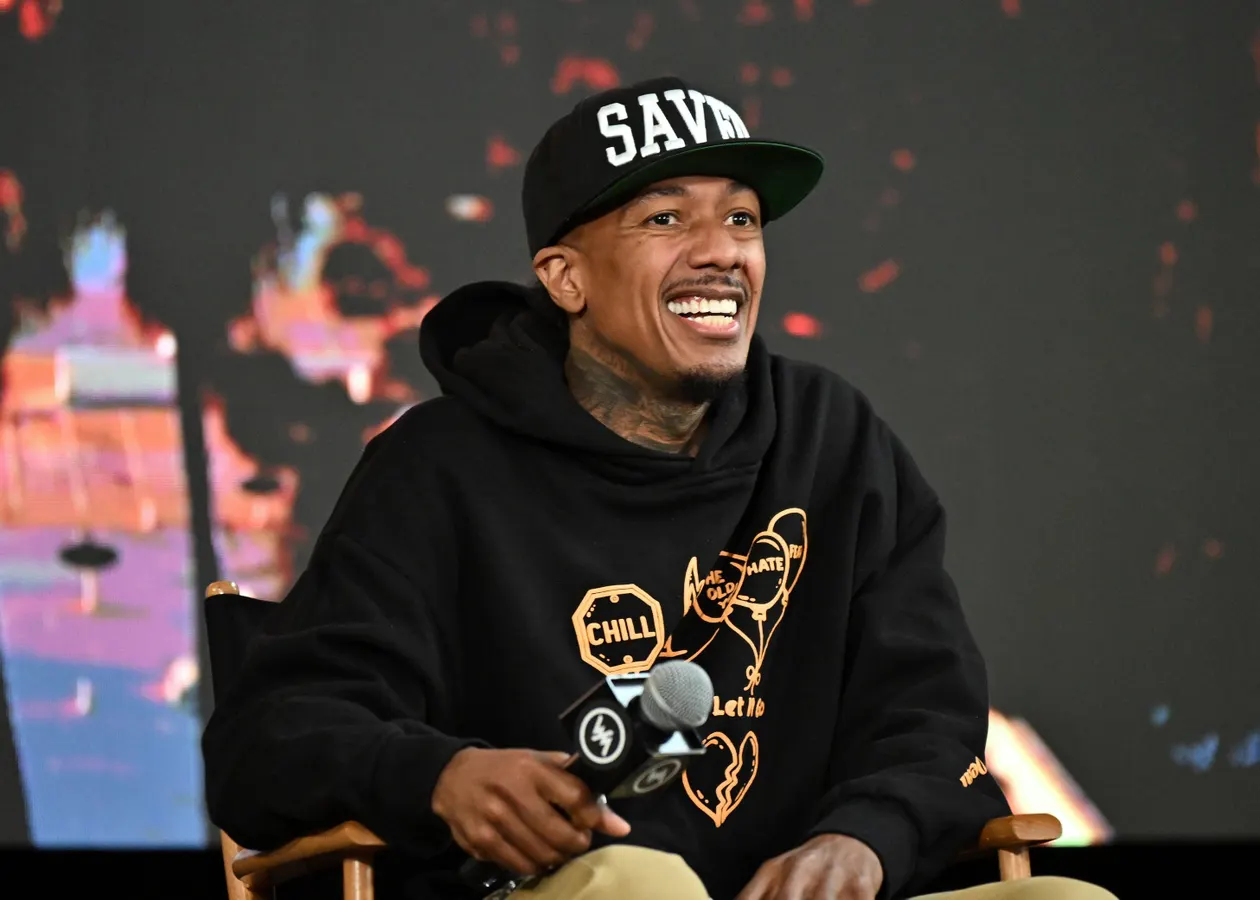

LOS ANGELES, CALIFORNIA – JUNE 06: Nick Cannon speaks onstage during WayMaker Men’s Summit Presented By BET Experience – Day 2 at The Beehive on June 06, 2025 in Los Angeles, California. (Photo by Paras Griffin/Getty Images for BET)
Getty Images for BET
On the surface, celebrity political commentary can feel like background noise or just another opinion in an already crowded media landscape. But every so often, a moment cuts through and stands out. Recent remarks from Nick Cannon, including defenses of President Donald Trump and claims about the Democratic Party’s historical ties to the Ku Klux Klan, have sparked renewed debate across social and political circles.
Not simply because of what was said, but because of who said it and when. For public figures whose platforms have long been associated with conversations around Black identity, empowerment and systemic inequity, these shifts carry weight. In a political climate where messaging is increasingly targeted, that weight extends far beyond entertainment.
The Risk Of Selective History
At the center of the conversation is a familiar claim: that the Democratic Party was historically aligned with the Ku Klux Klan. This assertion is not entirely inaccurate, but it is incomplete. Historical records confirm that, in the 19th and early 20th centuries, many white Southern Democrats supported segregationist policies, and some were connected to the KKK.
However, scholars widely agree that American political parties underwent a significant ideological transformation in the mid-20th century. Following the passage of the Civil Rights Act of 1964 and the Voting Rights Act of 1965 under President Lyndon B. Johnson, political allegiances began to shift. Many white Southern voters who opposed civil rights reforms migrated toward the Republican Party, a transition often described by political scientists as part of the “Southern Strategy.”
“This idea that the parties have always represented the same constituencies is simply not accurate,” notes Kevin M. Kruse, a Princeton professor whose work focuses on modern American political history.
Similarly, historian and African American Studies professor at Emory University Carol Anderson has documented how contemporary voting restrictions and political strategies must be understood within the post civil rights era, not separated from it. Institutions like the Brookings Institution have also published analyses outlining how party platforms, not just party names, have evolved over time. The distinction is critical. Without it, historical references risk becoming misleading narratives rather than informative context.
What The Data Shows About Black Voters
Current voter data further complicates simplified political narratives. According to the Pew Research Center, Black voters remain one of the most politically consistent demographics in the United States. In the 2020 presidential election:
- Approximately 90%–92% of Black women supported the Democratic candidate
- Roughly 80%–85% of Black men did the same
While there are nuanced differences within these groups, the broader trend reflects a strong alignment rooted in policy priorities, including voting rights, healthcare access and racial equity. Political scientist Melissa Harris-Perry has emphasized that Black women, in particular, continue to play a pivotal role in shaping electoral outcomes and advocating for democratic participation.
These patterns underscore a larger point that suggests that political affiliation within Black communities is not arbitrary. It is shaped by historical experience, policy impact and collective priorities.
Celebrity Influence In A Strategic Moment
Against this backdrop, the timing of high-profile commentary becomes especially relevant. With midterm elections approaching, both major political parties are investing heavily in outreach and messaging strategies aimed at key voter groups. In this context, celebrity voices can function as powerful amplifiers that are capable of reaching audiences that traditional political messaging may not.
Research on media influence has long demonstrated that familiar public figures can shape perception, particularly when their messages appear to challenge established narratives. Whether intentional or not, these interventions can introduce doubt, reframe discussions or shift attention. This does not mean that public figures should not express political views. However, it does highlight the importance of context, and the potential consequences when complex histories are reduced to simplified claims.
Interpreting The Shift
For observers, the question is less about individual intent and more about broader impact. Public figures, like any individuals, can evolve in their thinking. They can question assumptions, adopt new perspectives and engage with political issues in different ways over time. At the same time, audiences are left to interpret these shifts within a larger ecosystem; one where information, influence and timing intersect.
What does it mean when commentary aligns with narratives that have historically been used to minimize structural inequities? How should audiences evaluate statements that rely on partial historical framing, and what responsibility comes with having a platform that reaches millions?These are not simple questions. But they are necessary ones.
Why Context Still Matters
At its core, this moment reflects a broader tension in modern media which illuminates the gap between visibility and accountability. Access to large platforms has never been more widespread. But with that access comes an increased responsibility to ensure that information, especially information tied to history and policy, is presented with accuracy and depth. Selective narratives, even when rooted in fragments of truth, can distort public understanding. In a political environment where trust is already fragile, that distortion can have lasting effects.
For readers and viewers, this underscores the importance of critical engagement. Not every statement requires agreement, but every statement benefits from context. Celebrity commentary will continue to shape cultural and political conversations. That reality is unlikely to change.
What can change, however, is how those messages are received. As midterm elections approach and public discourse intensifies, the ability to distinguish between historical fact, partial framing and opinion becomes increasingly important. Because in the end, influence is not just about who speaks. It’s about what is said, what is omitted, and how it is understood.