Warehouse-style non-profit publicly owned grocery stores could save Arctic shoppers up to 45 per cent at the checkout, says Curtis Mesher, president of Nunavut’s NDP riding association.
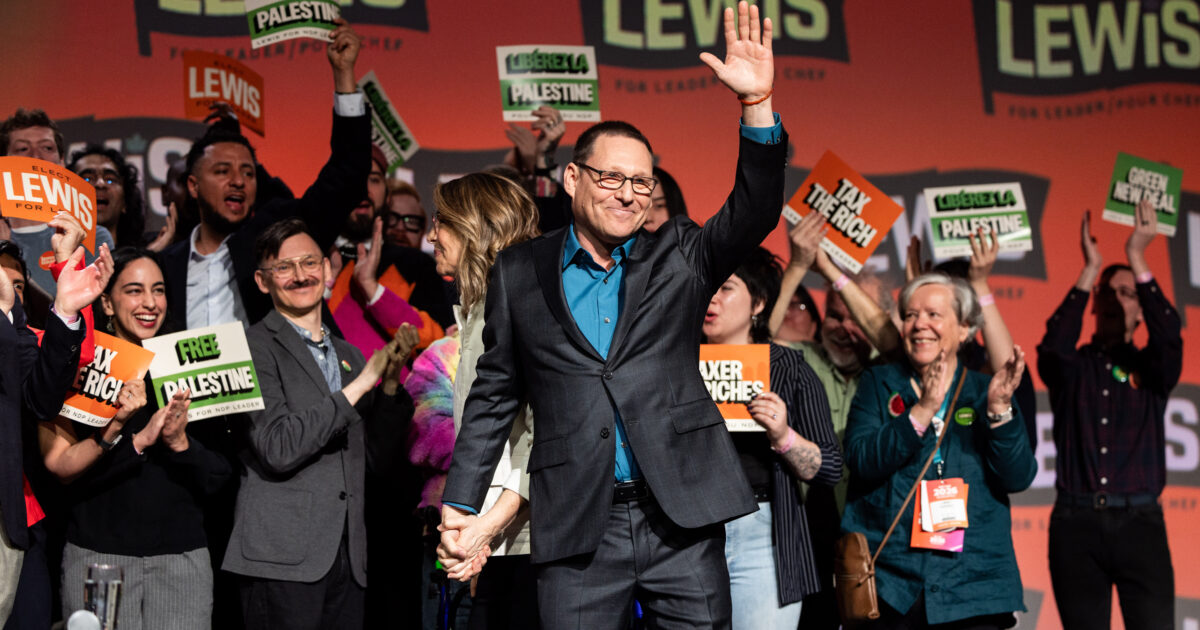
It’s an idea new NDP Leader Avi Lewis championed during his bid to head the federal political party. He won that vote on March 29.
“This goes to the heart of the issue of food insecurity,” said Mesher, an Iqaluit lawyer, in an interview Wednesday about the idea to create “public options” to reduce costs Canadians face.
“It is a wonderful approach to a situation that we know is very difficult.”
Mesher met with Lewis to discuss the public grocery store plan during the party’s convention in Winnipeg at the end of March
The idea is to establish 50 government-run grocery stores across Canada, including in the Arctic.
“Think Costco — but run as a public service,” Lewis repeated on the campaign trail.

The stores would be supplied by up to seven regional hubs, a couple of which might serve the three territories, Mesher said.
The budget would be $300 million to implement and the same amount would be needed each year to maintain it.
The stores would offer up to 2,000 products, mostly staples at a savings of up to 40 per cent in the south and up to 45 per cent in the Arctic, Mesher said.
Mesher points to similar state-run grocery chains in Mexico and Greenland as evidence the program can work.
“This is not a reinventing of the wheel. It’s simply saying, ‘Hey, have you thought about putting wheels on?’” Mesher said. “We’re learning from places that already have this in place.”
The NDP vision would establish a high-volume, warehouse-style model with subsidized rent and utilities backed by the regional food hubs.

An NDP government would work with provinces, municipalities, and co-ops to establish these public grocery stores across the country, Lewis said in his leadership platform.
Government-run grocery stores are also a hot political topic in the urban south, where both Toronto and New York City councillors are plotting their own pilot projects.
However, two Nunavut observers aren’t convinced it would work.
It’s a question of scale, said Duane Wilson, vice-president of stakeholder relations with Arctic Co-operatives Ltd., in a March 31 phone interview.
There are more than 20,000 Co-op memberships held by Nunavummiut, including some owned by large family households.
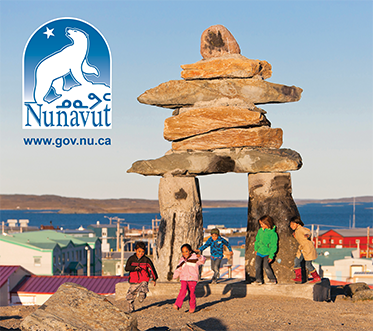
Co-op grocery stores operate in all Nunavut communities except Clyde River and Arviat. Arctic Ventures Co-op in Iqaluit is collectively owned by the other Arctic co-ops.
The stores themselves are part of a larger network of co-operatives with $12 billion in wholesale buying power, Wilson said.
“That’s where they achieve scale,” he said. “[Government] would not be able to have the scale that even existing operators do.”
Wilson said that the idea could be especially problematic in an Arctic context.
“I don’t know whether government, historically, has the best track record of running business enterprises with the goal of lowering costs,” he said.
Also, he points out, co-ops are already publicly owned. In all Arctic Co-op stores except Iqaluit, which is owned by the other co-op stores, members can become shareholders and receive dividends.
The Government of Nunavut is also cold to the idea of government-run grocers.
“Nunavut is an entirely different environment from large southern cities like Toronto and New York,” Department of Family Services spokesperson Ann Lehman-Allison said in a March 31 email.
Nunavummiut have their own food-related challenges that are different from most of the rest of Canada, she said.