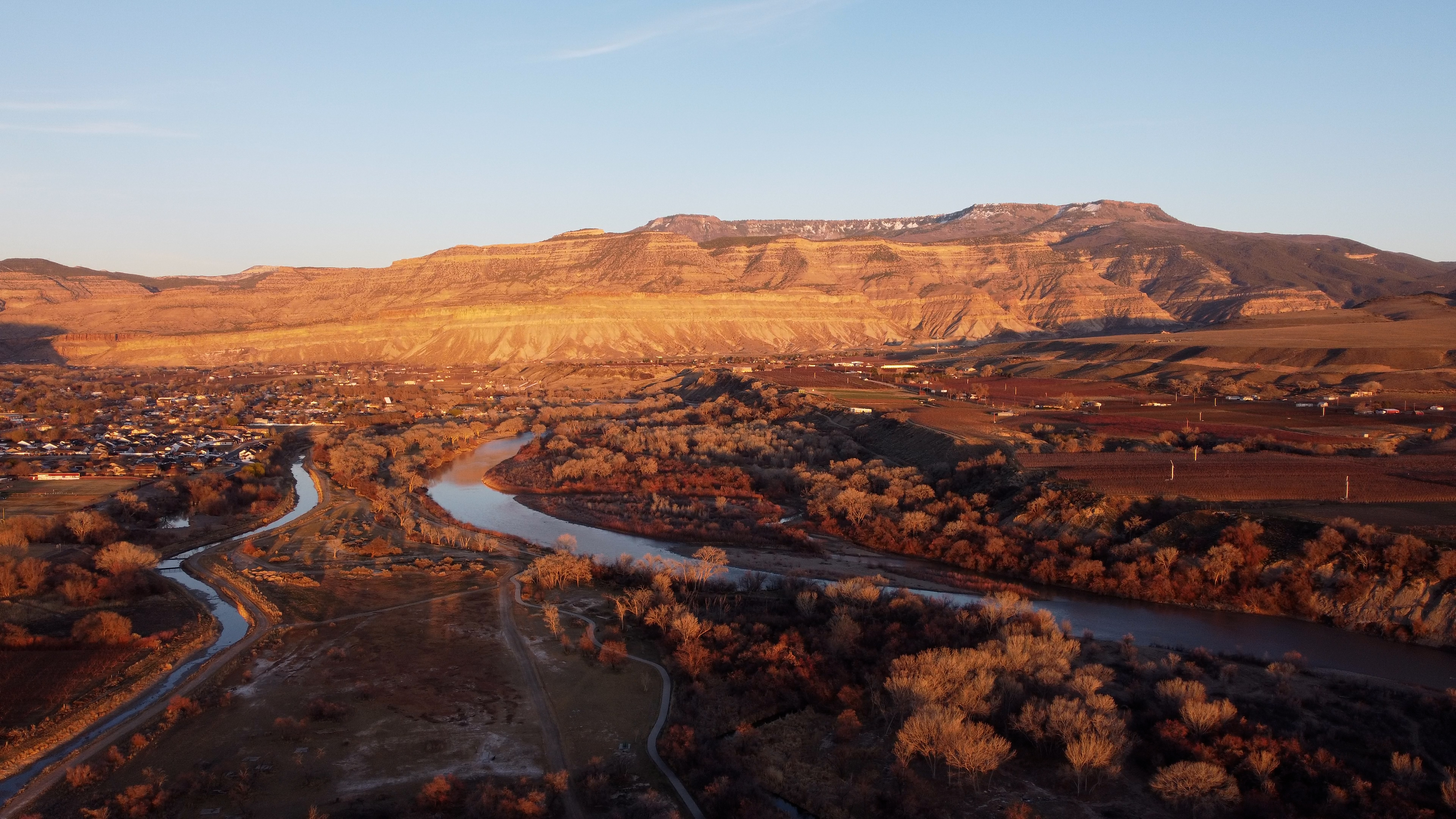
On Colorado’s Grand Mesa, Uncompahgre and Gunnison national forests, water for the region begins as snow in high-elevation locations before flowing down to creeks, reservoirs and irrigation systems that support communities across the Western Slope. It’s a quiet process, but it supports nearly every part of life downstream. (Forest Service video By Travis Weger)
On Colorado’s Grand Mesa, Uncompahgre and Gunnison national forests, water for the region begins as snow in high-elevation locations before flowing down to creeks, reservoirs and irrigation systems that support communities across the Western Slope. It’s a quiet process, but it supports nearly every part of life downstream.
However, that system has come under growing strain across recent decades. Years of drought, insect outbreaks and fire suppression has left forests with many more living and dead trees, leaving them vulnerable to not just wildfire, but also to a range of stresses that can impact critical watersheds.

Forest management protects water
The Grand Mesa Watershed Resiliency Partnership is built around a simple idea: if you want to protect water, you must first take care of the forest.
“Eighty percent of Coloradans drink water that originates on the forest,” said Dave Payne, assistant general manager with the Ute Water Conservancy District. “Managing those watersheds has been one of the greatest philosophies of the Forest Service.”
This effort brings the U.S. Forest Service, Colorado State Forest Service, local governments, industry partners and nonprofit organizations together to help strengthen the landscape. While reducing wildfire risk is a major part of the work, the broader goal is watershed resilience.

It is creating forests that can better handle fire, drought and changing conditions while continuing to provide clean, reliable water to communities.
On the Grand Mesa, the partnership is focusing on watersheds that directly supply municipal and agricultural water. Several creeks and drainages in the area, including the primary sources for water in Grand Junction, are all part of that effort. These areas are facing increasing pressure from development near forest boundaries and the changing conditions across the landscape.
To improve conditions, crews are thinning dense areas, using prescribed fire and supporting commercial timber harvest. The goal is to reduce overcrowding of trees, restore a more natural forest structure and give the ecosystems a better chance to withstand natural occurrences, including wildfire.
“We know fire will happen on this landscape,” said Bill Edwards, district ranger for the Grand Valley Ranger District. “Our job is to set the conditions so when it does, the land can gracefully accept it.”
A key part of this work is crossing boundaries. Instead of treating isolated patches of land, partners are working across federal, state and private land to create a more effective approach. Together we’re aligning priorities, sharing resources and decisions, accelerating work, and delivering results on the ground. The Colorado State Forest Service and local organizations help coordinate efforts, while private industry provides the capacity to carry out large-scale work.

Sustaining communities
Montrose Forest Products, a regional timber company, plays a significant role in active forest management by harvesting and using the lumber that is removed during treatment. The connection between forest restoration and local industry helps keep projects moving and makes them viable over the long term.
“We employ around a hundred people at the mill, and another hundred subcontractors, including logging crews, road builders and log haulers,” said Tom Herwerden, a forester with Montrose Forest Products.

The economic impact doesn’t stop at the mill. Each load of timber supports truck drivers, equipment operators and small businesses throughout the area, creating a steady cycle of work tied directly to improving forest conditions. For the Forest Service, those partnerships make it possible to operate at the scale that is required. For local communities, it means jobs, stability and continued investment.
“We end up having American-made building material that goes out all over the nation,” Herwerden said. “It really is a partnership between everybody who works on these projects.”
Nonprofit partners also play a critical role, helping ensure that decisions on the ground translate into long-term benefits for water systems downstream. Their work adds another layer of understanding, connecting forest treatments to water quality, sediment and overall watershed function.

Water is the lifeblood
Across the West, recent wildfires have shown how quickly watersheds can be damaged, with burned areas leading to erosion, sedimentation and long-term impacts to watersheds. On the Grand Mesa, where communities rely heavily on these forest-fed systems, the stakes are especially high.
“Water is the lifeblood of these communities,” said Edwards. “Protecting those watersheds, and the infrastructure that’s on them, is critical to the long-term sustainability of our neighbors and friends.”
The Forest Service is committed to creating healthier and more productive forests, safer and thriving communities and stronger forest products markets. Success starts when federal, state, private and nonprofit organizations reach across boundaries and work together to accelerate active forest management that increases the pace and scale and predictability of forest management. Working together across boundaries creates sustainable forests that are healthier, more resilient, and better prepared for the challenges ahead.

The Grand Mesa Watershed Resiliency Partnership is becoming a model for how to approach land management in the West. Through bringing together federal and state agencies, communities and industry around a shared purpose, it shows that resilience is built through collaboration.
In a place where water is life, the connection is clear: healthy forests support healthy watersheds and investing in the land today helps secure our tomorrow.