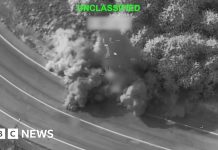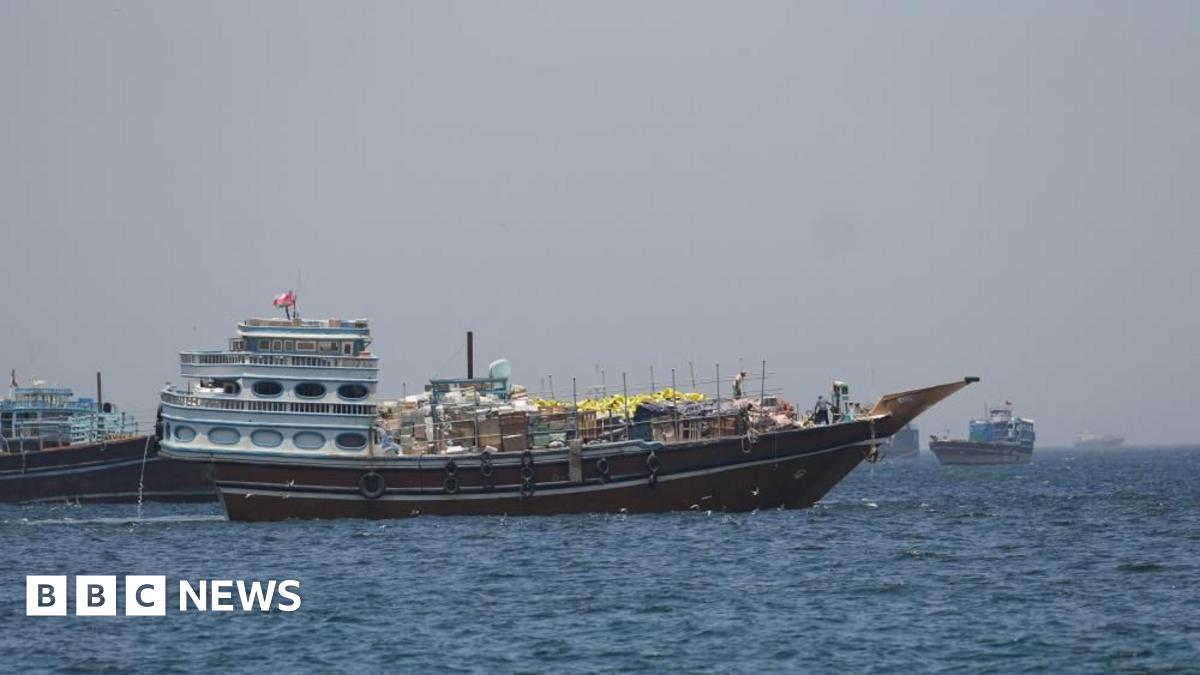
The Hormuz Strait has remained largely blocked since the US and Israel launched air strikes on Iran on 28 February – and Tehran responded by blocking the crucial waterway through which 20% of the world’s oil and liquefied natural gas is meant to pass freely.
The US says there are 22,500 mariners on 1,550 commercial vessels trapped in the Gulf.
There has been growing concern over dwindling supplies and the effects on sailors’ physical and mental health.
US Central Command (Centcom) says that “guided-missile destroyers, over 100 land and sea-based aircraft, multi-domain unmanned platforms, and 15,000 service members” are being used to support the operation.
In a briefing on the first day of the operation, Centcom commander Adm Brad Cooper said vessels from 87 countries were stranded in the Gulf – and the US had contacted “dozens of ships and shipping companies to encourage traffic flow through”.
What remains unclear is whether the US will attempt to provide stranded ships with a military escort.
Cooper said a “much broader defensive package” than would be required solely to escort ships was on offer, without giving details.
Mick Mulroy, a former US deputy assistant secretary of defence for the Middle East and a veteran of both the Marine Corps and the CIA’s paramilitary wing, told the BBC he believed that Project Freedom would be focused on providing air cover and defence from missile and drone attacks – rather than a physical escort of those vessels through the Strait of Hormuz.
However, Mulroy said there was no guarantee it would be successful in helping restore freedom of movement and commerce in the strait.
“The question is whether ships will trust their ability to get through without being attacked, and more importantly, the insurance company,” he said.
Tim Wilkins, managing director at Intertanko, a trade body representing independent tanker owners and operators, told the BBC there was “no structured convoy or co-ordination mechanism in place” and members were asking, “who initiates these transits? Who communicates with the authorities on behalf of the vessel? And, indeed – a critical one – what is the fallback if a vessel is challenged by Iranian forces during the transit?”