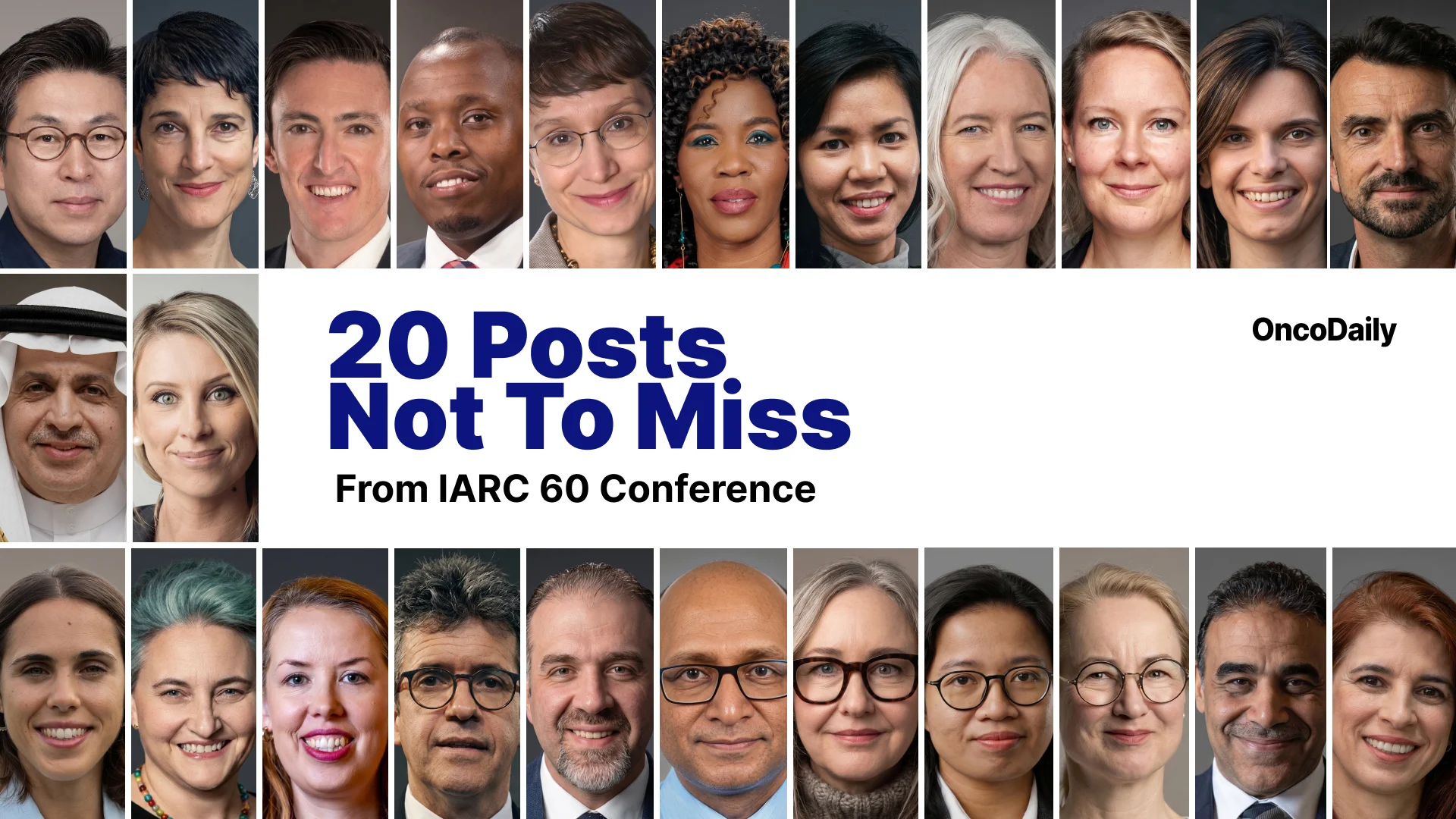
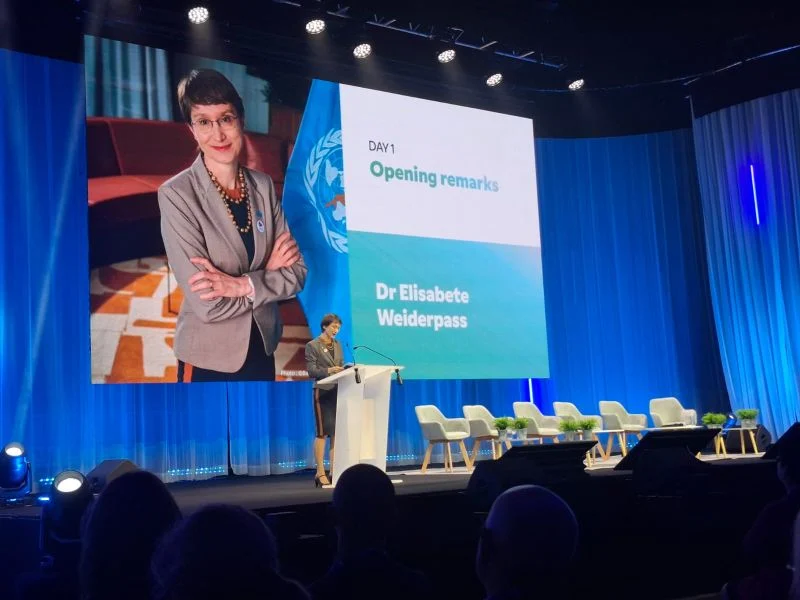
The International Agency for Research on Cancer (IARC) recently hosted its flagship IARC60 International Scientific Conference, ‘Cancer Research into Action,’ in Lyon, France, marking six decades of global leadership in cancer surveillance and epidemiology.
Organized under the leadership of IARC Director Dr. Elisabete Weiderpass and held in partnership with the Union for International Cancer Control (UICC), the celebratory event convened leading epidemiologists, public health practitioners, and clinical investigators. The conference centered on translating advanced discovery into systemic public health action and establishing robust science-policy frameworks to reduce the global cancer burden.
A major focus of the sessions involved addressing regional disparities in data collection and improving clinical research capacity in low- and middle-income countries (LMICs). By gathering diverse perspectives from across international networks, the conference emphasized that implementing sustainable cancer registries and localized prevention strategies is essential for translating global epidemiological findings into effective national healthcare policies.
Below is a curated selection of key highlights, institutional updates, and perspectives shared by global oncology leaders during the three-day event.
Union for International Cancer Control (UICC):
“IARC60 is taking place in Lyon until Thursday, 21 May – an event to celebrate IARC – International Agency for Research on Cancer / World Health Organization’s 60 years of research and to set challenges for the next 60 years of cancer prevention!
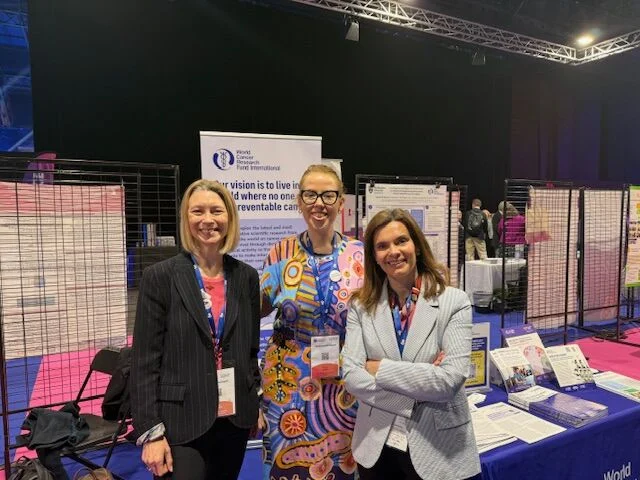
UICC is a proud supporter and looks forward to participating in a range of sessions. If you’re at IARC, find us at our booth – and reach out to Sally Hopkins and Laila Harras-Pelletier.
Read our recent interview with Dr Elisabete Weiderpass, Director, IARC, as she reflects on the past 60 years of IARC. ”
“After months of planning and preparation, it was truly heart-warming and deeply moving to witness the global cancer community come together in one of the most meaningful scientific celebrations in our field: the 60th Anniversary of the IARC – International Agency for Research on Cancer / World Health Organization, held in Lyon from 19 – 21 May 2026.
This was far more than an anniversary. It was a powerful milestone marking six decades of impact during which science has shaped policy, prevention efforts have saved lives, and global collaboration has remained the cornerstone of progress against cancer.
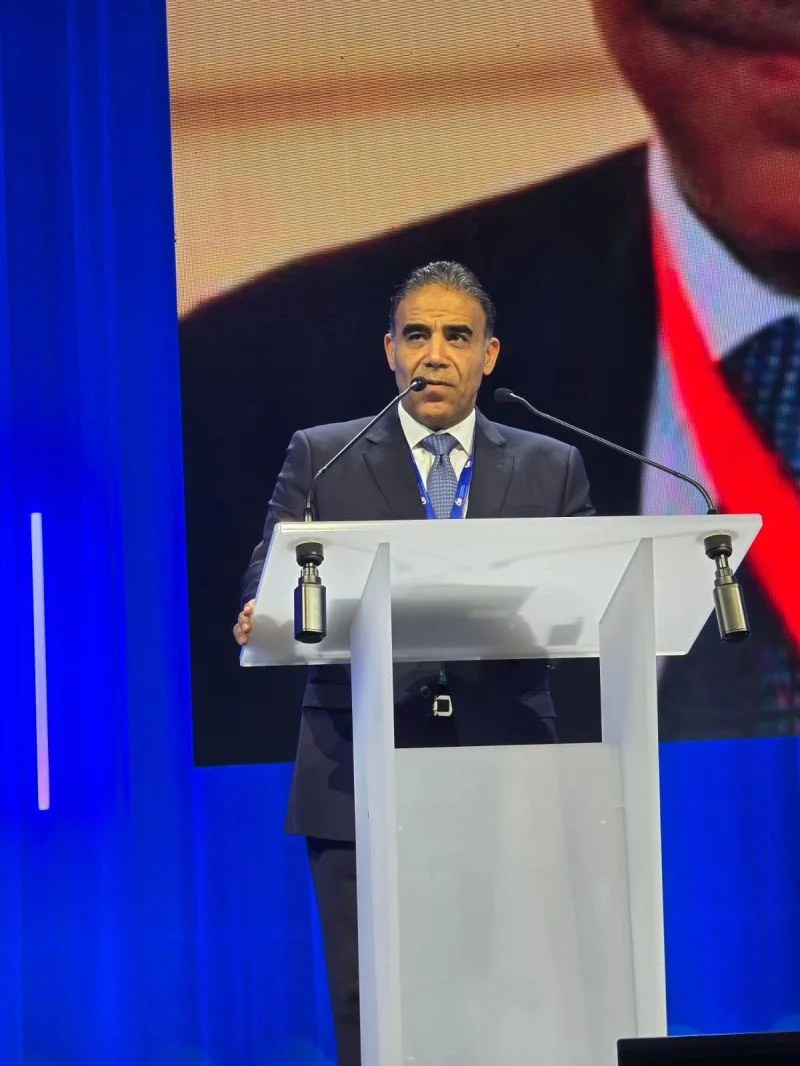
I was profoundly honored to be selected to deliver the opening speech as the Scientific Council representative, alongside Dr Elisabete Weiderpass and Professor Youngwoo Kim, Chair of the Scientific Council. Standing on that stage was a moment of pride and responsibility, reflecting not only personal trust but also the growing contribution of our region to the global cancer agenda.
It was also a great privilege to share Egypt’s experience during the session ‘Improving survival worldwide: towards the Global Breast Cancer Initiative.’ Presenting the results and impact of the Presidential Initiative for Women’s Health As one of the largest population-based breast cancer programs in the region with more than 23 million women screened through primary healthcare units across Egypt, sharing the PIWH result in decreasing the time to diagnosis and increasing the early detection as now more than 70% are discovered and treated in early stages of Breast cancer, demonstrating how evidence-based prevention, early detection, and health-system strengthening can translate into real, measurable population-level impact with Comprehensive economic evaluations, showing a positive return on investment, billions of pounds saved, thousands of life-years gained, and substantial improvements in quality-adjusted life years.
The scientific discussions throughout the meeting, from GLOBOCAN 2024 and cancer surveillance to prevention research, equity, and implementation, were truly inspiring. They reaffirmed the critical role IARC continues to play globally, particularly in supporting LMICs to translate science into action.
My sincere thanks and deep appreciation go to Dr Elisabete Weiderpass, Valerie McCormack, Partha Basu, Clement Chauvet, and all colleagues at IARC, as well as the Scientific Council and organizing teams, for their exceptional leadership, dedication, and hard work. Your commitment made this anniversary not only scientifically outstanding but truly memorable and meaningful.”
Key Scientific Proceedings and Announcements Released by IARC:
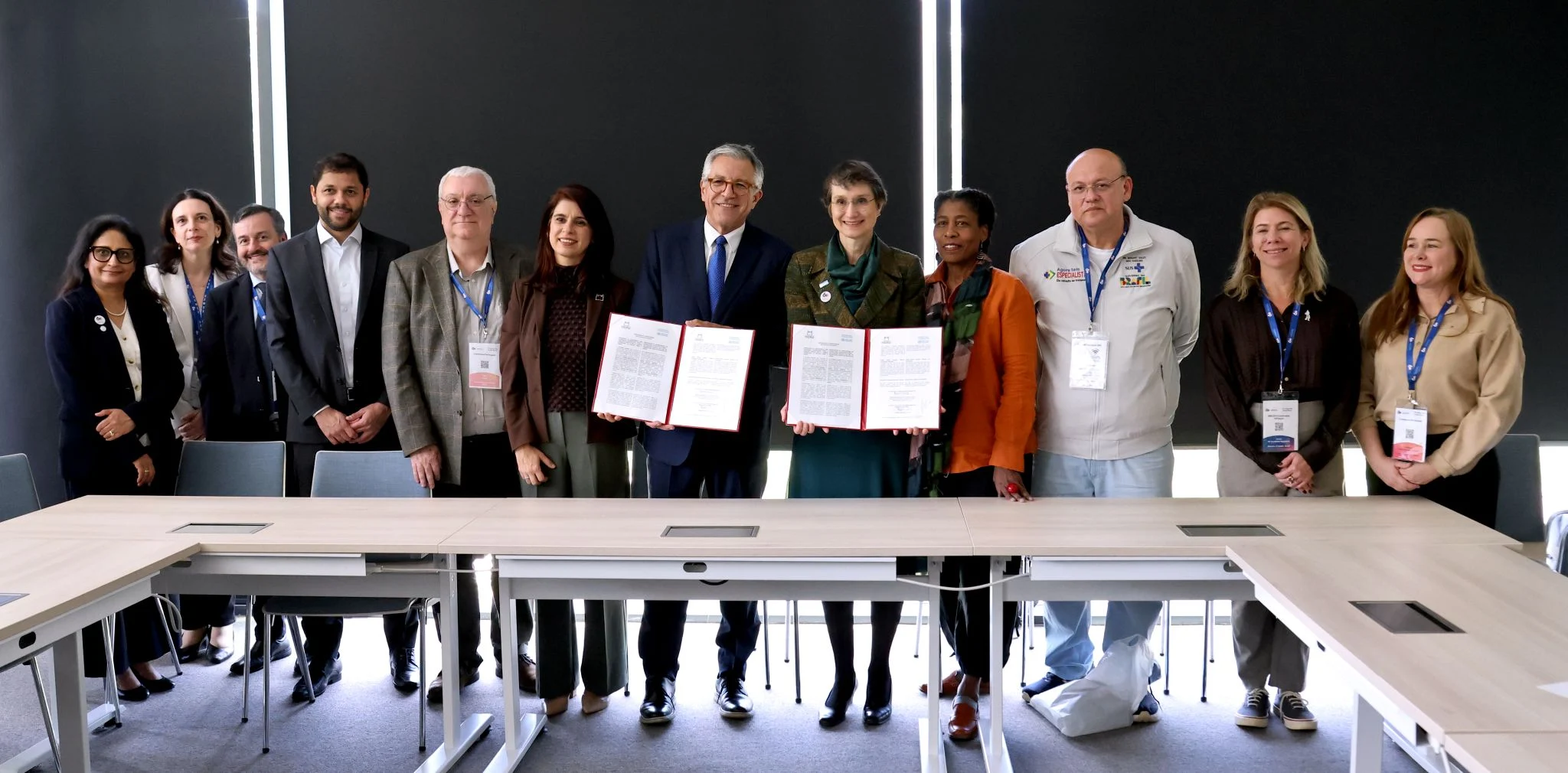
1. “During IARC60, IARC and Fiocruz signed a Memorandum of Understanding to co-develop research projects, increase academic exchanges, better disseminate results and publications, and support evidence-based policies.
IARC Director Dr Elisabete Weiderpass and Dr Priscila Ferraz signed the MoU in the presence of Dr Alexandre Padilha, the Minister of Health of Brazil, and representatives of numerous Brazilian health institutions.”
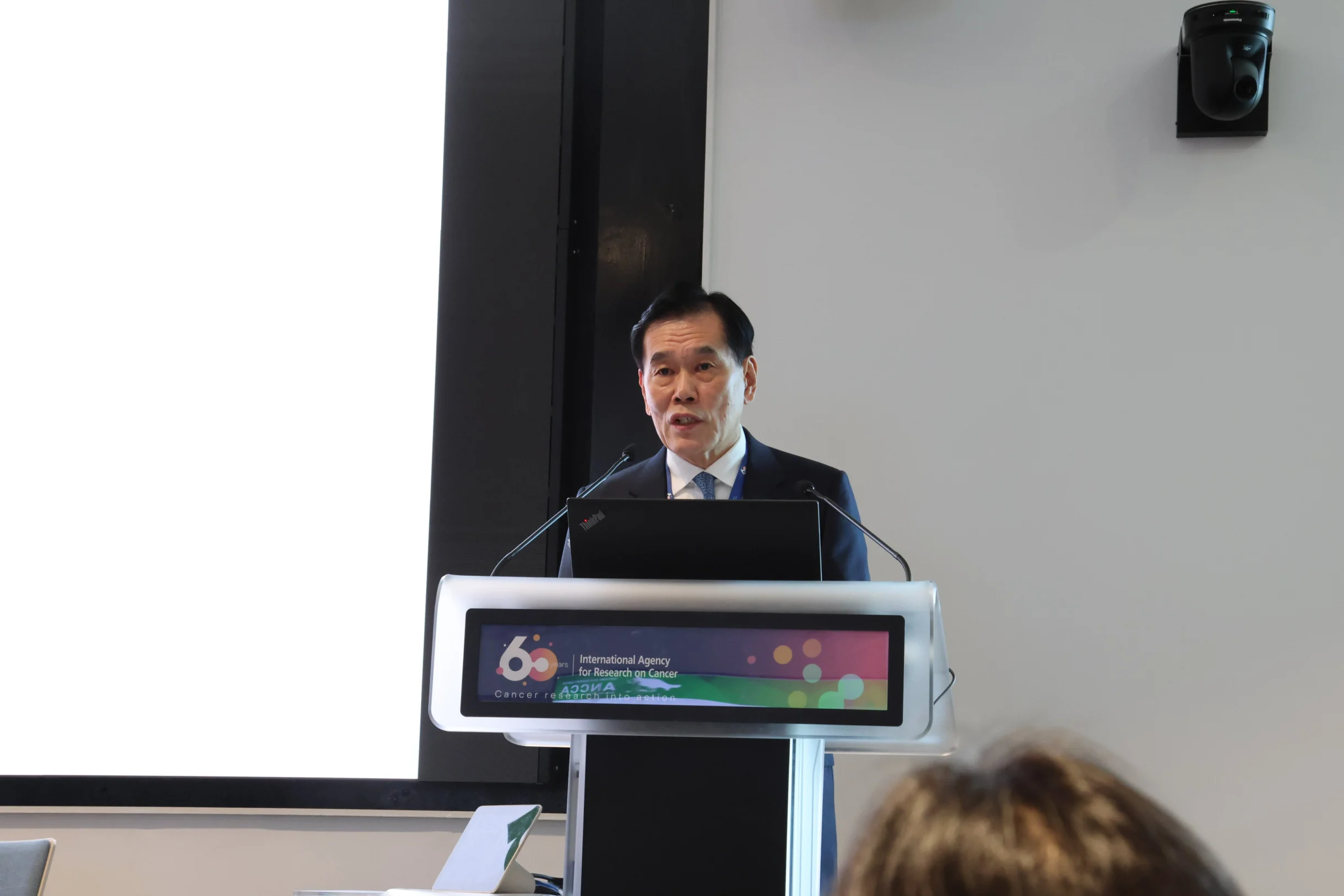
2. “There are incredible opportunities to align research agendas across Asia.
Now at IARC60, the Asian National Cancer Centers Alliance (ANCCA) partner session invites experts from China, India, Japan, and the Republic of Korea to present potential avenues to improve cancer control in the region.”
3. “Fantastic plenary from the Lancet Commission on Women, Power and Cancer at IARC60 Session showcased ‘life after the Commission,’ including reflections from 4 Commissioners on its influence in their work and a discussion by 4 external stakeholders of policy initiatives.”
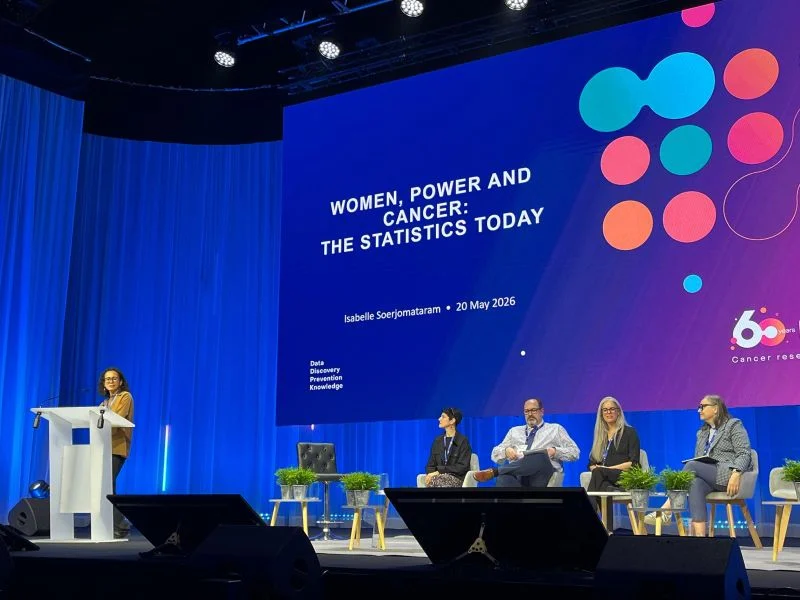
“Huge kudos to IARC Director Dr Elisabete Weiderpass and Clement Chauvet, and all the organizers for a great meeting, IARC60!
Hard to believe that IARC50 was 10 years ago! My first time visiting and I was deeply honored to represent the small cancer team back then at the World Health Organization.
The toughest part about IARC 60 was choosing between parallel sessions – so much great science – epidemiology, prevention, early detection and implementation research, cutting-edge technology, including AI -but without hype. Refreshing to take part in rational discussions about safety, efficacy, equity and ethics on its potential benefits and harms in cancer research, prevention, and care.
Can’t thank you enough, Shirin Heidari, for coming to Lyon to join fellow The Lancet Group Commissioners– on stage (and off) and mostly for your brilliant insights and talent moderating our external stakeholder panel in our session ‘Women, Power, and Cancer: from commission to collective action’ at the 60th anniversary conference of IARC60!
It was equally a pleasure and honor to take part in the WHA79 side-events around sex and gender, including the 10th anniversary of the SAGER guidelines, which will surely drive action further towards gender equity and better prevention and health for all!
I also enjoyed spending time with amazing Canadian cancer research, policy, and advocacy colleagues from the Canadian Cancer Society, CEO Andrea Seale, and Dr. Stuart E., EVP Research, and the brilliant and tireless Dr. Fei Fei Liu, Director of the Institute of Cancer Research, Canadian Institutes of Health Research.
And a global cancer research meeting would not be complete without a moment to reflect on progress on the elimination of cervical cancer with the inimitable Professor Karen Canfell, Partha Basu, Silvia de Sanjose, and Elias Mell, National Cancer Institute of Kenya.
This week was a critical reminder of the power of collective action, when informed by the best scientific evidence.”
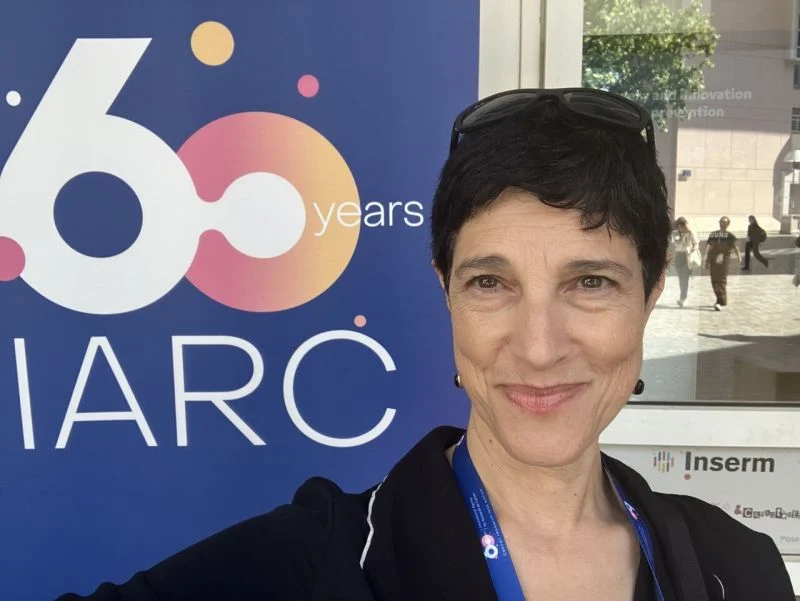
“A memorable few days in Lyon, where science, friendship, and shared commitment to cancer control came together beautifully.
Attending the IARC@60 International Scientific Conference was a truly inspiring experience. The sessions reflected the depth and breadth of modern cancer research, from discovery and innovation in cancer prevention to the evolution of GLOBOCAN estimates, breast cancer etiology, environmental and lifestyle determinants, and the urgent need to translate research into equitable and effective cancer control policies.
But beyond the scientific excellence, what made this visit especially meaningful was the human side of the meeting.
It was a great pleasure to reconnect with dear friends, meet inspiring colleagues, exchange ideas, and celebrate the value of international collaboration. These moments remind me that progress in cancer control is not driven by data alone, but also by trust, partnership, mentorship, friendship, and the ability to bring people together around a common mission.
Lyon offered the perfect setting for reflection. A city of history and culture, hosting a global conversation on the future of cancer prevention and public health action.
I leave this visit with renewed energy, stronger connections, and a deeper belief that our responsibility as clinicians, researchers, educators, and advocates is to ensure that high-quality cancer knowledge reaches the people and health systems that need it most.
Grateful for the enriching discussions, the inspiring sessions, and the wonderful friends and colleagues who made this visit so special.”
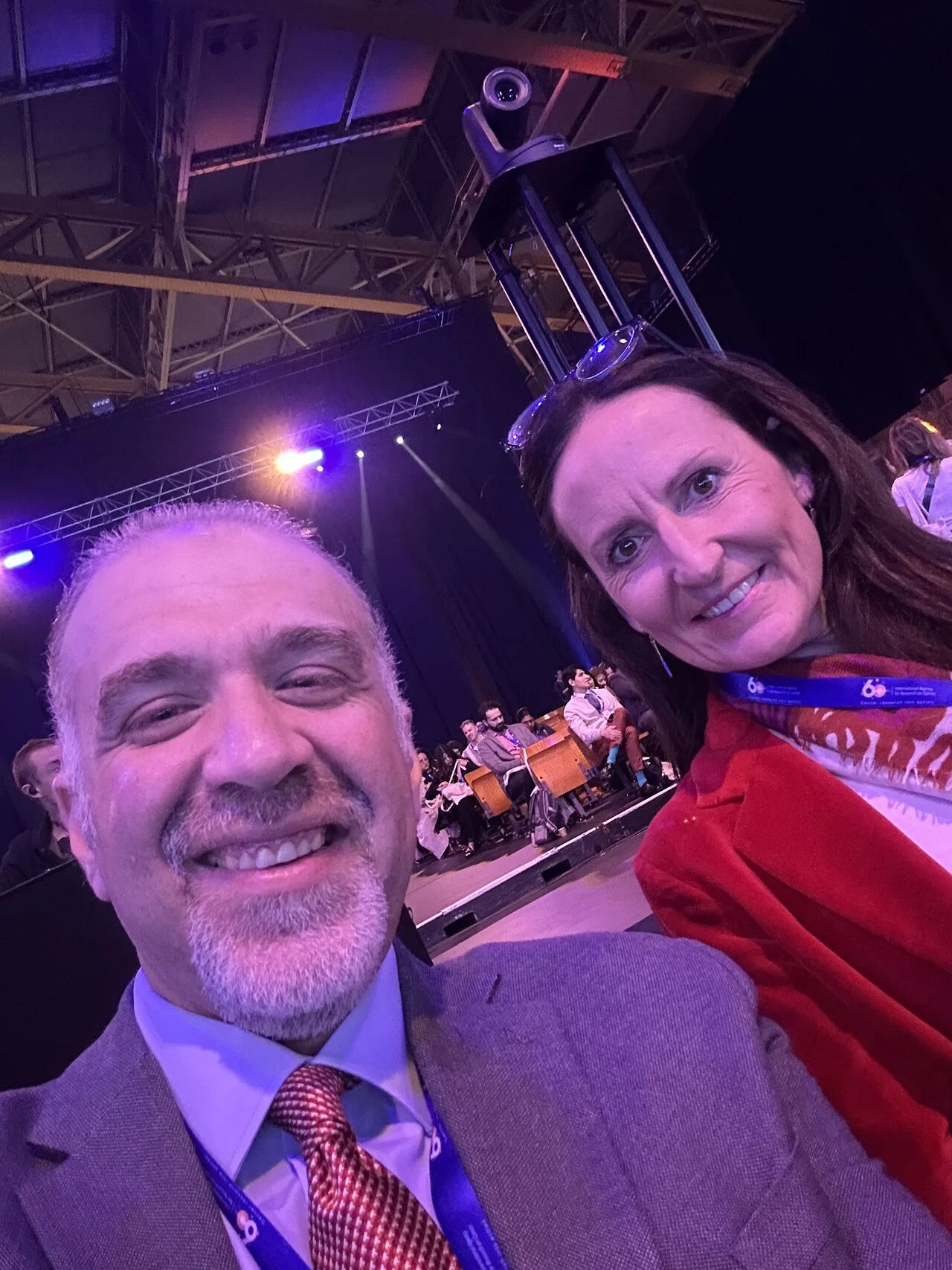
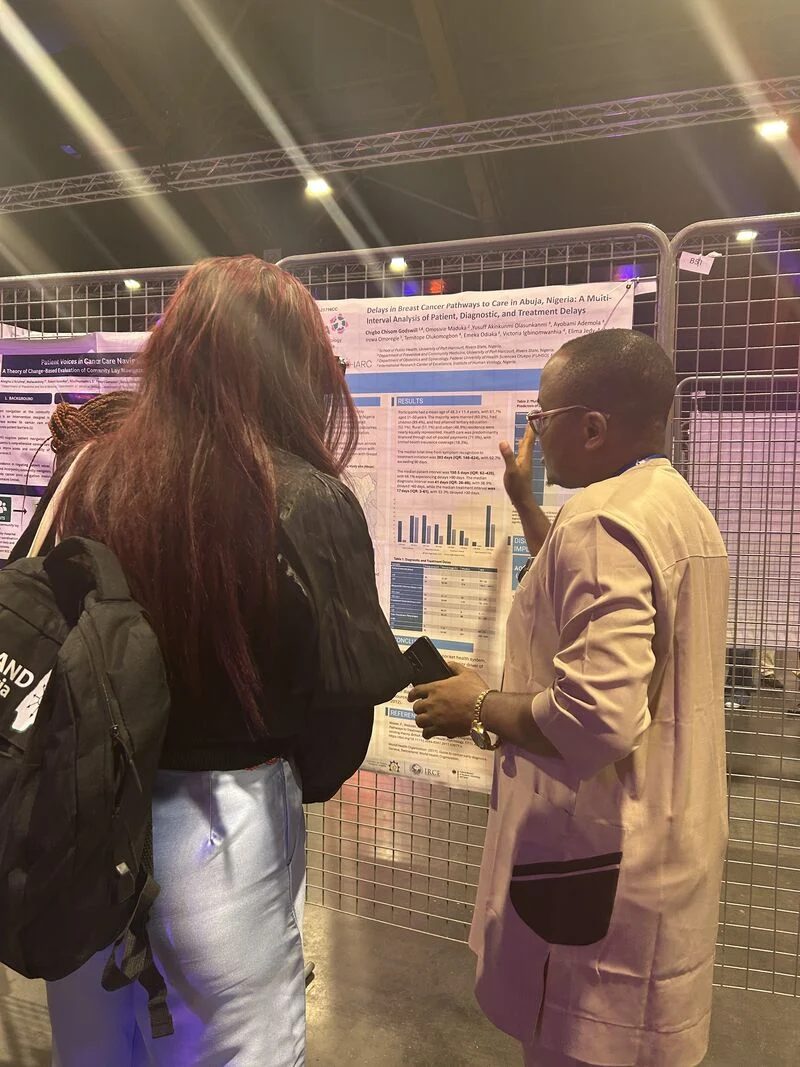
“Wonderful to see young researchers of the Network of Researchers in Africa, NORA, presenting results of their work at the IARC 60th anniversary conference in Lyon today.”
“Congratulations to IARC – International Agency for Research on Cancer and Elisabete Weiderpass for an exceptional 3-day conference to celebrate IARC@60. It was fantastic to meet so many colleagues, friends and make new connections from all over the world.
The spirit of collaboration was evident throughout the conference. Cancer prevention was discussed meaningfully in several parallel sessions, including the Cancer Prevention Europe session with great presentations by Joachim Schüz, Michele Matta and Karen Steindorf. There is also great momentum to continue making progress in building capacity in LMICs and already this conference has paved the path. In the concluding remarks, Cancer Australia CEO Dorothy Keefe said ‘Cancer prevention is the strategy for sustainability‘ and I could not agree more.”
City Cancer Challenge (C/Can):
“C/Can joined the IARC – International Agency for Research on Cancer 60th anniversary international conference in Lyon, three days dedicated to turning cancer research into action.
The conference brought together researchers, policymakers, and public health professionals to address one of the most persistent challenges in global oncology: closing the gap between evidence and practice. It was the right room for a conversation we’ve been building toward.
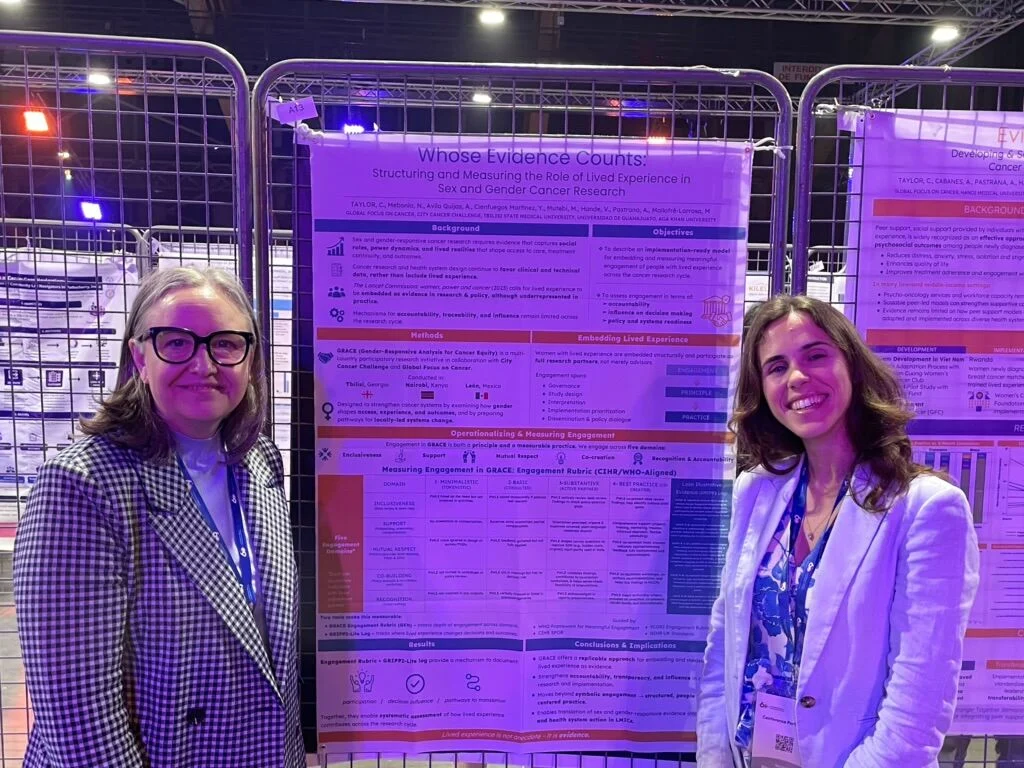
At the heart of our participation was the session ‘Women, Power and Cancer: From Commission to Collective Action,’ which built on the findings of The Lancet Group Commission on Women, Power and Cancer. Meritxell Mallafré-Larrosa spoke to what gender-responsive cancer systems actually look like when you move from principle to implementation.
The honest answer is: there’s no universal gender-responsive system in practice.
Through structured consultations in Tbilisi, Nairobi, and León, with clinicians, policymakers, civil society organisations, and women with lived experience, we found that while certain inequities recur across settings, how they manifest is highly context-specific.
That context-specificity is exactly why we established Gender-Responsive Analysis for Cancer Equity (GRACE), a locally-led implementation research consortium generating evidence at patient, provider, system, and policy levels across all three cities, building models grounded in local realities, not global assumptions.
Meritxell also delivered a rapid-fire presentation on strengthening cancer research capacity in LMICs as part of ongoing collaboration with the University of Melbourne, and presented a poster sharing early findings from the GRACE city consultations and the implementation priorities emerging from them.”
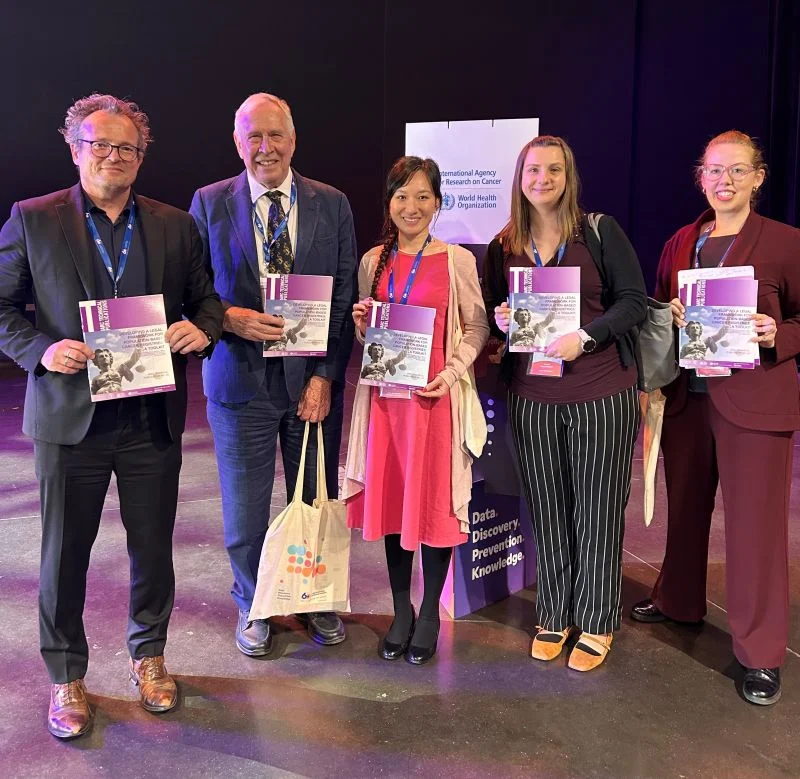
“This week in Lyon, I was proud to present the Legal Framework for Cancer Registries Toolkit at the IARC@60 conference!
Only 21% of the world’s population is covered by a population-based cancer registry. Laws play a critical role in the Global Initiative for Cancer Registry Development by mandating reporting, supporting timely data collection, and safeguarding privacy. Strong legal frameworks are essential to ensure systematic, high-quality cancer data: enabling countries to identify and address inequities and align with international best practices.
Developed by Sondra Davoren and colleagues at the McCabe Centre for Law and Cancer in collaboration with the IARC – International Agency for Research on Cancer and the African Cancer Registry Network, this toolkit draws on global legal analysis and expert input to provide a practical, adaptable approach for countries establishing or strengthening population-based cancer registries.
There is no one-size-fits-all approach, but the right legal tools can provide a powerful head start.
We will also be hosting a webinar soon to introduce the toolkit and share how it can be used in practice.
We hope that wide dissemination and feedback will support ongoing refinement of the toolkit, strengthening approaches to cancer registry regulation worldwide, and ultimately contributing to greater equity.”
National Cancer Institute of Kenya:
“NCI-K Participates in the Ongoing IARC@60 Conference in Lyon, France.
The National Cancer Institute of Kenya is participating in the ongoing IARC@60 Conference taking place from 19th to 21st May 2026 in Lyon, France.
Held at the IARC – International Agency for Research on Cancer and La Halle Tony Garnier, the conference has brought together experts, researchers, policymakers, and global health leaders from around the world to launch a bold new era in cancer prevention and control by translating scientific advances into impactful public health action.
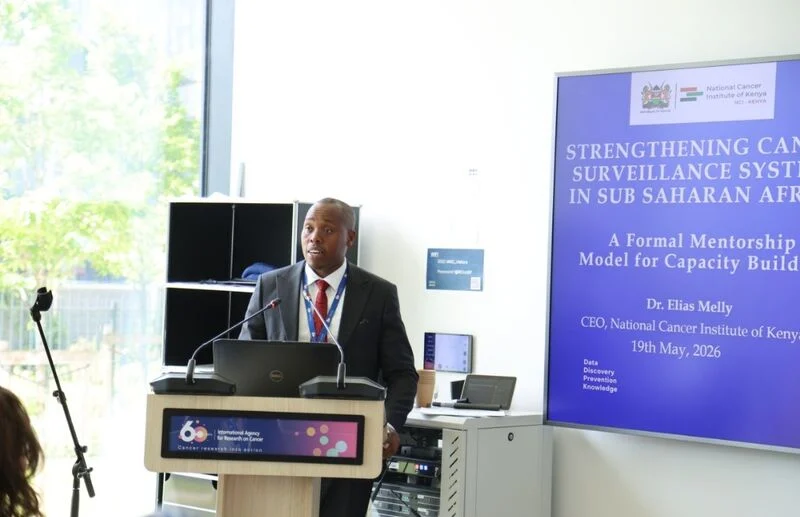
During the conference, Elias Melly, Chief Executive Officer of NCI Kenya, delivered a presentation titled:
‘Strengthening Cancer Surveillance Systems in Sub-Saharan Africa: A Formal Mentorship Model for Capacity Building.’
The presentation emphasized the urgent need to strengthen Population-Based Cancer Registries (PBCRs), develop sustainable local expertise, and build resilient cancer surveillance systems across Sub-Saharan Africa to support evidence-based policy and decision-making.
The IARC@60 Conference, themed ‘Cancer Research into Action,’ is celebrating six decades of scientific excellence and global collaboration in cancer research while looking ahead to the future of cancer prevention and control. The conference highlights the transformative power of science in shaping healthier societies through data-driven policies, the discovery of emerging risk factors, and the strengthened communication of scientific evidence.
The three-day conference is structured around three key themes:
- Discovery and Innovation for Cancer Prevention
- Translating Research into Public Health Action
- Science-Policy Interface for Global Change
NCI-Kenya remains committed to advancing evidence-based cancer control, strengthening regional and global partnerships, and supporting robust data systems necessary to guide cancer policy, prevention, treatment, and research across Africa.”
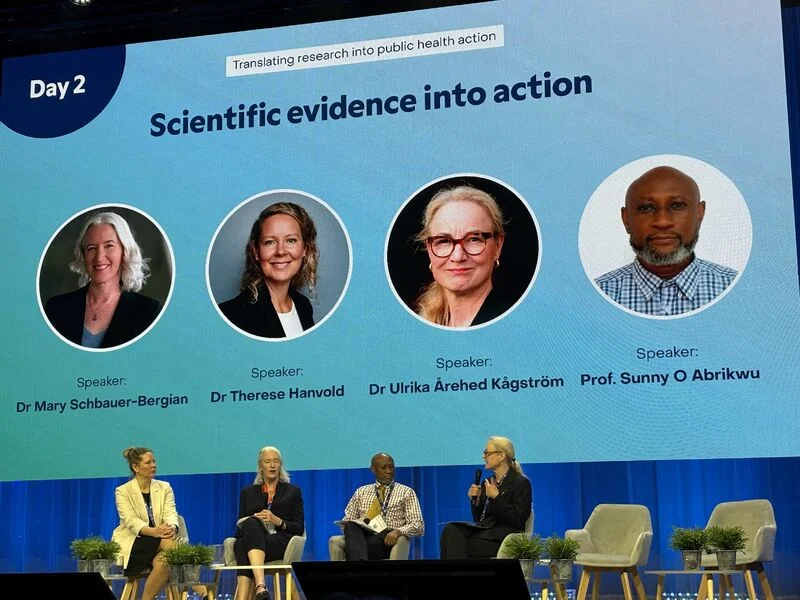
“At the IARC – International Agency for Research on Cancer 60th anniversary meeting in Lyon this week, discussions focused not only on what we know about cancer risks, but on how scientific evidence can actually be translated into real public health action.
Every cancer case we can prevent means less suffering for individuals and families, and a stronger, more sustainable society. To achieve this, we need knowledge grounded in solid scientific evidence, communicated in ways people can understand and act on. But even more importantly, we need societies that make healthy choices easier for people to make. Effective prevention is not only about raising awareness, it is about shaping policies and environments where healthy choices become the norm.
Together with Mary Schubauer-Berigan, Therese Hanvold and Sunny Okechukwu Abarikwu, I had the opportunity to discuss this critical issue.
At a time when misinformation spreads quickly, trusted science and collaboration across sectors and nations matter enormously. Thank you to IARC for creating an important space for dialogue between researchers, policymakers and civil society.
Please note: the image incorrectly states that I am a doctor, which I am not.”
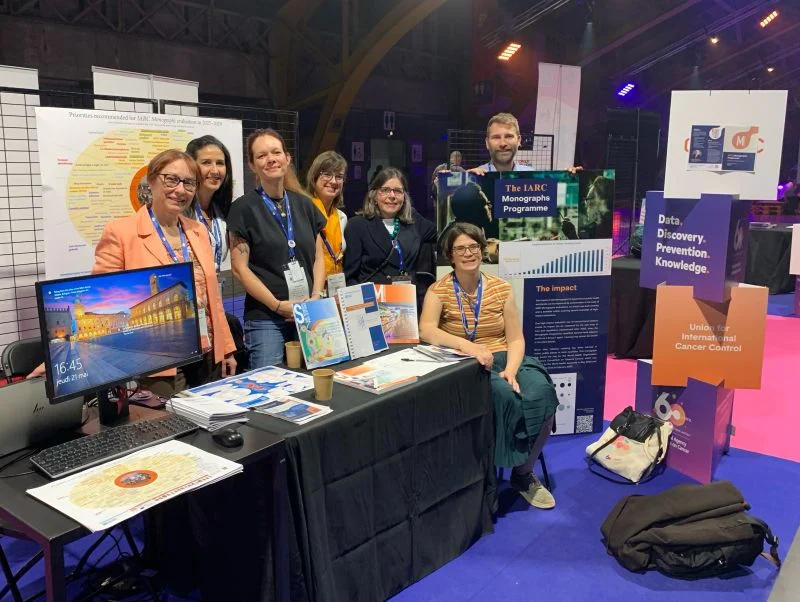
“Attendees at IARC60 were invited to engage with the IARC – International Agency for Research on Cancer / World Health Organization by visiting booths dedicated to our various programmes. I couldn’t be prouder of the small but mighty team that produces the IARC Monographs. Year in and year out, volume after volume, this group of stellar scientists and technical staff ensures that the transparent and systematic evidence syntheses produced by our expert Working Groups are published and preserved as a global public good.”
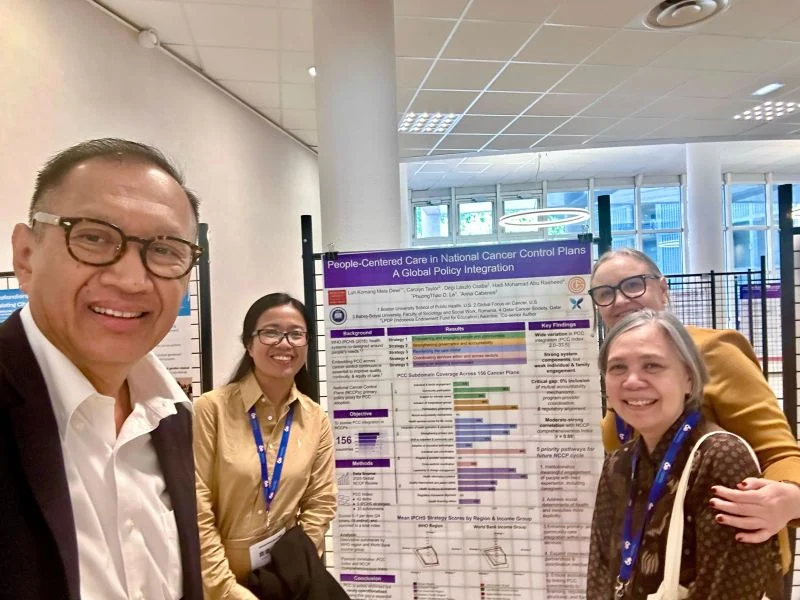
“A huge thanks to all the authors, Carolyn Taylor, Dégi László Csaba, Hadi Mohamad Abu Rasheed, Phuong Thao, and Anna Cabanes, for their collaboration and support in bringing our work to IARC@60 in Lyon, France.
Special thanks to my advisor, Phuong Thao, for introducing me to a SUPER supportive research group whose real-world work across cancer control areas shares the same goal: advancing people-centered care that better responds to patients’ and communities’ needs.
This conference has been a meaningful experience: learning from experts across cancer research, hearing the latest updates in the field, and reconnecting with mentors and dear friends Monica Nirmala, Kardinah Kardinah, and Kathleen Schmeler. I’m thankful to Boston University School of Public Health and Lembaga Pengelola Dana Pendidikan for making this experience possible.
Major key takeaway: never leave your poster unattended. You never know when a Minister might stop by!”
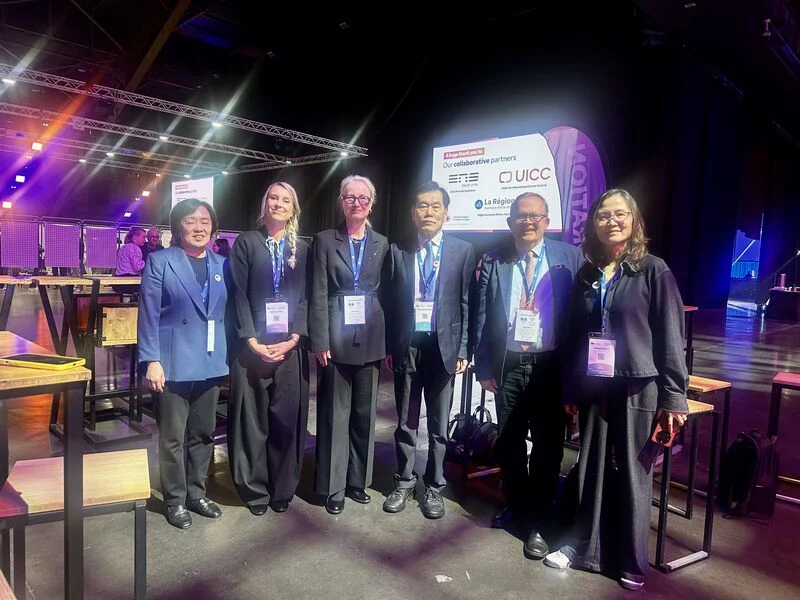
“A quick round trip to Lyon for the 60th anniversary event of IARC, and definitely worth it.
Strong discussions throughout the plenaries on how we move from evidence to action and from research to real policy impact. Generating data is not enough; the real challenge is how we translate evidence into prevention strategies, behaviour change and equitable cancer control policies that actually make a difference.
Great insights from Miriam Mutebi, UICC Board Member, Ulrika Årehed Kågström, President of Union for International Cancer Control (UICC) , Cesaltina Lorenzoni, President of AORTIC, Groesbeck Parham, Carlos Rodriguez-Galindo, and many others.
Beyond the sessions, it was excellent to meet again with Dr Jie He and his team from National Cancer Center China to discuss their engagement with UICC and preparations towards the World Cancer Congress in Hong Kong in 2026.
Also great conversations with Elias Melly from NCI Kenya around shared ambitions for the World Cancer Leaders’ Summit 2027 in Nairobi.
Between WHA79, IARC60 and wrapping up the second edition of the Cancer Planners Forum last week, it has been an intense few weeks of global health, cancer control, partnerships and meaningful connections.
A lot happening. A lot coming next. And honestly excited for it”
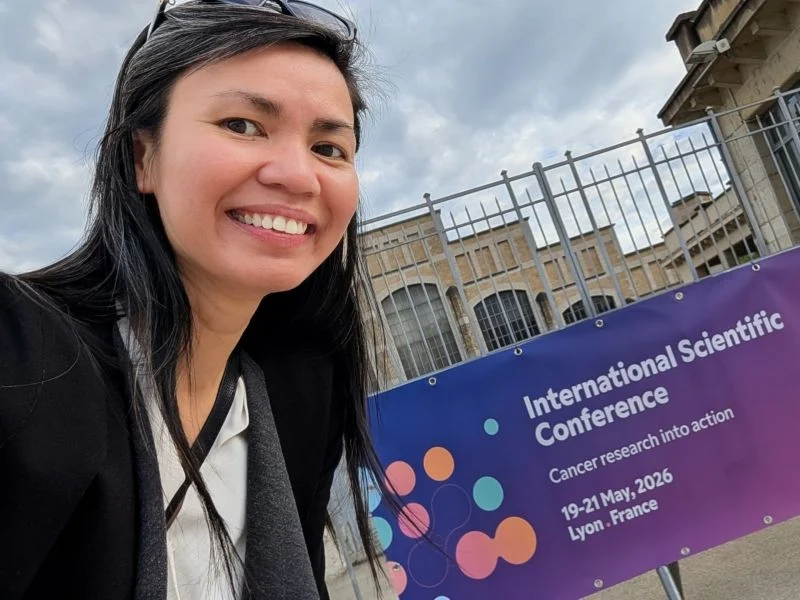
“Wrapped up 3 days at the IARC@60 Scientific Conference: Cancer Research Into Action in Lyon, France. Superb presentations from leading cancer scientists from all over the world!
On behalf of the research team, I presented the preliminary findings of the Vietnamese Self-Help Plus (vSH+) study, which showed that those who received the vSH+ group-based stress management intervention reported sustained reductions in depression and anxiety symptoms compared to those who did not. SH+ is an adaptable, scalable low-intensity psychological intervention that can be integrated in oncology settings to strengthen cancer supportive care.
With Carolyn Taylor and Vijay Kumar, we presented results from the Stronger Together – Rwanda study: all of women in the study adhered to treatment and reported improvements in several quality of life and mental health domains. Peer support can address the psychosocial needs in many resource-constrained settings.
With Mela Dewi and Carolyn Taylor (and Anna Cabanes in spirit), we presented our analyses of person-centered care (PCC) in national cancer control plans. We also proposed an index to help policymakers, practitioners, and advocates to evaluate benchmark progress on PCC – tay tuned for more!
Some other highlights of conference topics/concepts included:
- Recent advances in nutritional epidemiology and cancer
- Mutographs of cancer: discovering causes of cancer through mutational signatures
- Re-frame prevention research as systems engineering (by Dr. Groesbeck Parham)
- Important, tremendous work from The Lancet Commission on Women, Power and Cancer
- Lived experience as evidence (bold and beautiful presentation by Carolyn Taylor)
- Science and Political will must intersect to tackle the cancer burden nationally and globally (great to see a ministerial roundtable at a scientific conference!).”
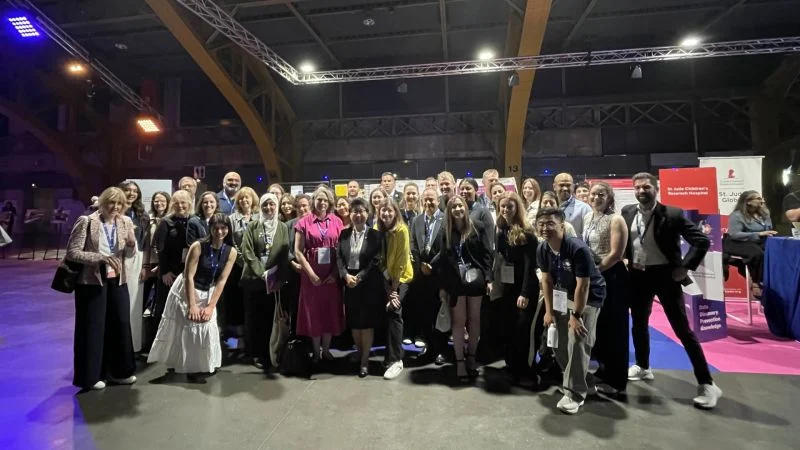
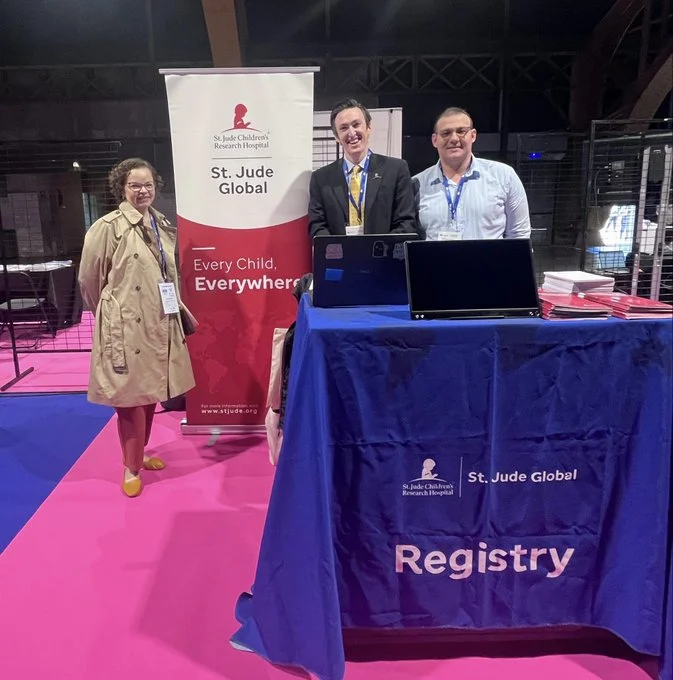
“The St. Jude Global Registry team is at IARC60 this week in Lyon! Stop by our booth to learn more about the SJCARES childhood cancer registry and our work using global pediatric oncology data to drive improvement in childhood cancer care.”
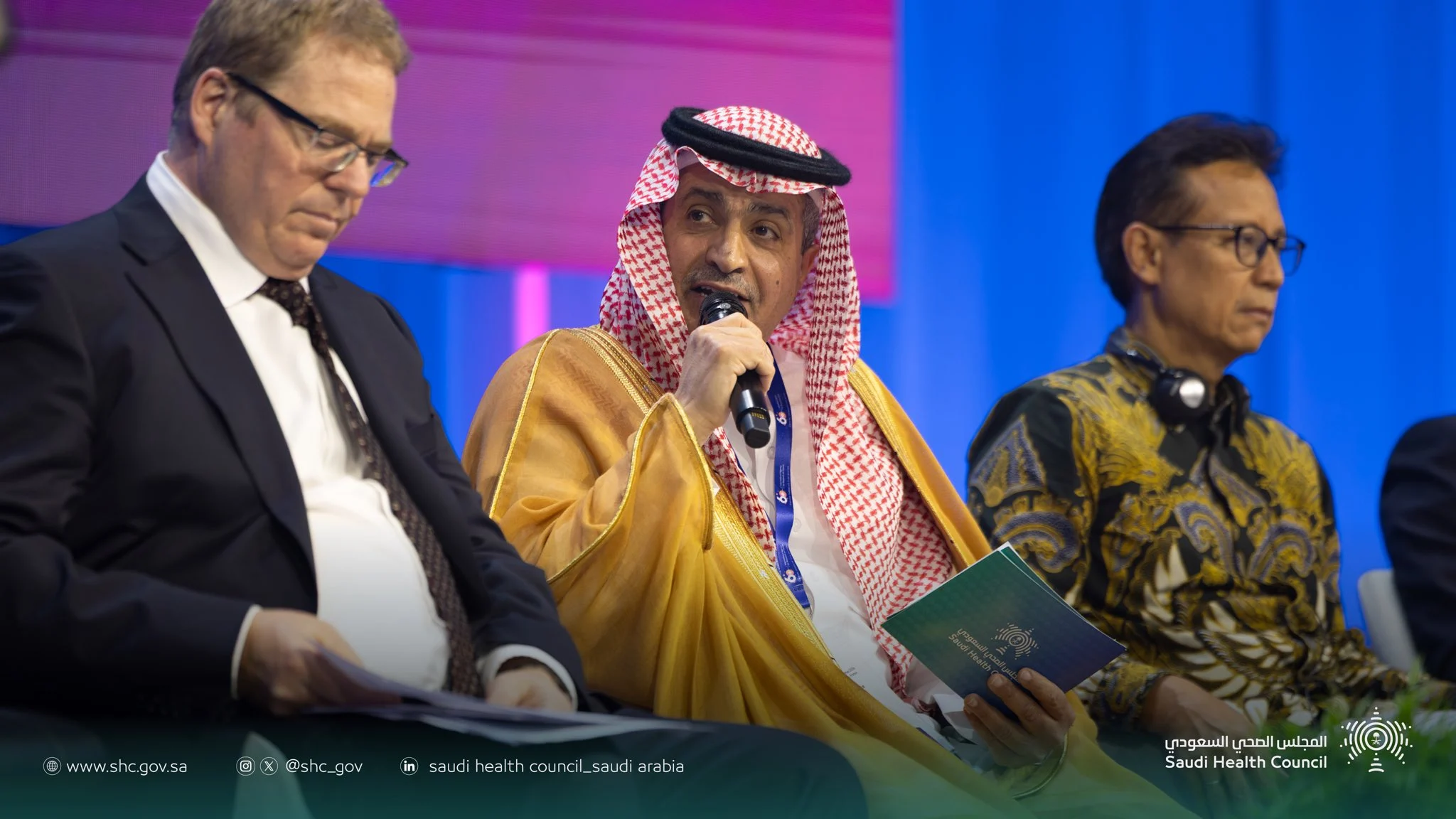
“I was delighted to participate in the International Scientific Conference and the celebration of the 60th anniversary of the founding of the International Agency for Research on Cancer on behalf of His Excellency the Minister of Health, Chairman of the Saudi Health Council, with the participation of health ministers and members of the Agency, and I was honored to review the Kingdom’s efforts and achievements and what has been accomplished from the targets of the Kingdom’s Vision 2030”
“That’s a wrap on IARC60!
From knowledge-sharing to meaningful connections, the International Agency for Research on Cancer’s international scientific conference was an inspiring experience.
We were honoured to represent Canada on the world stage alongside the CIHR Institute of Cancer Research, both learning from global leaders and contributing our expertise through a featured plenary session.
Among the most impactful moments was hearing from Dana Bellis, our inspiring patient partner from Haida Gwaii, who shared her lived experience as a caregiver for her mother with pancreatic cancer in a remote community.
Beyond the sessions, it was the moments of connection that stood out, meeting like-minded researchers, exchanging ideas, and gathering Canadians together to celebrate our collective impact.
Advancing cancer control takes a global community.
To take on cancer, it takes all of us. It takes a society.”