(SOUNDBITE OF THE BIGTOP ORCHESTRA’S “TEETER BOARD: FOLIES BERGERE (MARCH AND TWO-STEP)”)
TAMARA KEITH, HOST:
Hey there, it’s the NPR POLITICS PODCAST. I’m Tamara Keith. I cover politics.
XIMENA BUSTILLO, BYLINE: I’m Ximena Bustillo, and I cover immigration policy.
FRANCO ORDOÑEZ, BYLINE: And I’m Franco Ordoñez. I cover the White House.
KEITH: Today on the show, Markwayne Mullin took over as secretary of Homeland Security about two months ago. We’re going to take a look at how he’s making his mark on immigration enforcement. And, Ximena, I want to start with you. What changes have you seen since Mullin came on the job?
BUSTILLO: Mullin’s goal was to take DHS out of the headlines. That is what he said during his confirmation hearing. He didn’t want essentially the big press about immigration tactics and the use of force that was being used, particularly in cities like Minneapolis, that ultimately did lead to the death of two U.S. citizens there. He wanted to, you know, come into the agency, get an understanding of everything that he’s working with and dealing with, and then kind of see how to move forward on the Trump mass deportation campaign.
ORDOÑEZ: Yeah. I think it’s kind of like a, you know, kind of a pulling away from the dramatic spectacle raids that we saw in Minneapolis and other parts of the country, but clearly kind of, like, broader enforcement measures are still moving forward. And I’d say we really got a big display of that – you know, that effort at least this week and how it may play a role in kind of the campaign for the midterms. Trump had his, you know, big Cabinet meeting yesterday. He kicked off the meeting talking about how secure the border was, how reductions in the amount of fentanyl were coming across. And it wasn’t just Trump. You know, several Cabinet officials spoke. Secretary of State Marco Rubio also talked about immigration and the border, and Mullin also spoke at the Cabinet meeting, where he talked about these demonstrations at an immigration facility in New Jersey, where there’s been some hunger strikes.
(SOUNDBITE OF ARCHIVED RECORDING)
MARKWAYNE MULLIN: They say that they’re – that it’s because they’re on a hunger strike when there was only a handful of individuals that was refusing to eat because they want their ethnic group – or their ethnic right food. Well, they can go back to the country and get whatever food they want. The fact is, we’re giving them the calories they want. This isn’t Holiday Inn. We’re giving them sanitation.
KEITH: Yeah. And later in an interview on Fox News, he indicated that they were getting the required number of calories, meeting a statutory requirement. Ximena, what do you make of those comments?
BUSTILLO: You know, those comments are in response to kind of a resurfacing of concern over detention conditions. That hunger strike and then those protests happened at Delaney Hall, which is a detention facility in New Jersey. And, you know, this is something that we’ve kind of seen often in the last year of the first year of the Trump administration, where, you know, you have Democratic members of Congress try and make unannounced visits to these detention centers to check in on the conditions, and sometimes they were let in and sometimes they weren’t. And so if they were not let in, that did sometimes lead to direct clashes with law enforcement.
And so over the weekend, that really kind of started to boil over again in a way that we haven’t seen the last two, three-ish months with, you know, Senator Andy Kim as well as Cory Booker, both from New Jersey, you know, kind of being at the center of this pushback. And so now you are starting to see Mullin a little bit more in front of the camera than that quiet approach that he wanted to take at the start of the year and say, this is a detention facility. It’s not a hotel. And kind of beginning to have some of those, like, sharper, almost, like, clapback moments to defend the work that his agency is doing.
KEITH: Yeah. I do think that it’s fascinating that while you talk about him wanting to maybe have a lower profile, maybe not have the clashes in the street, he is suddenly making the rounds on cable, or I should say, on Fox News, multiple programs on Fox News this week, and he is talking about something else as well, which is potentially not allowing international flights into so-called sanctuary cities. What is he actually proposing there?
BUSTILLO: I mean, he is proposing to take the Customs and Border Protection officials that are under DHS and do work at ports of entry, which include airports, and essentially pulling them out of that work, which, you know, in a way, is under his purview. You know, we have seen other secretaries and even other presidents, you know, move border agents and officials from ports of entry, you know, around to supply one area, more or less another area that has resulted in port closures, which does impact international travel and international trade. And so this being proposed at the airport level almost is a much bigger explosive example of flexing that power.
Now, this is also being proposed at a very peak time for air travel. It is summer, which is always a time in which tourists come to the country, tourists – Americans go out of the country to go on vacation. We also have the World Cup coming up in a few weeks. And, you know, it is really interesting that he is proposing to make this move at this time, when, you know, DHS is also an agency that is very involved in securing the World Cup and the logistics behind the World Cup.
KEITH: Yeah. And also at a time when international travel to the United States is way down for a number of reasons, throwing that kind of wrench. Like, if you want to stay out of the headlines, don’t shut down flights.
ORDOÑEZ: This would be – not only that, this would be such a big deal, essentially, you know, shutting down international travel at major airports in Democratic-led cities during a massive, you know, event, the World Cup, when millions of travelers are going to be coming into the country. I will also note, though, as radical as this idea may sound, and it really is, I think a point that this administration also wants to make is that this is part of a messaging narrative that they’re looking to push forward. I mean, for this administration, as we’ve reported here so many times, Trump is as much about messaging sometimes as he is about the policy itself.
As you noted, these statements were made on Fox News. Mullin actually made these on “The Sean Hannity Show,” which is very much a MAGA, you know, listener base. So this was speaking to a particular audience that is very interested in this kind of thing. So I would argue this is very much a clear message to Trump’s supporters, kind of stoke the base to show that this is still a major priority.
KEITH: All right, we are going to take a quick break. And when we come back, some of the quiet things that are being done by the Department of Homeland Security to help meet deportation targets.
And we’re back. And, Ximena, you’ve been reporting on some of the more behind-the-scenes strategies that the administration is using to meet its deportation targets. Can you give us some examples?
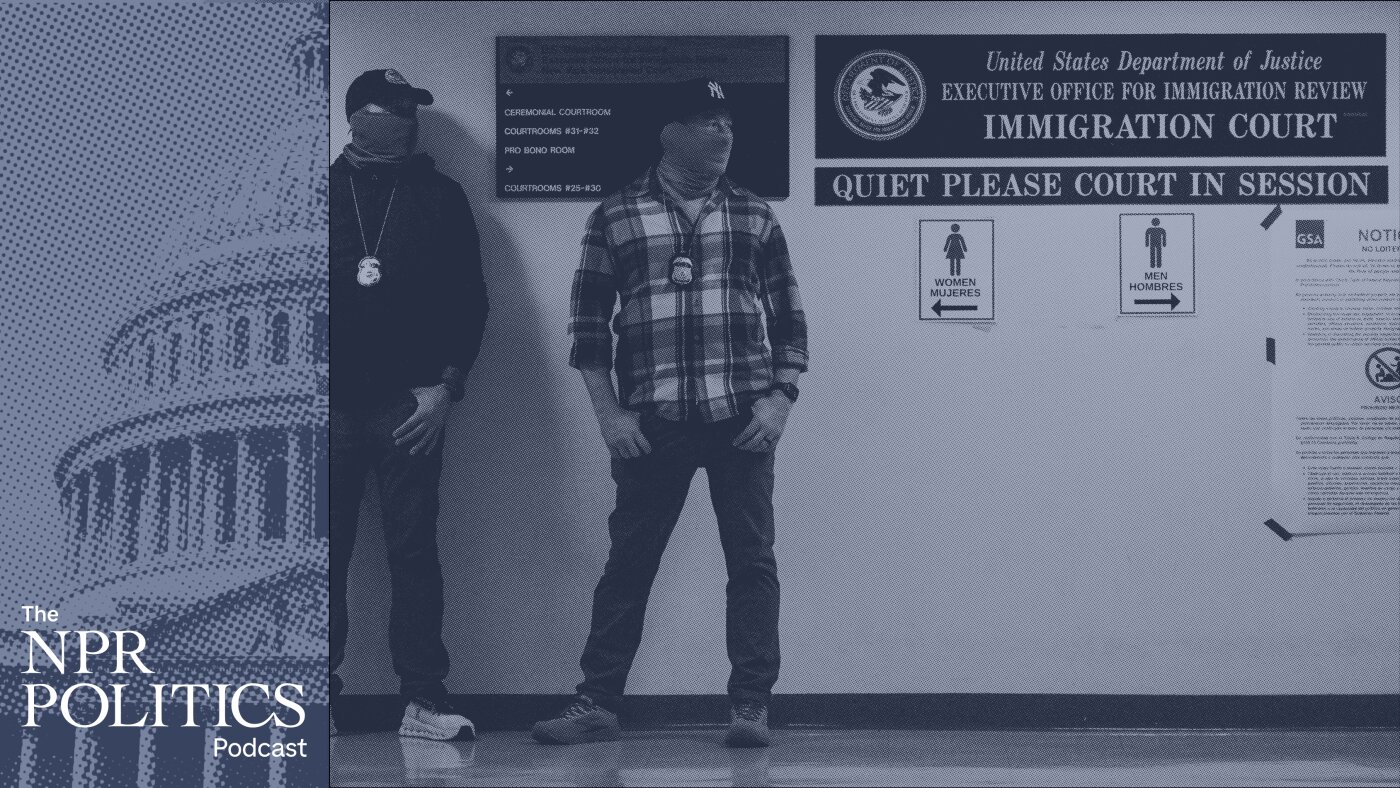
BUSTILLO: Yeah. I mean, let’s kind of think about the two pathways that, you know, immigrants take to claim some sort of legal status in the United States or protection from deportation. And that is either A, through an agency called USCIS, or B, through immigration courts, to argue against a potential deportation. So with the immigration courts – let’s kind of start with that – we have seen a major reshaping of immigration courts over, like, the last year and a half. Over a hundred and thirty immigration judges have been terminated, according to our independent count here at NPR. We have seen the start of closure of courts with the closing of the court in San Francisco. We have seen cases be delayed and pushed out to 2028, even 2029. But then at the same time, they just announced the largest class ever of immigration judges to be brought on to the Justice Department. Many of those have a government background, meaning they worked for ICE or DHS on the legal side, and then are coming over to be an immigration judge, which is very normal pathway, but now it seems to be one of the only pathways. And they are pressuring judges to move through specific cases a lot faster.
KEITH: OK.
BUSTILLO: So the most recent version of this is, you know, immigration lawyers have noticed a pattern of what are being called mega hearings. So essentially, like, a hundred plus people are getting a notice – or maybe not getting a notice – that they need to appear for their initial court hearing in immigration court very suddenly, like, let’s say within the next month. These are hearings that were not previously scheduled until 2027 or 2028. These notices are not necessarily getting to people via the mail on time.
KEITH: So people might have a calendar entry for, I need to go to court in 2028, and then all of a sudden, they’re…
BUSTILLO: It’s next week.
KEITH: Yeah.
BUSTILLO: And…
KEITH: And they may not have heard about it.
BUSTILLO: And they may not have heard about it. They may not be paying attention to the ins and outs of immigration courts at the moment. They may very likely not have an attorney that is paying attention for them. And so what happens is if people don’t come to that initial hearing, that gives the immigration judge license to give an approval on a final order for deportation.
KEITH: And these sort of mega hearings, is that the way things have traditionally been done, or is that an innovation?
BUSTILLO: No, it is a newer innovation. So normally these initial hearings – they are kind of batch hearings. You’ll go into a courtroom and there will be, like, 20 to 30 people sitting in, you know, the wooden benches and the judge calls them up one at a time. They’re not long individually. They’re, you know, 20 minutes each, 30 minutes each ’cause it’s just for the judge to say, you know, we’re acknowledging that, like, you are starting your immigration proceedings. You will be, you know, contesting your deportation, etc., etc. There’s a lot of procedural stuff that goes into that.
The thought also of having to do that one at a time for a hundred people is also just logistically very challenging. Some of the immigration courthouses that I’ve been in don’t really have waiting areas, and these courtrooms cannot house a hundred people. There are a lot of concerns about just physical logistics, space and safety with that. And then, you know, sometimes people could be in line for security and maybe miss the roll call or go to the wrong room or, you know, there’s just so many ways that things can go wrong. But when it goes wrong, that is essentially, like, a loss in your case.
ORDOÑEZ: Yeah. I mean, I will say, just to get the administration side, I mean, they have often pointed to the number of individuals who don’t show up for their cases, regardless. So I think that is part of the thinking there as well as, well, they’re not going to show up anyway, so let’s kind of group them all together.
BUSTILLO: Which is – you know, immigration lawyers would argue that the administration has created a condition of fear for people to not show up. You know, by and large most people do show up to their immigration court hearings, but you might recall that last summer, there was a really big enforcement campaign within these immigration courthouses where, you know, people were kind of torn between, do I miss my court hearing and have a guaranteed order of removal or do I go do the thing and then maybe get detained on my way out anyways? And we saw trends that really showed that enforcement campaign caused a significant drop in people attending, you know, in the vein of, like, more of these orders for removal were issued. But still, most people do go to court. Now, you’re right in that, you know, the Trump administration has long seen the courts, including these courts, as an obstacle to fulfilling their mass deportation campaign and promise.
KEITH: But they have figured out a way to do it in bulk now.
BUSTILLO: Yes. But that is, like, not even counting the other half of this, which is on the USCIS side, where we’re seeing more people falling out of status, more people’s paperwork not getting renewed, more people’s applications just not being decided on in time, which is another avenue to then provide essentially a population for immigration enforcement to target.
KEITH: OK. And that is you referring to reporting that you have done on the DACA program, people known as Dreamers. So tell us a little bit more about your reporting on that.
BUSTILLO: DACA recipients – they have a window in which they can submit an application to renew not just their DACA, but their work permit that DACA allows them to have. And it’s about four to five months prior to the expiration date of their DACA. But I have seen recent communication between USCIS and members of Congress that say it can take more than six months for the agency to issue a decision on that DACA renewal, which means that there is at least a one-month gap between someone, you know, having their DACA expire and then getting their renewal approved or denied. Now, that is a huge problem because the demographics for DACA recipients have changed over the last 14 years that this program has been in effect. It is older. It is in a different stage of life. The average DACA recipient is 31.
KEITH: Yeah. I mean, we talk about Dreamers as kids. But…
BUSTILLO: Yeah.
KEITH: …Some of these people are legitimately middle-aged. Thirty-one is not middle-aged.
BUSTILLO: Thirty-one is not middle-aged.
KEITH: Just to be clear. I know that.
ORDOÑEZ: They’re young, in my opinion.
BUSTILLO: Yeah. Most DACA recipients are between the ages of 31 and 44. They have jobs, they have children, they have aging parents, they have mortgages, they have a host of responsibilities that they did not necessarily have when they first enrolled in the program, even if they were, you know, 21 or 25 when they first enrolled the program. So essentially, what we have seen over the last few months is the administration has slowed the processing of many applications, including DACA. And so that is resulting in what at least appears to be more frequent lapses in status, which puts people out of work, makes it really difficult for people to sustain their families.
KEITH: Franco, President Trump, shortly after he won the election in 2024, was on NBC’s “Meet The Press,” and he said he wanted to find a legislative solution to allow DACA recipients to stay in the country. Was that just talk?
ORDOÑEZ: You know, I mean, it is actually kind of the way that generally he has felt in the first administration. He was very sympathetic to Dreamers and long talked about the soft spot he had for the children who, you know, had no power over these decisions made by their parents to come into the country illegally. But as Ximena is pointing out, these are not children anymore. And it does seem that he, or at least his team, is certainly abandoning some of that earlier sympathy in exchange for more of these hardline enforcement policies. I mean, his team has also repeatedly stressed that, you know, DACA recipients are not automatically immune from enforcement, and we’re seeing more and more cases of DACA recipients being detained.
BUSTILLO: And the administration has been very quick to assert the fact that DACA is not legal status. It is a delay in immigration enforcement on yourself. But, you know, this has generally been one of the handful of groups that has received a lot of bipartisan support. There have been various pieces of legislation in Congress volleyed back and forth that make it through one chamber but not the other, and then the other but not the one, to try and create some sort of long-term solution, which is what former President Barack Obama intended. You know, when he made that announcement in the Rose Garden, he said, this is not amnesty. He said, this is a stopgap measure to provide more time to, like, come up with a more permanent fix.
KEITH: I want to finish where we started, which is, you know, immigration was one of the keys to President Trump’s electoral success, but it has become something of a weakness because even many Trump supporters felt that the administration went too far. That’s why we saw a dialing back of the rhetoric, at least from the Department of Homeland Security. How do you see this playing in the midterms? I certainly get a sense that President Trump talked about immigration in that Cabinet meeting because he wants it to be one of his strengths again.
ORDOÑEZ: I mean, it’s his biggest domestic policy. I mean, I think there is no question that the hard tactics from earlier in the year in Minneapolis and other cities turned off voters, especially independents and even moderate Republicans who are going to be crucial in the midterms. Also Latino voters who he won. You know, there’s actually a new UnidosUS poll that found that 1 in 4 Hispanic Trump voters say they would not vote for him again if given the choice. You know, that’s not a poll that many Republicans are liking to see. But Trump is not someone who moderates his message. He’s not someone who necessarily changes course.
And I would also say that the reality is that immigration continues to be very popular with the Trump base, and that’s why I think you’re seeing him say it so often when you’re seeing his different Cabinet members on shows in Fox News and things like that. I would also say that we are a long way away from November, and I think the Republicans are banking on the idea that more and more people, as time goes on, are going to forget or at least think less about the spectacle and the focus that was on Minneapolis and those things. And instead, focus on the message that the administration is now trying to push, which is one on this is an issue of national security, and this is an issue of public safety.
BUSTILLO: From the immigration policy perspective, I think I am really going to be watching if anybody really reacts to the changes happening in immigration courts and at USCIS because these are, you know, the sleepy parts. You know, it’s not ICE. It’s not Border Patrol. You’re not seeing them out there, but they are the way people get to stay in the country. And we are seeing this administration put stricter and stricter and stricter limits on that. Now, during the first Trump administration, you know, as Franco mentioned, there was, you know, kind of the sympathy towards DACA.
But Trump did try to repeal DACA, and it lost in the court, the literal court, and then it lost in the court of public opinion as well, which is why, you know, Trump, I think, now tends to be more sympathetic and why he has not moved to rescind DACA this time around from a regulatory perspective. But does the public notice that their neighbors who are on DACA or their neighbors who are on a work permit or their neighbors that are on a green card are losing their status, are, you know, running into troubles with the government? Like, that is all in paperwork and filings and really not public spaces. And so that is the way we are seeing this administration really reshape our immigration system. And so it is a question of, you know, do voters notice?
KEITH: Yeah. I think that’s a very good question, and one we’ll be watching. All right, let’s leave it there for today. I’m Tamara Keith. I cover politics.
BUSTILLO: I’m Ximena Bustillo, and I cover immigration policy.
ORDOÑEZ: And I’m Franco Ordoñez. I cover the White House.
KEITH: And thank you for listening to the NPR POLITICS PODCAST.
(SOUNDBITE OF THE BIGTOP ORCHESTRA’S “TEETER BOARD: FOLIES BERGERE (MARCH AND TWO-STEP)”)
Copyright © 2026 NPR. All rights reserved. Visit our website terms of use and permissions pages at www.npr.org for further information.
Accuracy and availability of NPR transcripts may vary. Transcript text may be revised to correct errors or match updates to audio. Audio on npr.org may be edited after its original broadcast or publication. The authoritative record of NPR’s programming is the audio record.