
Listen to this article
Estimated 2 minutes
The audio version of this article is generated by AI-based technology. Mispronunciations can occur. We are working with our partners to continually review and improve the results.
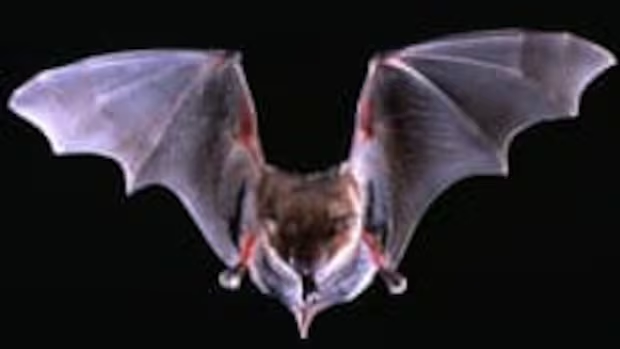
A bat in the Haldimand-Norfolk region has been confirmed as positive for rabies — prompting a warning from Grand Erie Public Health for residents to avoid contact with bats and other wild animals.
The health unit said in a Tuesday news release that people who were exposed to the bat are receiving treatment at Haldimand War Memorial Hospital in Dunnville.
While the overall risk of rabies exposure in the region remains low, public health officials say the case serves as an important reminder to stay clear of wild animals.
“Contact with wild animals, particularly bats, can pose a serious health risk,” Dr. Jason Malenfant, Grand Erie Public Health’s medical officer of health, said in the news release.
“The fact that a bat in our region tested positive is concerning but not unexpected.”
Rabies is spread through the saliva of an infected animal when it comes into contact with a break in the skin or a mucous membrane. However, if there has been no direct contact, public officials say there is no risk.
Rabies can be prevented in humans through a post-exposure treatment called “rabies prophylaxis,” but only if it is administered before symptoms begin.
Grand Erie Public Health is advising residents to stay away from wild animals, particularly those that appear unusually tame, injured or sick. Bats, skunks, foxes and raccoons are among the animals most commonly associated with rabies in Canada.
The health unit is also encouraging pet owners and livestock operators to ensure animals are up to date on rabies vaccinations and to take steps to prevent wildlife from entering homes and yards.
“If there is a bat in your home, please do not go near it or attempt to remove it yourself,” he said. “Please call animal control to assist with this.”
Anyone bitten or scratched by a wild or domestic animal should immediately wash the area with soap and water, seek medical attention and report the incident to Grand Erie Public Health.