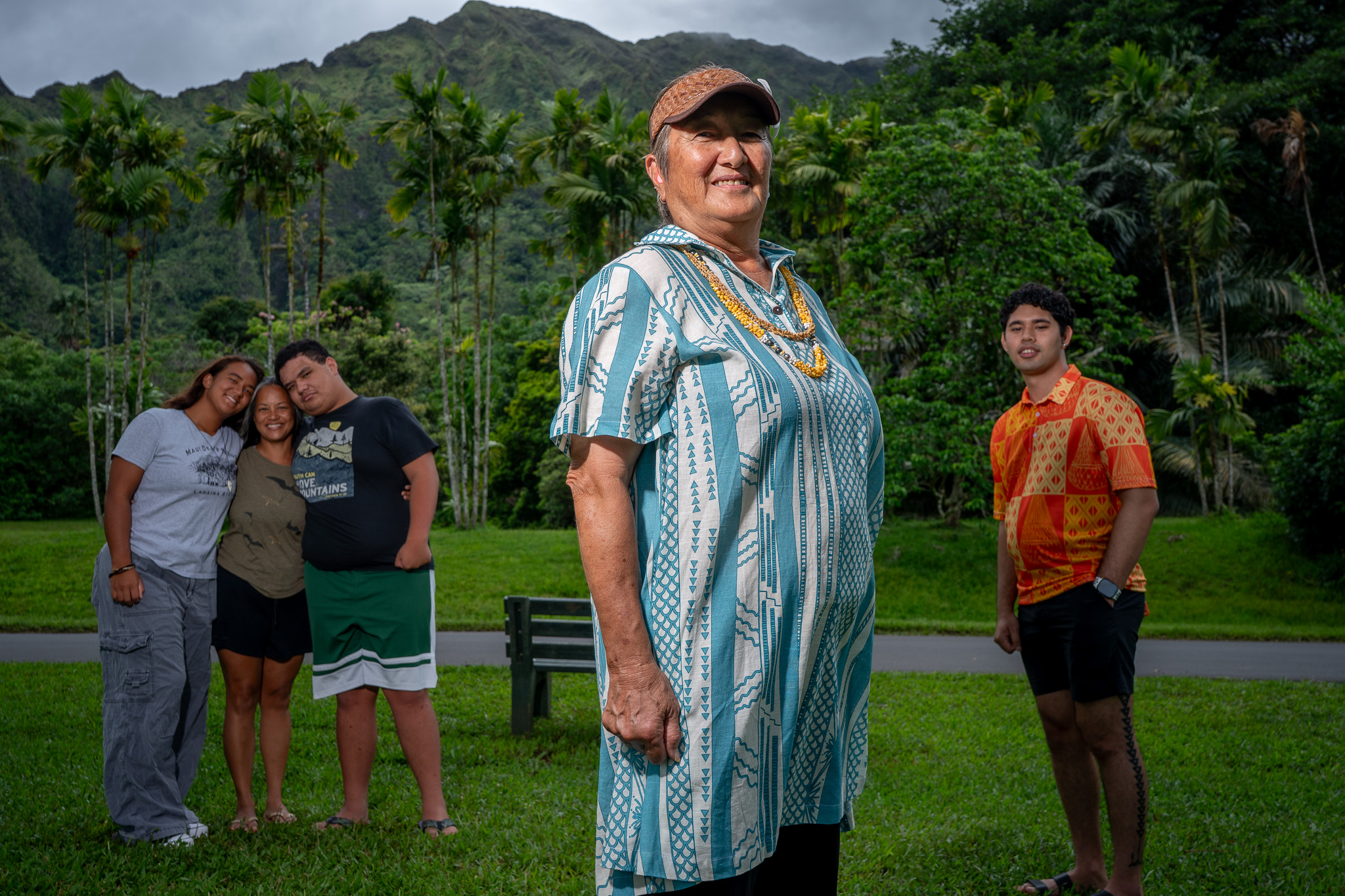
Growing up on Oʻahu in the 1950s, Maile Keamoai-Kane learned a lot from her father: how to prepare laulau, gather ʻopihi, and catch and clean fish. He never excluded her.
But being deaf, Keamoai-Kane struggled to learn another key aspect of Hawaiian culture: the language. Her father did the best he could teaching her improvised gestures with his hands to teach her some words, but there was no established sign language based in ʻŌlelo Hawaiʻi, the Hawaiian language.
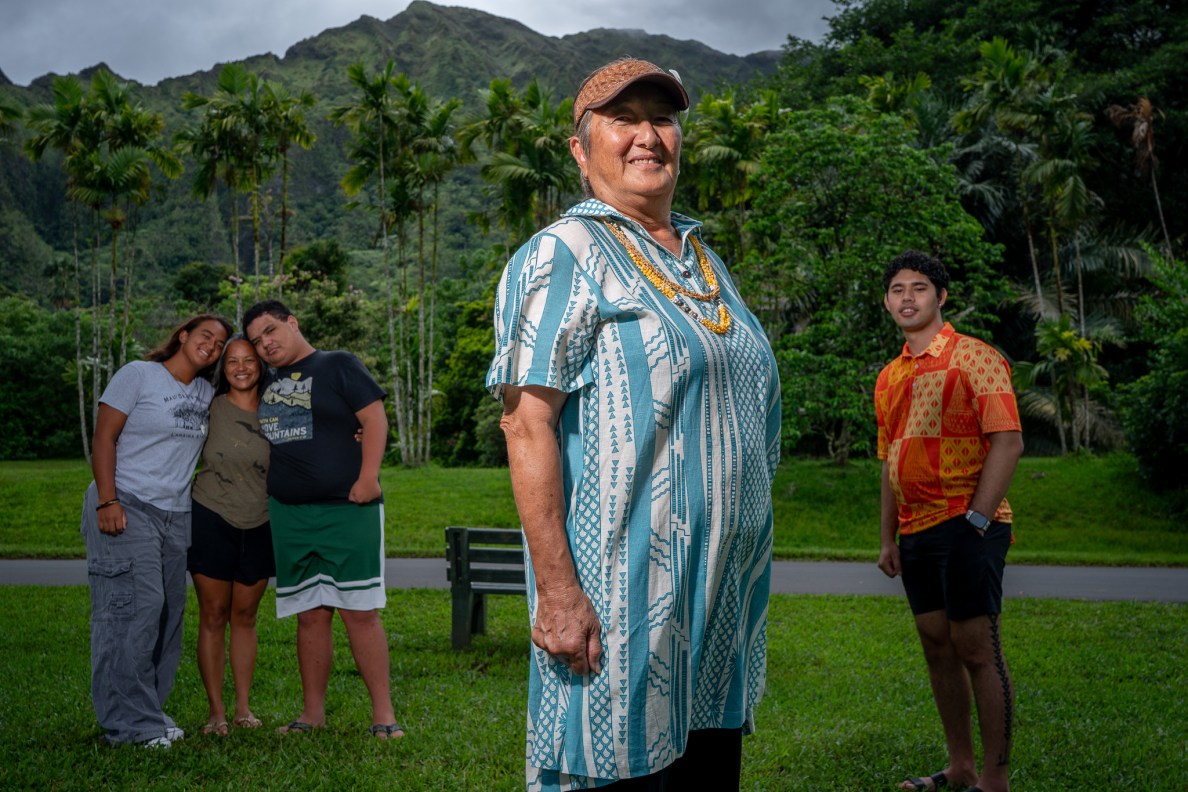
Instead, as a student at the Hawaiʻi School for the Deaf and the Blind, Keamoai-Kane said she was forced to read lips. Later in high school, she learned American Sign Language, or ASL, which uses signs based in American and French culture.
“I wanted to learn ʻŌlelo Hawaiʻi,” she said. “But at the time, the deaf school did not have a program. That is one of my regrets.”
Today, there is a small but growing effort to establish hand signs rooted in Hawaiian words and cultural values. Called ʻŌlelo Hawaiʻi Kuhi Lima — Hawaiian Language Hand Signs — the community-led initiative is working to create signs that preserve and honor ʻŌlelo and make the islands’ Native language more accessible to the Deaf community.
“We want to ensure that Deaf Kānaka have a meaningful place within the greater lāhui (collective identity),” said Keamoai-Kane, whose married name is Paongo.
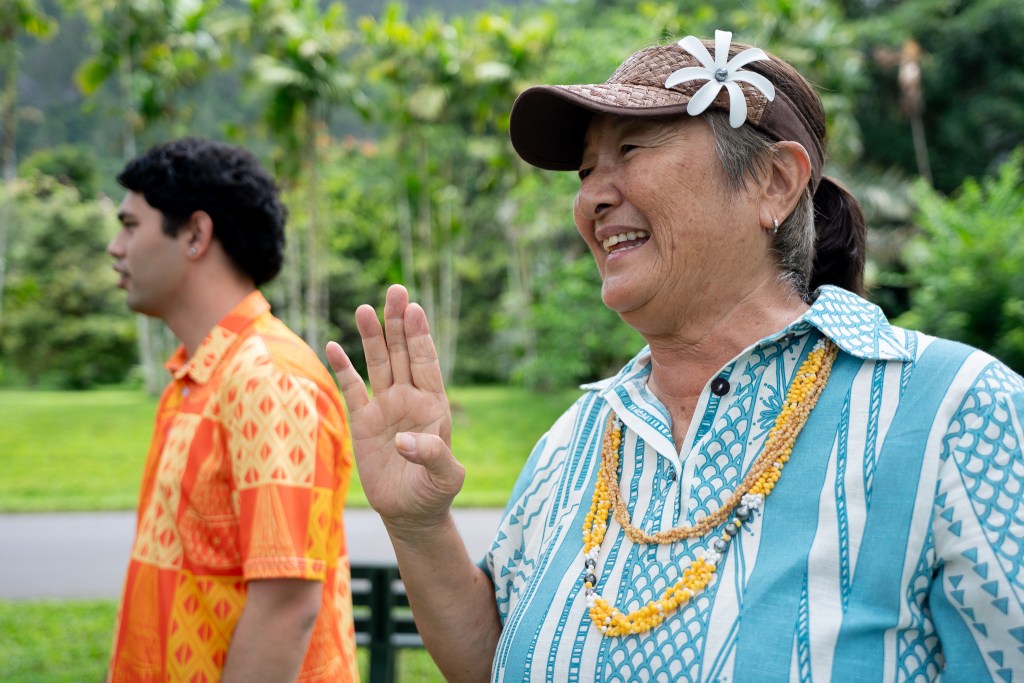
The effort was started in 2024 by University of Hawaiʻi student Kekai Kaaumoana-Cummings, who is majoring in ʻŌlelo Hawaiʻi and is the first deaf person at UH Mānoa in Kawaihuelani Ka Hālau ʻŌlelo Hawaiʻi — the Department of Hawaiian Language.
Kaaumoana-Cummings hopes to become a teacher and bridge the gap so Deaf Native Hawaiians have greater access to learning their Indigenous language.
“The project aims to develop new programs for Hawaiian immersion education that are academically accessible and community-based, providing opportunities for future growth,” he wrote in messages with Civil Beat.
The group has already created and discussed dozens of signs, but the system is still unofficial and developing. Some signs focus on everyday vocabulary, Hawaiian cultural concepts and ʻŌlelo Hawaiʻi grammar structures.
Kaaumoana-Cummings shared that they are still organizing and developing the signs carefully before publicly releasing an official list. However, simple words such as no, yes, house, land and mountain have been established.
In ASL, “house” is signed as though you were to outline the shape of a house with both hands, starting from the tip of the roof down to the sides of the walls. In ʻŌlelo Hawaiʻi Kuhi Lima, “hale” is signed with fingertips touching to form the shape of a roof, tapping them together.
“ʻŌlelo Hawaiʻi Kuhi Lima continues to evolve,” Kaaumoana-Cummings wrote, “laying a foundation for future generations to learn, use, and expand our language visually.”
Sign Languages In Hawaiʻi
Similar to spoken languages, sign languages vary by country, according to Keane Nakapueo-Garcia, a hearing PhD student at UH Hilo who is currently doing his own research into the signs historically used by Deaf Native Hawaiians to communicate.
For example, American, British, Australian and New Zealand sign languages are all distinct despite those countries sharing English as a spoken language. And American Sign Language (ASL) is not as simple as English communicated through hand movements. It is an independent language with its own culture — Deaf culture.
There is evidence that hand signs were used in Hawaiʻi prior to the introduction of ASL in the islands in the 1940s, and University of Hawaiʻi researchers in 2013 declared the existence of a Hawaiʻi Sign Language. But those signs don’t have a foundation in ʻŌlelo Hawaiʻi or Native Hawaiian culture, according to Kaaumoana-Cummings and Nakapueo-Garcia.
HSL is based on different cultures and spoken languages that were prevalent during the plantation-era — including Chinese, Japanese and Filipino — and is more akin to Pidgin. For example, in HSL the sign for “yellow” is related to cutting pineapple, a reference to plantation work that has no relation to ʻŌlelo Hawaiʻi.
The work of ʻŌlelo Hawaiʻi Kuhi Lima is about protecting Native Hawaiian history and identity, Keamoai-Kane wrote in messages with Civil Beat.
“Our group came together because we saw an urgent need to give a clear and primary voice to Deaf Kānaka Maoli,” she said. “To tell our own stories, on our own terms.”
Similar to how ʻŌlelo Hawaiʻi was banned in schools in 1896, Nakapueo-Garcia said Indigenous sign languages were also often discouraged or erased as Native communities were pressured to adopt English and other dominant forms of communication such as ASL or learning how to speak or read lips.
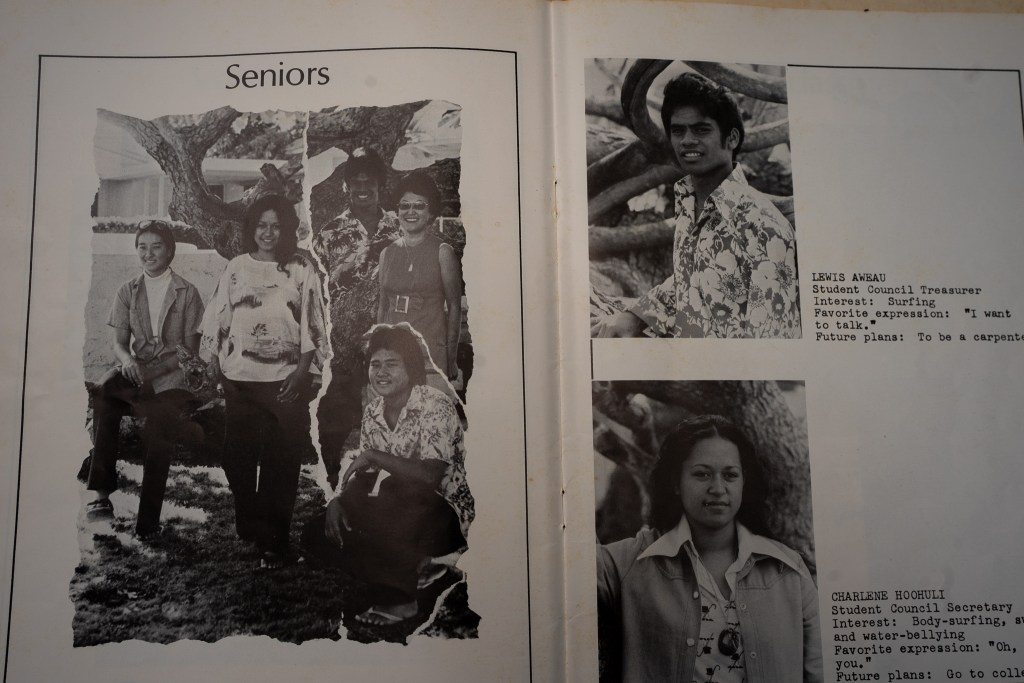
Therefore, much about how Deaf people communicated in decades past is unknown. Throughout his interviews with Deaf kūpuna, Nakapueo-Garcia observed signs he did not recognize.
“As they share their stories, I’m extrapolating different signs that they use. I recognized they are not ASL, and I recognized, from my time with HSL, that those signs are not HSL either,” Nakapueo-Garcia said. “I’m just trying to gather all the Indigenous signs that are out there, that are spread out across the pae ʻāina (archipelago).”
ʻŌlelo Hawaiʻi signs are now being developed by ʻŌlelo Hawaiʻi Kuhi Lima as other Native communities make similar efforts on the U.S. continent.
Melanie McKay-Cody is a deaf assistant professor of Cherokee, Shawnee, Powhatan and Montauk descent who is advising Nakapueo-Garcia. Her initial research revitalizing endangered Indigenous sign languages started with Navajo sign language in 1993 at the University of Arizona. She has since expanded her studies to various tribes working alongside an authentic signer of North American Indian Sign Language.
“We are at the point where we are almost complete with a video dictionary that features all the now 14 tribes of American Indians, and there are some differences,” she said, through an interpreter.
This work is important, she said, because “this is a part of their identity and their heritage.”

Blending Hawaiian And Deaf Cultures
An ʻŌlelo-based sign language would mean a lot to people like Nikki Kepoʻo, a Native Hawaiian mom of two in Kahaluʻu.
Her hearing daughter Rebekah Pualokomaika’i Kepoʻo, 17, is enrolled at Ke Kula ‘o Samuel M. Kamakau, a Hawaiian immersion school in Kāneʻohe. Her deaf son, Caleb La’aikeakua Kepoʻo, 14, goes to the Hawaiʻi School for the Deaf and the Blind in Honolulu.
Kepoʻo always planned for her son to enroll in the same Hawaiian immersion program as his sister. When her son was identified as deaf as a baby, she wanted to ensure he was fully immersed in both Native Hawaiian and Deaf culture.
But in her opinion, the immersion school isn’t equipped to serve her son with adequate resources and educators steeped in Deaf culture.
She expressed the hope for a formal bilingual-bicultural experience within immersion schools — a system where both ʻŌlelo Hawaiʻi and Native Hawaiian culture, and ASL and Deaf culture, can be integrated.
“Had there been an option, I would have loved that, because then both my kids would grow up in that same environment, same culture,” she said.
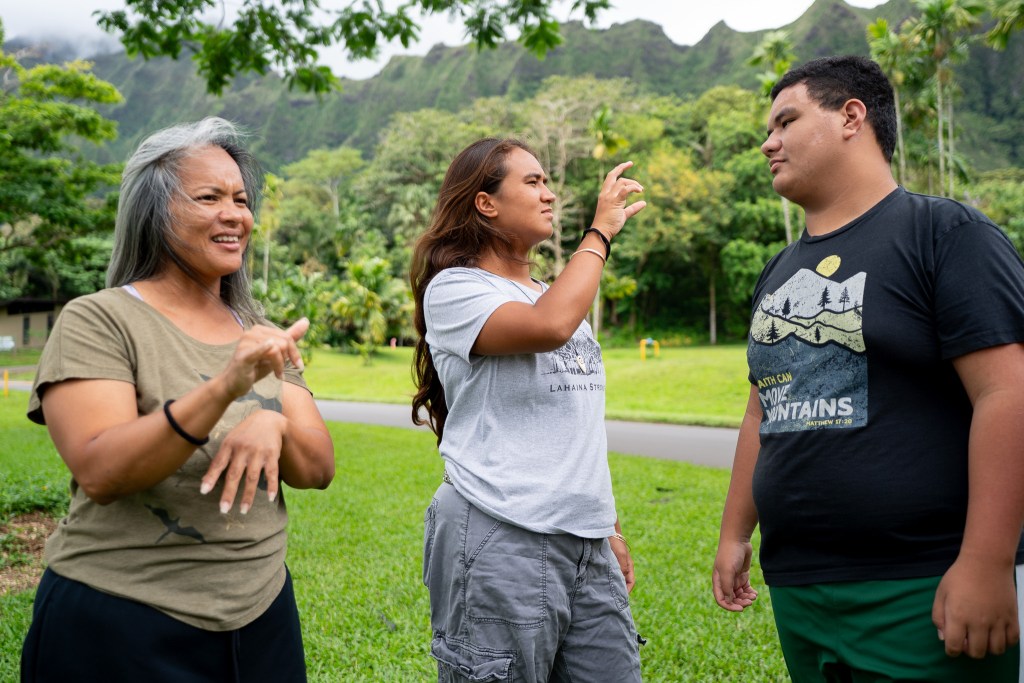
Unlike immersion schools, Hawaiʻi School for the Deaf and the Blind has a more American-focused education centered in ASL and American History, according to Nakapueo-Garcia. Kepoʻo currently sits on the school’s community council and has been a strong advocate for providing the Deaf students with cultural opportunities.
After he earns his PhD, Nakapueo-Garcia’s goal is to create a program in Hawaiian immersion schools for Deaf keiki and support families like the Kepoʻo ʻohana. He hopes to expand access to immersion education and create a repository of Native signs and have them available for the community to use.
“When they develop a sign language, they can have it in both the deaf school, so deaf kids can learn it as a second language,” Kepoʻo said, “and then at Hawaiian immersion, so that hearing kids can also have the option of signing in their Native language.”
Aunty Keamoai-Kane hopes future generations of deaf children in Hawaiʻi will receive the education, support and opportunities that were often unavailable to her generation.
“My dream is for Deaf people to no longer be left out or left behind,” she said. “And that young and old generations become more comfortable in communicating via ‘Ōlelo Hawai’i Kuhi Lima.”