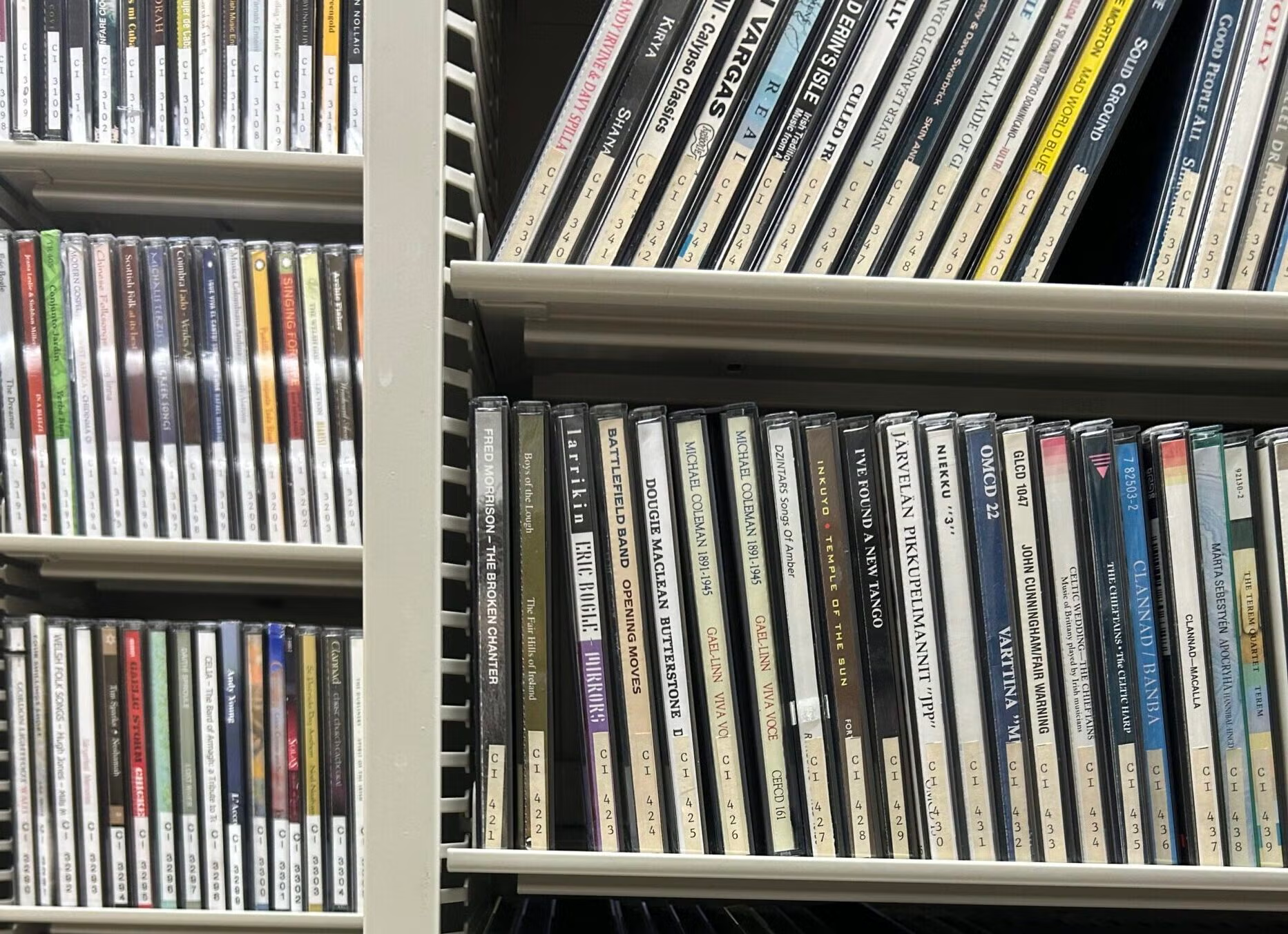
Another month has passed, which means I’ve listened to more great albums in WPR’s music library. Here’s the second installment of my library picks, where I tell you about all of the cool music I discover in our shelves.
Strunz & Farah: ‘Stringweave’
I was poking around WPR’s online music database one day, looking for something to play on my show, when I came across Strunz & Farah, who were listed as a mix between Costa Rican and Iranian music. I spent the rest of my day listening to their discography and slowly becoming obsessed with them.
Understanding Wisconsin, Together.
WPR’s “Wisconsin Today” newsletter keeps you connected to the state you love without feeling overwhelmed. No paywall. No agenda. No corporate filter.
Jorge Strunz and Adreshir Farah, both guitarists, met in the United States in 1979. I’m always drawn to Persian music of any sort, in part because of my Iranian heritage but also because it’s just good. The guitar is definitely more prevalent in Latin American music; I’ve noticed it less in Iranian music, which tends to lean more towards stringed instruments like the tar, kamancheh and oud. Iranian music is well-suited for the guitar, though, which is something I learned after listening to Babak Afshar’s album “Guitar Melodies,” which arranges Persian music for acoustic guitar and is just beautiful.
There’s a throughline between music from the Middle East and Latin America, probably due to the cultural crossroads between North Africa and Spain, which then brought those Middle Eastern rhythms to Latin America through Spanish colonization. “Stringweave,” among other albums by Strunz & Farah, pays homage to these musical traditions, blending them in an interesting way. My favorite piece from this album, “Laleh,” is a great example of this, mixing Persian percussion and violin (played by Iranian violinist Bijan Mortazavi) with Latin American fingerpicking. I played this track on my show in late June, and I’m excited to share more of this album on air.
Inti-Illimani: ‘Lugares Communes’
One fateful finals season in college, I stumbled across an hour-long YouTube video of instrumental folk music from the Andes. That video played on repeat as I wrote essays and studied for exams, awakening my love for Andean folk music.
Inti-Illimani is an iconic Chilean ensemble first formed in the 1960s. Their work honors traditional Andean folk music while combining it with other genres, making a beautiful fusion. One of my favorite stories of the band is when they got stranded in Italy in 1973 after the Chilean president was deposed while they were touring, leaving them without passports. They were stuck in Europe for 14 years, and later called it their “longest tour ever.”
All this is to say I was very excited to discover Inti-Illimani’s music in the shelves of our music library. This specific album has both vocal and instrumental pieces. I’ve played a couple of these pieces for my Saturday show — specifically “A la Casa del Ñandú” (which translates to hunting the ñandú, or the rhea in English, which is a type of South American ostrich) and “Mañana Quizás.” Both are great tracks that show off the beauty of Andean string and flute music.
Los Angeles Guitar Quartet: ‘LAGQ Brazil’
As a Southern California native, a part of me feels a silly sense of pride whenever I come across anything by the Los Angeles Guitar Quartet, even though I wasn’t a fan of theirs until I moved to the Midwest. (Sidenote: I did have a fangirl moment when they performed on the “Midday” with Norman Gilliland, but I played it really chill when I had to go take their photo in the studio.)
Their album of Brazilian guitar music is probably my favorite of their releases. It’s absolutely perfect listening for this time of year. They cover a wide variety of music in 54 minutes, playing samba, bossa nova and classical guitar pieces. The whole album makes me feel like I’m taking a dip in a cool pool on a warm day.