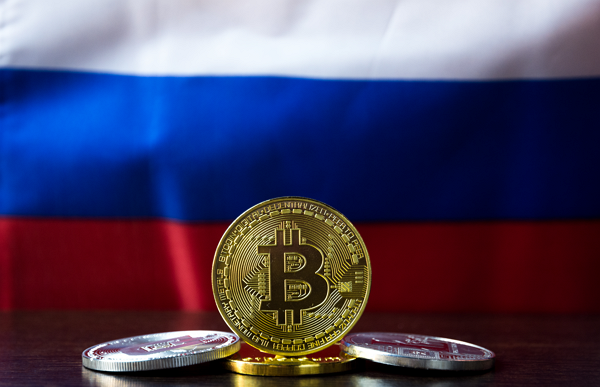
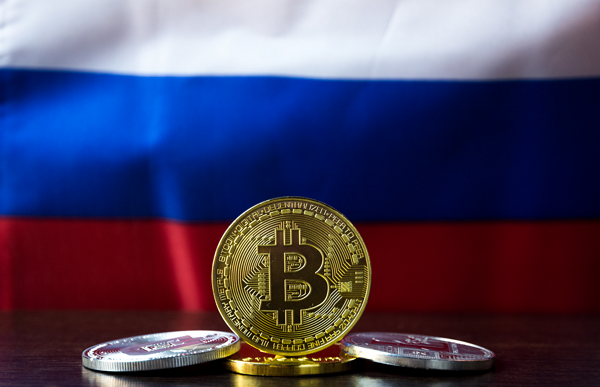
Russia’s lower house has passed a bill legalising cryptocurrency investment and trading.
On July 21, blockchain media outlet Cryptopolitan reported that the bill sets out a basic framework covering issuance, mining, custody and trading of cryptocurrencies, and opens a first route for Russian users to access the system within an institutional framework.
The State Duma, Russia’s lower house, approved the bill on “digital currency and digital rights” at its second and third readings. The bill is seen as Moscow’s most comprehensive attempt to regulate the circulation of decentralised digital currencies and Russia’s cryptocurrency market. It was submitted in April based on a new policy issued by the Central Bank of Russia last December, and 340 lawmakers voted in favour at the final review.
The core is to institutionalise the trading structure. Cryptocurrency trading in Russia will take place only on licensed and registered exchanges. Digital custodians will handle asset custody and accounting services, while brokers and asset managers will act as intermediaries between Russian exchanges and investors and between Russian traders and overseas platforms. Exchanges must also meet a minimum capital requirement of 15 million roubles.
Investment is allowed, but its use is strictly limited. The bill sets out which cryptocurrencies will be recognised within the Russian economy and where they can be used. Initially, digital assets with larger market capitalisations are expected to be prioritised for trading, and authorities have previously cited bitcoin (BTC), ether (ETH) and tether (USDT) as assets that meet current standards.
Retail investors can buy these assets as investment products, but must pass a test to confirm risks and understanding before purchasing. Ordinary Russian citizens who are non-qualified investors can buy only the most liquid assets, and holding limits will be set by the central bank. Detailed standards have not yet been disclosed, but a previously discussed benchmark was an annual purchase limit of 300,000 roubles through a single broker. Qualified investors, by contrast, can buy all cryptocurrencies without such restrictions.
Restrictions also apply to wallet use. Russian investors, regardless of whether they are qualified investors, can store and trade digital assets only through custodial wallets, while overseas-based traders can use non-custodial wallets.
Russia’s parliament also banned the use of cryptocurrencies as a means of payment for goods and services domestically. This means only the rouble and a future digital rouble will retain legal tender status in Russia. Exceptions are recognised when companies use cryptocurrencies for foreign trade settlements under sanctions, or when exchanges use cryptocurrencies to purchase other digital assets.
Key provisions of the bill will take effect on Sept. 1, 2026. The remaining provisions, including restrictions on transfers, will apply from the second half of 2027, and operators of existing digital asset platforms will be given a grace period until March 1, 2027 to obtain regulatory approval. Vladimir Chistyukhin (블라디미르 치스튜힌), deputy governor of the Central Bank of Russia, said the monetary authority must prepare more than 30 subordinate regulations by November.
The law still requires approval from the Federation Council, Russia’s upper house, and the signature of President Vladimir Putin. Russia’s move to bring cryptocurrencies into the mainstream is therefore expected to take shape after the bill’s passage through the drafting and approval of subordinate regulations.