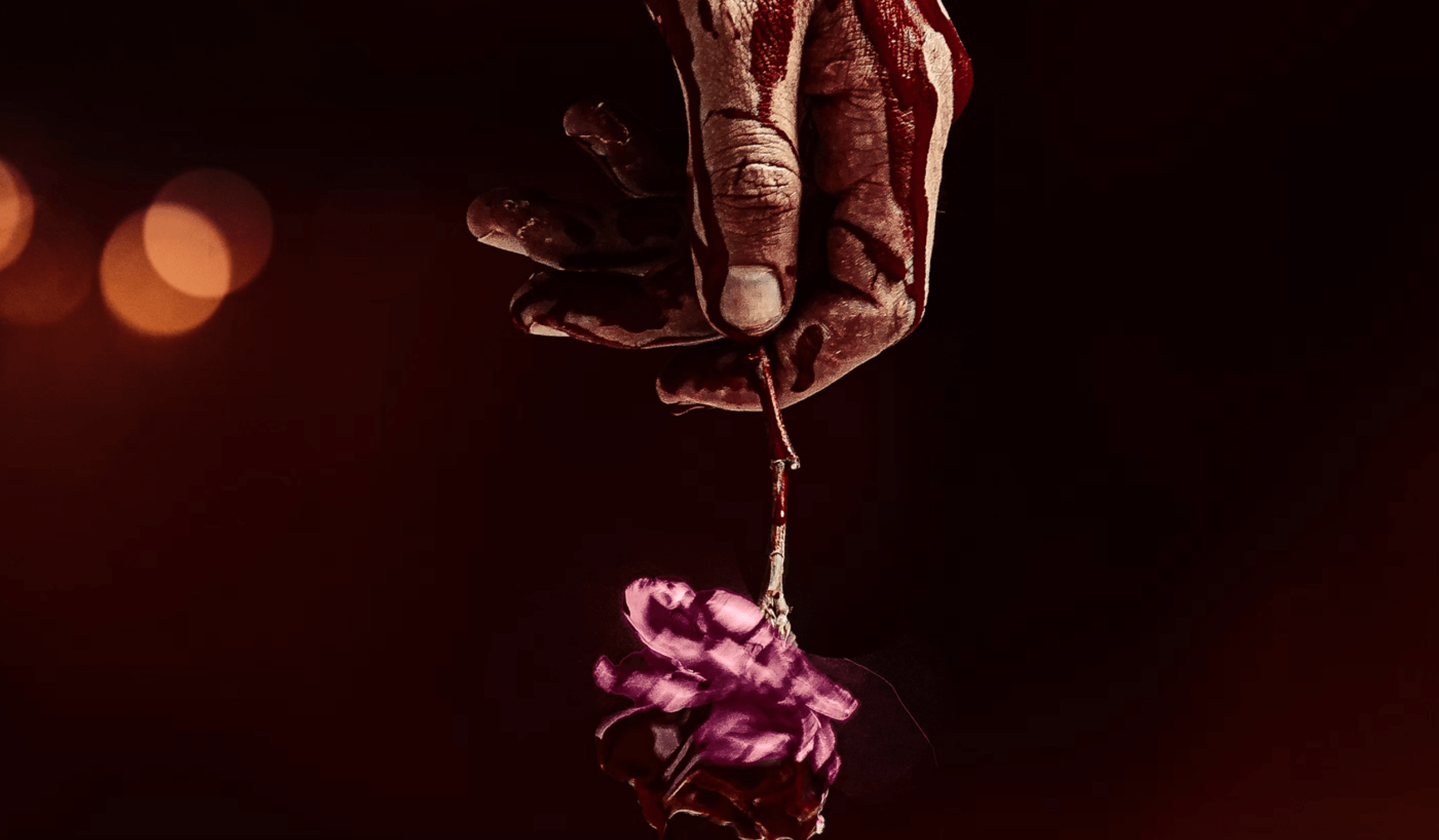
AUTHOR’S NOTE: Upon looking for an image for this piece, our initial search was for blood splatter, but we kept coming across blood stained flowers. That set off an alarm and we looked up blood stained flower symbolism. They symbolize the martyrs of resistance. While we can’t be sure of this connection in the music video below, it sure is a strange coincidence.
Petal – Ariana Grande’s new music video came out this week. Everyone is talking about her emaciated body, but I can’t help thinking about the copious amounts of blood in it. Since the video dropped, Grande put out a statement about taking a break from her music to focus on getting healthy. Public opinion believes that she is suffering from a severe eating disorder. Taking time for herself is a positive development, and I wish Grande a speedy and full recovery.
Petal is sad to watch before it gets disgustingly gory. A hopeful, aspiring actress and entertainer (played by Grande) comes in for multiple auditions to a table of judgmental, sexist men. With each attempt to be chosen, Grande changes her look, her style, her vibe. Again and again she is rejected for her body, her lack of originality, her lack of authenticity. A flower outside – emerging from a Hollywood star – loses its petals with each rejection. Grande’s pain is palpable in the video.
Hollywood and the music industry are grueling spaces known for their misogyny and tendency to prey on the vulnerable. I have seen clips of Grande performing in her younger years and how she was sexualized and casually degraded. I can feel angry and heartbroken for how she was treated as a person and for what the industry generally does to kids and especially young girls and women. Many stage parents are enablers of this system, who feed their children to executives who exploit and abuse in the name of profit and power.
I can also simultaneously believe that the ending to the video – where Grande takes a chainsaw and hacks up the executives – is gratuitous and dangerous and is emblematic the continued moral decay of our society. Oh, and it’s especially dangerous to Jews. More on that soon!
While we thankfully only see a silhouette of Grande hacking up the men and not their dismembered bodies, we see her face and body continuously splattered by their blood like you might get splattered by water doing the dishes. (Chores can be messy!) When the massacre is over, Grande goes out to the waiting room where a bevy of women – all similarly abused and discarded – cheer for their heroine with the fervor of victory. When women are occupied objectified resistance is justified, eh?
Put differently, while rejection is upsetting and abuse should never be excused or condoned, Grande seems to be saying that the answer to ending it should be accomplished by any means necessary. What about good old-fashioned healthy boundaries, lawsuits and criminal charges, where appropriate?
A couple years ago, I wrote about how Wicked – of which Grande was its star – was normalizing a very sick message. According to the premise of Wicked and films of its ilk – villains have backstories that make their deeds understandable. Wicked explains to us how and why the witch became wicked and how and why she is misunderstood.
In that piece, I noted that in a recent interview with Trevor Noah, author Ta-Nehisi Coates openly excused Hamas’s barbarism in a similar vein. Which is why – once again I am writing about art. Life certainly does seem to imitate it, and that is making the world more dangerous for all of us.
Coates, whose controversial new book (with a one-sided account of the Israel-Palestinian conflict), explains in the interview, “I grow up under that oppression and that poverty and the wall comes down, am I also strong enough or even constructed in such a way where I say this is too far? I don’t know that I am.” That Coates brazenly uttered those words and that Noah was not appalled at Coates’s confession, tells us that lack of accountability for evil has become normalized. Media is contributing to that normalization.
Luigi Mangione murdered a healthcare insurance CEO for his pain and suffering as a customer of a company. He was turned into a heartthrob hero for many instead of the cold-blooded killer that he actually is. And hot off the press – Abdul Al-Sayed just won the Democratic Senatorial primary in Michigan despite recently justifying a thwarted terror attack of Jewish pre-school children at a Michigan synagogue. According to Al-Sayed – hurt people hurt people.
Indeed they do – and sometimes they hurt them with a chainsaw.
I’m more squeamish around blood and guts ever since Hamas terrorists hacked up over 1000 of my brothers and sisters in Israel on October 7, filmed it for the world to see, and then denied it ever happened. Such gruesome and barbaric behavior didn’t sour the world on the perpetrators. Instead, it seems to have turned many of them into fans. Especially young folks – the age that watch Wicked and listen to Grande’s music. Last April, a Harvard CAPS-Harris survey asked respondents about who they support more in the war between Hamas and Israel. They found that 43% of respondents between the ages of 18 and 24 support Hamas.
Once Grande has hacked up the evil music execs, that flower that was dying outside, is brought back to life, quenched in the blood of the wicked, who got what was coming to them. (I wrote this line before I knew about the bloody flower symbolism.)
I wish Ariana Grande peace and healing. And I wish the same for our world. Toxic people should be avoided and criminals should be prosecuted. Anarchy and the breakdown of the rule of law – though seemingly romantic to the young and foolish – is what actually leads to mass oppression and destruction of the most vulnerable. And violent mobs are never good for the Jews.
If you found this content meaningful and want to help further our mission through our Keter, Makom, and Tikun branches, please consider becoming a Change Maker today.