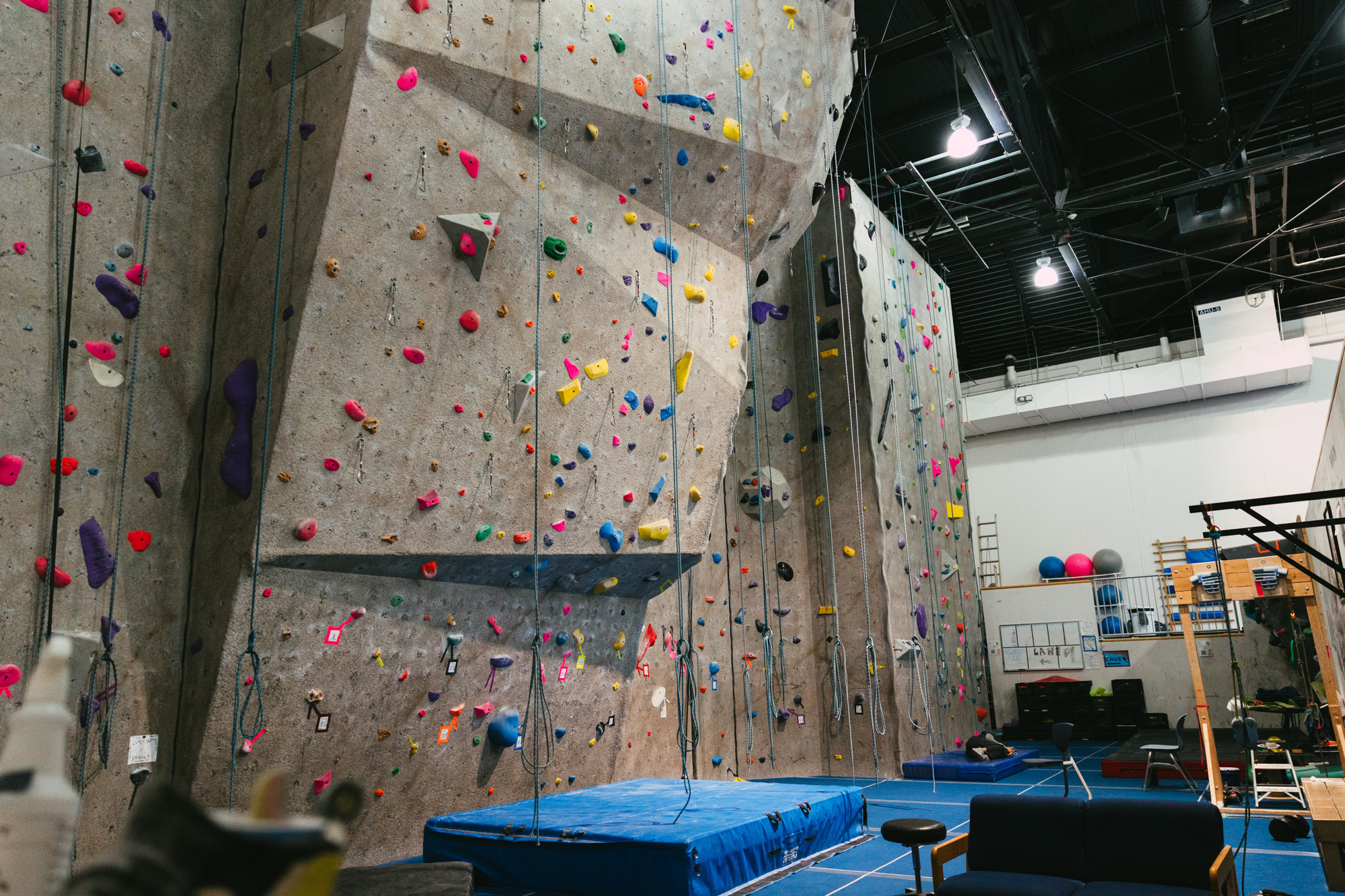
Through the Carolina Climbing Club and Campus Recreation’s climbing walls and outdoor programs, students are building friendships, learning new skills and challenging themselves both on and off campus.
UNC’s climbing walls, operated by Campus Recreation, are located at Rams Head Recreation Center and Fetzer Hall. An annual student membership to access the walls costs $20 a semester.
For students who may not know where to start, UNC’s climbing programs provide an entry point into the sport and a community to grow with. Students across different years, backgrounds and majors — beginners and experienced climbers alike — work together and build friendships through shared challenges.
Sophomore Kahaan Khatri started climbing during his first year at UNC, usually visiting the wall with existing friends but often leaving with new ones.
He said the layout of the gyms makes it easy for climbers to interact and build friendships.
“There’s only really two sections to boulder, and the first one is right at the front of the gym,” Khatri said of Fetzer Hall. “So a lot of the time, a lot of people congregate there and talk amongst themselves while they’re waiting to try one of the routes.”
Now, Khatri works for Campus Recreation at the climbing walls, where part of his job is introducing new students to the sport. Staff members give orientations where they explain how the climbing wall works and help first-time climbers get comfortable.
Sean Blizard, a senior, has been visiting the walls since the fall semester of his first year. He is now involved in UNC’s climbing club and Carolina Adventures, and works at the climbing walls. Carolina Adventures is a Campus Recreation program that takes students on outdoor expeditions that include kayaking, backpacking and climbing.
Blizard said he enjoys being able to combine his love of adventure with his social life. For him, the trust required between climbing partners can create tight bonds through shared experiences and challenges, which has led to some of his closest friendships in college.
That social environment, Blizard said, is part of what distinguishes climbing from a traditional gym workout, presenting a unique challenge by combining exercise with problem-solving. Climbers refer to routes as “problems” because they have to figure out how to navigate the holds and movements.
“Yesterday, I spent maybe an hour and a half with my buddy trying to figure out the problem, and so we’re working together, we’re trying things together, and eventually we get that payoff of being able to send it,” he said.
Khatri also said the mental exercise of climbing — outside of being a simple physical exercise — makes it more enjoyable.
“The idea of finding a route on the wall and figuring out how to climb it the exact way it’s supposed to be and kind of challenging yourself — that’s something that I’ve always found fun,” Khatri said.
Claire McAllister, a junior who is a climbing wall employee and climbing club member, said the sport has similarly helped her form friendships and experience places that she might not have visited otherwise. Last year, she traveled to Mexico on a climbing trip with friends she met through the club and plans to return this year.
For McAllister, the climbing wall makes the sport accessible to students who have never tried it. The walls provide equipment and orientations, while the club and Carolina Adventures allow students to develop their outdoor skills.
McAllister said it is important for people to try new things and step outside their comfort zone — especially to hone skills and hobbies they do not naturally excel in. She said fear is a survival instinct people don’t confront often enough and believes many people would experience less anxiety if they did.
“People will think that experienced climbers aren’t scared, and no — I’m terrified when I’m climbing,” McAllister said. “One of the biggest hurdles is the fear of it, but I think that it’s good to do things that scare you.”
@dailytarheel | [email protected]