IN BRIEF
- New research has found social and environmental dementia risk factors are largely ignored in prevention strategies.
- It’s estimated that by 2065, more than one million Australians will be living with dementia.
Exercise, healthy eating and blood pressure management are the most common pieces of advice for those at risk of dementia. But new research suggests Australia is ignoring crucial factors.
Dr Jennifer Dunne, an epidemiologist who was the research lead on the Curtin University paper, said dementia prevention is focused heavily “on the individual”.
She said the study, published in the peer-reviewed Lancet journal, was a “broader look” at dementia risk factors, mapping them to identify where “the evidence already was”.
It builds off a “large systematic review and meta-analysis” previously conducted by co-author professor Blossom Stephan, Curtin’s enAble Institute Dementia chair, which identified 61 risk factors — surpassing the previously identified 14.
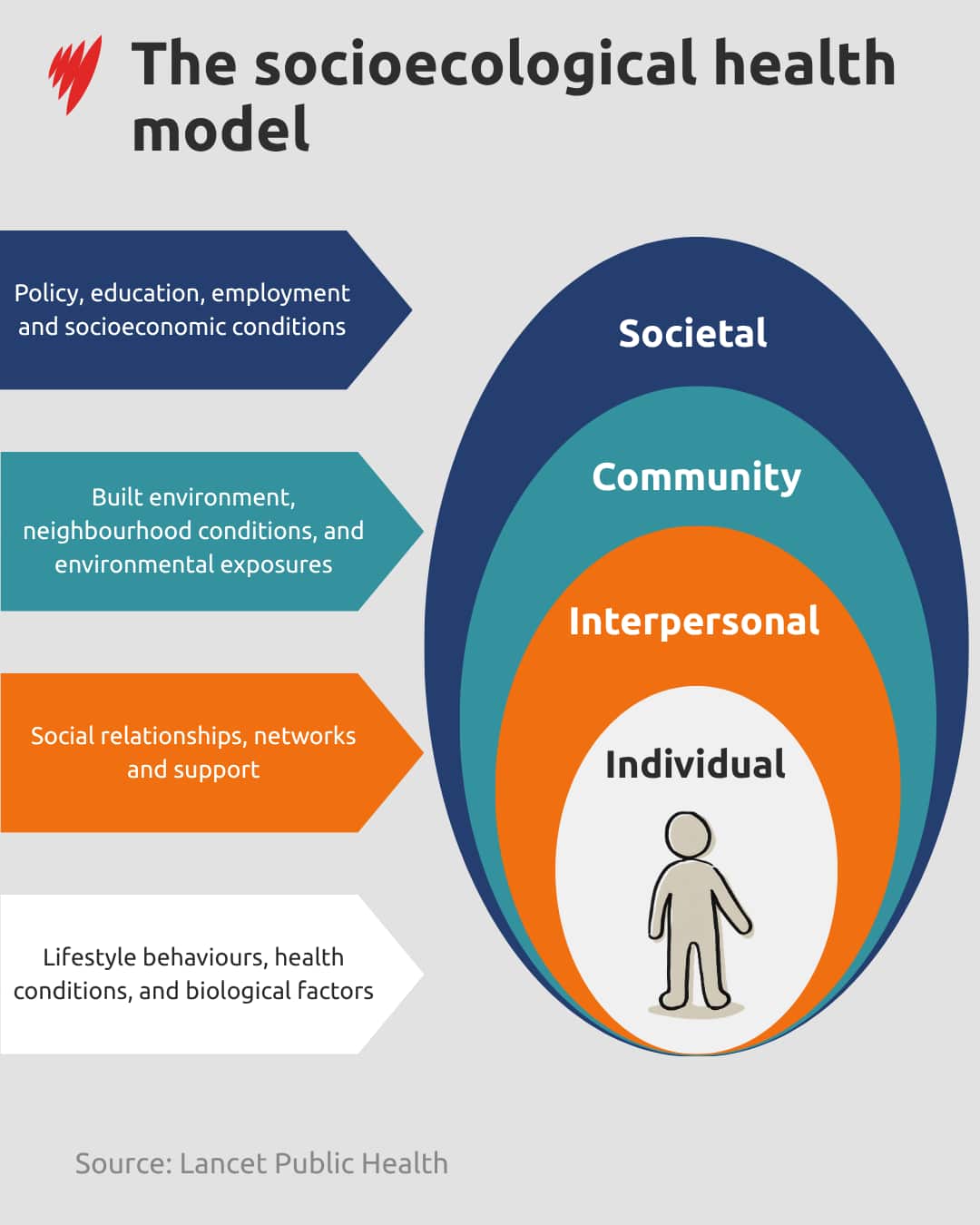
The research, the first of its kind, categorised the 61 risk factors using a socioecological model.
Your trusted source for staying up-to-date with the world around you. Get free daily news updates and analysis, straight to your inbox.
It found a lack of knowledge on how social and environmental conditions affect dementia — information crucial for dementia prevention.
Dunne, a Curtin University Dementia Centre of Excellence research fellow, said the report identifies “gaps” where researchers “should be looking”.
“There’s so much focus on preventing dementia, but we need to think more broadly about how we work together to prevent it,” Dunne said.
“We need to move away from the message of telling people you need to do all these [lifestyle] things because they can only be successful if the environment around them is supportive.”
Risk factors are ‘all interlinked’
Dementia is an umbrella term for more than 100 conditions — the most common being vascular dementia and Alzheimer’s disease.
Alzheimer’s accounts for up to 80 per cent of dementia cases, and impacts a person’s memory, thinking and behaviour.
Dementia is caused by neurodegeneration — damage or death of the brain’s neurons.
Uncorrected vision or hearing loss, social isolation and early childhood education are among the study’s 61 risk factors.
“You start thinking about dementia prevention in mid-life … but you can’t go back and do your childhood education again — you can’t change that risk factor,” Dunne explained.
“We need to ensure that the broader society in which we live supports high-quality education that is accessible to everybody.”
She noted that employed adults face a higher risk of social isolation as they approach retirement age.
Social isolation is enmeshed with other risk factors including loss of vision, loss of hearing, physical inactivity and depression.
“We know that when people sometimes become socially isolated, they become depressed. Then they tend to withdraw and stop exercising. They might start smoking, or start smoking more, which leads to a cascade of health conditions. It’s all interlinked,” Dunne said.
Stephan said the research must be turned into “action”.
“Dementia prevention should support healthy choices while also improving education, neighbourhoods, healthcare access and other social conditions that shape brain health across the population throughout a person’s life,” she said.
Dementia ‘close’ to a public health crisis
According to the Australian Institute of Health and Welfare, 439,000 Australians were living with dementia in 2025 — of those, 56 per cent are women.
A person’s risk of dementia increases with age, with 42.7 per cent of Australians aged 90 and over living with the condition.
Currently, dementia is the leading cause of death in Australia.
It’s estimated that more than one million Australians will have dementia by 2065.
Dunne said dementia is “already pretty close” to being a national public health crisis.
One way to counter that is ensuring Australians are ageing well.
“The whole goal is to keep people healthy and make sure we live in environments that are supportive to us — and that the government have a lot they can do to prevent dementia,” Dunne said.
Professor Tanya Buchanan, Dementia Australia CEO, said the research reaffirmed that “dementia risk reduction is a collective responsibility”.
“It is vital everyone has access to the supports and services they need to support their brain health,” she said.
“Alongside addressing brain health behaviour at an individual level, we need policies and actions from governments and organisations to make it easier for everyone to lower their risk of dementia.”
For the latest from SBS News, download our app and subscribe to our newsletter.