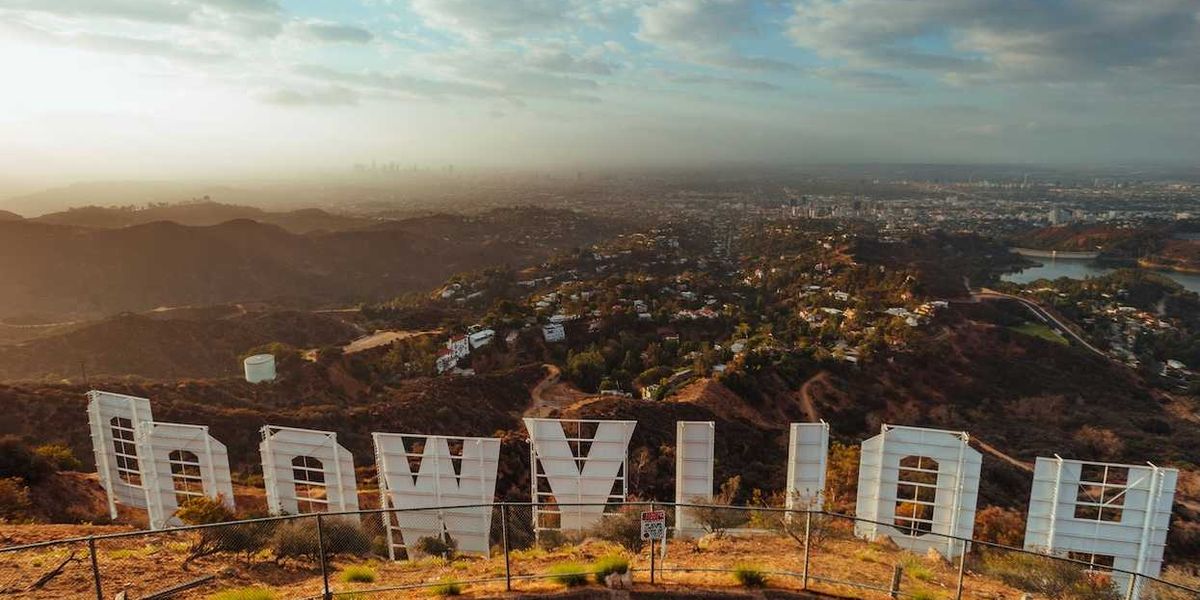
You know the age-old story of the Hollywood hopeful hopping on a bus somewhere in the Midwest and making the big move to the city of stars, Los Angeles, where movies and dreams are made! At one point, everyone did it—actors, musicians, writers, directors, and other artists of all kinds.
At some point, many of us as aspiring filmmakers will make this trek. But is it necessary these days?
I ask for a couple of reasons. Today we found Wade Patterson’s interview with Film Courage about the move-to-LA dream. Patterson grew up in Jackson, Mississippi, and moved to LA in 2017. He now works as a freelance DP, camera operator, and gaffer while developing his own feature, Death Cipher.
I also got a recent question from someone in another part of the world wondering about being a filmmaker and how to break in, so the video feels prescient.
Let’s dive in.
– YouTube www.youtube.com
Take That $50 Gig
I remember the first time I had my creative writing published anywhere. It was a short story in a magazine. I used the money to buy a satellite navigation system so I could move to LA. It wasn’t a ton of money, but by gum, I was published, and I was on my way.
Patterson’s first paid gig earned him about 50 bucks, and he was grateful for it.
“I will say at that time, though, there was also a lot of opportunity to just jump on these really small sets and do, like, super low-budget,” he said. “I was working on these super low-budget short films and web series … I think the one rule I have for myself is I don’t care what I get paid as long as I get paid something. I think my first gig I made like 50 bucks or something. It was very low.”
What mattered to him more at that point was meeting people and getting a foot in the door. It was hard for him. It used to be that internships were the way in, and often we were working for free in exchange for “experience.” That’s thankfully changed, for the most part, now.
“The power is not really on the side of the person trying to apply for the job. It’s really on the side of the person with the project because there’s only so much work and there’s so many people trying to get on sets.”
Your Crew Is Your Career
Money was only half the struggle. Patterson crashed with people he’d met on sets back in Mississippi, and the loneliness of a big city hit hard that first year. He stuck around long enough to build a community, and he believes the people you work with shape everything that happens on set.
“I think with anything, people are the most important thing, and with filmmaking, the people I work with, that’s almost more important sometimes than even the project we’re making, because if you work with someone that’s difficult or if you work with someone who has an attitude or if you’re the person with the attitude, no one wants to do that.”
Obviously, this applies outside of Hollywood. No matter where you are, you have to find your people, because it’s almost impossible to make a big creative project on your own.
Feast or Famine
Even if you’re great at the job, the work comes and goes on its own schedule. Trends happen. Industries fold. Mergers happen.
Patterson rode out COVID, had two strong years in 2021 and 2022, and then watched the strikes shut everything down again. He was convinced his run was finished, so he found himself an exit.
“I got certified as an EMT because I was like, ‘It’s over, right?'”
Then the phone started ringing again, and he stayed. His experience isn’t unusual, and the numbers back it up. FilmLA recorded 4,711 on-location shoot days in LA for Q2 2026, a 12.7% drop from the same period the previous year, and the quarter sits roughly 36% below the five-year average, according to The Wrap.
There were always dry spells in LA, but things have gotten harder. It’s tough to make a living as a filmmaker.
“Maybe my advice to anyone that’s trying to get in the film industry right now is have side gigs that you can always supplement your income with, because it’s feast or famine. Sometimes there are times when you’re working a lot, and then there’s going to be low points where you’re just in the valley; you’re just waiting.”
LA Matters Less Every Year
So after nearly a decade in town, is Los Angeles still the place to be? You might expect someone who lives there to say yes without hesitating. Patterson loves the city, the food, and the beach. When it comes to making movies, though, his answer gets complicated.
“I think less and less every year. I think in some ways it’s good for connections and meeting certain people.”
He said that studios often go hunting for outside financing anyway. So a growing number of filmmakers skip that step and raise the money themselves, then make a movie elsewhere using tax incentives in New Mexico, Canada, Oklahoma, wherever.
“For my own personal projects, I think I could probably do it anywhere, especially now that I’ve been able to make something and get it out into the world, that you have a little bit more leverage or a little bit more ability to say, ‘Hey, we did this, and come do this next thing with us.’ And so I think more and more it becomes feasible to leave LA.”
What If You Can’t Move to LA at All?
Patterson’s points make me think of a question I got recently from a reader outside the U.S. This person was aware that cold submissions go nowhere. How do you get access to producers and managers without moving to LA, they wondered?
I would say, start with a body of work. If you’re a writer, build up a backlog of scripts. If you want to direct, make creative, cheap short films with small groups, and that becomes your calling card. Honestly, if the work is good, put it online or on TikTok and self-distribute. The Internet has no gatekeepers, and your audience can find you.
But to do this, you need that network. You need collaborators. So find (or build) the community of people who want to do the same thing. I know this is easy to say and hard to achieve, but it’s critical.
If you’d like a more traditional route, look at labs and fellowships in your country or state, or industry labs that accept international entrants. These won’t always lead to production assistance, but they can help you meet people who might help you one day. For example, Sundance’s January Screenwriters Lab always includes both U.S.-based and international filmmakers, and the application typically opens in mid-April with a mid-May deadline.
Put the Nicholl Fellowship on your calendar. This year the Black List window ran June 8 to July 6, 2026, and the Writers Guild Foundation window ran June 22 to July 20. (Scripts must be written originally in English.)
Use regional labs to find your support systems locally. They can springboard you elsewhere. Apply to art and filmmaking grants so you can make your next project.
If you write genre, think co-production markets. Frontières is an international co-production market built around genre financing between Europe and North America. Submissions for its new Tokyo partnership ran through July 21, 2026. (Markets pitch projects, not lone scripts, so attach a producer in your home country and apply together.)
You can still query managers after you’ve gotten validation, but not before. Once you have a high evaluation, a lab selection, or a fellowship placement, lead with it in a short query to managers who rep writers in your genre. As we just covered, you only get one good ask.
Through all of this, I would say watch your budget closely. You can apply to five film festivals and realize you’ve spent hundreds of dollars, and that may go nowhere.
You do not have to be in Hollywood, and you do not have to play by Hollywood’s rules anymore. What you do have to have is passion and drive enough to keep going and keep making your work even though it’s always hard.
Good luck!