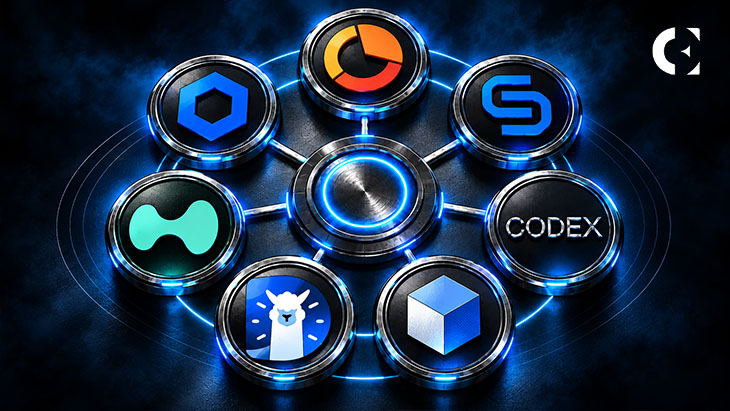
“Free” crypto APIs aren’t really free, they just charge you in different ways. From request limits to compute units, the real cost shows up once you start building.
This guide compares seven free cryptocurrency APIs by what $0 actually gets you. The roster covers CoinStats API, Chainstack, Codex, GetBlock, DefiLlama, Hyperliquid and Chainlink Data Feeds. Every limit was checked against official pricing and docs pages in September 2026.
What Makes a Free Crypto API Worth Using
A free crypto API is worth using when its limit outlasts your prototype. Headline numbers mean little until you know the billing unit behind them.
Most teams now work API-first, at least in part. Postman’s 2025 State of the API report puts it at 82% of organizations. Free tiers are where those teams test providers.
- A limit that survives a prototype. A useful free tier carries weeks of testing, not an afternoon.
- A clear billing unit. Credits, requests, and compute units scale differently under real traffic.
- Commercial terms you can ship on. Some free plans cover hobby projects only. Read the terms first.
- A visible upgrade path. Know the first paid price before your traffic grows.
- AI agent access. MCP, the Model Context Protocol, lets AI agents call an API as a tool.
84% of developers use AI tools or plan to, per Stack Overflow’s 2025 survey. Yet only 24% design APIs with AI agents in mind, Postman found. That makes MCP support a practical filter, not a bonus.
Limits exist for a reason. NIST’s API protection guidelines tell providers to rate-limit all API access for all callers. Every hosted free tier here enforces a cap.
Five Ways a Free Tier Is Measured
Free tiers use five units: credits, request units, requests, compute units, or no meter. The unit decides how far your allowance stretches.
Credits weight each endpoint, so a price call costs less than a wallet lookup. Requests count every call the same. Compute units charge more for heavy node calls.
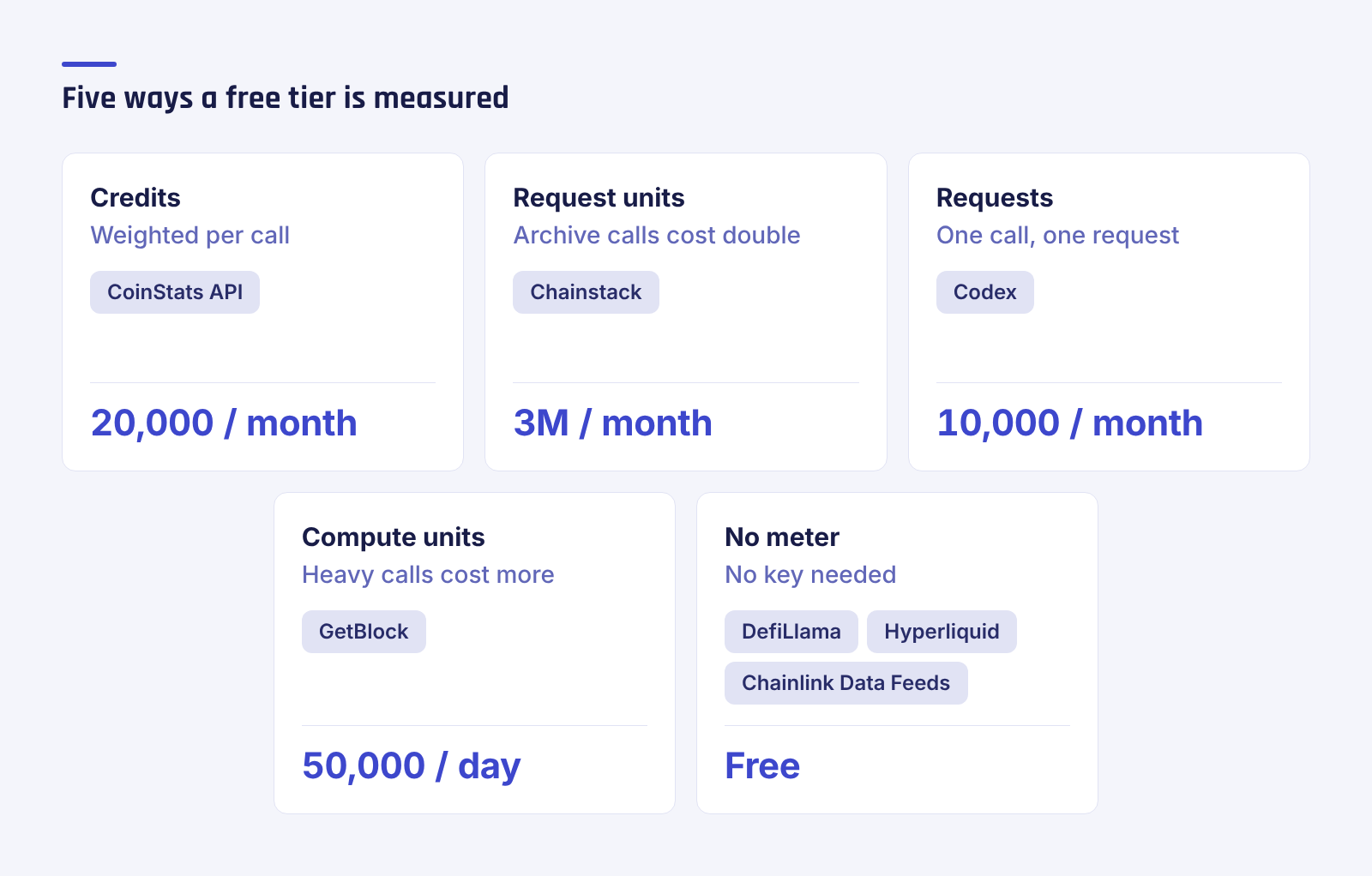
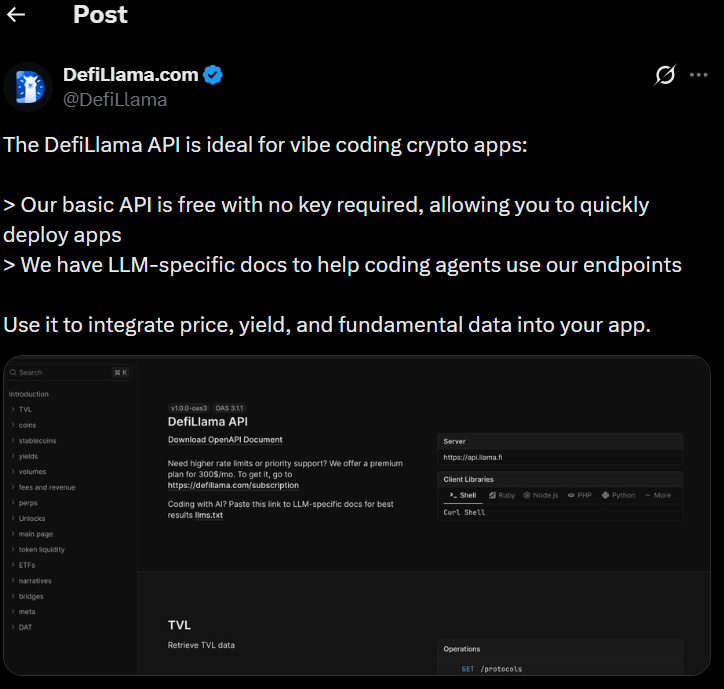
Chainstack’s request units split the difference: full node calls cost 1, archive calls 2. DefiLlama, Hyperliquid and Chainlink Data Feeds need no key at all. DefiLlama spelled out its policy on X:
Four Kinds of Free Crypto API
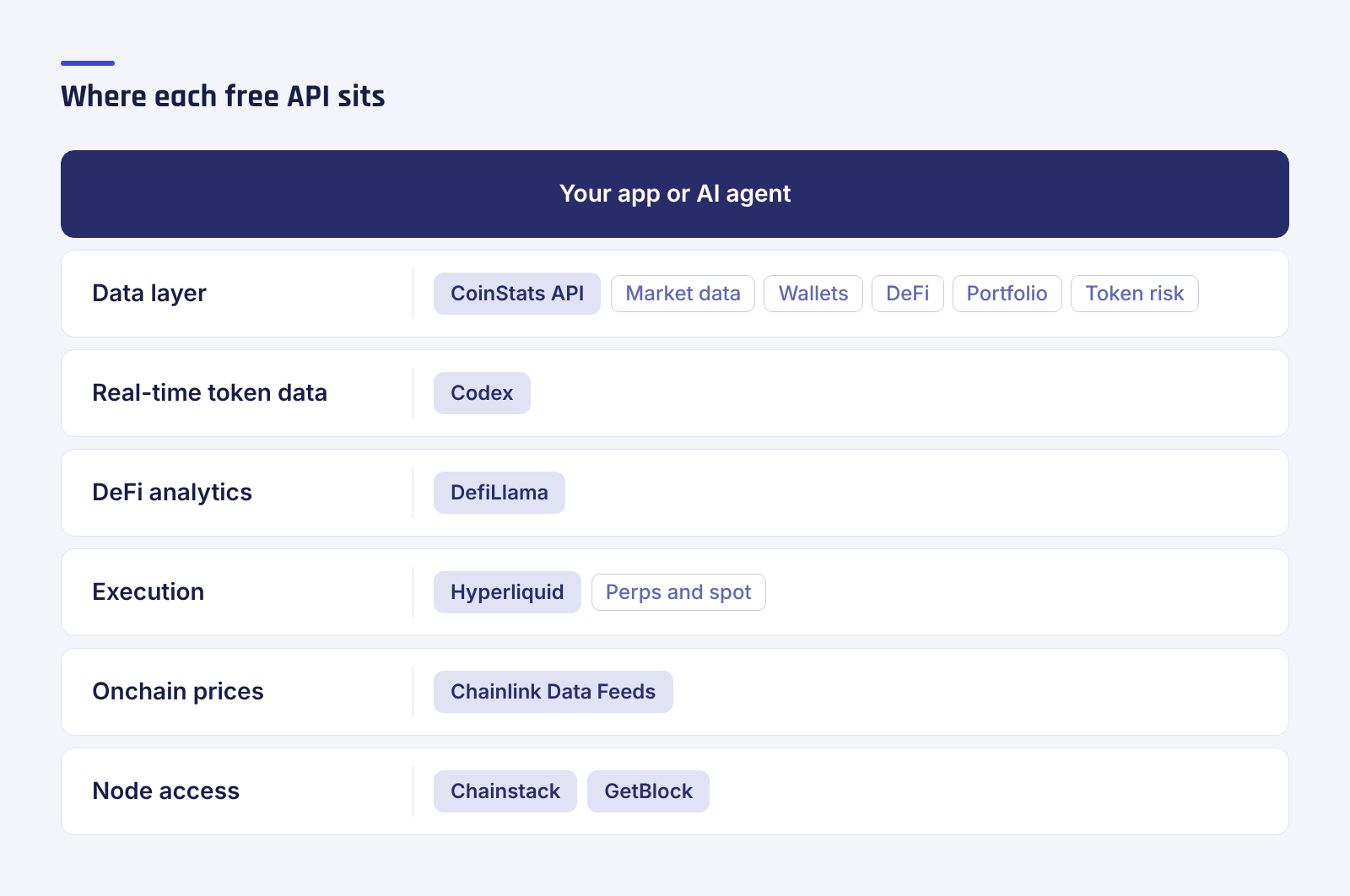
Free crypto APIs fall into four groups: data, execution, node access, and oracles. Most products need at least two.
- Data APIs return indexed, ready-to-use answers like prices, balances and history. CoinStats API, Codex and DefiLlama sit here.
- Execution APIs move assets. Hyperliquid, for example, executes perps and spot orders onchain.
- Node APIs expose raw chain state and send transactions. Every Ethereum client implements the JSON-RPC specification, one shared set of methods. Chainstack and GetBlock sell hosted access to it.
- Oracles bring offchain data onchain, filling the gap since smart contracts cannot access external data by default.
Quick Comparison
Six of the seven start at $0. Codex asks for a one-time $1 activation.
| Provider | Best for | Free tier | Key needed |
|---|---|---|---|
| CoinStats API | All-in-one crypto data | 20,000 credits a month, 2 requests per second | Free key |
| Chainstack | Reliable RPC across 70+ chains | 3M request units a month, 25 requests per second | Free account |
| Codex | Real-time token data | 10,000 requests a month, 5 requests per second | Key plus $1 one-time activation |
| GetBlock | RPC node access | 50,000 compute units a day, 20 requests per second | Free key |
| DefiLlama | DeFi TVL, fees and yields | 31 public endpoints | None |
| Hyperliquid | Perps and spot trading | Free reads, rate-limited per IP | None |
| Chainlink Data Feeds | Onchain price feeds | Free reads | None |
1. CoinStats API
Best for: Any crypto product requiring market data, wallets, DeFi positions, portfolio analytics, and token security.
CoinStats’ crypto API is the best fit for most crypto use cases. One key covers market data, wallets, DeFi, portfolio analytics and token security.
Coverage spans 100,000+ coins, 200+ exchanges, and 120+ blockchains, including Bitcoin, Ethereum, and Solana. The same infrastructure powers CoinStats’ consumer app, used by 1M+ people monthly.
In a simple way: CoinStats API = market data + wallets + DeFi + portfolio analytics + token security.
Core Capabilities
- Market data: Real-time prices, market caps, volumes and charts for 100,000+ coins. Exchange candles run from 5-minute to weekly intervals.
- Wallet data: Balances and transaction history for any address across 120+ chains. Bitcoin xpub, ypub and zpub keys resolve every address in a wallet.
- Portfolio analytics: Realized and unrealized profit and loss per wallet, exchange account or portfolio.
- AI agents: Its MCP Server gives Claude, ChatGPT and Cursor 20+ data tools. Agents without keys can pay per request through x402.
Data Specifications
- Coins: 100,000+
- Exchanges: 200+
- Blockchains: 120+ (74 of them EVM)
- DeFi protocols: 10,000+
- API type: REST plus MCP Server
Free Tier and Pricing
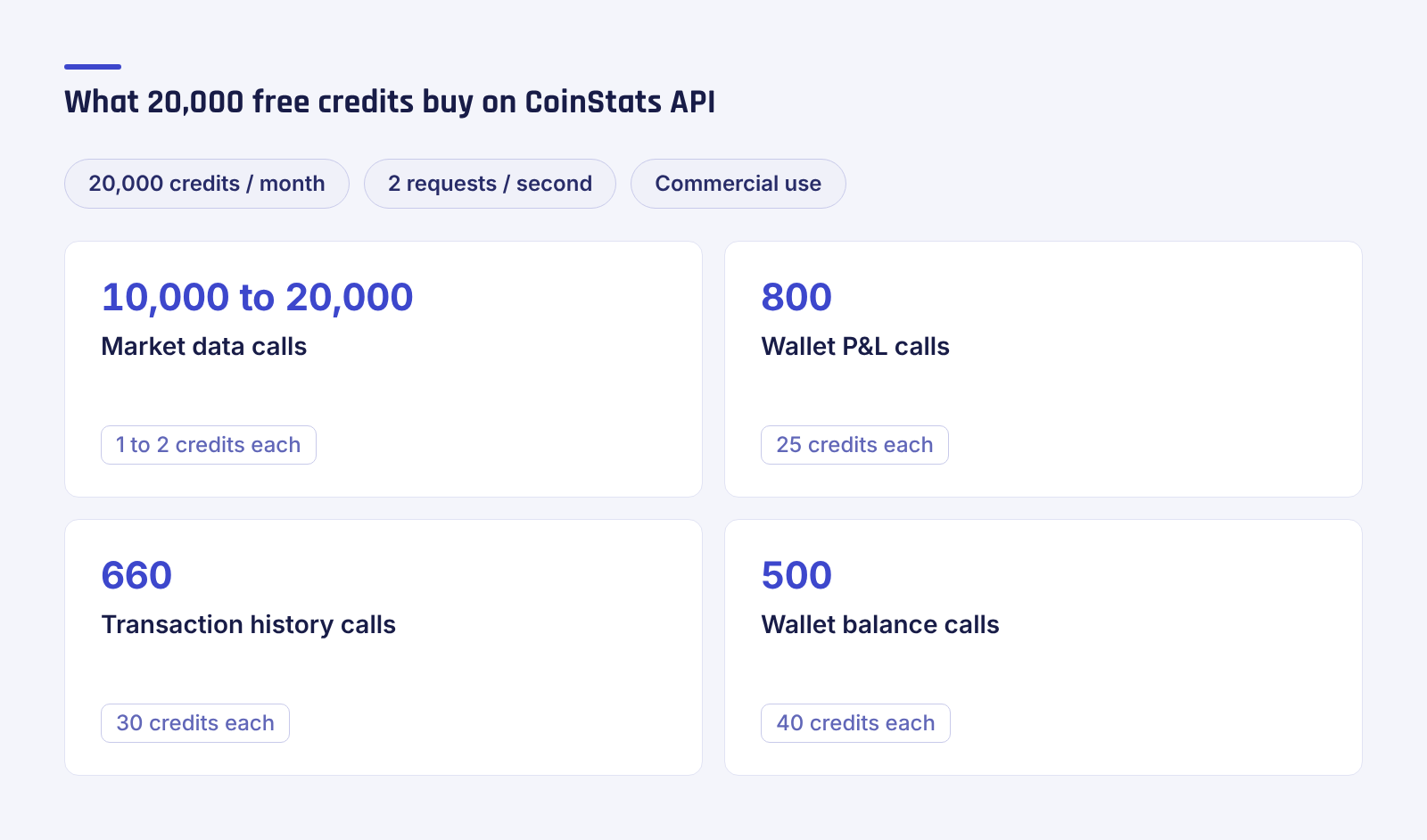
The free plan gives 20,000 credits a month at 2 requests per second. Commercial use is allowed, and no card is needed.
Credits are weighted by endpoint. A price call costs 1 to 2 credits. A wallet balance call costs 40.
Paid plans start at $49 a month for 1,000,000 credits. Wallet DeFi positions sit on paid plans only.
Ideal For
- Portfolio trackers and wallet apps
- Trading bots and signal engines
- Crypto tax and accounting tools
- AI agents that need wallet and price data
Limitations
- Data API, not an RPC node. Pair it with Chainstack or GetBlock to send transactions.
- No live streaming or webhooks. Data comes by polling.
- Wallet DeFi positions require a paid plan.
- Token security covers Ethereum-compatible (EVM) chains only and costs 5,000 credits per call.
2. Chainstack
Best for: Reliable reads, transaction submission and real-time streams across 70+ chains.
Chainstack powers global blockchain apps for fintech, DeFi, wallets, custodians, and analytics. It delivers reliable, predictable RPC across 70+ chains, Solana included.
Node choice is the differentiator. Global Nodes route each request to the nearest healthy region. Dedicated Nodes run on isolated infrastructure.
Self-hosted deployment is also available. Chainstack processes 10B+ API calls daily. Customers include Circle, Trust Wallet and TradingView.
Core Capabilities
- 70+ chains: Managed and self-hosted nodes. One vendor covers Solana and whatever you add next.
- Yellowstone gRPC streaming: Structured Solana events arrive as they happen, with no polling loop.
- Trader Nodes: Regionally deployed and tuned for low-latency trading workloads.
- Official MCP server: Deploy nodes and query chain data from Claude, Cursor and other agent clients.
- Compliance: SOC 2 Type II and ISO 27001 certified, with SSO and role-based access.
Free Tier and Pricing
The free Developer plan covers 3M request units a month. It runs at up to 25 requests per second and does not expire.
Full node calls cost 1 request unit, and archive calls cost 2. Growth starts at $49 a month for 20M request units.
Archive data starts on Growth. Yellowstone gRPC streams start at $49 a month. Unlimited Nodes start at $149 a month.
Ideal For
- Bots that need reliable reads and transaction submission
- Solana trading apps that stream events in real time
- Teams shipping across several chains at once
- Organizations with SOC 2 and role-based access requirements
Limitations
- Free tier suits light usage only
- Nodes return raw data. Balances and USD prices need a data layer like CoinStats API.
- Archive data, debug and trace sit on paid plans
3. Codex
Best for: Real-time onchain token data and prediction markets.
Codex is an enriched blockchain data API built for production trading apps. It indexes every token and pair the moment it hits the chain.
Results come through one GraphQL endpoint. GraphQL returns only the fields you request, with no indexers to run.
The same infrastructure serves TradingView, MoonPay and Uniswap at billions of requests per month. It carries a 99.9% uptime SLA.
Core Capabilities
- 80+ networks: Prices, candles, holders and wallet balances across Solana, Ethereum, Base and more.
- Sub-second freshness: New tokens, pairs, and price changes become queryable in under a second.
- Live subscriptions: Streams push prices, trades and new token launches without polling.
- Prediction markets: 26M+ markets from Polymarket and Kalshi, with odds and order books.
- Agent payments: Via MPP, the Machine Payments Protocol, agents pay $0.001 per request. No account or API key is needed.
Data Specifications
- Tokens: 103M+
- Wallets: 2B+
- Blockchains: 80+
- Prediction markets: 26M+
- Data freshness: Sub-second
- API type: GraphQL plus WebSocket subscriptions
Free Tier and Pricing
The free plan includes 10,000 requests per month at 5 requests per second. Activation costs a one-time $1.
Free access covers core token endpoints. Streaming, webhooks and wallet, holder and prediction endpoints start on Growth.
Growth starts at $350 per month for 1M requests. Agents can skip plans entirely and pay per query.
Ideal For
- Trading platforms and terminals with live charts
- Token screeners tracking new launches
- Prediction market apps built on Polymarket or Kalshi data
- AI agents that pay per query
Limitations
- No raw RPC or node-level access
- No centralized exchange trading endpoints
- GraphQL only, so REST-first teams face a short learning curve
- The free plan excludes streaming and prediction data
4. GetBlock
Best for: Node access across the widest network list, 100+ chains in all.
GetBlock is the second node provider here, with the widest network list. It provides hosted RPC endpoints, the raw interface blockchains expose to apps.
Its node list shows 97 networks on shared endpoints and 124 on dedicated nodes. GetBlock completed a SOC 2 Type II attestation in Q2 2026.
Core Capabilities
- Shared and dedicated nodes: Shared endpoints for fast starts, private nodes for production traffic.
- Compute-unit billing: Light calls cost fewer units than heavy or archive calls.
- Archive data: Full historical chain state for backfills and analytics.
- Developer tooling: A documentation MCP server helps AI coding tools use the API.
Free Tier and Pricing
The free plan gives 50,000 compute units a day at 20 requests per second. It includes two access tokens on shared nodes.
Starter costs $49 a month for 90M compute units, with 20% off billed annually. Dedicated nodes start at $1,000 a month.
Ideal For
- Sending transactions and signing flows
- Raw block, log, and archive reads
- Multichain backends on less common networks
Limitations
- Raw responses, so you decode the data yourself
- Heavy calls burn more compute units
- Archive data sits on paid plans only
5. DefiLlama
Best for: DeFi TVL, fees, yields and stablecoin data with no signup.
DefiLlama tracks TVL, the value deposited in DeFi protocols, plus fees and yields. Its public API needs no key and no signup.
Its coverage spans 7,000+ protocols across 500+ chains. DeFi TVL stood at about $94 billion on September 29, 2026.
Core Capabilities
- TVL and history: Total value locked by protocol and by chain, with historical series.
- Fees, revenue and volumes: DEX volumes plus protocol fees and revenue.
- Yields and stablecoins: Pool yields and stablecoin supply by chain.
- Open adapters: Protocol adapters are open source, so anyone can audit the math.
Free Tier and Pricing
The free API offers 31 endpoints with no key. Rate limits are not published.
The paid API costs $300 a month and adds 38 endpoints. Unlocks bridge flows, and hacks sit behind it. It also unlocks DefiLlama’s official MCP server.
Ideal For
- DeFi dashboards and newsletters
- Research and protocol comparisons
- Yield and stablecoin trackers
Limitations
- Protocol-level data only. Pair it with CoinStats API for per-wallet positions.
- Free rate limits are not published.
- Unlocks, bridges, and raises are paid-only.
6. Hyperliquid
Best for: Trading bots and dashboards built on perps and spot markets.
Hyperliquid runs an onchain order book for perpetual futures and spot trading. Its API serves market and account data for free, with no key.
By late September 2026, it listed 178 active perps and 330 spot pairs.
Core Capabilities
- Market data: Order books, trades, and candles for every perp and spot market.
- Account data: Positions, open orders, fills and portfolio history for any address.
- Live streams: WebSocket feeds for books, trades and user events, up to 1,000 subscriptions per IP.
- Onchain trading: Signed requests place and cancel orders, with no exchange account needed.
Free Tier and Pricing
Reads are free, with no key or signup. Each IP gets a budget of 1,200 request weight per minute.
Most calls weigh 20, so that is about 60 calls a minute. Order book snapshots weigh just 2.
There are no API plans. Addresses can buy extra request capacity at 0.0005 USDC per request.
Ideal For
- Perps and spot trading bots
- Order book and market dashboards
- Portfolio views for Hyperliquid accounts
Limitations
- Covers Hyperliquid’s own markets only
- Short history, capped at the latest 5,000 candles and 10,000 fills
- No official MCP server
7. Chainlink Data Feeds
Best for: Smart contracts and backends that need tamper-resistant onchain prices.
Chainlink Data Feeds are onchain price oracles anyone can read for free. There is no key and no signup.
Feeds run on dozens of networks, from Ethereum to Solana and major layer 2s. Chainlink reports over $34 trillion in transaction value enabled as of September 2026.
Chainlink says Data Feeds secured $50B+ in DeFi as of May 2026. Reading a feed needs an RPC endpoint. Free plans from Chainstack or GetBlock cover that.
Core Capabilities
- Reference prices: Crypto, forex, commodity, and index prices, updated on deviation or heartbeat thresholds.
- Decentralized oracle networks: Multiple independent oracle operators update each feed.
- Gas-free offchain reads: Backends read any feed through an RPC call at no cost.
Free Tier and Pricing
Chainlink charges no subscription to read Data Feeds. Offchain reads through an RPC call cost no gas.
Low-latency Data Streams are a separate paid product. Plans start at $150 per stream per month.
Ideal For
- Lending and perps protocols that settle on prices
- Backends that want a neutral reference price
- Smart contract prototypes on testnets
Limitations
- No REST API. Reads go through contracts.
- Updates follow thresholds, not every tick.
- Feeds get deprecated from time to time, so check a feed’s status.
What It Costs to Grow
Free tiers end at different points. This table shows the first paid step for each provider.
| Provider | Free tier | First paid step |
|---|---|---|
| CoinStats API | 20,000 credits a month | Starter, $49 a month for 1,000,000 credits |
| Chainstack | 3M request units a month | Growth, $49 a month for 20M request units |
| Codex | 10,000 requests a month | Growth, $350 a month for 1M requests |
| GetBlock | 50,000 compute units a day | Starter, $49 a month for 90M compute units |
| DefiLlama | 31 endpoints, no key | API plan, $300 a month for 38 more endpoints |
| Hyperliquid | Free reads, no key | No API plans. Extra capacity costs 0.0005 USDC per request |
| Chainlink Data Feeds | Free reads | Data Streams from $150 per stream per month |
Hyperliquid sells no API plans at all. Chainlink charges only for its separate Data Streams product.
Which Free Cryptocurrency API Should You Choose?
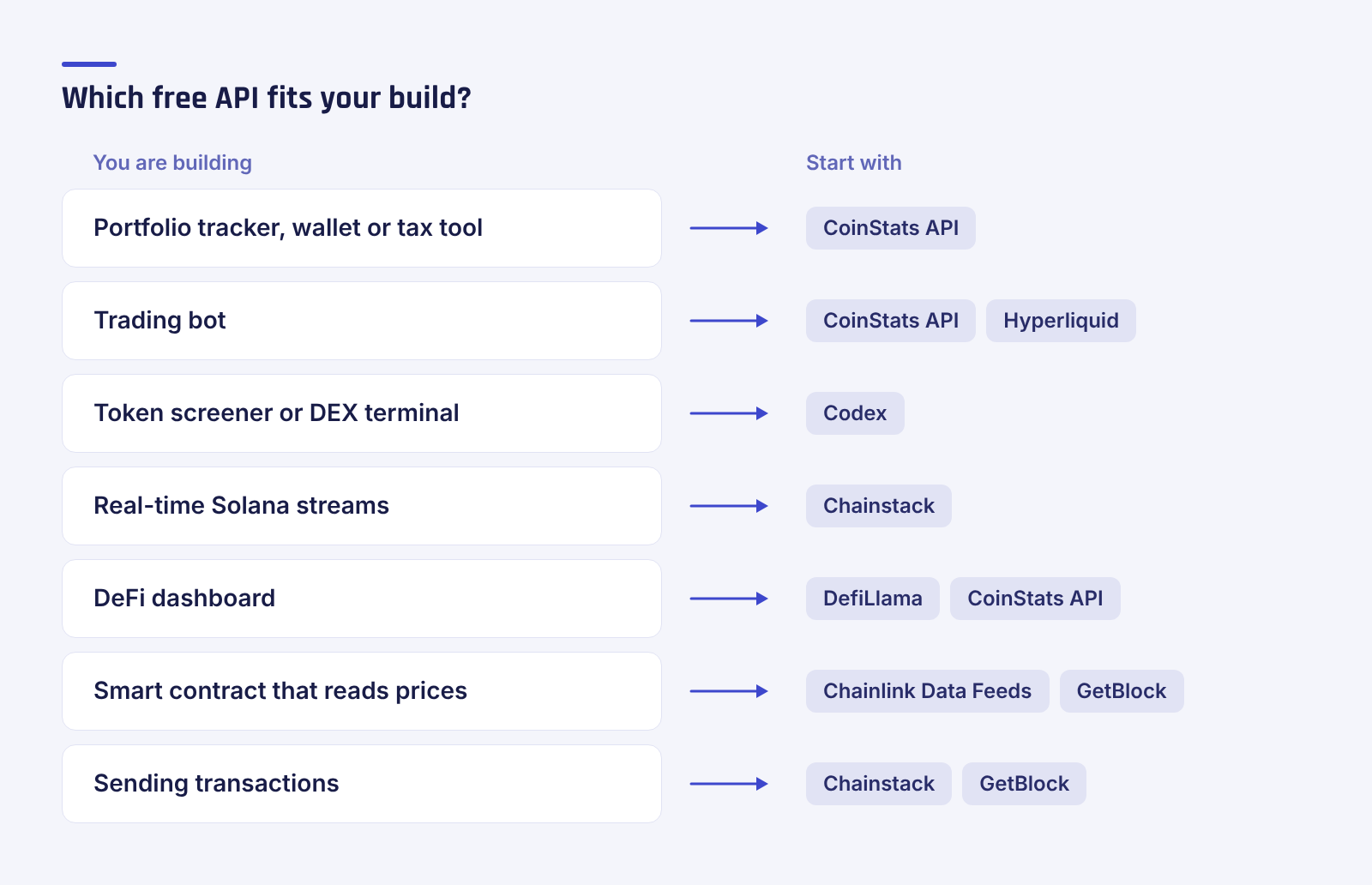
Pick by what you are building, not by the biggest free number. Most builds map cleanly to one or two providers.
Portfolio Trackers, Wallets, and Tax Tools
CoinStats API covers prices, balances, transactions, and P&L in one schema. Add Chainstack or GetBlock only if you send transactions.
Trading Bots
Use CoinStats API for prices and portfolios, and Hyperliquid for perps and spot orders. Codex adds new tokens the second they launch.
Token Screeners and DEX Terminals
Codex indexes new pairs in under a second. Its paid tiers add streaming.
Real-time Solana Apps
Chainstack streams Solana events through Yellowstone gRPC, with no polling loop. Its Trader Nodes are tuned for low-latency trading.
DeFi Dashboards
DefiLlama supplies protocol TVL, fees, and yields. CoinStats API adds per-wallet DeFi positions on paid plans.
Smart Contracts That Need Prices
Read Chainlink Data Feeds through a Chainstack or GetBlock endpoint. All three cost nothing to start.
Three Free Stacks That Work
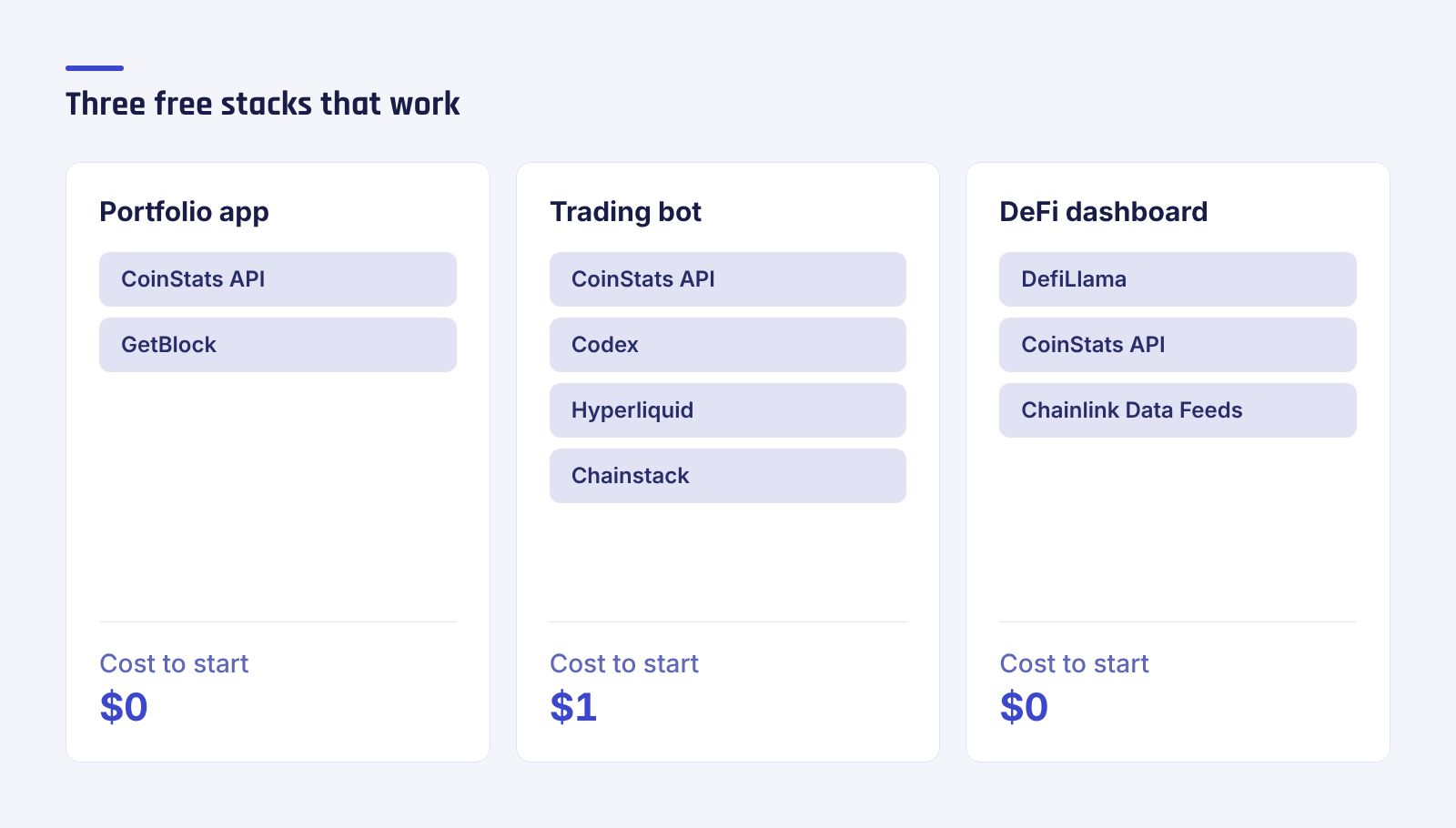
Most teams run two or three of these APIs together. Three combinations cover most builds.
- Portfolio app: CoinStats API for data, GetBlock for transactions.
- Trading bot: CoinStats API, Codex, Hyperliquid, and Chainstack. The $1 is Codex’s activation.
- DeFi dashboard: DefiLlama for protocols, CoinStats API for wallets, Chainlink for prices.
Final Thoughts
Start with one broad free key, then add specialists for your core feature. For most crypto products, that key is CoinStats API.
Add Codex for real-time tokens, and Chainstack or GetBlock for node access. DefiLlama, Hyperliquid, and Chainlink Data Feeds cover DeFi metrics, perps trading, and onchain prices.
Related: A Practical Guide to Crypto APIs for Developers
FAQ
CoinStats API is the best fit for most crypto use cases. Its free plan covers market data, wallets, and portfolio analytics under one key. Commercial use is allowed.
DefiLlama’s public API needs no key or signup. Hyperliquid serves market and account data without a key. Anyone can read Chainlink Data Feeds onchain.
CoinStats API allows commercial use on its free plan, with no card needed. Other free plans differ, so check each provider’s terms before launch.
A crypto data API returns indexed answers like prices, balances, and P&L. An RPC node returns raw chain state and sends transactions. Most apps pair one of each, such as CoinStats API with Chainstack or GetBlock.
CoinStats API ships an MCP Server with 20+ tools, plus x402 pay-per-request access. Chainstack’s MCP server lets agents deploy nodes and query chain data. Codex lets agents pay per query with no account.
The units differ, so raw numbers mislead. CoinStats API gives 20,000 weighted credits, and Codex 10,000 requests a month. Chainstack gives 3M request units a month, and GetBlock 50,000 compute units a day.
Disclaimer: The information presented in this article is for informational and educational purposes only. The article does not constitute financial advice or advice of any kind. Coin Edition is not responsible for any losses incurred as a result of the utilization of content, products, or services mentioned. Readers are advised to exercise caution before taking any action related to the company.