Remo Ruffini always knew Moncler could be more than just puffer jackets. That’s why he stepped up to buy the business in 2003 when it was a sleepy ski brand with sales of around 50 million euros.
But the Italian entrepreneur, who had cut his teeth in the fashion world with a brand he created in the 1980s called New England, envisioned a brighter future for Moncler and systematically set out to recreate it.
And it worked. Today, Moncler is part of a publicly held group that posted 3.13 billion euros in sales in 2025.
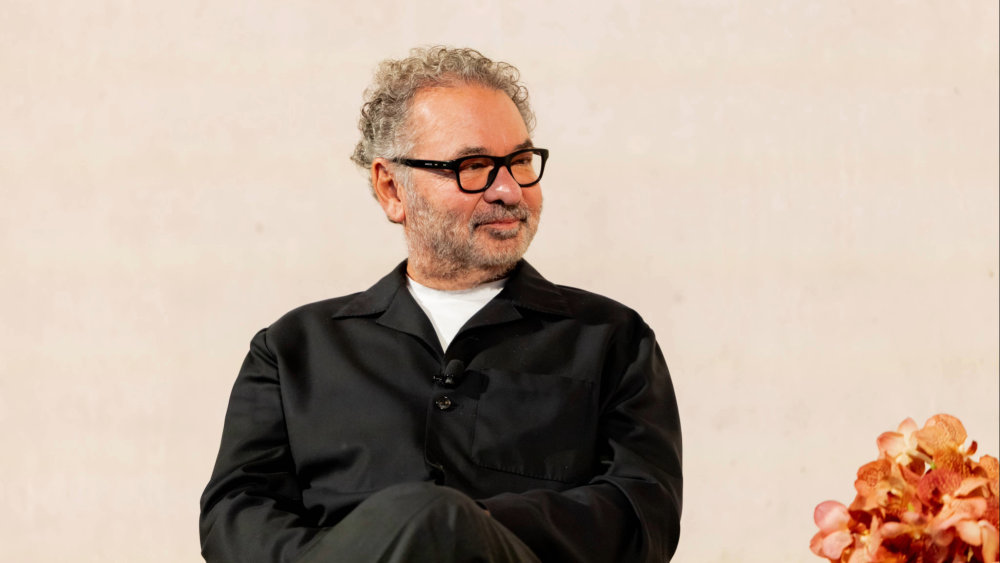
“I evolved the approach, I evolved the attitude, I wanted to attract different communities,” he said in a conversation with WWD’s Milan bureau chief Luisa Zargani.
Among Ruffini’s most impactful moves was to collaborate with designers ranging from Junya Watanabe and Nicolas Ghesquière to Thom Browne as well as hitting the catwalk in Paris and other cities.
But by 2018, he said, he was “bored,” and came up with Moncler Genius, a collaborative project where he would work with different designers, artists, singers, sports figures and others to reshape the brand.
“I needed something to give more energy to my communities and to me as well,” he said. So he created “an imaginary house with eight windows, and every two years, we called eight designers to interpret the history, but always looking toward the future.”
The process, he said, was to identify people who had a design aesthetic he admired and then hold intense conversations to ensure they understood the history and legacy of Moncler while also providing them the “freedom to express their own creativity. For me, it’s very important to merge the two cultures. Most of the time, the process results in something very interesting.”
In addition, Ruffini said expanding Moncler’s distribution was key to its growth. In order to help customers understand how the business had expanded beyond down jackets, he felt it was important to open his own stores. So starting in 2008, Ruffini began doing just that as a way to “explain exactly what’s happening with the brand,” and showcase the products, categories and stories that were integral to the company.
“We can talk every day in the store with the people to explain our strategy, our attitude, our history,” he said. Moncler traces its roots to 1952 in Monestier-de-Clermont in France.
The first store opened in Paris and was “very tiny,” less than 900 square feet, he said, but customers immediately embraced it, lining up to enter the space.
Over the years, Moncler, which now operates more than 300 stores globally, has also evolved its retail presence, as evidenced by the 23,000-square-foot flagship the brand opened on Fifth Avenue in New York in September.
Ruffini said he has long felt a kinship with the city, and the U.S., since his father moved to New York in 1968 and the young Ruffini visited him several times a year. After he finished school, he continued to visit, driving up and down the East Coast to Nantucket, Martha’s Vineyard, Rhode Island and other places he loved. It was this experience that inspired him to return to Italy and launch New England, a preppy-inspired brand that was “very Brooks Brothers, but with Italian creativity.”
He continued to produce the brand for two decades until 2001, when he sold it and then bought Moncler.
He said that the success of New England proved he had the ability to build a brand. “I invented it myself,” he said. “I built my own dream with no history.” It was shortly after selling the brand that he heard Moncler was available.
He was living near Como at the time, very close to the mountains, and would go skiing every weekend. “Then one day, someone told me Moncler is on the market; you can buy the brand. I was in love because this was my first jacket when I was 15 years old. I thought this could be an incredible opportunity. I basically started from scratch because the company was very small at that time and I started to rebuild the brand into what it is today.”
Although Ruffini has significantly expanded Moncler since buying it, there’s still room for additional growth, particularly in the Americas, which currently account for just 14 percent of overall sales. In addition to the new flagship in New York, the company also held a runway show in Aspen in February for its high-end performance line, Moncler Grenoble, as it works to heighten its exposure in the U.S.
“We’ve been here many years, but, for us, the U.S. has always been underpenetrated,” he said. “But it’s a super important country. I love the different micro communities around the U.S. I feel we have to be more important as a brand.”
He said two or three years ago, he changed his strategy to focus on Moncler as one brand with three dimensions: the core collection, which represents the largest part of the company’s sales, as well as Grenoble and Genius. He said the Aspen show represented a “turning point for the brand in the U.S. It was a very good experience for us; we have a lot of friends there and I think we improved our brand perception.”
Then he decided to open “the biggest store in the world” in New York in the former FAO Schwarz site that he remembered fondly from his youth. “It was very important to open a place to explain my strategy. When you go into the store, I hope you understand what Moncler is.”
The store clearly distinguishes the three collections with the main collection on the ground floor, segmented by aesthetic, along with Genius, and then Grenoble housed on the second floor for customers seeking mountain, hiking or biking clothes.
Ruffini believes Moncler is underpenetrated in the U.S. because it is perceived as a mountain brand and much of the country sports warmer climates. “This is what we want to explain — that we are not only a skiwear company, but we have a collection that is 360 degrees. We always try to reset.”
That includes investing in more warm-weather products — and the customer is responding. “Spring is quite strong,” Ruffini said. “It’s not as strong as winter, but it’s growing fast. Knitwear, all the ready-to-wear, shoes — it’s not like it was five, six or seven years ago. But we’re not in a rush. For me, the long-term strategy is the most important thing, and I think we can grow step by step.”
While Ruffini will continue to provide creative direction for Moncler, in April, former Bottega Veneta chief executive officer Bartolomeo (Leo) Rongone joined the company as CEO with Ruffini becoming executive chairman. He said he wasn’t pressured into bringing someone in, but he believes the time is right.
“I found the company 23 years ago, and it’s grown to 3 billion euros revenue and I was involved in almost everything. My background is more product, more designing, more creativity, and I felt it was the right moment to have a strong person to follow the business day-by-day. I’m still involved in the company a lot but I care more about the long-term vision.”