The 2026 midterm election showed that leftists like Michigan Senator-elect Abdul El-Sayed — and even candidates who have been affiliated with the Democratic Socialists of America — can win in competitive areas of the country, under the right circumstances.
But it also showed the danger of nominating candidates like them.
Many of them won, but they also often ran worse than other Democrats — and even further behind some of the party’s most moderate candidates.
The results clearly illustrate that nominating more moderate candidates remains the most fruitful path to winning swing seats and states. And they suggest candidates like El-Sayed could cost Democrats in less-wavey elections.
While the party previously nominated these kinds of candidates in dark-blue districts, it nominated El-Sayed in the Michigan Senate race and a DSA member in a swing congressional district in that state. It also nominated left-wing candidates for Senate in Florida and Minnesota, and in several House districts that had voted for President Donald Trump in 2024 — including in California, Maine, Montana, Pennsylvania and Tennessee.
Bernie Sanders-backed Senate candidates were the worst performers
This trend was most evident in the Senate results.
In fact, in key races, the four candidates most aligned with the party’s left flank — and endorsed by influential democratic socialist Sen. Bernie Sanders of Vermont — accounted for the four worst performances, compared to 2024.

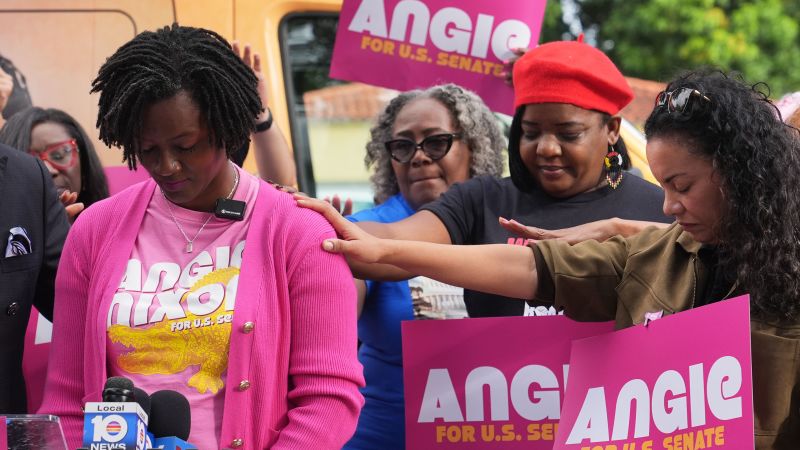
They were Maine Senator-elect Troy Jackson (half a point worse than Kamala Harris, as things stand), Minnesota Senator-elect Peggy Flanagan (5.9 points better), El-Sayed (8.4 ponts better) and Florida Senate candidate Angie Nixon (10.2 points better).
The average Democratic Senate candidate in key races ran sixteen points better than Harris did in 2024.
These candidates are different flavors of leftists, for sure. Nixon is an actual DSA member who joined in June. El-Sayed is not a democratic socialist and has called himself a capitalist, but he clearly comes from the left wing of the party, and many prominent Democrats feared that nominating him would cost them the seat even in a strong Democratic environment. Both Jackson and Flanagan are also pretty liberal, with Flanagan having defeated a more moderate primary opponent in Rep. Angie Craig.
All four of these candidates also ran worse than the Democratic gubernatorial candidates running on the same ballots.
These candidates account for 4 of the 5 candidates that Sanders endorsed. The fifth, Sen. Ed Markey of Massachusetts, won easily in blue Massachusetts. But he also notched one of the party’s worst performances compared to Harris’ numbers in his state, beating her 2024 margin by just 5.8 points.
In contrast to how these candidates performed, we saw many of the more moderate Democratic candidates notch some of the biggest over-performances.

North Carolina Senator-elect Roy Cooper over-performed Harris by 23.2 points. Mississippi Senate candidate Scott Colom, who ran as a pro-law enforcement moderate, is currently over-performing by 23.1 points and could pull the upset of the election cycle over GOP Sen. Cindy Hyde-Smith. Senator-elect Adam Hamilton in Kansas, Sen. Jon Ossoff in Georgia and Senator-elect Josh Turek in Iowa ran 21.1, 20.2 and 17.2 points better than Harris, respectively.
Some of the other biggest over-performances came from candidates with less moderate (and even rather “woke”) pasts — but who clearly ran as moderates this time. That includes Senator-elect James Talarico in Texas (25.7 points better than Harris) and Senator-elect Dr. Annie Andrews in South Carolina (21.9 points better).
It’s true that Democrats won nearly all of these races, regardless. But given these results, it’s valid to wonder if they could have also won the Florida race — which Nixon lost by about three points — if they didn’t have a nominee affiliated with the DSA.
The results in the battle for the House told a similar tale, though the differences are less stark.
Pollster G. Elliott Morris of Strength In Numbers ran the numbers in all races and found that progressives and members of the Congressional Progressive Caucus over-performed Harris by an average of 12.2 points. That was compared to 14.1 points for members of the more-moderate New Democrat Coalition, and 15.4 points for moderate-to-conservative Blue Dog Democrats.
Curiously, Morris found that DSA candidates actually over-performed by even more — an average of 16.5 points.
But that’s from a very small sample size of just seven candidates. And they were generally running in very blue districts where, yes, being far to the left might be an asset.
The picture in more-competitive districts suggests far-left candidates could have — and likely did — cost Democrats.

Perhaps the biggest win for the left was in Michigan’s 7th District, where Democratic Rep.-elect William Lawrence won a swing seat. Lawrence was a member of the DSA when he won his primary, though he left the group in the general election. His win, like El-Sayed’s, could be read to prove that far-left candidates can win swing districts.
But Lawrence only narrowly won, and he only over-performed Harris by a relatively meager 4.3 points. That’s one of the smallest over-performances in the House.
Also telling: In Maine’s 2nd District, Sanders-backed state Auditor Matt Dunlap over-performed Harris by just 8.1 points and lost.
The result was particularly striking because retiring moderate Democratic Rep. Jared Golden had managed to keep the Trump-supporting district in Democratic hands in far-less-favorable environments in recent years. Dunlap defeated a more-moderate candidate backed by the national Democratic Party in the primary.
The district apparently will now be the bluest one that Democrats won’t represent in the House — and the party can blame a Sanders-backed candidate.
Left-wing Democrats appear to have performed about on-par with other Democrats in districts like Colorado’s 8th, Montana’s 1st and Pennsylvania’s 7th. Rep.-elect Randy Villegas also won a swing district in California’s 22nd district, but it’s too early to compare his margin to 2024 (more than 40% of the vote is yet to be counted as of Friday morning).
There was one left-wing candidate who significantly over-performed but came up short in a pretty red district. It was Democrat Justin J. Pearson, whom you might remember from when he was expelled from the Tennessee state House in 2023. He lost by just one point in a district Trump had carried by 21, even after campaigning with New York Rep. Alexandria Ocasio-Cortez.
Still, that was the exception to the rule.
There’s a clear lesson for Democrats looking at these election results: It’s preferable to run moderates — and avoid far-left candidates — in battleground areas. After all, huge blue waves like this also tend to be the exception, not the rule.