We may receive a commission on purchases made from links.
Whenever someone says, “They could never make that movie today,” it’s usually in response to shifting cultural norms and sensitivities. Whether it’s a thoughtful analysis of how the world has changed over time or your grandad railing against “woke,” there are some familiar suspects that get pulled out when looking at the discrepancy in the values we depict on screen. A movie like “Blazing Saddles,” with its renegade and off-color humor, seems at odds with how we treat ideas of race and sexuality today. (But then, even at the time, Mel Brooks thought “Blazing Saddles” would get him killed.)
However, if we’re talking about movies that can’t be made today, we should think of the ones that challenged audiences to an unusual degree, and there was a proliferation of such films in the 1970s. The New Hollywood era turned the industry upside down and forced our mainstream cinematic stories to reflect a grittier, bleaker reality, where new understandings of violence and deviance were more prevalent than ever. Some of the films on this list had limited accessibility to begin with, but many were dark, complex stories released by big studios that were far less risk-averse than today’s widely homogenized, sanitized mainstream. Studios don’t make movies like these anymore, because executives get nervous about them, and audiences are likely to reject them.
Here are 10 movies from the 1970s that couldn’t be made today.
Deliverance
“Deliverance” features the kind of pensive, shocking, and dark subject matter that major studios don’t pursue as heavily today, and its production was dangerous as all get out. The story of four civilized men from the city who seek to canoe down the rapids of a soon-to-be-dammed river and come face-to-face with the random violence and savagery of the natural world was shot on location in Rabun County, Georgia, and you can feel the real-life peril of the actors performing dangerous in-camera stunts.
Warner Bros. was already nervous about the John Boorman-directed film’s thematic content during production, and they slashed the budget. That led the main performers to do it themselves: Jon Voight got shots of him actually free-climbing the cliffside, Burt Reynolds wanted a go at being in one of the canoes as it went over a waterfall, and Ned Beatty nearly drowned while shooting other footage of the rapids. A huge fistfight also broke out on set, though that was more of an occupational hazard related to stubborn creatives than dying at the hands of nature.
Still, it underscores the film’s feral tone, most notably in its infamous sexual assault scene. Never mind the fact that such a sequence would be a hard sell for any major studio today; the remaining hour of the runtime is a slow, eerie, process-oriented trek to the bottom of the river as the characters reckon with the existential weight of death and life away from their cushy, urban comforts. Despite its ultimate box-office success, it’s not a natural crowd-pleaser or a traditional thriller, and executives would likely balk at its deliberate pace, tone, and emotionally ambiguous payoff.
The French Connection
The first of a couple of William Friedkin movies on this list — that guy loved to push boundaries for most of his career — “The French Connection” commits an unforgivable sin in the modern age: It puts an unlikable character at the center. A gritty crime thriller about a couple of rough-hewn NYPD cops who discover a huge heroin-smuggling ring originating in France, Ernest Tidyman’s screenplay, based on Robin Moore’s book, is scathingly forthright in its depictions of institutionalized racism and brutality within the police system.
Much of that comes straight from the character of “Popeye” Doyle, portrayed by Gene Hackman in an uncompromisingly unlikable performance. In his aggressive efforts to pursue the mastermind of the drug operation, he uses unorthodox, often illegal tactics that circumvent institutional directives. Through racial slurs, beatings, and reckless pursuits through city streets, “The French Connection” pulls no punches in showing how easily derangement born of power complexes can infest systems of authority.
But that’s what makes the film so dangerous and thrilling, along with its exhilarating filmmaking fundamentals and set pieces, including a now-iconic car chase that helped define the modern idea of the trope. Yet between its hard-edged documentary shooting style, its ambiguous and haunting ending, the extremely dangerous stunt-driving, and the loathsomeness of the main character, it’s hard to imagine a studio like 20th Century-Fox going out for something like this again. (Hackman does return for another great performance in a sequel, though.)
National Lampoon’s Animal House
The anarchic looseness by which “National Lampoon’s Animal House” operates is both its strength and its liability. John Landis’s 1978 gross-out comedy — the first from the creators and talent behind the DIY comedy magazine National Lampoon — shows a casual disregard for any ethical reckoning of the disreputable Delta Tau Chi fraternity at its center, following its delinquent members as they wage war against the priggish Dean Wormer and a rival house of preppy sociopaths.
The film treats fraternity culture — all the drinking, the hazing, the toga parties, the apathy toward consequences — as a celebration, which informs the most dated elements of the film’s chaos. A subplot in which Pino (Tom Hulce) hesitates to sleep with an incapacitated, underage date reads as downright sinister today, even if segments like these were detours in a comedy otherwise meant to bring institutional authority down a peg.
But even aside from the elements that are problematic to a modern audience, studios weren’t even convinced “Animal House” could be a movie when it was being made. Executives just didn’t get the shaggy, coarse nature of the premise, and yet, those are the elements that have made “Animal House” still influential to this day. It set the template for an unruly ensemble fighting back against the malaise of day-to-day expectations, a template so many coming-of-age comedies would crib in the years that followed. While studios have gone forward with plenty of movies mimicking the broad structure of an “Animal House,” there are plenty of elements in the film that wouldn’t survive a table read.
Taxi Driver
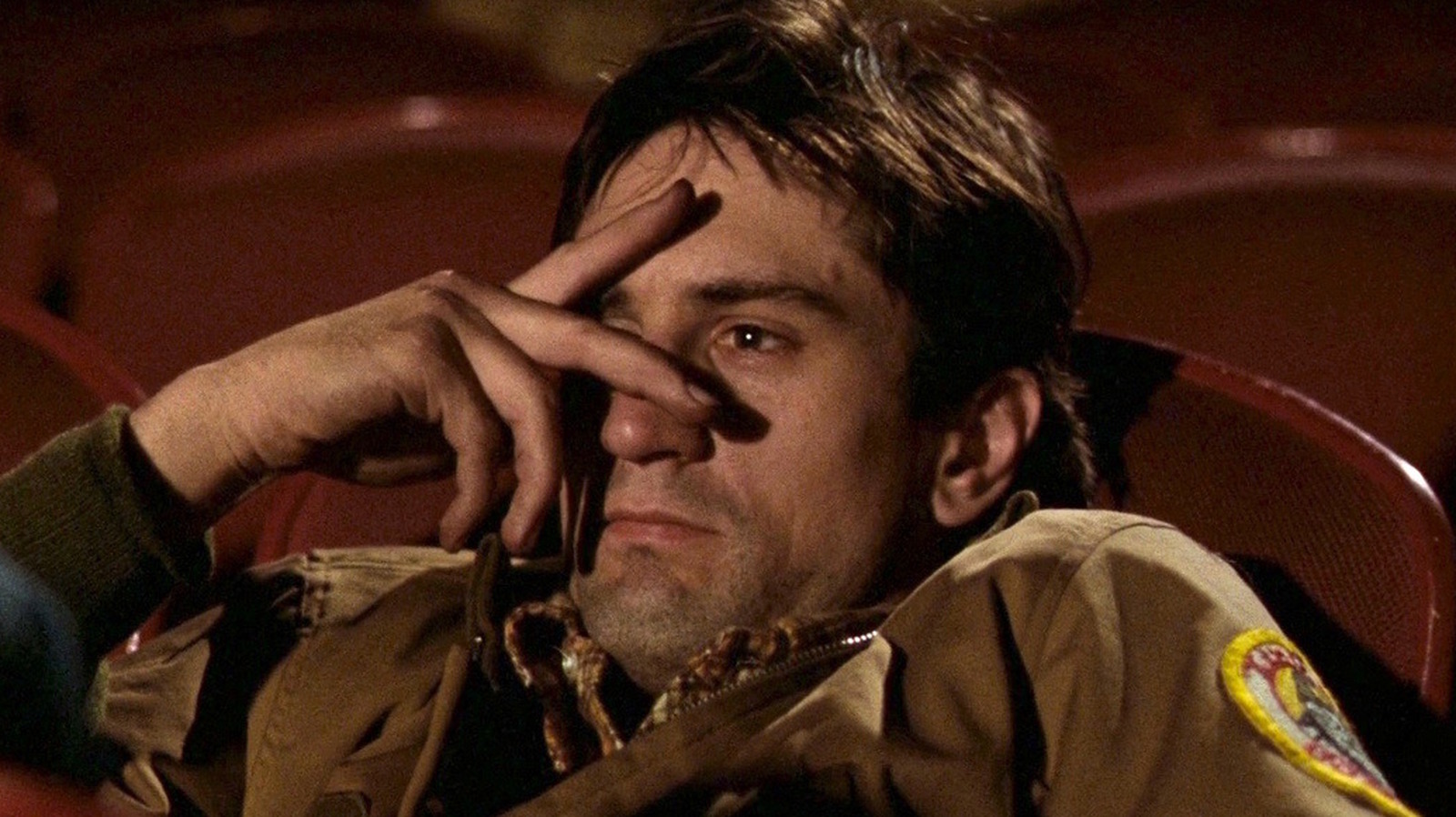
Martin Scorsese’s bleak character study may be seen today as a pinnacle of dark, seedy ’70s cinema and a touchstone in the career of one of the greatest modern directors, but it’s hard to imagine a studio like Columbia Pictures giving it the green light today. It was already controversial and shocking upon release in 1976, and that was in an era when more adventurous, risky, and daring movies were hitting the mainstream.
It’s a fantastic film, though, one that still feels genuinely sensational even after decades of rapturous praise from critics and cinephiles. It’s all in the complexity Scorsese and screenwriter Paul Schrader use to define this story of Vietnam War veteran Travis Bickle (Robert DeNiro), who takes on a job as a night-shift taxi driver while battling his insomnia and, more subconsciously, his PTSD, as he slowly slips into radical extremism in his quest to rid New York City of what he sees as its scum and decay.
It’s an unblinking portrait from the perspective of a deranged vigilante, with additional lurid elements involving child sex trafficking and a graphic, bloody climax that leads to an ending where Bickle is whitewashed and lionized by the media. It trusts the audience to recognize the dark irony of its final frames, and they make the film itself skeptical of Bickle’s supposed heroism, a difficult ask in an era when audiences call for clear-cut morals and a disregard for complexity in leading characters.
Sorcerer
The making of William Friedkin’s “Sorcerer” was a perfect storm of problems. Paramount Pictures and Universal Pictures were already taking a risk by fully backing this bleak, grueling existential thriller. based on the 1950 French novel “The Wages of Fear” by Georges Arnaud. Letting Friedkin, of all people, loose while filming on location in the Dominican Republic on top of that was just asking for trouble.
Friedkin was given complete control over the film after the huge successes of “The French Connection” and “The Exorcist,” and its modest $2.5 million budget soon ballooned to over $22 million during its toilsome production. Everything went wrong: Filming in remote locations led to widespread malaria, dysentery, and gangrene among the crew, nearly half of whom were hospitalized or sent home; controlled on-set explosions went awry and injured stuntmen; and the film’s most famous set-piece, a truck carrying mounds of rotting dynamite as it traversed a dismantling bridge in a rainstorm, was first built for $1 million on location before unusually arid conditions forced the production to rebuild it elsewhere.
That said, you can feel the manic, intense energy of a director, cast, and entire film crew desperately scrambling through blood, sweat, and tears to finish the film in the fierce, hellacious final product. All of the on-set problems faced by “Sorcerer” contribute to the ferocious identity that defines it, helping secure its status as a masterpiece — just don’t expect Paramount or Universal to impetuously fund anything like it ever again.
Apocalypse Now
You wanna know how much “Apocalypse Now” would never be made today? It almost wasn’t made in the ’70s! Every major studio declined to back Francis Ford Coppola’s surreal, nightmarish psychological epic about the Vietnam War. The U.S. was just coming off the chaotic 1975 evacuation of Saigon, and “Apocalypse Now” was viewed as commercial poison.
When the stories from the set came out, all those studios must have breathed a sigh of relief. Coppola decided to finance the picture himself, and the on-location shooting in the Philippines became a legendary tribulation, widely regarded as one of the most dangerous and troubled productions ever. The list seems endless: Martin Sheen had a heart attack; Typhoon Olga swept through and destroyed major sets (and almost killed Coppola); the construction of the jungle sets killed a workman; and Coppola suffered extreme dehydration and malnutrition.
The famous on-set documentary “Hearts of Darkness” brutally details the excruciating making of the film, which is almost as essential as watching “Apocalypse Now” itself. To truly understand the madness at the heart of Coppola’s enduring masterpiece, you have to understand the psychosis that went into making it in the first place. It goes without saying that it’s still unlikely any notable studio today would be interested in funding a movie of such knotty subject matter while giving full control to the erratic director helming the project, so appreciate the “Apocalypse Now” you’ve got, because you won’t get any more of them. (Well, except for all those different cuts that exist.)
A Clockwork Orange
Stanley Kubrick’s 1971 adaptation of Anthony Burgess’s novel imagines a near-future Britain overrun by teenage “ultra-violence” and answers it with a nearly as monstrous state rehabilitation program. Kubrick shoots it with a cold, balletic elegance that lets the atrocity fester in the mind in ways that still feel transgressive today. Malcolm McDowell’s Alex, droogs in tow, tears through the film’s first act to a soundtrack of Beethoven — magnetic, articulate, and psychotically violent.
You likely know the controversy that would follow, but we’ve explained it in full for you if not. In short, British tabloids linked the film to copycat crimes, followed by death threats to Kubrick and his family. In 1973, he personally withdrew the film from UK distribution, a ban that held until his death in 1999. The X rating and the ensuing public backlash are a permanent stamp on the film’s legacy, and major studios no longer release movies this risky, which ask their audience to be complicit in the pleasure of its own violence.
Add in an extended sexual assault sequence and a satire that condemns both criminal savagery and state control equally, offering no easy side to sympathize with, and you’ve got something that the major Hollywood business players would treat as commercial anathema. We already get plenty of think pieces on this movie, which came out over 55 years ago, but imagine the online discourse if it came out today!
Straw Dogs
Released in 1971 alongside “A Clockwork Orange” and “The French Connection,” “Straw Dogs” was, erm, the straw that broke the camel’s back in terms of a general public outcry in response to the sudden increase in depictions of graphic violence in film. After his last film ended up exceedingly over budget and delivered behind schedule, director Sam Peckinpah’s only option was to head to England to make an adaptation of Gordon M. Williams’s 1969 novel “The Siege of Trencher’s Farm,” which Peckinpah had described as a “rotten book.”
Peckinpah makes the film rotten in his own fashion. It’s a movie with a long history of controversy, from nationwide bans in certain countries to heavily edited versions that strip it of its most troubling and gratuitous elements. The film is infamous for its harrowing sequence of sexual assault, in which Peckinpah either depicts the seemingly contradictory ways in which victimized women may respond to real-time violence or suggests that women are readily coercible into sex, depending on your view of the director’s contentiously ambiguous perspective.
There’s no doubt that Peckinpah’s rageful, delirious account of man’s proclivity and capacity for savage violence delivers the primitive gut-punch he intends. A film so intentionally designed as a challenge to its viewers is a far cry from what any big studio would be interested in financing today, at least not to this degree of discomfort and perversity — the 2011 remake from director Rod Lurie keeps the basic premise but strips it of all its gritty, distressing power.
The Devils
Ken Russell’s 1971 historical horror, adapted from Aldous Huxley’s nonfiction account of the Loudun possessions, “The Devils of Loudun,” follows Urbain Grandier (Oliver Reed), a worldly 17th-century French priest whose political enemies conspire with a sexually repressed, hysterical convent of nuns, led by the tormented Sister Jeanne (Vanessa Redgrave), to have him tried and burned as a witch. True to Russell’s talents, it’s a film of mass hysteria, guiding the viewer through a garish, operatic descent of writhing bodies, sexual aberrations, and stark, brutalist set design.
To this day, it’s one of the most provocative films ever made, and its historic reputation helps explain why it’s only now getting a restored 4K re-release from Warner Bros. Clockwork, the new arthouse and repertory offshoot. Back in the day, that same studio panicked when it realized what it had on its hands. The film was released with an X rating, and even then, its most notorious sequence, involving the graphic desecration of a statue of Christ, was removed from prints for decades; a more complete cut wasn’t available until the 2000s, and the film has still been infamously hard to seek out and watch.
Given the anti-clerical fury, the uninhibited sexual content, and a studio that repressed the release for years, “The Devils” is a film that a studio like Warner Bros. is now happy to leverage the notoriety of among hardcore cinephiles, but they wouldn’t be caught dead financing to this degree anew. Just praise the Lord that you’ll now be able to see it.
Salò, or the 120 Days of Sodom
Pier Paolo Pasolini’s final film, released in 1975, just weeks after his still-unsolved murder, relocates Marquis de Sade’s 120 Days of Sodom to the last gasp of Mussolini’s fascist republic, where four powerful libertines abduct a group of teenagers to a remote villa and subject them to months of escalating degradation. Pasolini’s intent was unambiguously political, and he framed the film as an allegory about how absolute power devalues human bodies into consumable objects, with fascism as the ultimate endpoint of such a mindset.
By nature, that makes the film’s imagery so relentless and removed from any conventional narrative comfort or safety net that its grander ideas are often obscured by its extreme reputation. It was banned outright in multiple countries for years, and the British Board of Film Classification didn’t even pass an uncut version in Britain until 2000. Even now, distributors and streaming platforms handle it gingerly, and anyone approaching it is due for extensive framing about its intent. The fact that Pasolini didn’t live to defend it himself adds another cryptic layer of uncertainty among viewers.
Needless to say, no studio, arthouse distributors included, would finance this today. Even now, it remains a film more discussed and known in the public consciousness of cineastes as an example of a dangerous, boundary-pushing deviation than something that’s been widely seen, purely off the back of its reputation for depravity.