3 Questions

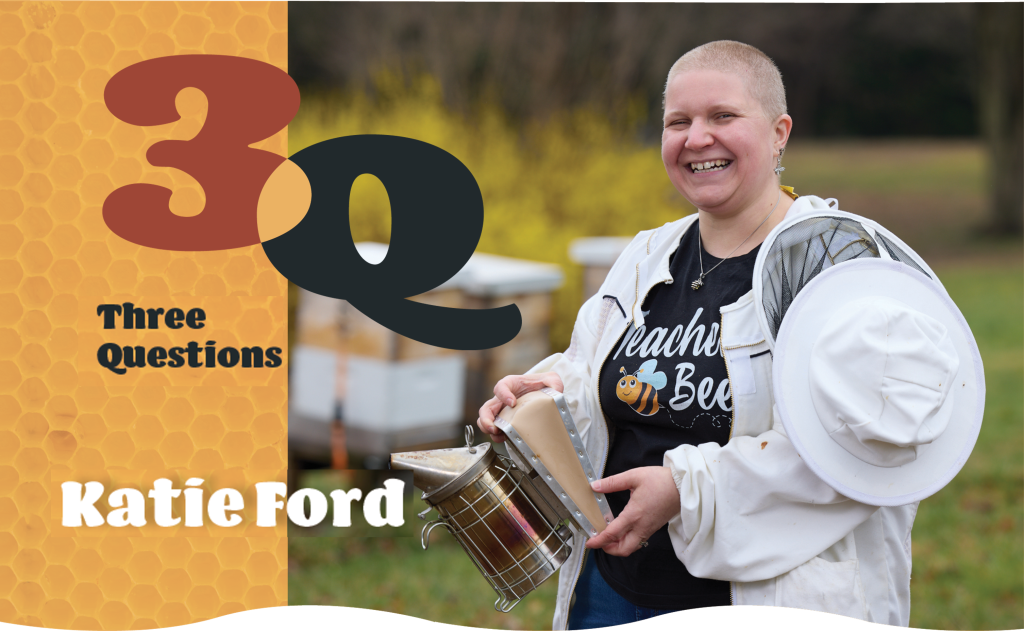
What does beekeeping have to do with teaching and public education? Turns out there are plenty of parallels to draw between the two. Just ask Katie Ford, a music teacher at Harford Academy, which serves students ages 3-21 with IEPs and whose intellectual needs significantly impact how they comprehend and communicate information.

How long into your teaching career were you before you made the move to Harford Academy? What compelled you to make the change? I had been teaching for two years when we relocated to Harford County for my husband’s work. I cried tears of joy in the interview when the music supervisor told me about Harford Academy because I honestly didn’t know schools that specialized in serving students with severe and profound special needs existed. I fell in love with this population in college when my fraternity started a chorus for local persons with disabilities. I am very fortunate that life brought me here because I feel like this school is where I am supposed to be.

You’re a beekeeper! What drew you to beekeeping? Do you see parallels between the success of a beehive as a cooperative, self-sustaining micro-verse and the success of a public school? Bees are easy to overlook, but they are essential to life on earth as extremely proficient pollinators. According to the USDA, one out of every three bites of food is a result of the work of pollinators like bees. Unfortunately, bee populations are under incredible stress due to choices made by a variety of industries, such as the use of pesticides and monocropping.
Like a hive where every bee contributes to success, a school needs its own collaborative team to thrive. And, like bees and their hives, when educators are overburdened, undervalued, and unsupported, the ecosystem of our schools and society are thrown out of balance. Educators need respect, care and support from local, state, and national stakeholders, just like bees need tending by knowledgeable and caring beekeepers.
What has beekeeping taught you about patience, care, resilience, and our relationship to nature and one another? How does that translate to your work? A beekeeping instructor told us to accept this fact: “You WILL get stung.” You can wear all the protective equipment, read all the books, have a serene mind and calm manner, but odds are you will still get stung. Walking into a classroom is a lot like that. You can prepare in all the right ways and your lesson may still fall flat. The behavior intervention plan you agonized over may not work out and you will feel “stung.” That feeling is painful and often irritating, but it doesn’t change the value of the work you are doing, and you can’t give up on it.
Deep down you care about your hive (your class) and you will suit up again and help them thrive by checking the health of the hive (assessing student understanding), applying treatment when needed (reteaching, utilizing a new modality to present the content, etc.) and then reaping the sweet honey (seeing students blossom into their success).