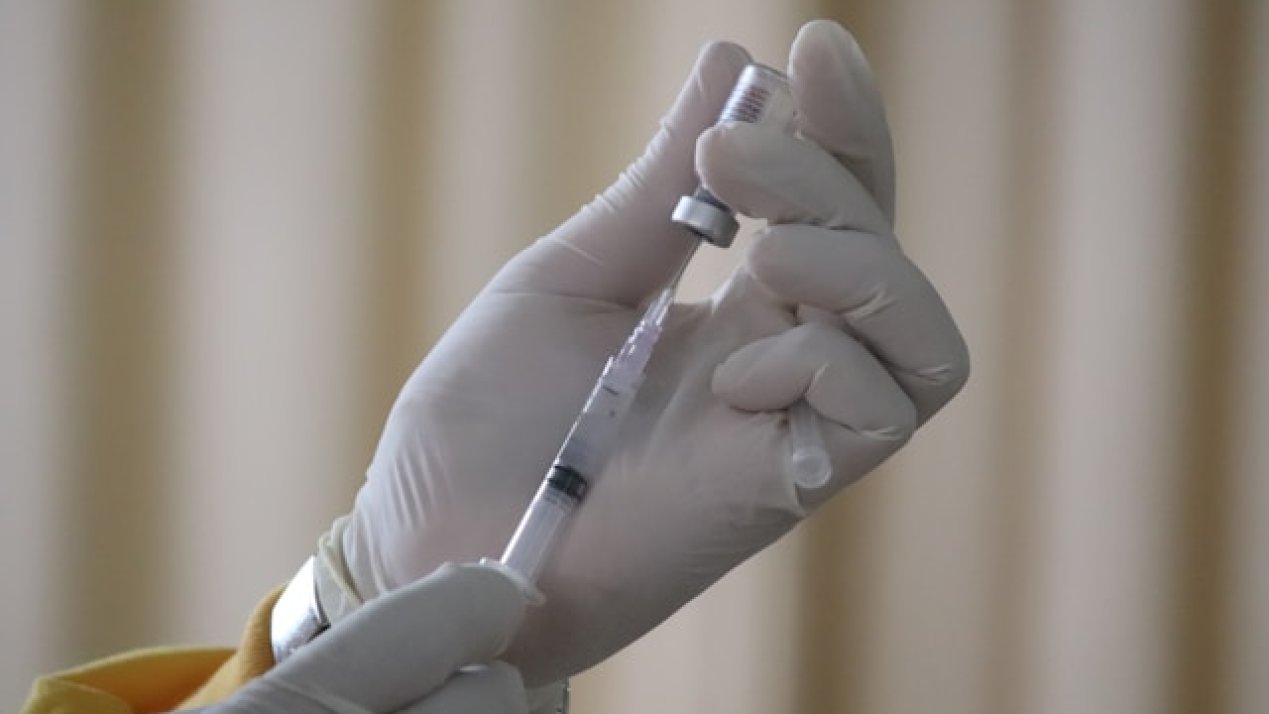
Mexico’s Health Ministry reported that 16,252,819 measles vaccine doses were administered nationwide between Jan. 1, 2025 and Feb. 13, 2026, as part of a coordinated national strategy to strengthen population immunity and expand immunization coverage.
Mexico’s Health Ministry (SSA) reported that more than 16.2 million measles vaccines were administered nationwide between Jan. 1, 2025 and Feb. 13, 2026, as part of a coordinated national strategy to strengthen population immunity.
In a statement, the Ministry of Health said 16,252,819 doses were applied across the country during the period, reflecting a sector-wide effort to expand coverage and reinforce preventive measures against measles.
The vaccination campaign has been carried out in coordination with institutions that make up the national health system, the Mexican Social Security Institute (IMSS), the Institute for Social Security and Services for State Workers (ISSSTE), IMSS-Bienestar, PEMEX, the Ministry of National Defense and the Ministry of the Navy. The strategy also involves the health ministries of Mexico’s 32 federal entities, underscoring an interinstitutional approach to disease prevention.
Authorities said the vaccination drive prioritizes children aged six months to 12 years who have not received any measles dose or who require a booster. Individuals aged 13 to 49 without a vaccination record or with incomplete schedules are also considered a priority group.
The ministry called on parents and guardians to review their children’s vaccination records and visit health centers to begin or complete the corresponding immunization schedule. Officials described vaccination as a core measure to protect both individuals and communities, particularly in the context of preventing outbreaks of vaccine-preventable diseases.
To facilitate access, the government enabled an online platform where citizens can identify their nearest vaccination site. Through dondemevacuno.salud.gob.mx, users can consult eligibility criteria and available locations. Guidance is also available free of charge via the national hotline 079.
Mexico has recorded an increase in measles cases since 2025, with over 9,000 confirmed infections reported nationwide through early 2026. Authorities have confirmed 28 measles-related deaths and report that widespread vaccination coverage, the availability of millions of vaccine doses, and an extensive network of vaccination points have limited the impact on public health.
Measles cases have increased across several Mexican states since early 2025, but health authorities say vaccination coverage and targeted containment measures have prevented broader public health risks.
According to preliminary data from Mexico’s General Directorate of Epidemiology, 9,074 measles cases had been confirmed nationwide between Jan. 1, 2025, and Feb. 10, 2026, out of 23,068 probable cases reported through the Special Epidemiological Surveillance System for Febrile Rash Illnesses. The national incidence rate stands at 6.7 cases per 100,000 inhabitants, a level health officials consider manageable given the country’s population of more than 133 million.
Chihuahua has recorded the highest cumulative number of confirmed cases, with 4,505 cases over the 2025–2026 period, followed by Jalisco with 2,193 cases. Other states with notable case counts include Chiapas, Michoacan, Guerrero, and Sinaloa. In contrast, several states, including Veracruz and Puebla, reported no confirmed cases in 2025, though new confirmations appeared in 2026.
Authorities have confirmed 28 measles-related deaths during the period, representing a national case fatality rate below 0.5%. Most deaths occurred in Chihuahua, which accounted for 21 fatalities, while Jalisco, Sonora, Durango, Michoacan, Tlaxcala, and Mexico City each reported isolated cases.
Epidemiological data show that measles has disproportionately affected children. The highest number of confirmed cases occurred among children aged one to four years, followed by those aged five to nine years and adults between 25 and 29 years. Infants under one year registered the highest incidence rate, at 51.13 cases per 100,000 inhabitants, underscoring the vulnerability of unvaccinated populations.
President Claudia Sheinbaum says that most Mexicans are vaccinated against measles and urges the public to remain calm, noting that national control strategies have already proven effective in states such as Chihuahua.
“Measles is the world’s most contagious virus, and these data show once again how it will exploit any gap in our collective defenses against it,” says Tedros Adhanom, Director General, WHO. “Measles does not respect borders, but when every child in every community is vaccinated against it, costly outbreaks can be avoided, lives can be saved, and this disease can be eliminated from entire nations.”
Recently, the Pan American Health Organization (PAHO) issued an epidemiological alert on measles in the Americas, urging countries to strengthen surveillance, expand vaccination, and ensure rapid outbreak response as cases continue to increase across multiple countries in the region.
The alert points to sustained growth in measles cases in 2025 compared with the previous five years, a trend that is continuing into early 2026. PAHO calls on health authorities to intensify epidemiological surveillance, including active case finding and laboratory diagnosis, implement supplementary immunization activities to address immunity gaps, and respond quickly to suspected cases to limit transmission.
The Americas had previously reduced estimated cases from 116,365 in 2019 to just 2,320 in 2024, and measles deaths fell to essentially zero. This achievement allowed the region to be reverified for measles elimination in 2024, becoming the only WHO region to regain elimination status after Venezuela’s re-verification in 2023 and Brazil’s in 2024.
However, the success proved fragile. First-dose measles vaccination coverage in the Americas recovered to 88% in 2024 — above the global average of 84% — but remained below the 95% needed at national and subnational levels to prevent outbreaks and sustain elimination. Pockets of under-vaccinated communities, combined with imported cases, resulted in outbreaks in several countries in 2025, including Canada and Mexico, leading to sustained transmission and the loss of the region’s measles-free status as of November 2025, reports MBN.