On Tuesday, Secretary of Defense Pete Hegseth announced that the men and women who defend our nation will be able to choose whether to be protected from the flu. In his video statement, he said that service members will no longer be required to get the annual influenza vaccine because flu causes “no threat to our military readiness.”
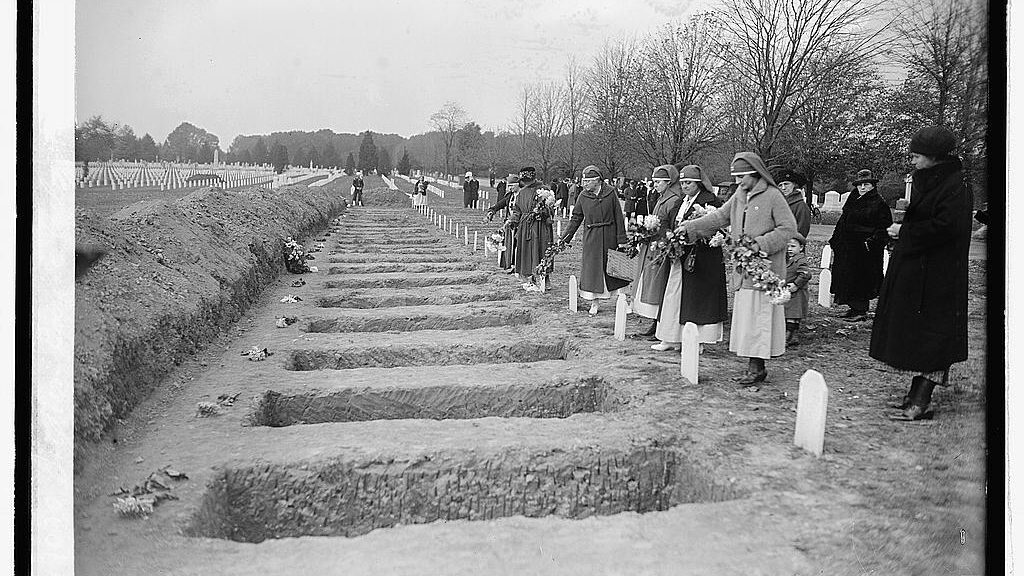
Unfortunately, this is untrue. During the 1918 influenza pandemic, more than 20,000 U.S. service members died and hundreds of thousands were hospitalized. People of military age were among those with the highest death rates during that outbreak, impacting not only their health, but the U.S. economy and military readiness. Historians report that up to 20% of U.S. service members became ill. As a result, the U.S. military began pursuing a flu vaccine to ensure that, in the future, our nation’s defenders would be protected from this threat.
During World War II, the U.S. military pioneered the first flu vaccine, which protected those in uniform from serious illness or death. It has required flu vaccinations for all men and women who serve since the 1950s. The military experience also helped the medical community learn that some viruses, like the flu, change frequently, requiring regular updates to vaccines.
As we see every winter, flu is easily spread when people are in close contact. And military service requires operating in many places where it’s easy to spread viruses like the flu, including ships, tents in deployed locations, tanks, submarines, barracks, training facilities, and planes with multiple crew members and/or passengers.
Even more unfortunately, asking people who develop flu-like symptoms to isolate is insufficient because those who are infected with the flu can spread it a day prior to symptom onset. Furthermore, some of those infected with the flu have very mild or no symptoms. During the 2023-24 flu season, for every 100,00 people over 65 infected with the flu, 32 died and 400 were hospitalized; similarly, for every 100,000 adults of military age, two died and 65 were hospitalized. Asserting that flu poses no risk is untrue.
Our nation’s best military leaders have long recognized the risks infectious diseases can present. Gen. George Washington, when he commanded the Continental Army during our War of Independence, directed that everyone in uniform be inoculated against smallpox, because it was significantly degrading military readiness. During World War II, Gen. Douglas MacArthur reportedly highlighted that the war would last longer because for every division facing the enemy, another was hospitalized and a third was convalescing from infectious diseases.
In 1999, the military stopped vaccinating troops to protect them from adenovirus infections. As a result, 13,000-15,000 troops in training became ill every year, of whom over 1,000 required hospitalization. Even more unfortunately, eight men and women who volunteered to defend our nation died of adenovirus infections before the vaccine requirement was reinstituted in 2011; since then, there have been no deaths due to adenovirus infections among military personnel.
Political leaders have also recognized the national security risks posed by naturally occurring, accidental, and deliberate biological threats. President Trump, in his 2018 National Biodefense Strategy, explicitly identified influenza as a significant biological threat. More recently, now-Secretary of State Marco Rubio, in an April 2025 assessment of compliance with the Biological Weapons Convention, noted that Russia and North Korea maintain an offensive bioweapons program and that the “United States does not have sufficient information to determine whether China has eliminate(d) its assessed historical biological warfare program.” Hegseth’s decision unfortunately may have given potential adversaries a new vulnerability to exploit.
The U.S. military must be available every day, anywhere to defend our nation. To do so, the military has developed numerous measures to protect military personnel from preventable illness or injury. Body armor, for example, can’t prevent you from being shot, but it does a great job of preventing almost all of those who are shot from dying. And those who have to wear it complain about how heavy it is and that it slows them down, but the data are so clear and compelling that the military requires wearing body armor in areas where there is a risk of being shot.
Similarly, flu vaccines are not a force shield that protects anyone from any infection, but they are very good at protecting those who become infected from becoming seriously ill and from dying.
Over the course of 37 years of military service, I saw firsthand in peacetime and in combat the incredible dedication of men and women who volunteer to defend our nation. They deserve the truth about the risks from flu and the truth about the benefits from the flu vaccine, not political platitudes.
Maj. Gen. (ret.) Paul Friedrichs, M.D., is a retired military medical officer whose last job in uniform was in the Pentagon as the senior medical adviser to the Joint Chiefs. He then served as the senior director for global health security and biodefense on the National Security Council.