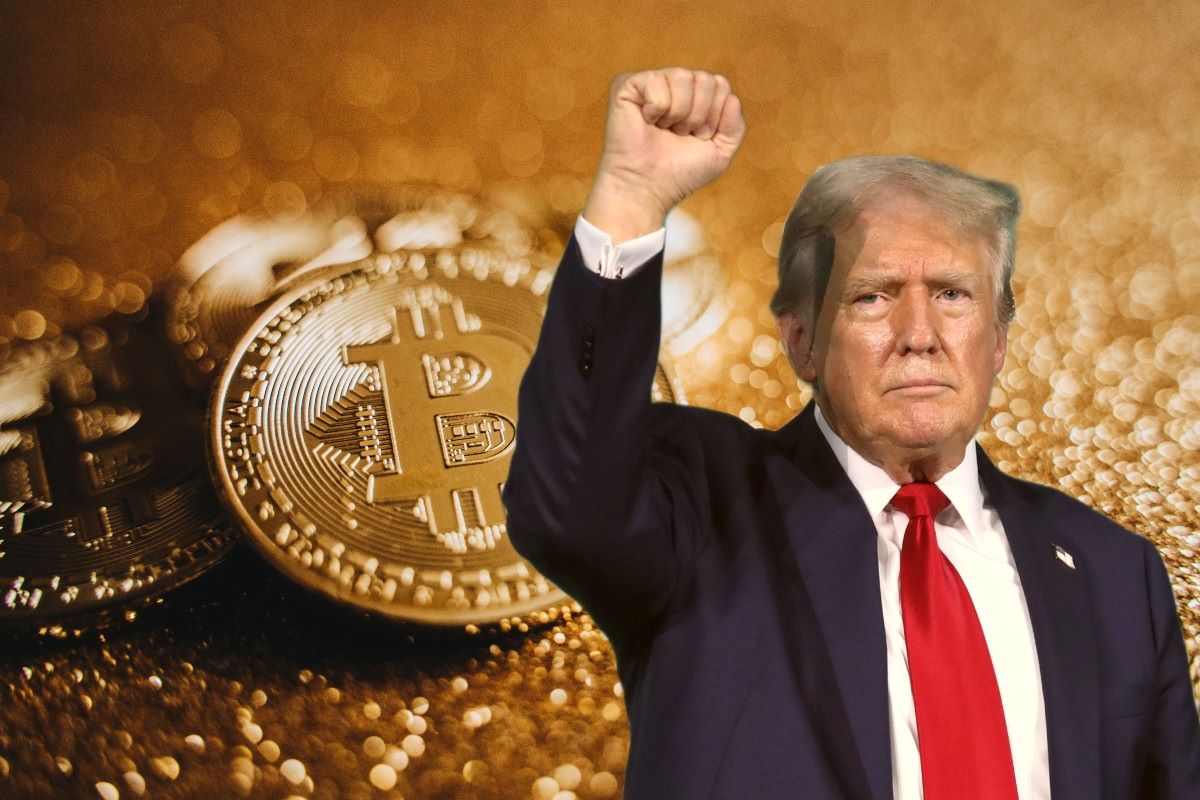
The Reuters news agency has just published an investigation into the involvement of the Trump family in cryptocurrency. They claim that the family made at least $2.3 billion from its main crypto-related ventures, while more than a million private investors subsequently suffered losses.
What is cryptocurrency
Cryptocurrency is a kind of digital money. It exists only online and is not issued or controlled by a bank or government. It is promoted, as World Liberty Financial claims, “to build and democratize a new financial system for the benefit of millions”. It is attractive to some because of its privacy. To open a conventional bank account, you must prove your identity, and the bank must cooperate with police and tax authorities.
By contrast, cryptocurrency exists only as a private record on a digital ledger, known as a blockchain. This keeps track of who owns what and helps prevent fake or repeated spending. But nobody else knows what you hold, and you store crypto in a digital wallet, which holds the keys that let you access and move it. It can be spent anywhere, and people can use it to send money directly to each other. It has attracted both speculative investors and, in some cases, criminal activity because transactions can be difficult to trace.
But since there is no government backing or bank behind a cryptocurrency its value floats up and down in response to level of demand. Successful investors buy cryptocurrency when the price is low and sell when it is high. Others gain through fees and licensing arrangements, as when Donald Trump licenses his name and image to a promote a cryptocurrency.
The basic story
Reuters’ report begins with the simple example of a woman who spent $2,000 to buy a Trump-linked meme coin (a form of cryptocurrency). She assumed that a product backed by the president would be safe and profitable. But the coin’s value later collapsed, leaving her with only $120.
The article claims that the Trump family followed a similar pattern across several ventures. They put little or no money at risk themselves, promoted the projects heavily, and earned fees or revenue as buyers rushed in. When prices later fell, the investors bore the losses.
The four ventures
Reuters examined four main crypto-related businesses, linked to the Trumps. These were: World Liberty Financial; ALT5 Sigma; American Bitcoin; and the $TRUMP meme coin. Reuters argues that billions of dollars flowed from mainly small investors into ventures linked to the Trump family, while the licensing arrangements meant that the family itself assumed relatively little financial risk.
Why people bought in
Reuters found that many investors believed that if Trump or his sons were backing something, it must have legitimacy or political momentum behind it. Some admitted they did little research and relied on the Trump name and the broader excitement around crypto. Most of those interviewed knew of Donald Trump’s history of failed business ventures, but believed that the backing of the President was a guarantee of success.
Several investors interviewed by Reuters said they felt embarrassed, angry, or misled after losses, sometimes of tens of thousands of dollars. A few still hoped that prices would recover, but most seemed to accept they had been badly burned.
The role of the presidency
Reuters argues that Trump’s return to the White House made the situation more troubling. The administration adopted policies seen as helpful to the crypto industry, while Trump and his family were also profiting from that same industry.
Reuters argues that the structure of these ventures meant the Trump family benefited from fees, licensing arrangements and rising investor interest, while much of the financial risk remained with those buying the assets.
Reuters interviewed eight ethics experts about this. They agreed that, even if it may not clearly break the law, this was an unusual and serious conflict of interest, blurring the line between public office and private gain.
More from East Anglia Bylines

Truth is power
Nominate an organisation that needs scrutiny