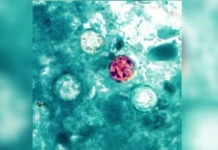
The current cyclosporiasis outbreak is one of the biggest surges in recent years. Here’s what to know about the previous outbreaks.
WASHINGTON — The Centers for Disease Control and Prevention is investigating a multistate outbreak of cyclosporiasis, a parasite that causes severe diarrhea.
About 1,645 cases have been confirmed since May 1 by the CDC, and more than 5,100 possible cases are being monitored for confirmation. The outbreak has impacted Michigan the hardest, where 3,309 people reported having the diarrhea-causing parasite called cyclospora.

Officials have not identified a source of the cyclosporiasis surge, though it is believed that the Michigan outbreak is tied to the cases in Ohio, Kentucky and West Virginia. Michigan officials have also pointed to lettuce or salads as the possible cause of the parasitic outbreak, though an investigation is still ongoing.
The number of confirmed cases is likely to be higher as most people recover at home without medical treatment and are not tested for the parasite.
The current cyclosporiasis outbreak is one of the biggest surges in recent years. Only a small number of outbreaks have surpassed 1,000 cases.
The last time there was an outbreak of the parasite was in 2019, when some 2,400 illnesses were reported in the U.S. caused by contaminated basil from Mexico. A 1997 outbreak tied to raspberries sickened more than 1,000 people in the U.S. and Canada.
The parasite is usually found in tropical or subtropical regions of the world, though when detected in the U.S., it has been linked to various types of fresh produce. Researchers note that fresh produce is particularly vulnerable because it is often consumed without cooking, giving the parasite an opportunity to survive until it is eaten.
Previous outbreaks of cyclosporiasis have included raspberries, bagged lettuce or salads, cilantro, basil, snow peas and green onions.
Case counts typically rise during the spring and summer months; therefore, the cyclosporiasis season is considered May 1 through Aug. 31. Clusters of cyclosporiasis cases have been detected outside this range in some years.
How to stay safe amid the cyclosporiasis outbreak
Washing produce won’t guarantee safety, but it does lower risk, officials say.
Rinse fruits and vegetables under running water before cutting, cooking or eating them. Buy whole heads of lettuce, pull off the outer leaves before washing and scrub firm produce with a clean brush. Cut away any bruised or damaged spots, and refrigerate cut or prepped produce within two hours.
Freezing may help, but it isn’t a guarantee. Cooking is the only sure way to kill the parasite.
It’s important to note that chemically disinfecting or sanitizing produce, such as soaking it in vinegar, might not fully eliminate cyclospora.