European clothing brands can still sell garments whose cotton may be linked to exploited farmers and child labour in Pakistan – and EU law lets them get away with it.
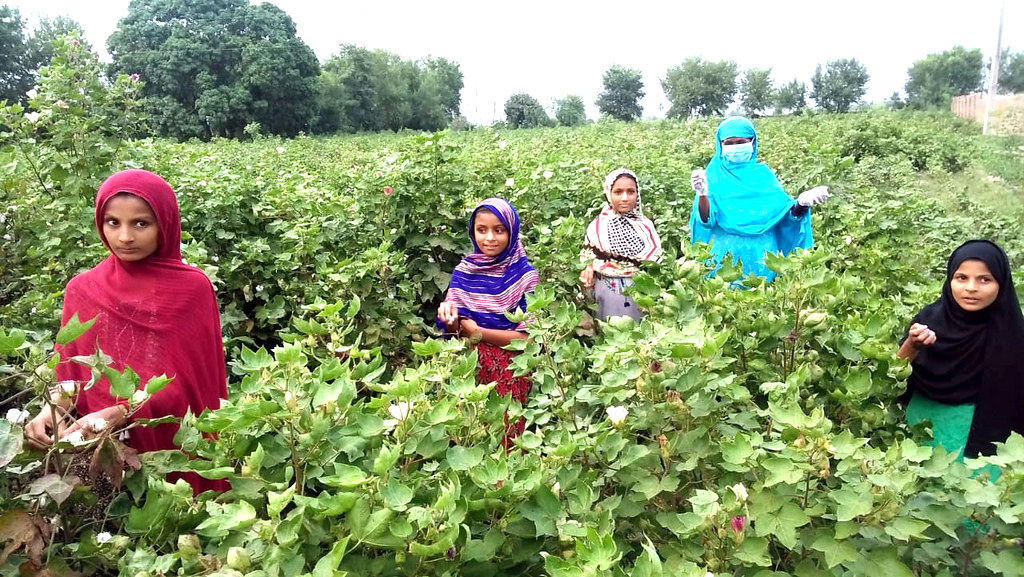
Guddi, aged around 50, picks cotton in Matiari District in Sindh Province, the most fertile after Punjab. She belongs to a low-caste of Hindu family. She has never gone to school. Neither have any of her six children – with a seventh on the way. “I would like them to be educated, but it’s just not possible,” she said. “What’s their future? Nothing! They will live in servitude like me.”
Guddi is among the hundreds of thousands of share-croppers with no means of income trapped in servitude or bonded labour to pay back – often inflated debts – to landlords, a feudal elite controlling the nation’s farmland.
Pakistan is among the seven largest producers of cotton globally. At the same time, it also ranks 18th on the Global Slavery Index, with 2.3 million bonded labourers. This scourge occurs especially in the informal agriculture economy which lies outside social law enforcement, with exploitation largely unchecked and unpunished.
Guddi’s 13-year-old daughter also works in the cotton farm owned by their landlord. “I want to see her happy and prosperous, but it takes four pairs of hands to pick 40kg, for which I get paid Rs 500 (€1.58),” Guddi said. “I could never break out of poverty; neither will she; she is a slave.”
Guddi’s daughter is now among an estimated 22.8 million (about 44 percent) Pakistani children aged 5-16 forced to work for day to day survival of their families. Pakistan scores the world’s second-largest number of out-of-school children.
Cotton hand-picked by Guddi and her daughter is sold to middlemen in local towns, transported to ginning factories (separating fibre and pressing cotton into bales), then to spinners (producing yarn) and eventually turned by urban factories into garments. Half of those are exported to the EU which is Pakistan’s largest export market for fashion goods.
‘The textile industry is one of the most exposed to unfair labour conditions; nonetheless farm-to-factory traceability is not mandatory since it has been opposed by the industry,’ said Helene De Rengerve, a human rights advocate
EU law on forced labour
To clean up supply chains from social and environmental harm, two landmark complementary laws are under adoption by EU lawmakers. The ban on products made with forced labour is coupled with mandatory corporate sustainability due diligence for large companies. The former was expected to come into effect in 2025; the latter in 2027.
However, in early April 2024 the European Parliament voted for watered-down provisions, in the run-up to the June 2024 June European elections. The Council of the 27 member states (acting as co-legislator) has delayed its final approval of the flawed text to next autumn.
Loopholes in the norms fail to require high street fashion retailers (as well as importers of any goods from overseas) from performing and disclosing full traceability of their supply chain right down to the procurement of raw material to clearly show their origin.
“The textile industry is one of the most exposed to unfair labour conditions; nonetheless farm-to-factory traceability is not mandatory since it has been opposed by the industry,” Helene De Rengerve, a human rights advocate, said.
Despite growing civil society demands for greater transparency and accountability, European businesses appear reluctant to abide.
The European Branded Clothing Alliance (EBCA), a Brussels-based lobby group, represents the interests of leading high street brands, including the Spanish Zara (owned by Inditex), the Belgian-German C&A and the Swedish H&M.
“Companies would need sufficient time to map out their complete supply chain in third countries, […], imposing it by law will not immediately make it happen,” publicly argued EBCA, which declined our requests for further comments.
“Technical methods already exist to ascertain where the cotton comes from, including electronic labelling,” pointed out Priscilla Robledo, Lobby & Advocacy coordinator at Clean Clothes Campaign, a civil society network.
“We try as much as possible to provide information on cotton origin through digital tools and QR codes,” Yaqoob Ahmed, chairman of Pakistan’s leading garments manufacturing house Artistic Milliners, told us. “Our clients include high street retailers like Zara, H&M, C&A, etc.”
Zara, H&M, C&A
C&A is the only big brand indicating the share of garments imported from Pakistan (six percent in 2022), besides disclosing the names of suppliers, similarly to H&M, while Zara has a strict confidentiality policy.
In response to our enquiries, the three companies individually referred us to their sustainability reports, claiming zero tolerance for human rights violations. But they all acknowledged that their direct verifications are limited to textile manufacturing and do not extend to cotton farms in Pakistan or elsewhere.
They simply require their garment suppliers to purchase cotton certified as environmentally and socially sustainable under the Better Cotton voluntary initiative. This market-based platform claims to help farmers achieve “better yields and improved working conditions.” It operates as a third-party auditing system helping international clothing retailers to showcase their responsible sourcing.
According to this scheme, ginning mills can certify as much cotton as they source from licensed farms. But, since spinners make yarns with bales from both certified and uncertified cotton, there is no guarantee that the physical fabric reaching the platform’s affiliated garment manufacturers is not linked to forced and child labour.
“Our chain of custody does not ensure 100 percent traceability to final retail products,” admitted a Better Cotton spokesperson.
Artistic Milliners also sources through Better Cotton certification programme. “The cotton we buy in Pakistan is in huge quantities and only a part of it comes from the farms we manage ourselves, the rest originates from privately managed farms,” said Ahmed. “But there is no way anyone can be 100 percent sure about the working conditions at those farms.”
“Better Cotton’s approach does not yet allow us to know the exact source of cotton in our products,” confirmed Bianca Maley, head of external affairs at C&A. “We continue our efforts […] to address human rights risks in cotton production.”
“We are currently monitoring the progress of Better Cotton pilot in traceability solutions which will allow us towards targeted remediation in risk-based countries,” Albin Nordin, a press officer at H&M, told us.
Better Cotton has recently signed an agreement with the Federation of Pakistan Chambers of Commerce and Industry to further improve its tracking system, which was introduced in the country in 2009. It is part of its plan to ensure full traceability from farm to clothing stores. Industry uptake is still at an early stage.
Burden of proof
Activists are not fully convinced. “For due diligence practices to be effective at identifying and remedying forced labour, they must go beyond third-party audits,” said Sian Lea from NGO Anti-Slavery International.
“We advocated against certifications and contractual clauses (e.g. Better Cotton) used by importers to dump responsibility on their suppliers, but EU lawmakers did not officially exclude them,” said Robledo. “National supervisors should not consider these tactics as an excuse for companies to circumvent their obligation to identify potential upstream risks.”
Within the EU legal framework, it is up to member states’ to start investigations based on grievances revealed by third parties (NGOs, media, etc), and prove that a product involves forced labour, in order to ban it.
Also, to respectively impose fines and seek compensation, competent authorities and the victims of abuses have to demonstrate that the company did not do its best to prevent wrongdoings by its direct and indirect suppliers (including cotton farm owners).
“A large barrier to justice is that victims would have to bear the burden of proof in courts, since the reversal we requested was rejected by lawmakers although most of the relevant information is in the hands of companies,” said Robledo.
The EU rules, referring to the standards of the International Labour Organisation (ILO), cover also bonded and child labour. But for Guddi and her daughter, filing a lawsuit for neglected due diligence without even knowing which clothing brands sell garments made with the cotton they pick would be an almost utopian task.
Child labour in Pakistan boosts EU fashion profits
“Child labour in Pakistan is a complex issue since children are traditionally involved at family level in the agricultural sector,” argued Insaf Nizam, an expert on fundamental principles and rights at work in South Asia at the ILO. “So it is not always easy to understand if they voluntarily or forcibly help their parents and if, on top of that, they are kept in bondage (e.g. forced labour-driven cumulative debt) with their parents by a landlord.”
Child work, as a positive experience to learn useful skills, can deteriorate into slavery depending on different conditions, often difficult to define in practice.
This is the blurred limbo in which 12-year-old Iqra Solangi lives. She works from dawn to dusk in the intense summer heat of District Matiari in the cotton-rich province of Sindh, alongside her younger sibling. “I get tired, but there’s no choice, my family needs the money.”
Haji Mohammed, owner of the 50-acre agricultural land where Iqra and her family pick cotton said: “Some of the farm workers run heavy debt, others who are able to manage their finances pay it off, provided that the crop yield is good.” He insisted on one point: “I am small landlord, not all landlords are exploitative.”
Zubaida Machi, Iqra’s mother, said that the landlord has recently improved the wages for her and her husband to Rs 800 (€2.5) per 40kg. “During the cotton picking season, we work non-stop seven days a week with our children to put food on the table,” she said. “We want to send them to school, but we can’t afford it.”
Provincial authorities appear to have dragged their feet in documenting the true magnitude of forceful child labour.
‘Our governments lack the will, as well as the capacity, to eliminate child slavery,’ said Pakistan‘s unionist Nasir Mansoor
The last nationwide survey (covering all of the country’s provinces) dates back to 1996, reporting 67 percent of 5 to 14-year-olds as being engaged in agriculture, forestry and fishing nationwide.
The province of Punjab (where the largest share of cotton is grown) concluded in March 2020 its updated child labour survey, recording a slight increase from 60.6 to 61.5 percent. Around three percent of them are employed in crop-based farming, such as cotton.
The province of Sindh (the second largest Pakistani cotton producer) lags behind, ostensibly due to bureaucratic delays.
None of the surveys performed so far has ever quantified the number of children held in captivity by landlords together with their families. “We observe that the worst form of forced labour has decreased over the last 20 years,” argued Nizam.
Nonetheless, ILO officers admitted that the improvements they observed during their field missions are not confirmed by the figures of the Pakistani authorities.
“Our governments lack the will, as well as the capacity, to eliminate child slavery,” said Nasir Mansoor, secretary general of the National Trade Union Federation (NTUF).
To help Pakistan with it’s international obligations in eradicating child labour, the ILO launched the CLEAR Cotton Project, funded by the EU with €9m in March 2018.
The cotton-rich provinces of Sindh and Punjab were part of it, along with other cotton-producing countries in the Global South.
The initiative ended in February 2023. It involved awareness-raising and capacity building of labour departments, employer organisations, farmer communities and textile workers. It also made efforts to improve the livelihoods of cotton farmers by reducing their reliance on child labour, and made efforts to rehabilitate and school children.
But it did not deal with traceability, unlike the parallel project Better work which, however, only covers garment factories, not cotton farming.
“The aim of CLEAR Cotton was to test some interventions and hand over the tools to local stakeholders, so that they can keep implementing what was proved efficient,” said Lucie Pelfort, project officer at ILO.
The most tangible reported success was the rehabilitation of about 1,671 children, who were saved from labour and provided access to education. However, the ILO can’t say if they continued their education after the project was wrapped up.
As part of the project implementation, a few landlords in Punjab were requested to stop using child labour on their cotton farms and due diligence was piloted on a number of ginning and spinning companies sourcing raw cotton and selling bales to garment manufacturers.
Good laws, bad enforcement
ILO refused to share the names of the involved landlords and companies, nor did it publish the report mapping the cotton supply chain in selected communities, developed through a complementary project funded by Inditex (the Spanish textile conglomerate owner of Zara brand).
On top of lack of transparency in the supply chain, national legislation intended to end child labour is still a piece of paper.
“We now have some of the best laws (namely the Bonded Labour Abolition Act 2016, and the Prohibition of Employment of Children Act 2017) but also the worst enforcement,” Gulfam Memon, a retired official of the Sindh labour department, told us. Memon now works as a consultant with international organisations such as the ILO and Unicef. “Our governments lack the will, as well as the capacity, to eliminate child slavery.”
“There are only a few hundred labour inspectors for the entire province of Sindh and they aren’t trained or even interested in enforcement,” said Nasir Mansoor of NTUF.
“Sindh province has not yet included informal sectors, such as agriculture, in labour inspections,” Faisal Iqbal, former CLEAR Cotton national project coordinator at ILO in Pakistan, said. “As an alternative, we supported the training of district vigilance committees to do field monitoring and advise the authorities on abuses in farmlands, but they lack budget and vehicles for inspections.”
The Sindh labour department did not respond to requests for comment.
Despite limited progress made by Pakistan over the last 10 years, in October 2023, the EU extended the favourable trade regime until the end of 2027.
The initiative, first awarded in 2013, aims to support Pakistan’s debt-ridden economy from shocks like the often devastating floods which hit again the country in 2022, leaving millions of farmers homeless and jobless.
Among the conditions attached by the EU was the ratification and effective implementation of the ILO international conventions on human, child and labour rights. This was precisely the reason why Pakistan was included in the CLEAR Cotton project, funded with EU taxpayers’ money.
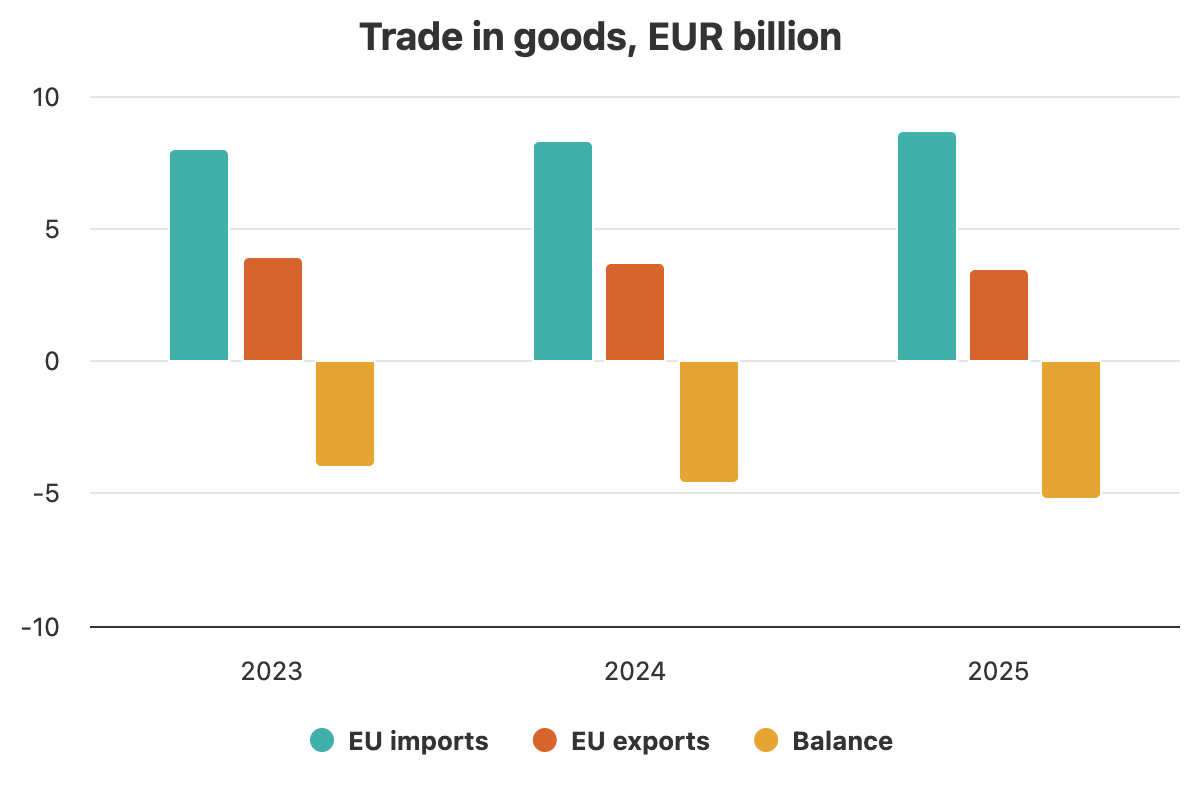
The GSP+ allows Pakistan to export goods in specific sectors, such as textiles, with no custom duties. It has helped boost the country’s total trade volume from €8.3bn in 2013 to €14.85bn in 2023.
“The GSP+ scheme brings economic benefits to cotton producers, garment manufacturers in Pakistan and European companies sourcing from the country at low cost, largely at the expense of Pakistani farmers whose fundamental labour and human rights are abused,” said Muriel Treibich, lobby & advocacy coordinator for the activists network Clean Clothes Campaign, adding that “it is urgent for the Pakistani government and for all private parties to live up to their commitments.”
The growth in trade may indeed have little effect in improving the lives of farmers due to the insufficient legal safeguards. “The two EU laws on forced labour and due diligence will not be sufficient to prevent the textile products made with cotton harvested through forced labour from being imported to the EU thanks to the GSP”, said Virginia Enssle from the NGO Fairtrade.
Blind spot
“We closely monitor the implementation of commitments by Pakistan,” said a spokesperson for the European Commission. “But trade restrictions would only have limited effect because child labour [….] takes place mainly in economic sectors that do not produce for export, such as subsistence agriculture, as stated in the report published by ILO in 2022.”
Nonetheless, the commission’s latest GSP+ assessment report acknowledges that “forced labour, primarily in the form of debt bondage is found across the country notably in sectors such as […] agriculture.” And cotton is the largest export-oriented agricultural product in Pakistan.
“Children who have no other choice than being exploited with their own bonded family in cotton farms inherit the forced labour condition of their parents,” Priscilla Robledo from Clean Clothes Campaign concluded. “This is the core issue that the EU does not want to see.”
Timeline | The EU’s efforts to clean up supply chains
February 2022 – The European Commission proposes the Corporate Sustainability Due Diligence Directive (CSDDD), which would require large companies to identify and address human rights and environmental harms across their supply chains.
December 2023 – A provisional deal on the CSDDD is reached, clarifying scope, penalties, and the list of rights companies must respect.
March–July 2024 – The CSDDD is approved by the European Commission in March 2024 – after undergoing changes that reduced its scope – and its final text is published in the EU Official Journal in July 2024.
25 July 2024 – The CSDDD enters into force.
27 November 2024 – The EU formally adopts the Forced Labour Regulation (FLR), banning any product made using forced labour – at any stage of production.
13 December 2024 – The Forced Labour Regulation enters into force. Member states have until 14 December 2025 to designate their competent enforcement authorities, and the European Commission must issue compliance guidelines by 14 June 2026.
26 February 2025 – The commission adopts an Omnibus package to simplify due diligence requirements, responding to industry pressure and a political push to reduce regulatory burden on businesses. Critics warn the changes gut the CSDDD’s reach.
3–16 April 2025 – The European Parliament votes to amend implementation timelines for the CSDDD. The EU enacts the “Stop the Clock” directive, postponing key compliance dates for both the CSRD and CSDDD.
November–December 2025 – The European Parliament adopts its final trilogue mandate on the Omnibus package on 13 November 2025, with 382 MEPs in favour and 249 against. Trilogue negotiations between parliament, commission and council begin on 18 November and conclude on 8–9 December 2025. On 16 December 2025, the European Parliament formally adopts the final text of the amended rules, significantly scaling back both the CSDDD and sustainability reporting obligations.
26 February 2026 – The revised Omnibus Directive is published in the EU Official Journal and enters into force on 19 March 2026. Member states must transpose the CSDDD provisions into national law by 26 July 2028.
14 December 2027 – The Forced Labour Regulation becomes fully enforceable. From this date, any product linked to forced labour can be banned from the EU market or blocked at the border.
26 July 2028 – The CSDDD is transposed into national law. Earliest date by which large companies must comply with the revised CSDDD due diligence obligations.
July 2029 – National laws take effect: the CSDDD applies to EU and non-EU large companies.
This article was first published by Voxeurop and supported by Journalismfund Europe