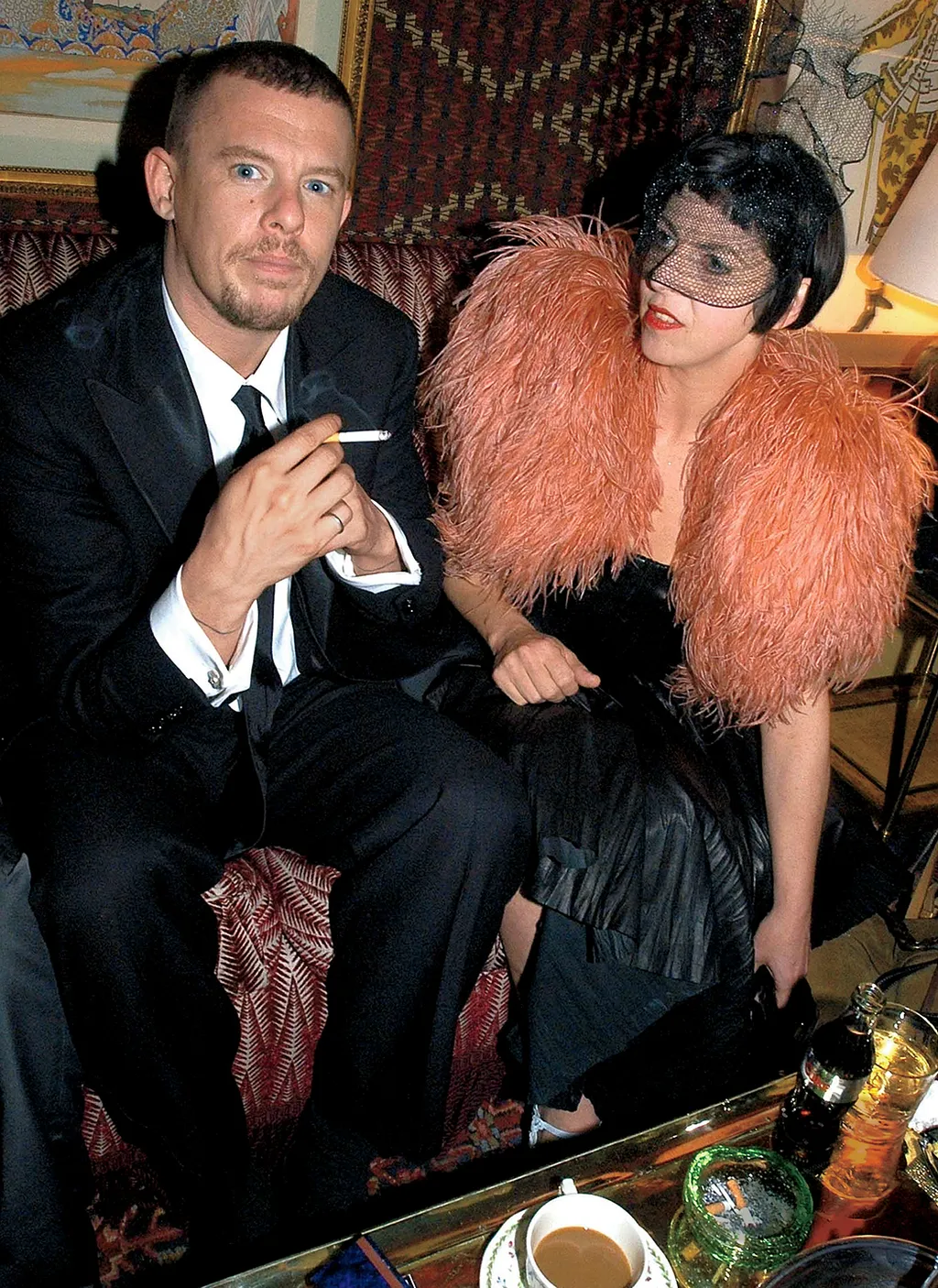
Three years later, Alexander was gone too.
To understand Lee is to understand that pain was never a wound to be hidden. It was a raw material, something to be pressed and shaped into art the way a jeweler presses heat into gold. His collections circled the same dark constellations again and again: loss, vulnerability, violence, beauty, and survival. Not because he was consumed by darkness, but because he refused to pretend it wasn’t there. And yet, in the same breath, he insisted fashion was not to be taken too seriously. That it was theater, provocation, play. There is something almost paradoxical in that. A man who poured his deepest wounds into his work and then winked at the audience. As if to say, “This matters enormously, and it doesn’t matter at all.”
Issie understood that instinct. She wore hats like armor and, in a 2002 interview with journalist Tamsin Blanchard, explained that they were also a form of protection. If someone tried to kiss her, the hat gave her an excuse to say goodbye before they got close. She only wanted to be kissed by the people she loved. That same interview gave us another line that has followed her ever since: that a hat was a cheaper and less painful form of plastic surgery. It was a funny line, and she meant it to be.
Their friendship was complicated, impossible to reduce to a comfortable narrative. It bore the weight of loyalty and disappointment, of two people who needed each other in ways neither could entirely articulate. McQueen understood, perhaps better than anyone in fashion, that the most honest beauty is always a little unsettling. Maybe that is the reflection their story leaves us with. People who feel everything most deeply are often the ones most desperate to remind us not to make too much of it. That the grandest gestures sometimes come wrapped in irreverence, because to admit how much something means is its kind of vulnerability.