Since the Voting Rights Act and other changes spurred by the civil rights movement, hundreds of African Americans have been elected to the office of mayor or U.S. representative. But very, very few Black politicians have become senator or governor. Most of that small group, such as Barack Obama, Kamala Harris, Cory Booker, and Wes Moore, were elected in blue states. Red states in the South have big Black populations, but their white residents are overwhelmingly Republican and rarely elect Democrats of any race. That provides an opening to the few Black Republican politicians, such as Senator Tim Scott of South Carolina and Representative Byron Donalds of Florida, who could become the Sunshine State’s first Black governor in November.
Purple states are complicated. Sometimes Black candidates, such as Georgia gubernatorial candidate Stacey Abrams and Wisconsin Senate hopeful Mandela Barnes in 2022, win the Democratic nomination but lose the general election. Other times Black candidates are either discouraged to run statewide by party operatives who suggest that they can’t win the general election, or are defeated by white opponents in part because Democratic voters think those white candidates are more viable. While party officials never state this explicitly, their ideal politician in a purple state has traditionally been someone like ex-governor and current North Carolina Senate candidate Roy Cooper: white, male, Christian, center-left, and who lives outside of the state’s urban areas or has at least kept their drawl. They believe those candidates can win by wooing some voters who would otherwise back GOP politicians.
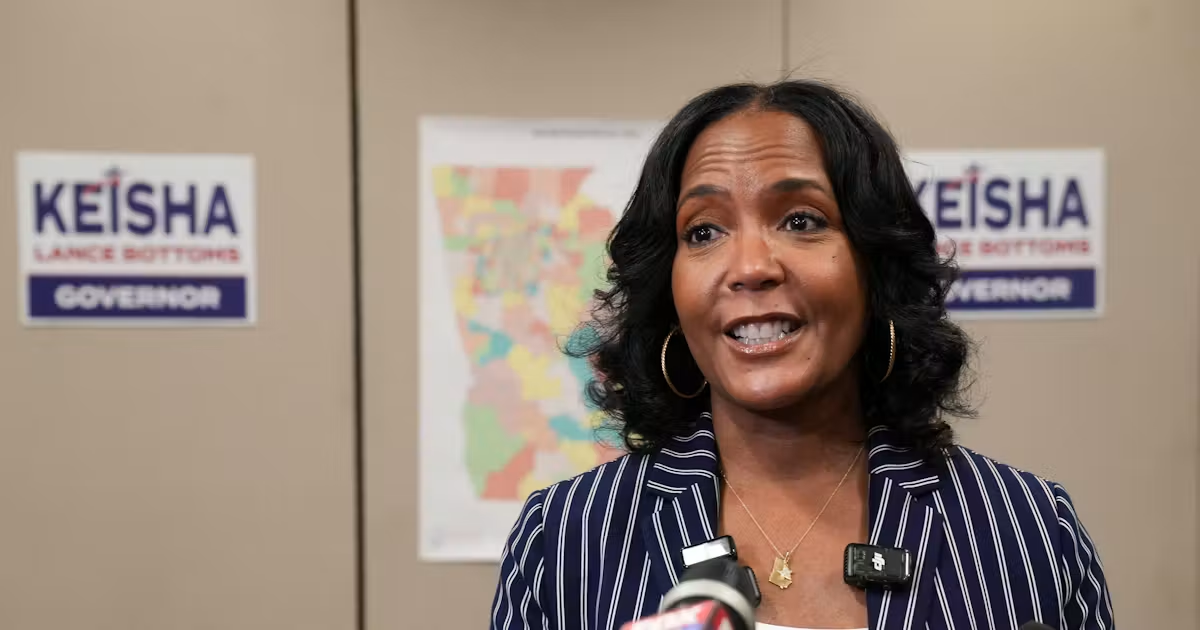
Bottoms and Crowley aren’t in this mold. Bottoms was born in Atlanta and attended the historically Black college Florida A&M. She served on the Atlanta City Council for two terms and then as mayor from 2018 to 2022. The city is 46 percent Black, while the state of Georgia overall is 32 percent. Crowley was born in Milwaukee and has spent almost his entire adult life there. Milwaukee County, which Crowley has led since 2020, is 27 percent Black; the state overall is just 7 percent.