
Photo-Illustration: Courtesy of Luar, Carolina Herrera, Fforme
Some months ago, Raul Lopez told me he was going to hold his next Luar show at the site of the 1964 World’s Fair, in Queens, and I basically said, “Right on!” It was a pain to get there on Monday night; it took me over an hour in a taxi and once I got to the park, around 8:30 p.m., no one seemed to know where to go. Though you couldn’t miss the Unisphere. The runway was going to circle the globe. Someone handed me a copy of Raul’s show notes. At the top it read: “Christopher Street Columbus.” Exactly what he had said months before.
Although it took each model about 15 minutes to make an orbit, I didn’t care about the logistics or the weak lighting. By the sixth look, a striped cream-colored suit on a mop-haired guy also wearing red-tinted glasses, large earrings of twisted silver and white flip-flops, I was in love with Raul’s story and the free mind that took us from the early Renaissance to the Caribbean and, finally, to the streets of New York City.

Photo: IK ALDAMA / Courtesy of Luar
The dandy in white and flip-flops had over his pants billowy shorts in a pleated white fabric, a shape that recalled trunk hose. A pivotal style in the history of dress, it marks the beginning of fashion, because for the first time men looked different from women. Before that, both sexes wore robes or tunics. But now the men are revealing the shapes of their bodies. And they will lead fashion’s big changes for the next several centuries, right up to the development of the modern suit.


From left: Photo: IK ALDAMA/ Courtesy of LuarPhoto: IK ALDAMA/ Courtesy of Luar
From top: Photo: IK ALDAMA/ Courtesy of LuarPhoto: IK ALDAMA/ Courtesy of Luar
Raul had it all, compact in one brilliant show, with planes twinkling in the clear sky on approach to La Guardia, and with his own story of a gay Dominican man. The clothes, for both men and women, had a rare street edge, one that was totally believable and fresh. Raul said he was interested in the collision of cultures and history, and, as well, the tension between “the street and the empire.” Such ideas are available to any fashion designer if they have the ambition, emotions, and talent to pull them off.
And Raul does. The clothes had a physical quality, notably a taut navy bomber on a woman with mini trunk hose and high white boots, a black leather jacket with extreme Tudor sleeves, and an impossibly kinky look on a guy whose face and shoulders were covered with a kind of beige stocking and who had on black pants with a wide leather strap running from crotch to a loop around his neck. I also loved the armorial attitude of a molded black leather tunic-style jacket on a guy with black trunk hose.


From left: Photo: IK ALDAMA/ Courtesy of LuarPhoto: IK ALDAMA/ Courtesy of Luar
From top: Photo: IK ALDAMA/ Courtesy of LuarPhoto: IK ALDAMA/ Courtesy of Luar

Photo: IK ALDAMA/ Courtesy of Luar
The collection had depth and dark humor and truth. Plus the metallic and black evening dresses were fabulous. Their cut was elegant, but they also had the feeling of being undone and naked.


From left: Photo: IK ALDAMA/ Courtesy of LuarPhoto: IK ALDAMA/ Courtesy of Luar
From top: Photo: IK ALDAMA/ Courtesy of LuarPhoto: IK ALDAMA/ Courtesy of Luar
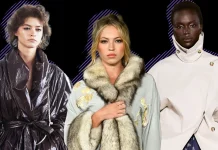
A few hours earlier, at the David H. Koch Theater at Lincoln Center, against a long bed spiked with tens of thousands of yellow tulips, Wes Gordon put on a terrific show for Carolina Herrera. And I mean for the brand, which is marking its 45th year in the rag trade, as well as its founder, who was in the front row. Herrera was a friend and subject of Andy Warhol’s, and it took her company a respectful four decades to put her likeness on a garment — actually, a minidress edged in yellow fringe. Gordon also included a yellow slip dress hemmed with black lace that featured an image of a New Yorker magazine cover, apparently from the week when Herrera, who was born in Caracas in 1939, started her company in New York.


From left: Photo: Filippo Fior / Gorunway.com / Courtesy of Carolina HerreraPhoto: Filippo Fior / Gorunway.com / Courtesy of Carolina Herrera
From top: Photo: Filippo Fior / Gorunway.com / Courtesy of Carolina HerreraPhoto: Filippo Fior / Gorunway.com / Courtesy of Carolina Herrera
Luar and Carolina Herrera are on completely different orbits, as apart as Mars and Venus, but Gordon captured her aura with imagination and wit. And he didn’t let up. So many collections over the relatively short run of Fashion Week have felt half-baked. But Gordon clearly considered the universe of Herrera, from her affection for a crisp white shirt and black pants (or a skirt) to splashy polka dots to practical daytime tweeds with a cashmere sweater (or maybe a bra) to the American sportiness of a full-skirted organza evening dress with a high ruffled collar.


From left: Photo: Filippo Fior / Gorunway.com / Courtesy of Carolina HerreraPhoto: Filippo Fior / Gorunway.com / Courtesy of Carolina Herrera
From top: Photo: Filippo Fior / Gorunway.com / Courtesy of Carolina HerreraPhoto: Filippo Fior / Gorunway.com / Courtesy of Carolina Herrera
And Gordon played up the vivid yellow, with a fringed suit and a party dress that looked like a crush of yellow roses. Though I had to laugh at the opulence of the tulips, just because they reminded me of Bill Blass, a great friend to many designers and writers. He loathed yellow flowers. When a daffodil had the nerve to pop up in his yard, he had it mowed down. Such is human taste.

Photo: Filippo Fior / Gorunway.com / Courtesy of Carolina Herrera
The rest of Monday’s collections were a bit of chop and change. Colleen Allen reprised her successful use of velvet, adding more separates, and she also sought to change the proportions of her dresses, raising the waist to a Regency-inspired line. The results were lovely, but I felt I wanted to see a tad more variety and surprise from her.

Henry Zankov, following a solid debut for Diane von Fürstenberg, offered some zesty and easy knits for his own line, along with abstract prints that had a ’60s vibe, but the show quickly got repetitive. Or I lost interest.


From left: Photo: IK ALDAMA / Courtesy of ZankovPhoto: IK ALDAMA / Courtesy of Zankov
From top: Photo: IK ALDAMA / Courtesy of ZankovPhoto: IK ALDAMA / Courtesy of Zankov
Rachel Scott was daring at Diotima, exploring fields of densely packed organza ruffles (and ruffles generally) on coats and dresses. But the effect was heavy and, perhaps, a little self-conscious. What I missed most from Scott were clothes more clearly connected to the street. Stuff you want to wear every day.


From left: Photo: Courtesy of DiotimaPhoto: IK Aldama/ Courtesy of Diotima
From top: Photo: Courtesy of DiotimaPhoto: IK Aldama/ Courtesy of Diotima
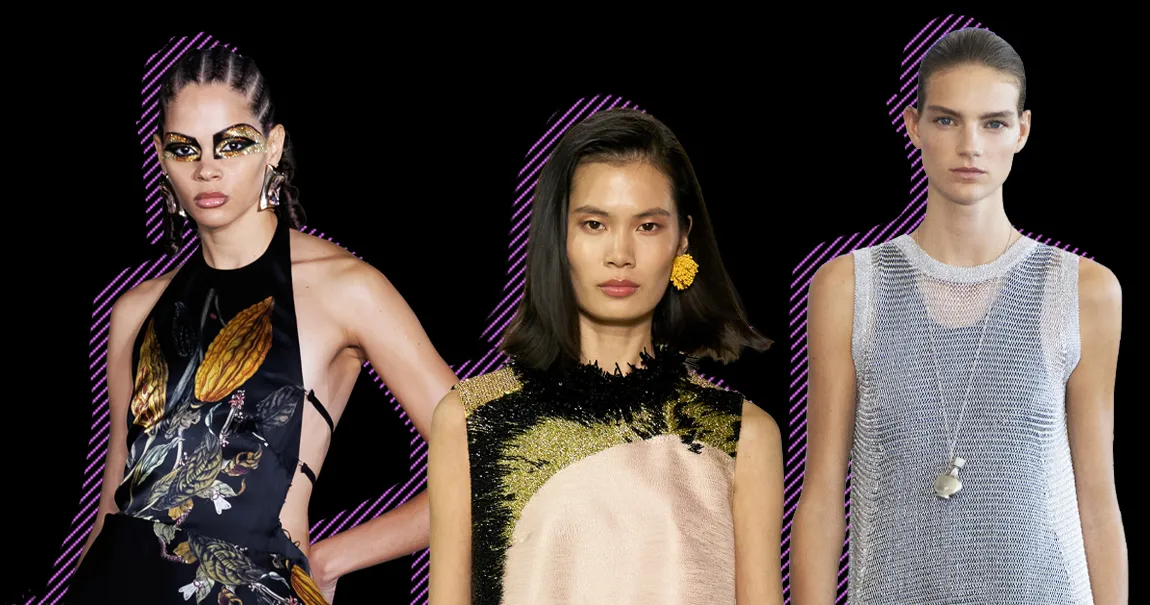
Much of Fforme looked fresh, particularly the skimmy knit dresses that creative director Frances Howie showed over one-piece bathing suits, and a perfectly cut slip dress in a shade of mercury. I also liked the plain sexiness of a spare black top with tiny straps and sharp pants finished at the hips with similar straps. But, again, while many of Howie’s tailored looks displayed the rigor that Fforme is known for, and a lightness of hand and fabric, the minimalist shapes didn’t take my mind anywhere.


From left: Photo: Courtesy of FformePhoto: Courtesy of Fforme
From top: Photo: Courtesy of FformePhoto: Courtesy of Fforme

Photo: Courtesy of Fforme