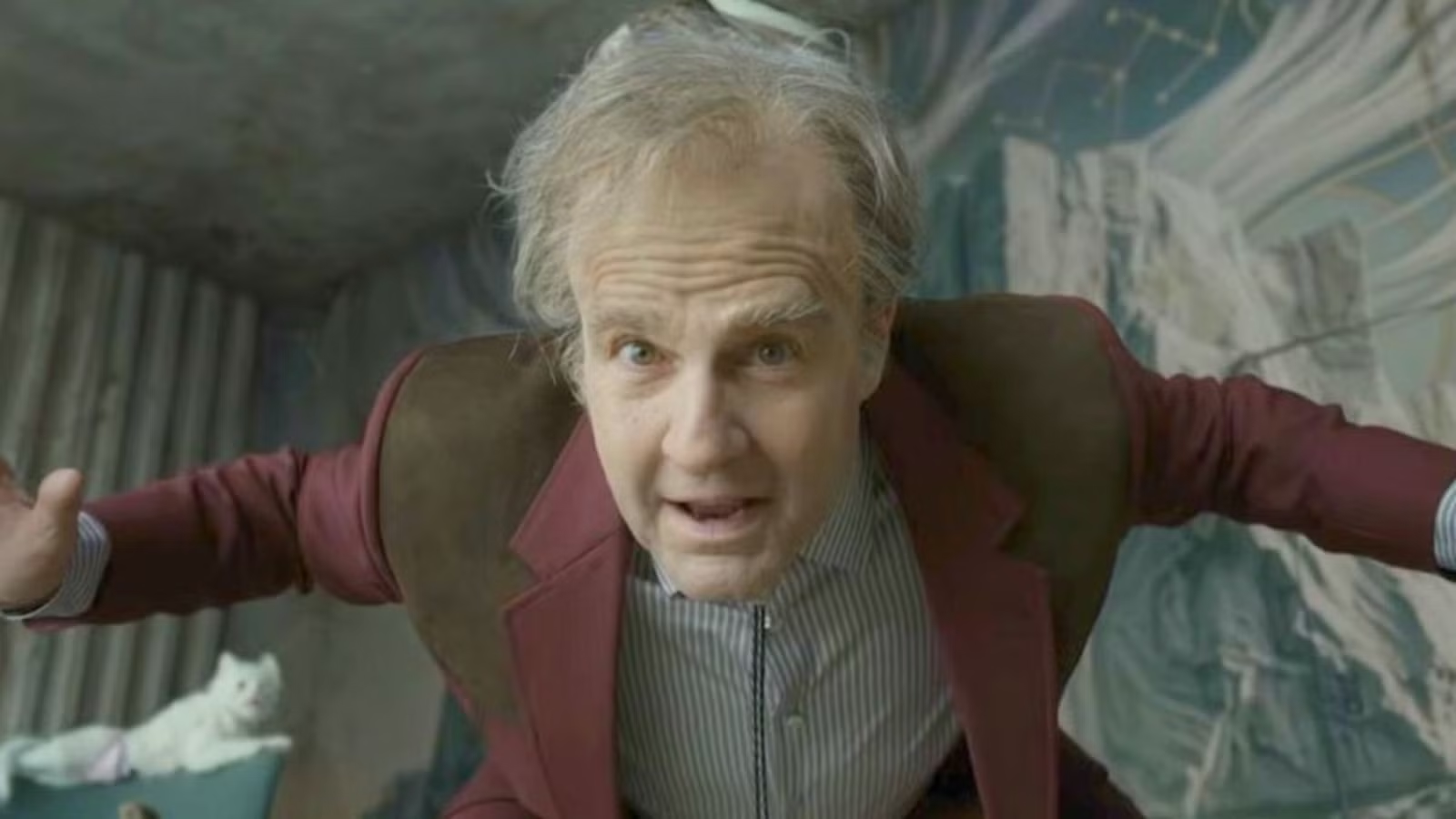
Tom Cruise has divided critics and audiences with his audacious performance in Digger. Director Alejandro González Iñárritu crafted a unique film that challenges viewers to consider intense social themes about billionaires and environmental crises through a distinct lens. I loved every second of Digger. It felt like there was more to the story than the trailers revealed. Exceptional performances bolster the film’s ever-shifting tone and presentation, making it work phenomenally.
Still, Digger was never made to appease everyone. Shockingly, critics haven’t connected with the film’s overall messaging as much as they have with the performances. The movie currently holds a 51% rating from critics on Rotten Tomatoes, but audiences are enjoying Cruise and Iñárritu’s pairing more, giving the film a 71%.
After watching Digger and seeing its lackluster box-office return on opening weekend, I thought about other movies that failed to connect with critics and audiences at release only to become acclaimed classics in the long run. Part of me feels Digger is destined to become a masterpiece reevaluated over time. It’s far from the first movie to turn things around after a rocky initial release. I’ve put together a list of films that suggest Digger may need more time to carve out its place as a masterpiece, as these lauded classics were anything but upon release.
‘The Shining’ (1980)
‘The Shining’ Earned Stanley Kubrick a Razzie Nomination for Worst Director

Reception Upon Release: Kubrick is one of cinema’s most acclaimed directors, yet many of his films were divisive at the time. When The Shining hit theaters in 1980, many critics were put off by the lack of traditional scares, slow pacing, and cryptic narrative. Others felt it strayed too far from the original novel, downplaying supernatural elements and altering characters, including Stephen King. Gene Siskel’s review for The Chicago Tribune (via Newspapers) famously called the film a “crashing disappointment” that “contains virtually no thrills.” Kubrick was nominated for Worst Director at the first Razzies in 1981, but Robert Greenwald won for Xanadu.
Lasting Legacy: The Shining has become such an acclaimed horror classic that Kubrick receiving a Razzie nomination seems ridiculous. Once audiences and critics stepped back and reexamined the film, they saw Kubrick’s brilliance in bold ways. Jack and Wendy’s relationship was not flat as initial reviews indicated, but a terrifying portrayal of domestic abuse and family collapse. The pacing lets creeping dread take hold, with every choice heightening suspense through expert direction and harrowing performances. The film also became the subject of endless analysis, thanks to documentaries like Room 237 and conspiracy theories about Kubrick using the movie to confess to faking the moon landing.
‘Fight Club’ (1999)
‘Fight Club’s Subversive Commentary Was Lost on Critics and Audiences

Reception Upon Release: Director David Fincher made a bold, anti-capitalist film exploring toxic masculinity and corporate control through biting satire. However, audiences did not see it that way at the time. Most took the film at face value, seeing it as violent action relishing in anarchy. Roger Ebert’s two-star review notably calls it a “cheerfully fascist big-star movie,” writing it off as “a thrill ride masquerading as philosophy.” The tepid reception and dark themes made Fight Club a theatrical misfire, but it found a second life on DVD.
Lasting Legacy: Fight Club cultivated a loyal following through strong DVD sales and word of mouth. The film’s twist ending became a notorious talking point, making it something people felt they needed to see. The subversive twist and layered commentary make the film perfect for repeat viewings as audiences discover exceptional attention to detail and nuanced character elements with each watch. Viewers can study the movie, finding the social commentary and anti-consumer messaging expertly woven into a story that is equally engrossing and thought-provoking.
‘The Night of the Hunter’ (1955)
Charles Laughton Never Directed Another Movie After the Film’s Poor Response

Reception Upon Release: Audiences in 1955 had certain expectations when going to the theater, and The Night of the Hunter defied them all. It felt like a suspenseful noir film but also embraced Southern Gothic horror and fairy-tale-like elements. Audiences expected a thriller but were confused by what often felt like a harrowing folk tale. Robert Mitchum’s chilling performance as Harry Powell was seen as taboo because he was a serial-killing preacher who weaponized religion to prey on people. Audiences didn’t know how to process the movie, and initial reception was so bad that actor-turned-first-time director Charles Laughton chose never to direct again.
Lasting Legacy: Film scholars and acclaimed directors later reevaluated The Night of the Hunter and recognized its brilliance. The film is regularly studied as a triumph of visual storytelling, with spectacular cinematography, strong performances, and an almost poetic screenplay. Numerous filmmakers credit The Night of the Hunter as influential to their process, including Guillermo del Toro and the Coen brothers. The love/hate tattoos on Harry Powell’s hand have become iconic, with directors like Spike Lee and Martin Scorsese using similar iconography inspired by Laughton’s classic.
‘Scarface’ (1983)
Brian De Palma’s Masterpiece Earned Him a Worst Director Razzie Nomination

Reception Upon Release: Al Pacino gives one of his most high-energy performances as gangster Tony Montana. The film runs nearly three hours and is packed with excessive violence and profanity, which most critics noted at the time. It received an X rating that was appealed down to an R, with scenes like the chainsaw sequence pushing the envelope. Tony Montana is an unlikable protagonist, with reviewers like Pauline Kael describing him as “small and mean,” calling the film “an allegory of impotence.”
Lasting Legacy: Scarface found a second life thanks to DVD releases and hip-hop culture. De Palma’s gangster epic had a distinct impact on the ’90s hip-hop community, with artists relating to an intense pursuit of their dreams. The 20th anniversary DVD release included special features dedicated to the film’s influence, with musical artist Nas saying (via Collider), “We all are savages in pursuit of the American Dream. Rappers relate to that ’cause that’s how we come up.” Film scholars have also reevaluated Scarface, noting that Oliver Stone’s script is layered with biting satire of the economic era and speaks volumes about capitalism and greed.
‘Harold and Maude’ (1971)
Audiences Weren’t Ready for Hal Ashby’s Darkly Humorous Unconventional Romance

Reception Upon Release: Harold and Maude features a relationship between a young, death-obsessed man in his 20s and an eccentric 79-year-old woman. They meet at a funeral, sparking a journey of dark humor and friendship that blossoms into romance. Vincent Canby of The New York Times called the movie “creepy and off-putting,” highlighting the mismatched relationship many saw as taboo. The humor is dark, covering mortality and suicide with brash insightfulness that some found abrasive rather than funny.
Lasting Legacy: Harold and Maude continued to build an audience thanks to passionate college students who championed the film’s diversity, along with film scholars reevaluating what director Hal Ashby crafted through his unique character study. Viewers saw past perceived taboos to recognize the film’s message about embracing life and never being afraid to say yes to new opportunities. Maude’s past and Harold’s bleak outlook create a beautiful dichotomy, offering existential questions about life and love that have found their place in film history.
‘Vertigo’ (1958)
Hitchcock’s Classic Thriller Isn’t as Far-Fetched as First Believed

Reception Upon Release: Vertigo wasn’t a critical hit, and many felt the plot about a retired detective with vertigo was far-fetched. Some noted a disjointed narrative that didn’t feel cohesive and revealed too much too soon. One of the biggest criticisms was the pacing, with many finding the mystery sluggish. Penelope Houston’s 1959 review for Sight and Sound (via The Classic Film Show) felt as though Hitchcock was repeating notes from prior films while also taking a jab at the movie’s pacing, saying, “This time he is repeating himself in slow motion.”
Lasting Legacy: Vertigo received a massive cultural reassessment when it was re-released in 1983, allowing a new wave of critics and audiences to offer opinions with more perspective. Critics hailed the slow pacing as mesmerizing, drawing viewers into the mystery. Critics praised Hitchcock’s techniques as masterful, including the film’s use of the dolly zoom to underscore the protagonist’s vertigo. Hitchcock faced similar scrutiny with films like Psycho, but both are lauded masterpieces that highlight the director’s talent and influence on cinema history.
‘The Thing’ (1982)
Viewers Couldn’t Handle John Carpenter’s Relentlessly Bleak and Gory Masterpiece

Reception Upon Release: The Thing had the unfortunate timing of releasing right after Steven Spielberg’s E.T., which didn’t help the sci-fi horror movie find an audience amid poor reviews. Critics were put off by the film’s bleak tone and setting, with characters never having hope for survival. The movie also embraced ghastly practical gore effects that were too intense for some audiences. Roger Ebert‘s two-and-a-half-star review calls it “a gross-out movie” that chose to “concentrate on the special effects and the technology and to allow the story and people to become secondary.”
Lasting Legacy: The Thing eventually became a classic as audiences reevaluated what turned off reviewers in 1982. Audiences no longer saw the intense gore and creature effects as abrasive style over substance and appreciated the technical achievement on display. While reviewers like Ebert initially disliked having to keep track of characters “until we’ve lost count of who may have been infected,” that paranoia has been hailed as a masterclass in suspense. The ambiguous ending may have once left viewers wanting more, but it has since been studied and dissected, spawning intense theories and continued speculation decades later.
‘The Rocky Horror Picture Show’ (1975)
Critics Couldn’t See Beyond the B-Movie Musical’s Shock Value
Reception Upon Release: The Rocky Horror Picture Show was never made to please mainstream audiences. It embraced a campy tone and challenged gender norms of the era with musical numbers and characters focused on explicit sexual themes. The movie rejected traditional values, pushing content many saw as deviant. Reviewers labeled its B-movie aesthetics and amateur execution. The wild characters and audacious musical numbers failed to connect with general audiences.
Lasting Legacy: The Rocky Horror Picture Show has persisted as a cult classic thanks to midnight screenings and a deeper understanding of its intent. The film thrives through screenings where viewers dress as their favorite characters and fill theaters, becoming active participants by shouting at the screen and singing along with every song. People recognized the B-movie elements as part of its charm, letting the criticisms help it find new life. Rocky Horror became a sanctuary for LGBTQ+ and other marginalized communities, with screenings often serving as a haven.
‘Blade Runner’ (1982)
It Took Several Edits To Turn ‘Blade Runner’ Into a Masterpiece

Reception Upon Release: When Blade Runner hit theaters in 1982, it wasn’t the impressive film it is now. Ridley Scott’s original release featured rough narration from Harrison Ford that detracted from each scene. Audiences didn’t connect with the slow pacing and noir aesthetics, expecting something more action-packed than philosophically introspective. The story confused some viewers, and its happy ending doesn’t fit the overall tone, making the initial negative reactions understandable.
Lasting Legacy: Multiple edits of Blade Runner exist, but most agree the 2007 Final Cut is the best version. The Final Cut restores ambiguity to the ending and the unicorn scene, sparking debate over whether Deckard is a replicant. Since its release, Blade Runner has become a sci-fi classic and helped shape the cyberpunk aesthetic. Rather than being hindered by slow pacing, the movie’s contemplative nature lets audiences sit with heavy concepts amid stellar aesthetics. While it took time to get it right, Blade Runner bounced back from a rough start.
‘The Big Lebowski’ (1998)
The Coen Brothers Surprised Critics With Their ‘Fargo’ Follow-Up

Reception Upon Release: The Coen Brothers had become known for crafty, twisty thrillers with comedic angles, like Raising Arizona and Fargo. The Big Lebowski was still a crime thriller but veered into deeply comedic, almost philosophical territory that many did not expect. Critics felt the story went nowhere after a complex narrative of varying motives. The cast played oddball personalities, like The Dude (Jeff Bridges), a slacker coasting through life, and Walter (John Goodman), his angry bowling buddy. However, some found characters like Walter annoying and overtly unlikable rather than endearing and humorous.
Lasting Legacy: The Big Lebowski has become one of the Coen brothers’ best films, and audiences have come to love its quirky charm. The plot that goes nowhere is recognized as a twisty narrative that subverts expectations at every turn. It leads audiences through an escalating series of events that begins with a simple misunderstanding. The brilliance of The Dude is how relaxed he remains through it all. Beyond earning its place as a classic crime caper comedy, The Big Lebowski uniquely spawned a real-world religion among loyal viewers who embrace The Dude’s laid-back ways.

- Release Date
-
October 2, 2026
- Runtime
-
128 minutes
- Director
-
Alejandro González Iñárritu