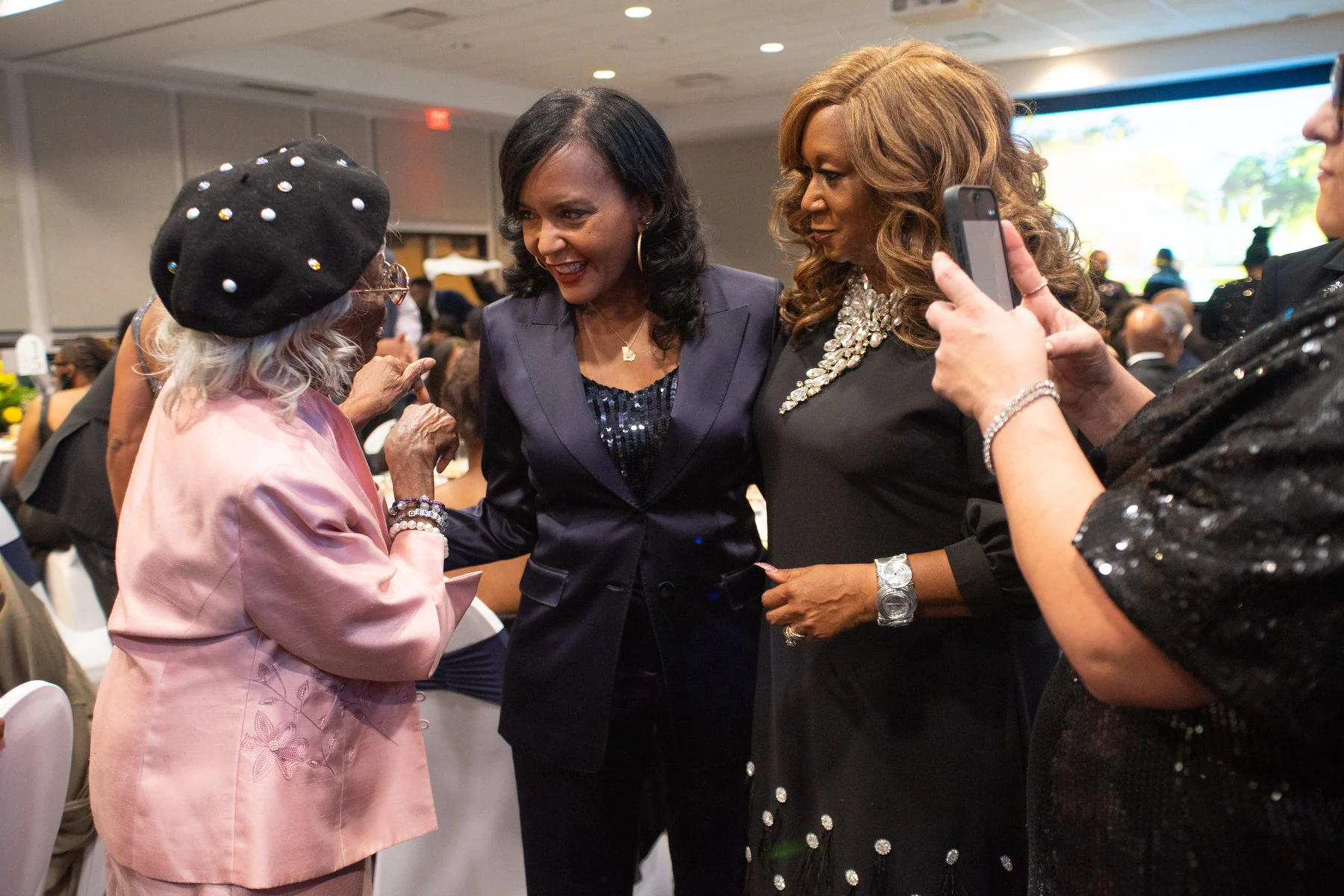

The 2016 election changed how Tanya Miller felt about politics. The 2024 election — President Donald Trump’s defeat of then-Vice President Kamala Harris — changed how she saw her career.
“Who I viewed as one of the most qualified folks to ever run for president got beat by a convicted felon,” she said. “It was really devastating in a personal way. It was personally devastating to watch as a Black woman.”
But then she saw Democratic attorneys general across the country standing up to Trump. She looked at her career and thought about her daughter, about the history of the Civil Rights Movement in Georgia — and knew she could do that, too. Now Miller, who successfully ran for Georgia’s state legislature in 2022, is on the ballot again, this time running for attorney general.
“All that experience led me to think that I was uniquely qualified in this moment to step up and fight for our democracy and to fight for the rule of law and to protect the people of Georgia from all of the harm that was coming from this administration,” Miller said.
Miller is far from alone in feeling her background and lived experiences made her ready to meet this political moment.
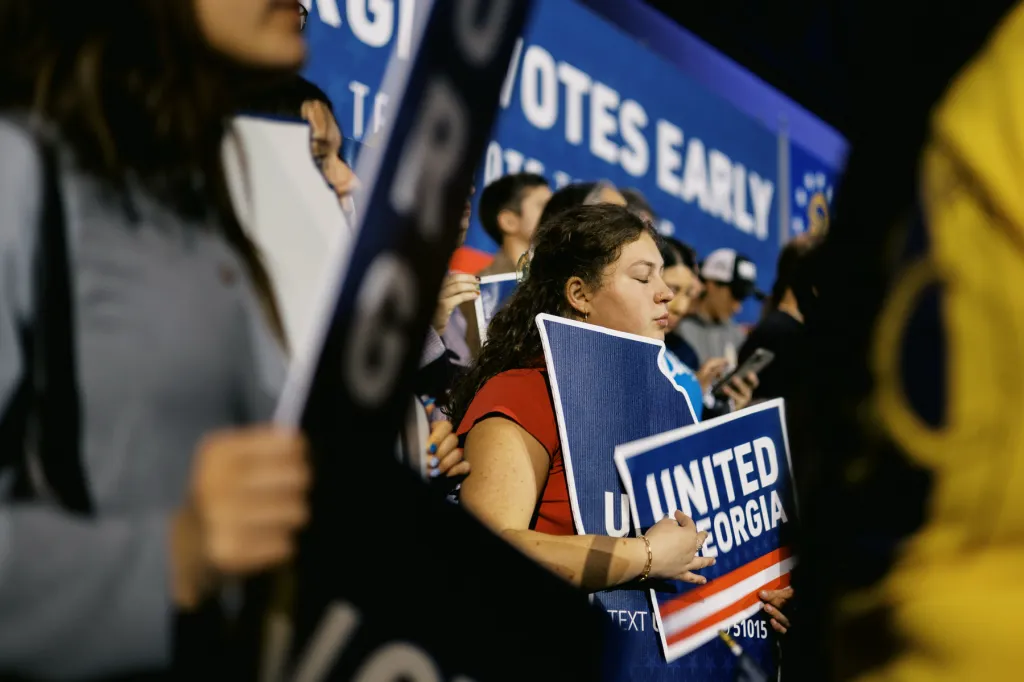
She’s one of eight Black Democratic women whom Georgia voters will have the chance to vote for in 10 statewide elections this year, a new record in the state.
Heading the ticket is Keisha Lance Bottoms, the former mayor of Atlanta, who would be the first Black woman governor not just in the state but in U.S. history. Joining them are Judge Penny Brown Reynolds, running for secretary of state; Katherine Juhan-Arnold, running for agriculture commissioner; Keisha Waites, running for insurance commissioner; Nikki Porcher, running for labor commissioner; Sheila Edwards, running for public service commissioner; and Lydia Powell, running for school superintendent.
It’s a moment not lost on the women who are running.
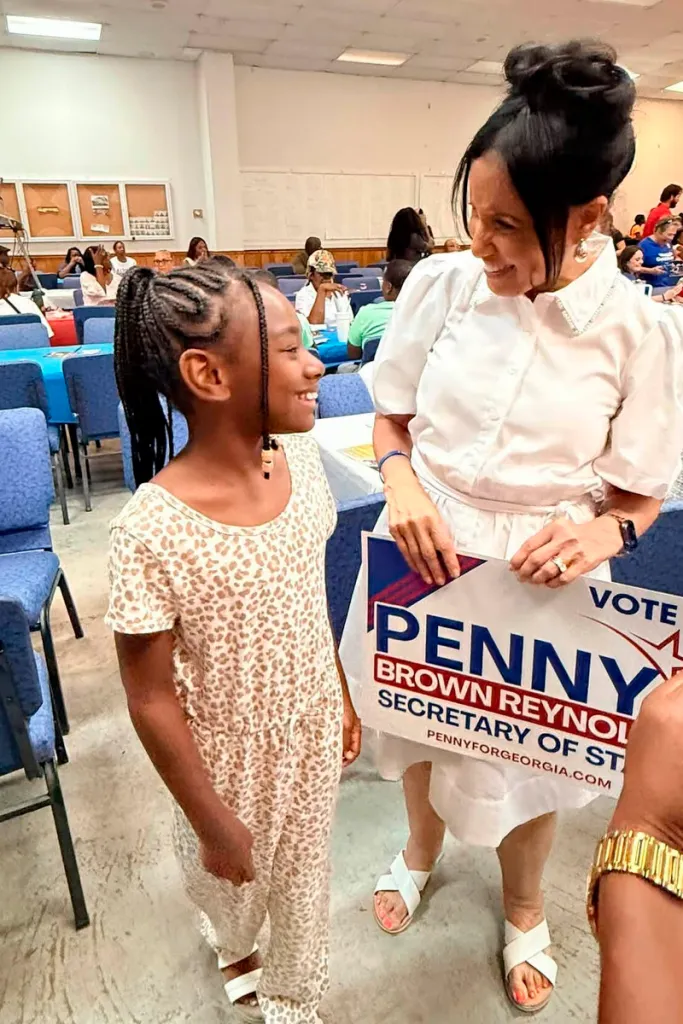
“People like me generally don’t run,” Brown Reynolds said. Her decision to run for secretary of state is directly connected to what she sees happening around her: the attacks by the Trump administration on diversity, equity and inclusion programs, Black women facing disproportionate job losses, the assault on voting rights.
“The voices of women are so very, very important, which I think is why we have eight women on the ticket right now in Georgia,” she said.
(Erin Fender for The 19th)
The gubernatorial race between Bottoms and billionaire Republican healthcare executive Rick Jackson is rated as a toss-up; recent polling by the Atlanta Journal-Constitution in the down-ballot statewide races shows tight contests.
Winning statewide as a Democrat in Georgia is challenging, even as the state has gotten more blue in recent cycles. That’s especially true for Black women. Stacey Abrams’ gubernatorial losses in 2018 and 2022 and Harris’ presidential loss in 2024 hang over Black women candidates. But the win-loss record for Black women is only a small part of the narrative, said Nadia Brown, a professor of government at Georgetown University and a scholar on intersectionality, politics and identity.
“I think the bigger story is that there are these eight Black women running for statewide office and to me this is undoubtedly connected to the grassroots work that so many Black women have put into Georgia for decades, for generations.”
Brown pointed to the work done by LaTosha Brown and Black Voters Matter and Abrams and her voting rights group, Fair Fight. Their work registering and mobilizing voters helped redefine what organizing and voter activation can mean for Black women throughout the South, and Georgia specifically. It’s work that also doesn’t always yield results in real time but rather changes the electorate going forward.
“If these women win, it will be because of the mobilization efforts that Black women have put into communities,” Brown said. “The Democratic Party, not so much. This isn’t necessarily a story about how parties are supporting Black women, how these eight women got to be on the ballot because they were following party machine politics, but rather that these are capable women right who have a history of serving their communities. They have the political expertise and know-how.”
What happens next is up to voters. “You might not agree with some of their policy positions,” Brown said. “But no one can say that these women aren’t qualified.”
Christina Greer is a professor of political science at Fordham University and the author of “How to Build a Democracy: From Fannie Lou Hamer and Barbara Jordan to Stacey Abrams.” She also pointed to the work that Abrams did in organizing as well as running for governor in 2018 and 2022 — though she said Abrams is likely not to be credited for that work because of the way that “we have relatively short political memories.”
In addition to her organizing, Abrams changed the landscape by showing that Black women can raise money, including from donors who have historically saved the majority of their dollars to back White men.
It’s still uneven. Many Black women candidates have struggled with fundraising efforts post-2024. Bottoms has been vastly outspent in her race, as Jackson has put over $200 million of his own money into his campaign.
However, candidates including Miller say small-dollar donations have been critical to their campaigns. They mean a lot, she said, not just in terms of funding but what they mean in terms of voter confidence. She said she thinks of her own mother, whose first-ever political donation was $10 monthly to Barack Obama’s 2008 run.
“I just feel, for me, when people give any amount of money in support of the campaign, it matters so much to me because oftentimes folks are giving you their last,” Miller said. “I think that is the beauty of a lot of the small-dollar donations; it allows all of us to participate in helping make sure that we get folks in office who are going to look out for working and everyday people.”
It reflects the very spirit that is motivating so many of these women’s campaigns, Greer said. She said that after 2024, a lot of the conversation around Black women and political engagement focused on the way that these women felt like they needed a moment for rest, a pause after reckoning with Harris’ loss. But again, that was never the full story.
“Fast forward two years and we’re seeing a lot of Black women saying, ‘You know what? I’m tired of supporting people to try to get them to understand what we need. Why am I constantly begging people to do the thing we need them to do? I’m going to run myself and do the thing.’”
(Judge Penny Brown Reynolds campaign)
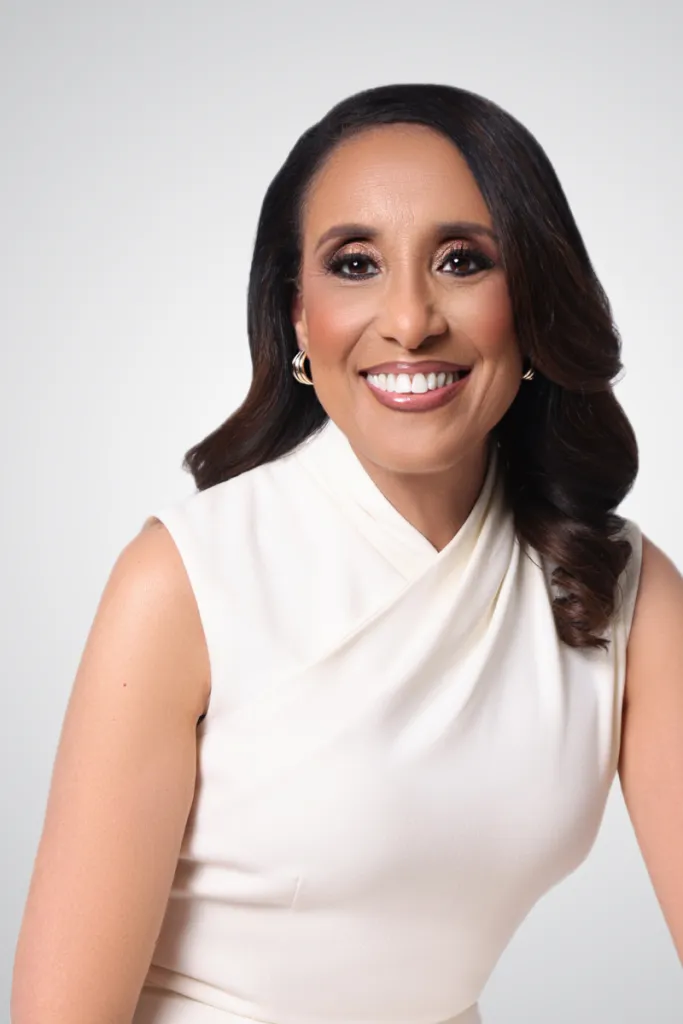
Brown Reynolds has already had an illustrious career as a former prosecutor, an assistant attorney general, a judge, and a television star. She has a PhD in criminal justice and is an ordained minister who also served in the U.S. Justice Department’s Office of Civil Rights in the Biden-Harris administration.
“I’m running now because more than ever, I believe that the right to vote is under attack and the right to vote should be a right and not a fight, and I believe that competence matters,” Brown Reynolds said.
Her decision to run has been deeply inspired by legendary Atlanta-based civil rights leaders — and the women who were critical to that work who never became household names.
“They were the ones at the kitchen table. They were the ones who constantly now work in the churches,” Brown Reynolds said. “They were integral parts of the Civil Rights Movement and so, for me, it’s almost as though it’s a spiritual baton that has been passed to me.”
Brown Reynolds is running against Republican Tim Fleming, who worked for Gov. Brian Kemp and is now serving in the state legislature. Now, Brown Reynolds is thinking about what it means to be not only working behind the scenes, but making your name and face a part of that work.
“It’s what we call visibility versus viability. I’ve always been that viable person,” Brown Reynolds said. When deciding to run for secretary of state, she knew it was time to become visible, too. And she said she’s hearing from voters — especially younger Black women — about how much her candidacy means to them.
Brown Reynolds said that her campaign isn’t just about the fight for voting rights, but helping younger people see themselves in politics, too. It’s why she established her campaign headquarters just minutes from the Atlanta University Center, the hub for Atlanta’s five historically Black colleges and universities; it’s why she’s set up a fellowship program within her campaign to train these very students in how politics and campaigns work.
“I know that what I’m doing is not just walking through the door, but that I’m also required to open that door,” she said.
(Judge Penny Brown Reynolds campaign)
While Bottoms, Miller, Brown Reynolds and the other women candidates would make history, it’s not the focus of their messaging.
Brown at Georgetown said this is a shift from earlier when identity was, by necessity, central to the candidacies of Black women. They knew that voters expected them to call attention to what made them a historically underrepresented candidate.
Increasingly, Brown said, “people with two eyes can see, ‘Oh this is a Black woman running for office’” and candidates don’t need to speak directly about their identity or potential to make history.
It’s a shift that has happened as more Black women have run for office.
“Candidates aren’t leaning in to talk about their race and gender, but what the policies that they support are or how they view the world that is definitely informed by race and gender,” she said. “What this shows me is that we have a much more sophisticated electorate that doesn’t need to be spoon-fed marginalized candidates.”
It was only a few generations ago, she noted, that Black women were denied access to law schools.
“Now you have a Black woman running for secretary of state in the Deep South that could possibly win. That’s an amazing story. But also knowing the doors she will open whether she gets elected or not and people seeing her on the ballot, it changes the conversation about what Black women can do and how they have been able to do it. That’s the larger story,” Brown said.
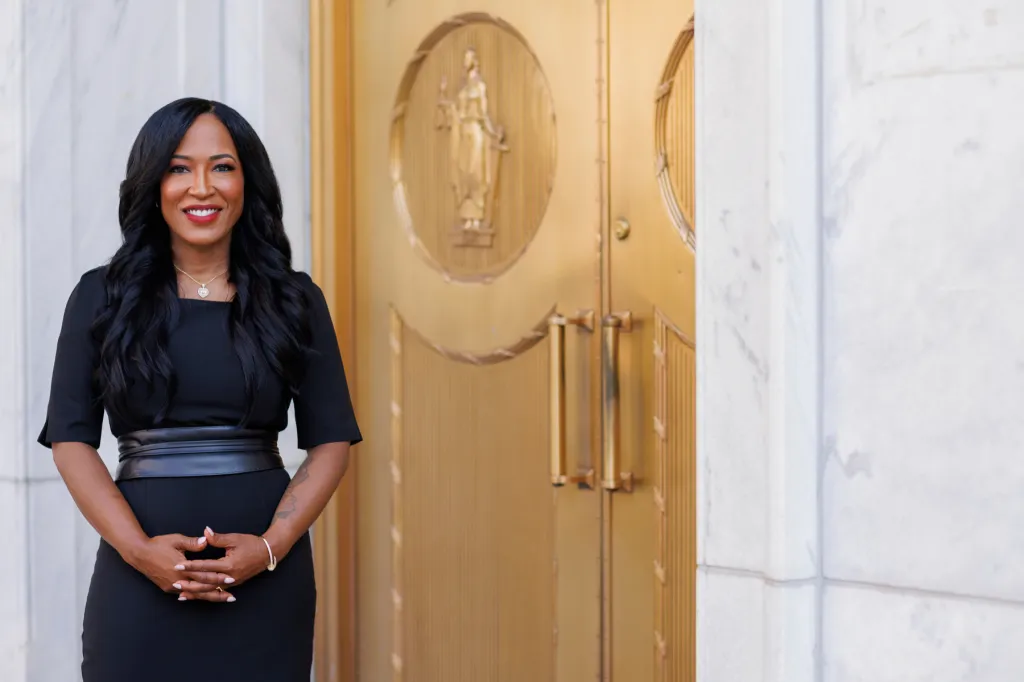
Greer said Tanya Miller’s candidacy is a perfect snapshot of what this moment is for Black women candidates. She pointed to how Miller has routinely stressed on the trail that voters should vote for her because of her record and the fact that she’s an “attorney’s attorney” — albeit one who also happens to be a Black woman who, Greer said, is “beyond supremely qualified for this job.”
Miller’s opponent, Republican Brian Strickland, is an attorney and state senator who chairs the Senate Judiciary Committee.
–
(Tanya Miller for Attorney General campaign)
In the final push before Election Day, Miller said she’s grounding herself by telling her family’s story: Her grandmother was born in 1922 in Mississippi and Miller was raised by her mother in Ohio. She frequently describes herself on the campaign trail as a “working-class kid.”
“I watched my mom work hard and still get pushed around because people with power always had someone in their corner, and my family never did,” Miller said. “I became a lawyer to be the advocate my family never had.” These are experiences that she carries with her today — and she thinks they help connect her with voters.
Miller worked for a major law firm, clerked for a federal judge, and served as an assistant U.S. attorney in New York and as an assistant district attorney in Fulton County.

“I am the product of the hopes and dreams of the people like my grandmother and the folks who came before me and it is an honor to take the baton to do something that matters, to do something that protects the people, to do work that makes them proud,” she said. “I think we should always be striving for a more perfect union, a more perfect democracy, and I feel lucky and really honored to be in a position to use the talent and the skill that I have in service of that.”
It is, in short, why she’s running.
“I refuse to sit on the sidelines.”
To check your voter registration status or to get more information about how to vote and what’s on your ballot, visit vote.org.