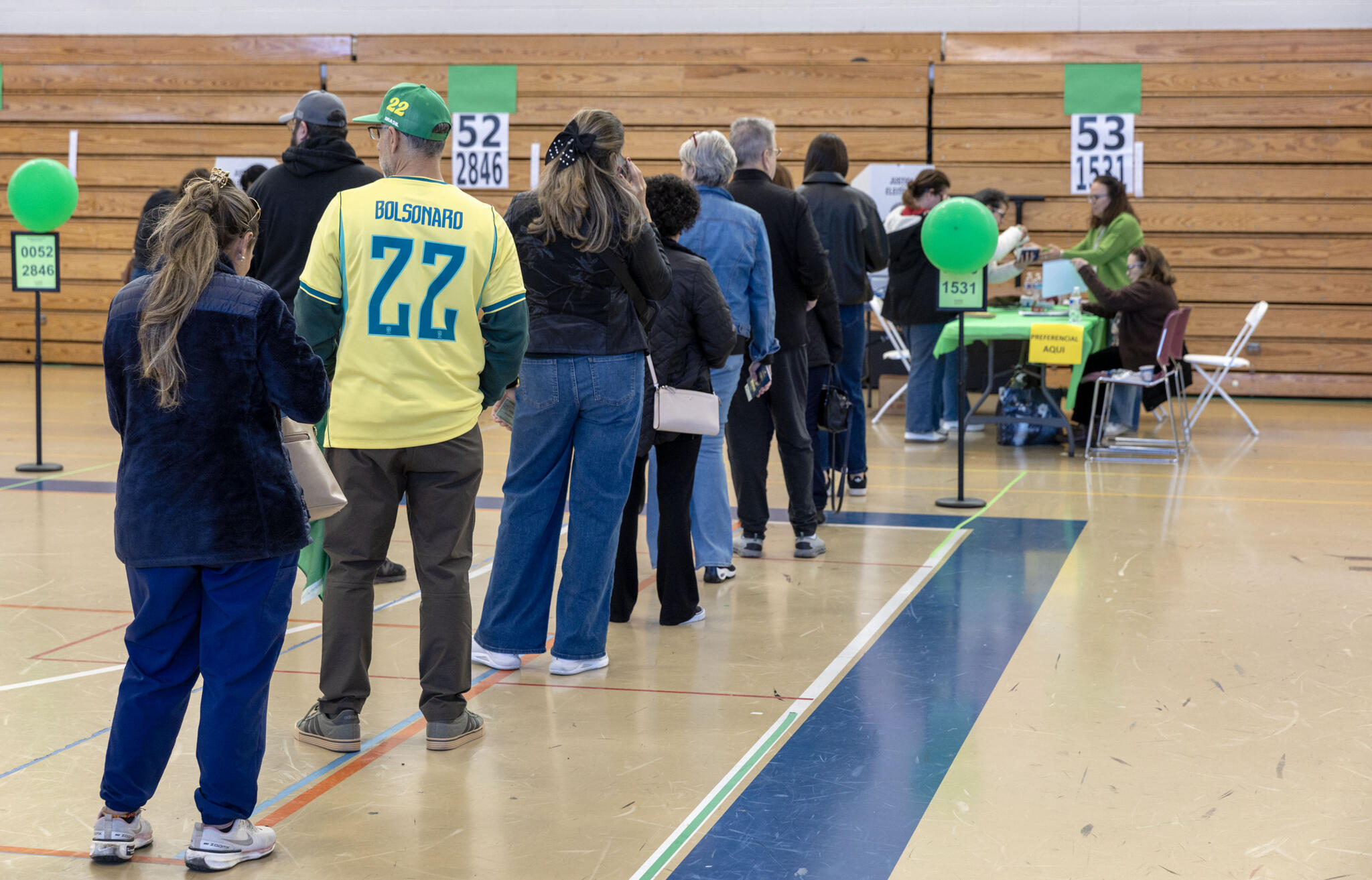
On voting day at Salemwood School in Malden, Brazilians from around New England arrived in the thousands this week to cast ballots for the country’s next president.
Brazilian funk music played over a speaker across the street from the school in the yard of a church — a song praising far-right candidate Flávio Bolsonaro. Two men stood over a grill turning beef skewers, “churrasquinho,” to sell to hungry voters.
They were raising funds for a Christian missionary group, not anything political. But the big election gave them the chance to set up outside the polls.
”Who do we support?” smiled landscaper Samuel Dos Santos. “You already know that!”
His buddy at the barbecue, truck driver Jairo Alberto, finished the thought: “Just by the fact that we’re working, you already know who we support.”
In Brazilian political speak, that means Bolsonaro.
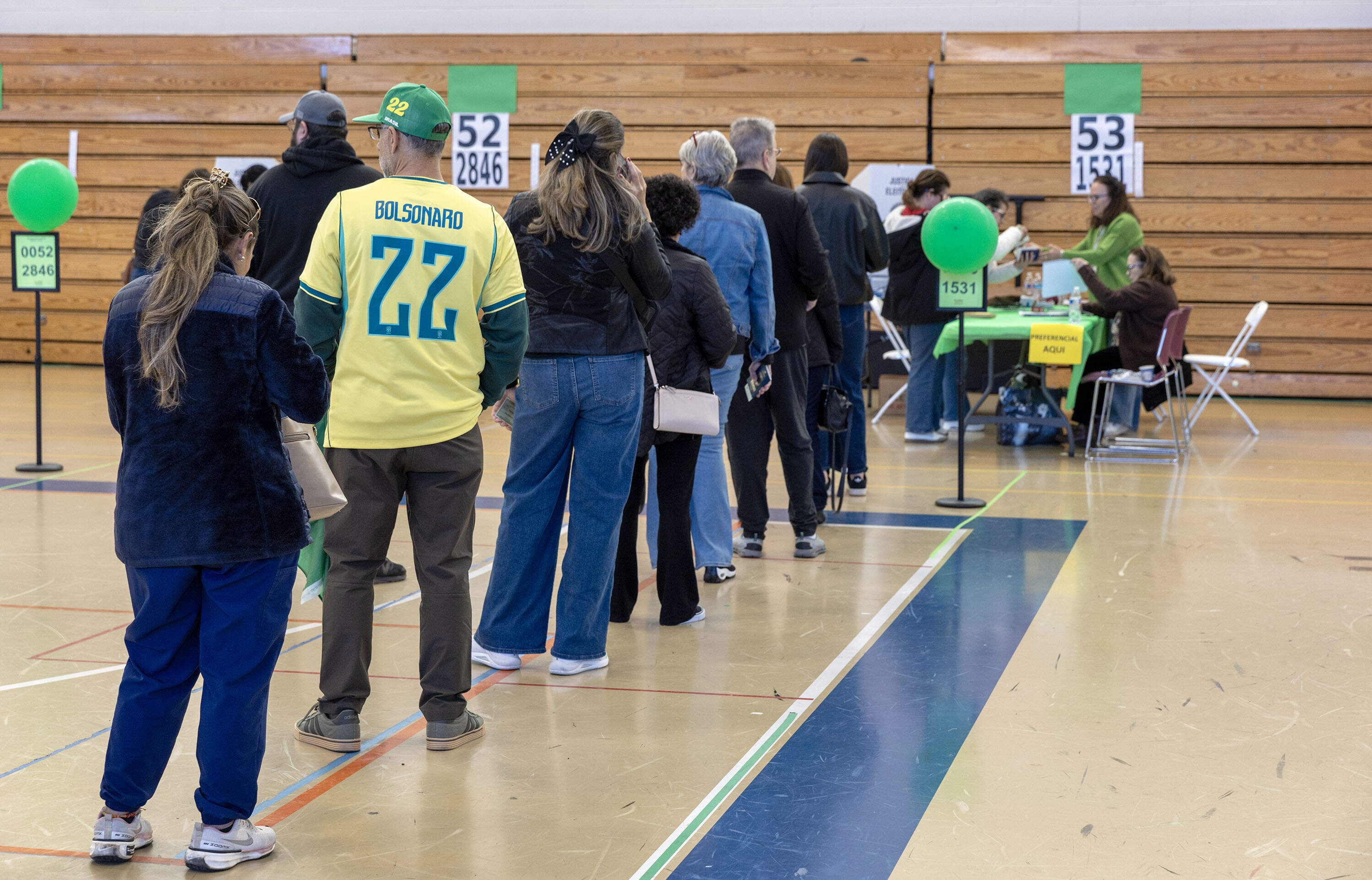
Nearly 20,000 Brazilians took to the polls in Malden and Framingham on Sunday, in one of the most populous Brazilian voting districts in the U.S. They’re largely working class, and they voted for Bolsonaro 72% to 28% over leftist incumbent President Luiz Inácio Lula da Silva.
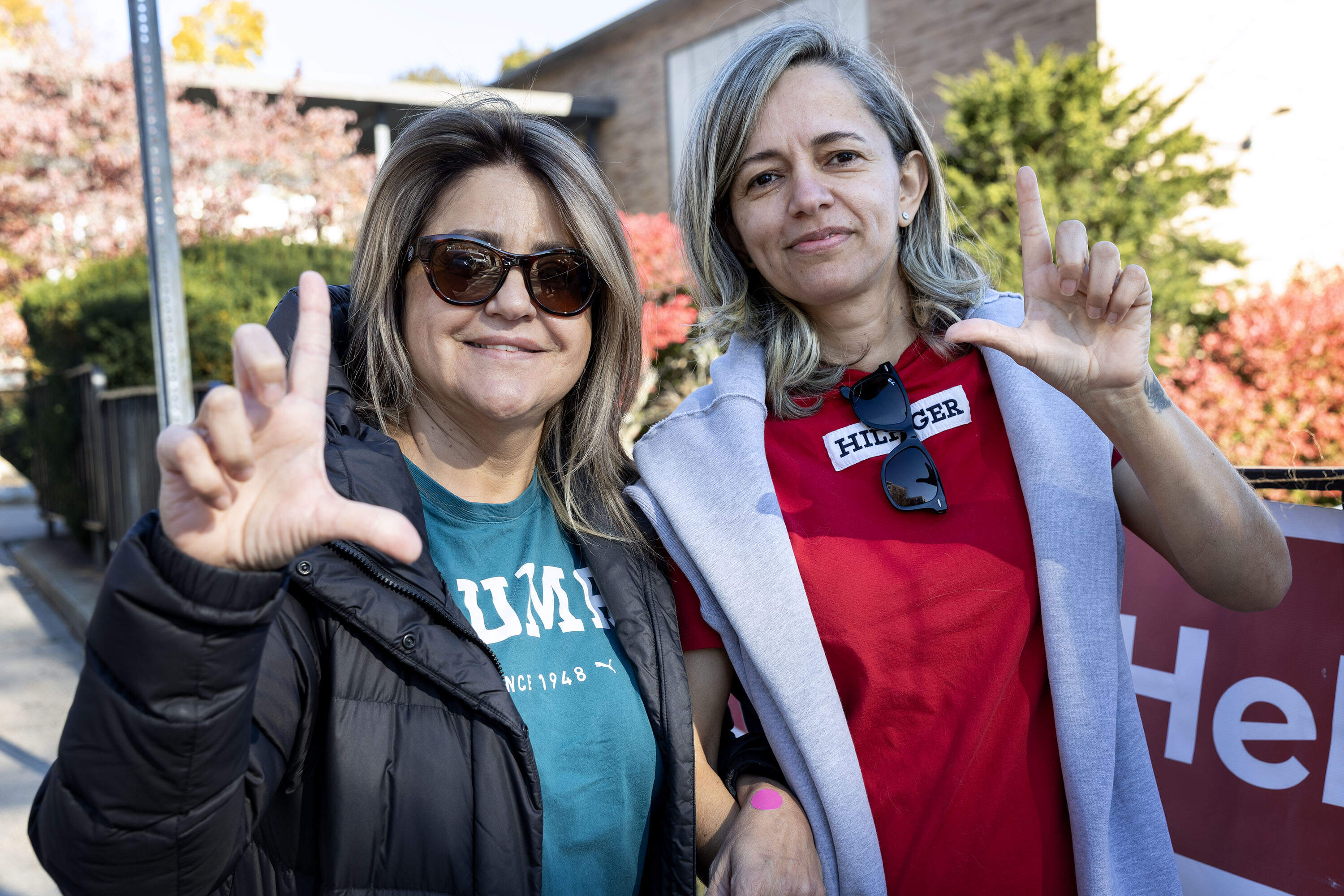
Lula supporters may be in the minority, but they’re not afraid to make their presence known and share their thoughts about the other side.
“Many of them mix politics with religion — many of them are evangelicals,” said Eva Cirelli of Andover.
“They take everything that the state offers them here, then complain that those leading Brazil are thieves,” she said in Portuguese.
Brazilian politics are as divisive as American politics — with each side accusing the other of dictatorial intent — and the country’s recent history closely mirrors events in the U.S. Lula won Sunday’s election convincingly, but tensions are hardly resolving, as Bolsonaro refuses to acknowledge the results.
For the Brazilians of Massachusetts, political lines are drawn along class divisions, church devotion and education — even if they converge on the ideal of America that has galvanized immigrants for centuries.
O sonho americano
After casting her ballot, house cleaner Sandra Marinho stood outside the school in a circle of Bolsonaro supporters. She said she left Brazil nearly 20 years ago, when Lula was serving his first term as president. Marinho, who lives in Everett, blames Lula for Brazil’s problems.
“What has Lula done for Brazil? Absolutely nothing,” she said in Portuguese. “If he were good for Brazil, it wouldn’t be the way it is now.”
Marinho left her daughters in Minas Gerais when they were 10 and 11. Now they have kids of their own, and Marinho supports the whole family with her work here.
“When I came here, my dream was to give a better life for my daughters, for my family, and stay in this country,” she said in Portuguese.
Marinho said the American dream is something every Brazilian dreams of having.
“The public safety, the culture, the healthcare — all these things that Brazil does not offer Brazilians, the United States offers its immigrants,” she said. “I love this country.”
Marinho’s assessment of Brazil’s economy may be at odds with key socioeconomic indicators over the Lula era. According to Liz McKenna, a Harvard Kennedy School instructor who studies political movements in Brazil and the U.S., Brazil’s poor have seen massive progress under Lula.
The share of Brazilians living in poverty declined from 50% in 2003 to 21% in 2024, according to McKenna’s analysis. Real per capita GDP, meanwhile, increased by 40%.
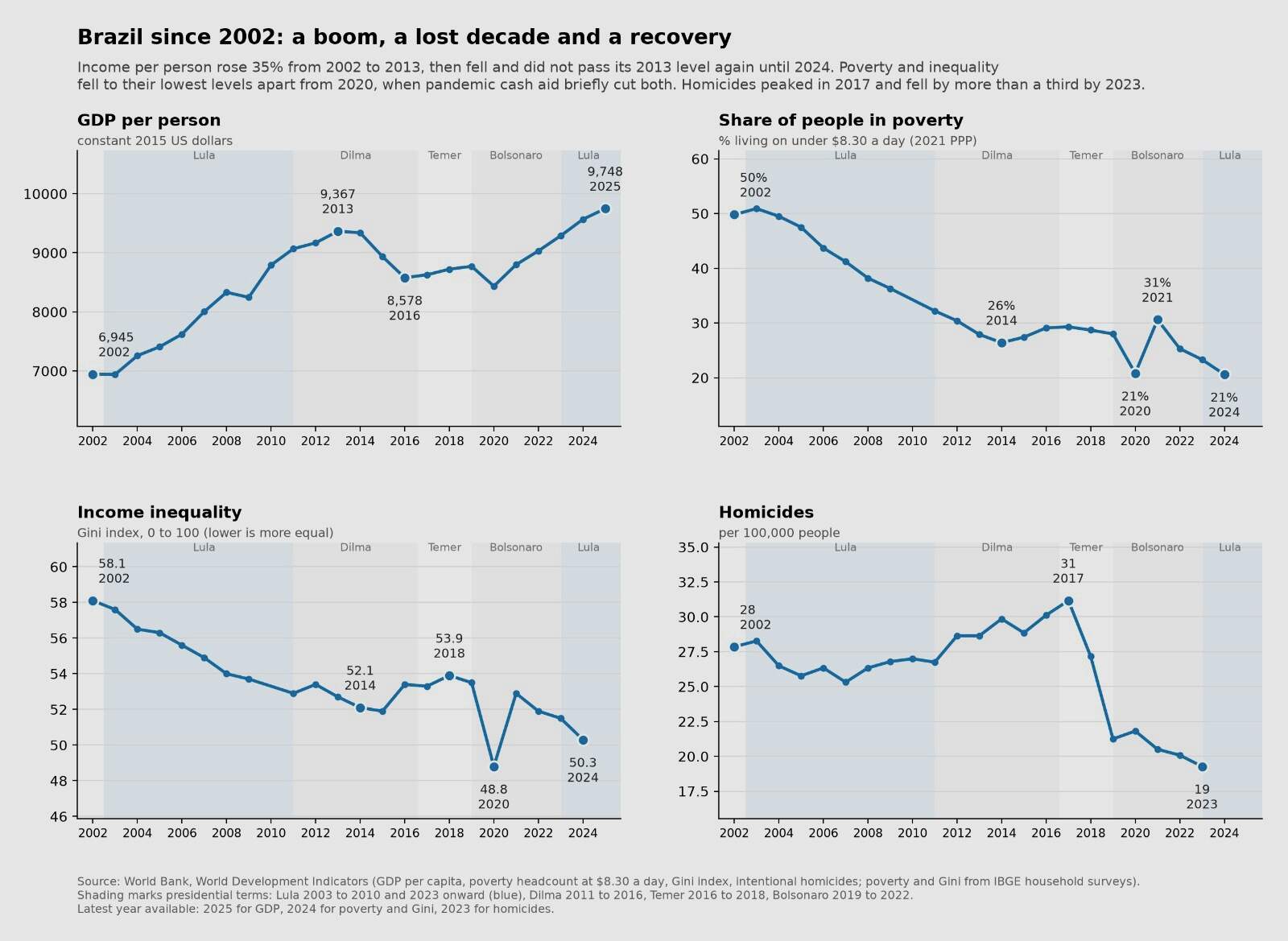
But those statistics don’t resonate with everyone in the diaspora.
“Many Brazilians who came here felt that the narrative about [Lula’s] economic regime as ‘lifting millions out of poverty’ (true) did not reflect their experience (also true),” McKenna said in a text.
McKenna said many of Bolsonaro’s “most loyal supporters” reside in Massachusetts and Florida, home to the two largest Brazilian communities in the U.S.
More highly educated Brazilians in the U.S. tend to support Lula, McKenna said, and she sees at Harvard a microcosm of the dichotomy, with professors and students on one side, and service workers on the other.
“People who came to Boston during Brazil’s economic crises, and then they rebuilt their lives here,” she said, “they’re still embedded in these church networks, and they still vote very heavily for Bolsonaro.”
In contrast, McKenna said, Brazilian students and researchers at Harvard were mobilizing hard for Lula in the weeks leading up to the election.
“ They came together, they self-organized around the runoff, and really believed that a comeback was possible,” she said. “That reflected what we heard was happening in Brazil.”
Enter MAGA
According to a recent study, as many as 350,000 Brazilians live in Massachusetts, comprising the largest immigrant group in the state. And they’re the most affected by Trump’s immigration crackdown, making up two of every five people deported out of Massachusetts.
For a Brazilian community that gravitates toward Bolsonaro — an ally of President Trump — the mass deportation campaign brings conflicted feelings toward the American president.
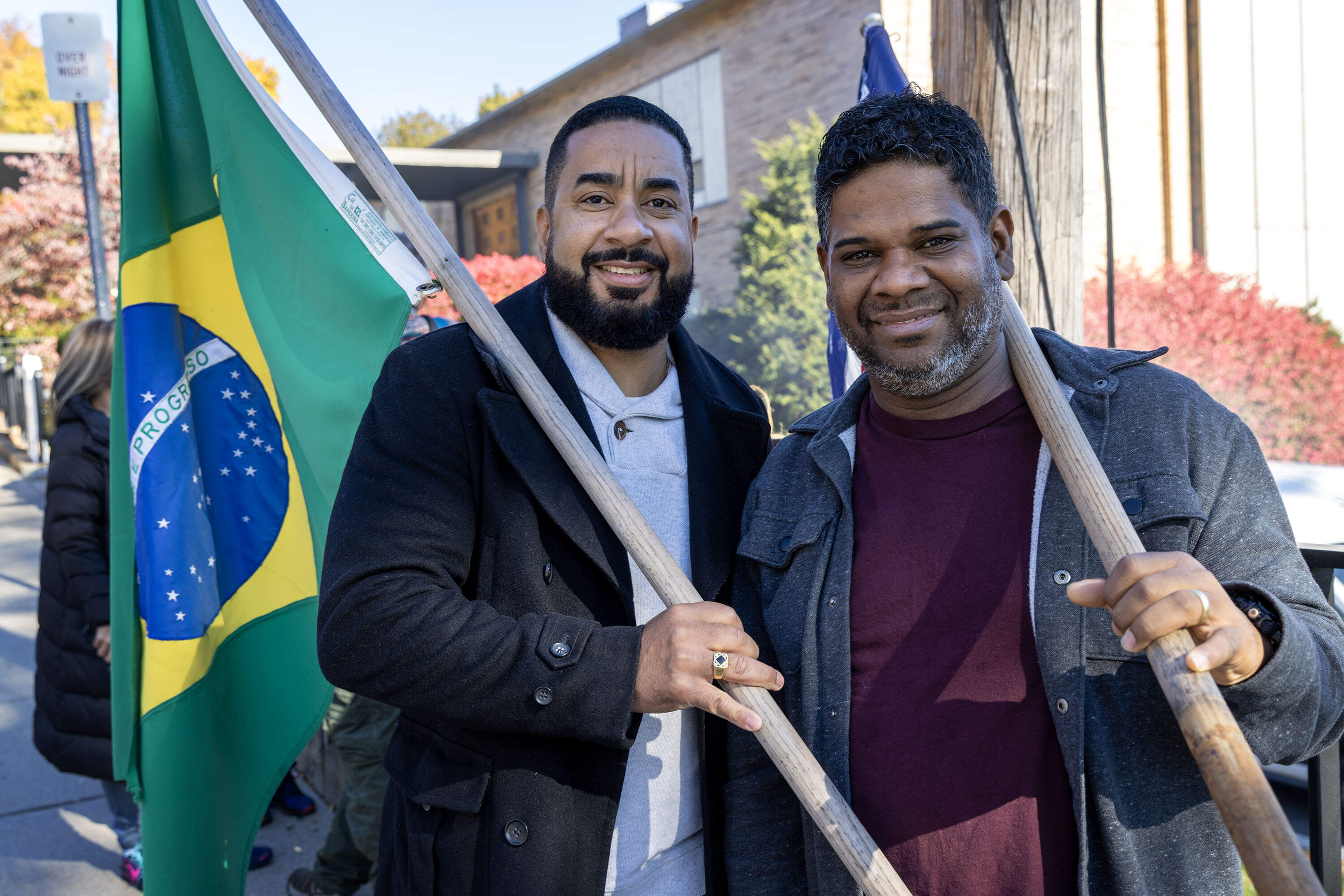
After voting for Bolsonaro on Sunday, Adriano DaSilva of Woburn said he opposes abortion — and broadly backs the conservative agenda — but he’s against the deportation of workers and the separation of families.
“That’s a mark against [Trump],” he said in Spanish, “but it doesn’t take away from the right-wing policies that we want.”
For DaSilva, and other business owners in the Brazilian community, that “mark” could come at a big cost.
DaSilva is a general contractor who does residential construction. He said ICE arrests and self-deportations — including Brazilians and immigrants from across Latin America — are causing labor problems. He can’t find painters to hire, carpenters and plasterers are increasingly hard to come by, and nobody’s showing up to take the place of the immigrants who are gone.
“We’re losing work, plain and simple,” he said. “You don’t have the personnel, you don’t have the means to do the work.”
Contrast that with DaSilva’s version of the U.S. when he was growing up in Brazil. He said he started learning about the American dream in the fifth grade.
“It’s shown in the books: the structures, the buildings, the work sites, the big cranes,” he said. “They talked about how that country was born, the first president, the revolution — everything.”
DaSilva said the American dream is alive and well — except for people who are in the country without documents.
“These are the people who are having problems,” he said. “So the dream suddenly doesn’t work for this person who entered or is here illegally.”
‘The most left state in the country’
Outside the polling place in Malden, supporters of President Lula pointed to his investments in education and in the poorest regions of Brazil.
Ione Andrade of Burlington said Massachusetts policies aren’t far off. She thinks that’s lost on many Brazilians here.
“They have no idea that Massachusetts is the most left state in the country,” Andrade said. “Even myself, the first time I came, I didn’t want to stay here. I just wanted to save money and go back.”
Andrade first immigrated in the late 1980s, and went back to Brazil a few years later, hoping to live a better life there and start a business. But that didn’t pan out, so she returned to the U.S. and has lived here ever since.
Now Andrade is 61 and has a business as a party DJ and face painter.
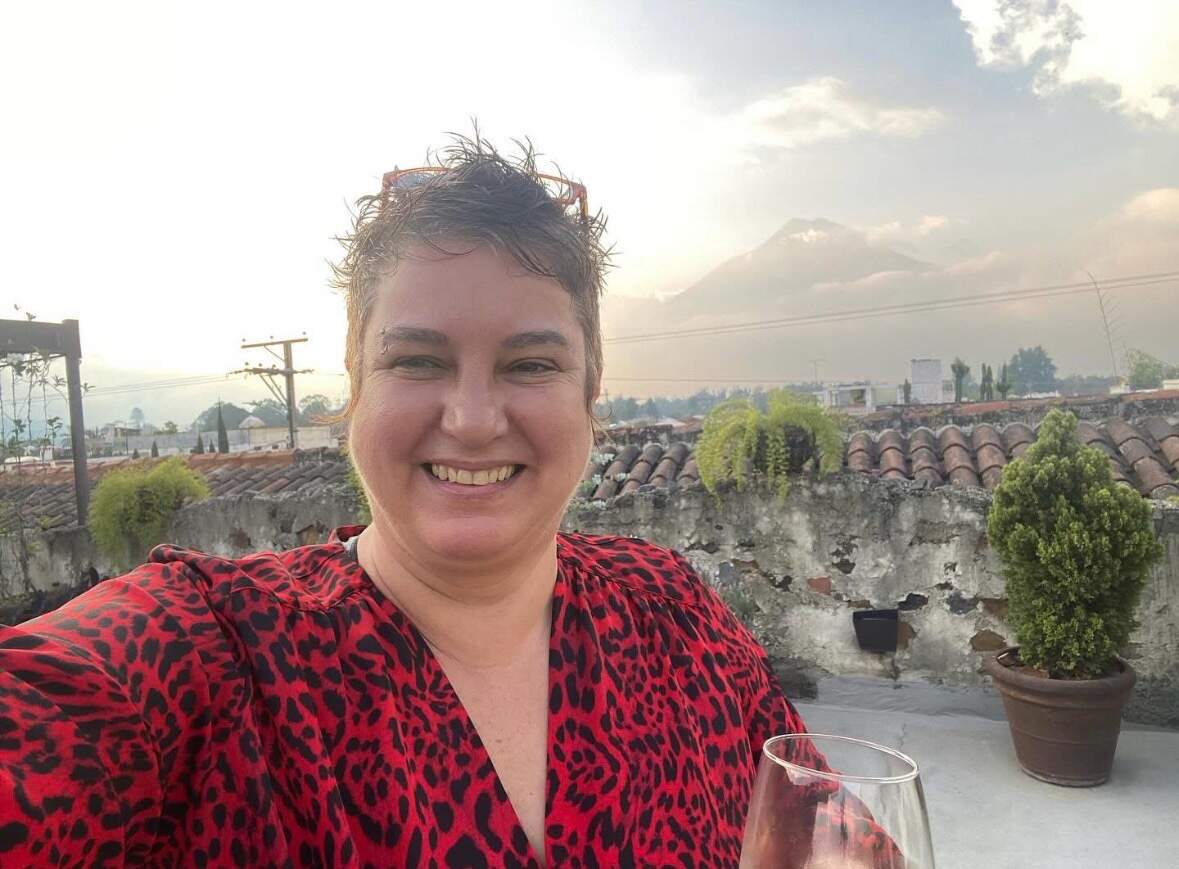
“ I always thought I was gonna do … just the jobs that American people don’t want to do,” she said. “But in the end, little by little, I was able to do my own business. My own, Ione American dream.”
Andrade’s dreams for Brazil came true Sunday, when Lula pulled off an upset victory and won by 4.4 million votes. A defeated Bolsonaro fled to the United States a few days later, and was reportedly granted a visa by the Trump administration after Brazilian authorities seized his passports.
That’s not what Ione Andrade has in mind when she speaks of the American ideal, a country that grants passage to a man many Brazilians believe is attempting to flee justice.
But for some Bolsonaro supporters, he’s facing political persecution in Brazil, and the U.S. is giving him refuge.
This story is part of an ongoing series called “State of the ‘Dream,” which profiles longtime Massachusetts immigrants and their communities.