The designer’s body-con dresses shifted runway styles and welcomed women of color into the industry.
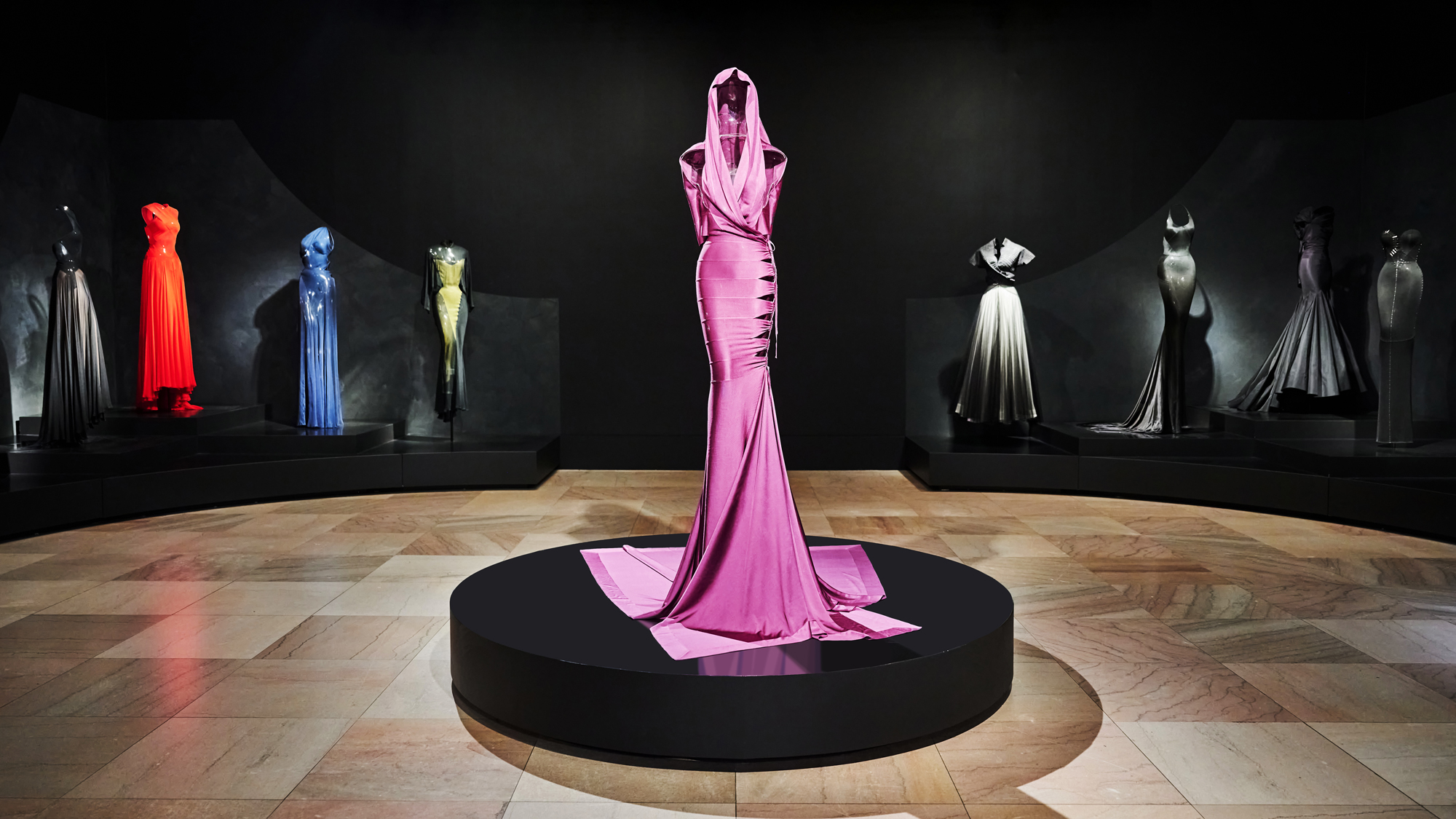
Installation view of ‘Azzedine Alaïa: Sculpting Fashion,’ at the Legion of Honor, San Francisco, 2026. (Photo by Randy Dodson; courtesy of the Fine Arts Museums of San Francisco)
Spend any amount of time talking about Tunisian-French couturier Azzedine Alaïa, and you can count on one particular word coming up again and again: sculptural.
It’s not for nothing. Alaïa’s meticulously constructed, breathtakingly body-con dresses often look like something you’d be more likely to find on display in the Galleria Borghese or the Musée Rodin than on the body of a woman. Minimalist silhouettes elevated by intricate detailing, gorgeous draping and absolutely to-die-for construction make Alaïa’s couture feel as clean, elegant and hermetic as a line drawn by Matisse.
The Legion of Honor’s new show Azzedine Alaïa: Sculpting Fashion makes good use of Alaïa’s trademark transparent mannequins (based on the body of his muse, Naomi Campbell) and cinematic lighting to show these garments in all their glory. The show is a wonderful tribute to the designer as we approach the 10th anniversary of his death.
It begins with some absolute show-stoppers, including a mauve acetate jersey bandage dress designed so exactingly that it might be impossible to walk in (although somehow Grace Jones managed to do just that at the 1985 fashion Oscars in Paris).
Other delectable treats await visitors in this opening salvo of high fashion. To the right of Grace Jones’ dress stands a sleek evening gown with a deconstructed bustier studded with two rows of straight pins and decorated with tailors’ markings, headlining a grouping of monochrome gowns. To the left stands one of the show’s major pop-culture moments: a crimson silk chiffon frock with transparent, overlapping straps that Rhianna absolutely wore the daylights out of at the 2013 Grammys.
Born in Tunisia in 1935 (when it was still a French protectorate), Alaïa found early inspiration in the North African color palette and the habits of the nuns that he would see out and about. Upon moving to France in 1956, the designer landed a coveted internship at Dior, but was ousted after only four days due to prejudice against North Africans — tensions were escalating between France and its colony in Algeria. Nonetheless, the influence stuck; Alaïa would later purchase some 600 Dior gowns as a part of his massive 20,000-piece historical collection.
As his career developed, Alaïa left his mark on not only runway styles, but the models who walked those runways. His mentorship of, among others, Naomi Campbell and Veronica Webb brought women of color to a very white industry. Later, he dressed powerful women like Tina Turner and Michelle Obama at the height of their careers.
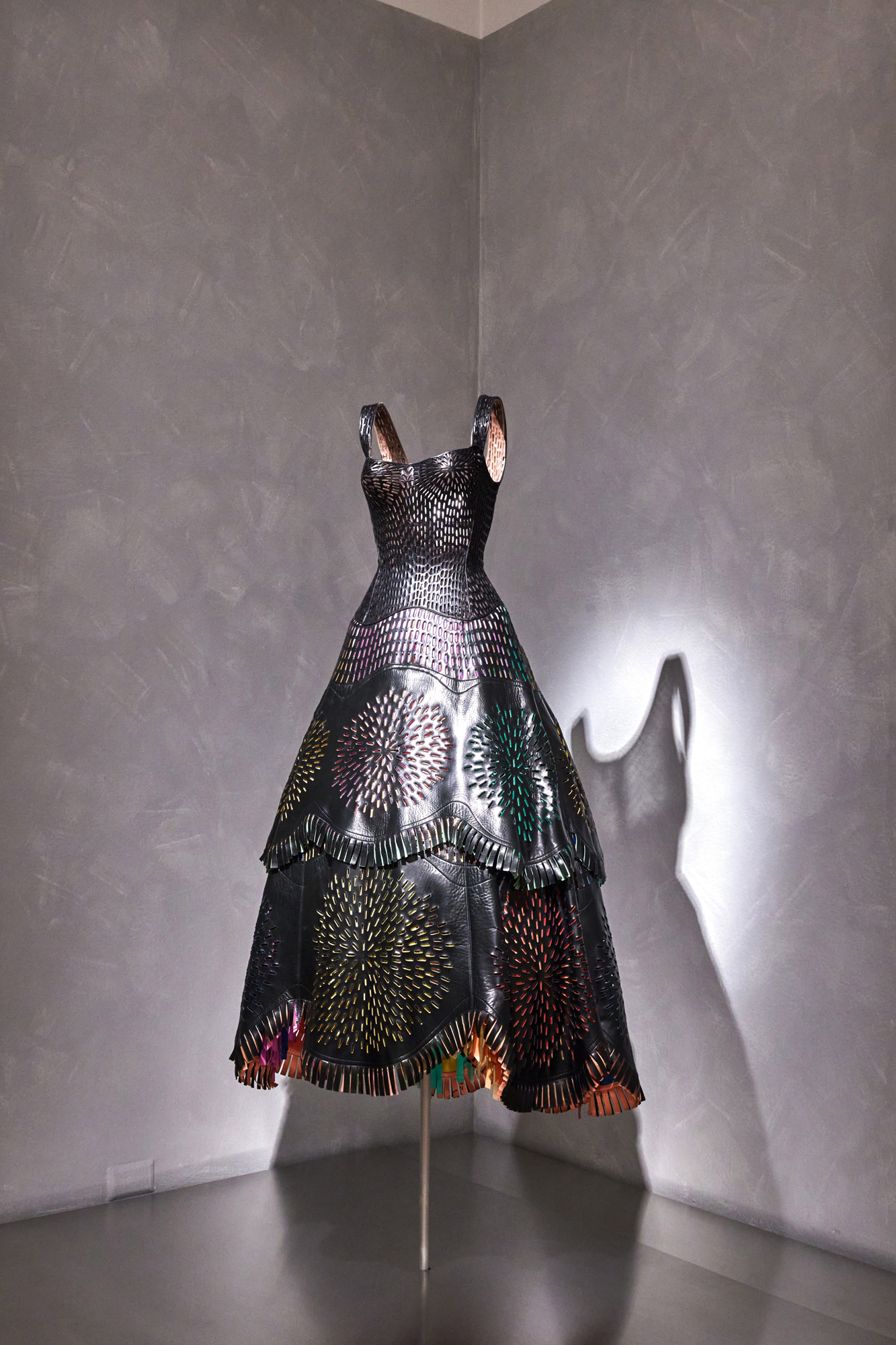
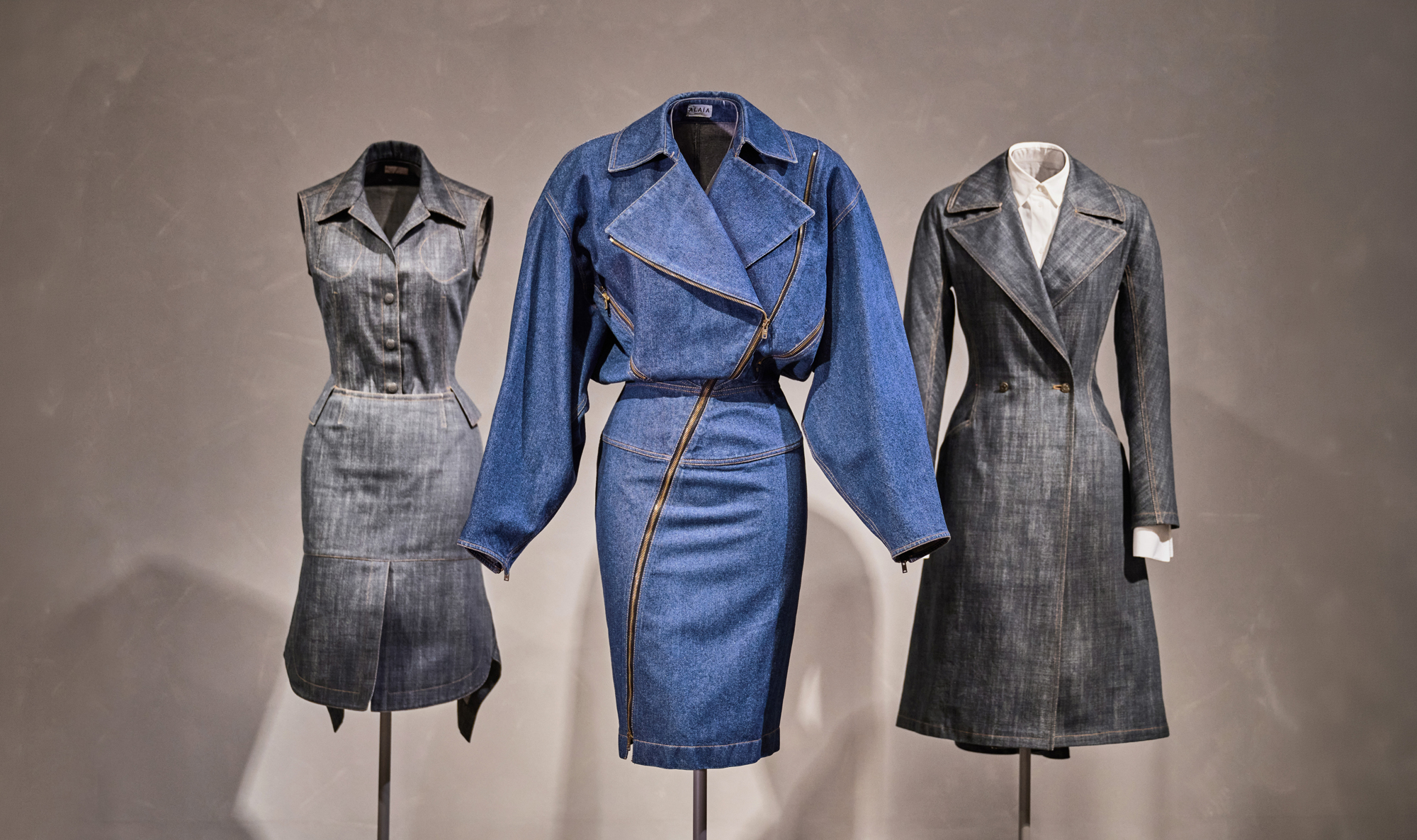
At the Legion of Honor, the influences Alaïa found on both sides of the Mediterranean — as well as his storied workmanship, which saw him ignore industry calendars in order to move at his own pace — are seen throughout Sculpting Fashion’s individual galleries, which highlight the designer’s encounters with particular fabrics and aesthetics.
One gallery explores the indelible mark that the Bay Area left on the designer, centering those two signature materials long beloved by West Coasters: leather and denim. According to show curator Laura L. Camerlengo, Alaïa considered the pair to be “humble materials that he wanted to elevate into couture.”
The pieces here are a master class in hard and soft, with careful use of metal studs and leather transforming a silk chiffon look into something resembling chain mail. An elegantly ruched skirt and bolero worn by Dutch model Linda Spierings sits across from one of the show’s few boxy offerings: a stunning coat covered in carefully arranged eyelets. The gallery is highlighted by an absolutely perfect leather gown with so many handmade cutouts of such intricacy that it turns the firm material gossamer.
The Bay Area was much more to Alaïa than just an encouragement to experiment with different materials. When establishing himself as a solo force in the early 1980s, after a spread in Women’s Wear Daily by the legendary street photographer Bill Cunningham brought him to a new level of prominence, Alaïa made inroads into the American market via the East Coast’s Bergdorf Goodman and San Francisco’s own I. Magnin.
‘Azzedine Alaïa: Sculpting Fashion’ is on view at the Legion of Honor (100 34th Ave., San Francisco) through April 11, 2027.