Two stylists go head-to-head on fashion’s most divisive embellishment.
With winter comes sequin season. While some consider the embellishment the ultimate expression of evening glamor, others might argue that its appeal is less than timeless. Can sequins ever truly be chic, or is there a fine line between sophisticated sparkle and sartorial excess?
Their history makes a compelling case for the former. Sequins began their life as a wealth signifier – metallic discs and coins that adorned ancient royal garments to convey status. Today, sequins continue to feature in the eveningwear collections of some of the world’s most prestigious fashion houses, while their presence on the high street has made them more accessible than ever.
But does ubiquity diminish their allure? Elite Traveler asks fashion experts Oriona Robb and Giorgio Ammirabile to discuss whether this age-old symbol of glamor still deserves its place in a well-dressed wardrobe.
Related article: Is Androgynous Dressing Suitable Cocktail Attire?


For sequins
Oriona Robb, stylist
Sequins are chic – they catch the light in a way that nothing else in your wardrobe can. The festive period gives us permission to celebrate, and sequins are how we show it. It’s also the darkest time of the year, so naturally, we’re drawn to light.
The chic part, for me, is the contrast. When you pair the sparkle with matte fabrics like wool, cashmere, silk, or crepe, it gives it something to play against. For a well-styled look, I reach for a sparkling shirt and wear it open over a fine knit.
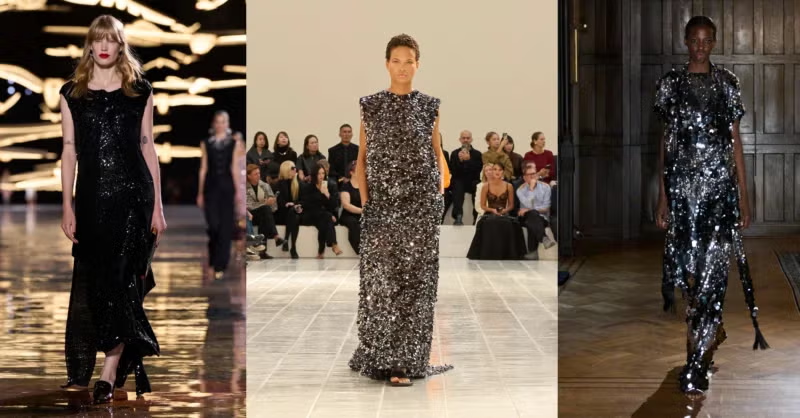
I love tonal sequins: black on black, navy, champagne, gunmetal. Matte and micro ones are beautiful, too – they shimmer rather than glare. Wearing one glitzy piece with clean, quiet lines (like a long-sleeved sequin column dress) works well and tells people you know exactly who you are.
There are lots of high-fashion brands that work effectively with the fabric. For me, Michael Halpern is today’s master of sequins – his work has real glamor and movement – and I adore the way Ashish uses them with humor and a sense of storytelling.
Saint Laurent’s sparkly pieces are also extremely elegant, as are Valentino’s and Chanel’s, who both handle [the material] with discipline. They all understand that sequins should be part of the design of the garment – never an afterthought.


Against sequins
Giorgio Ammirabile, fashion editor and stylist
There’s something about sequins that, when material and styling aren’t properly considered, can scream ‘cheap’ from across the room. Wearing them during the day often ends up making a look appear more like a costume. Even at the highest end of fashion, they can lend the impression of a stage outfit.
A dress that looks exquisite in motion on a runway can read as one solid block of glare in flash photography. The construction often turns out to be inexpensive, too, and the plastic used is not always best quality – stiff backing material makes the sparkling dresses sit awkwardly, and large, mirror-bright disks flatten the shape.
The holiday bodycon mini – something of a December uniform with its giant iridescent sequins, cutouts, and a plunging neckline – needs to be retired. The sequins often bunch and lift wherever the dress pulls. It starts to feel predictable when the shops offer the same dress every year, and everyone arrives in the same version of it. I’d avoid them at any formal event – there are better materials to wear. If you still want to catch the light, a bias-cut satin dress in bronze or ink blue will do it beautifully.