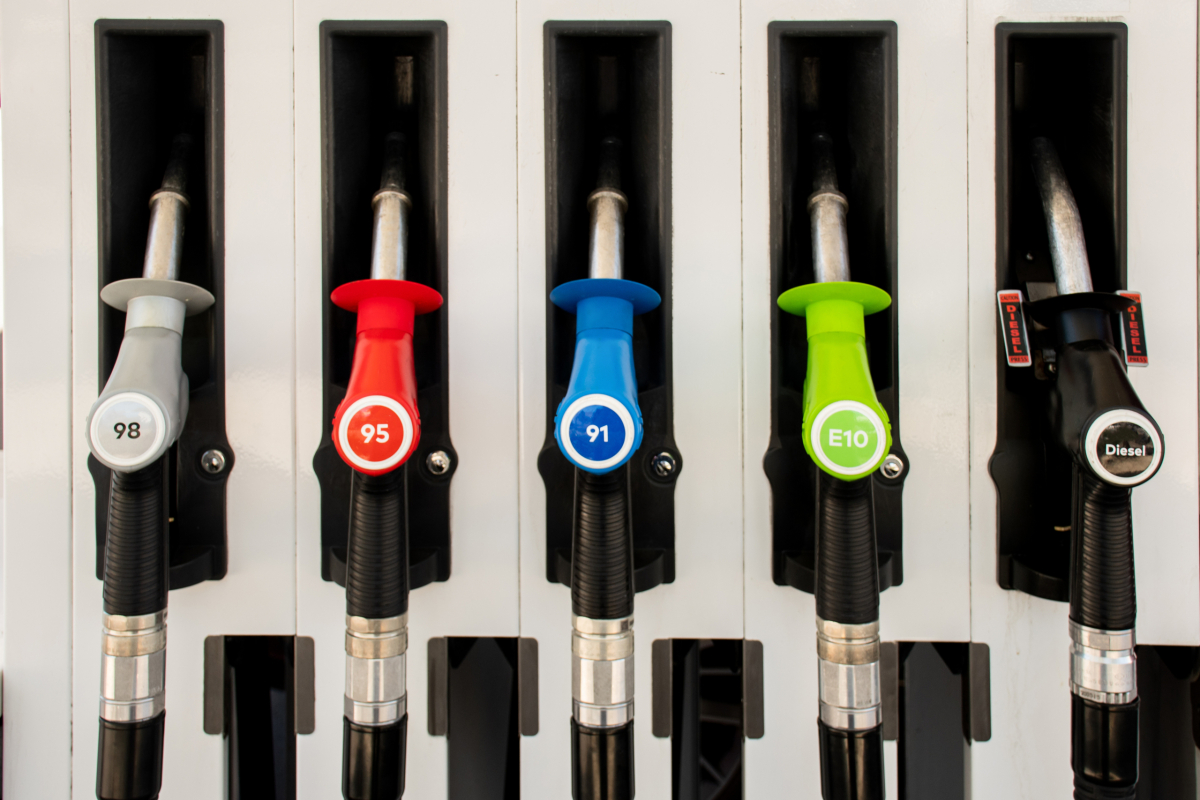
And prices have surged sharply since February due to the closure of the Strait of Hormuz – petrol is up 40 per cent since the start of the conflict, and diesel 72 per cent.
It’s unclear when the strait will open again, and it is critical for us to be prepared now for disruptions to our fuel supplies that may extend for months ahead.
Ordinarily, rising prices when something is in high demand and limited availability is a necessary pain – to bring demand down to meet supply in the short term, whether it is toilet paper or bananas, and send signals that we need more supply in the market.
But a fuel price spike has particularly severe consequences.
It directly affects every Australian who drives and indirectly affects everyone else through increased prices for goods, which travel by truck.
And it hits the lowest-income households particularly hard, who spend six times more of their income on fuel than the highest-income households.
The Albanese government has decided to cut the tax rate on fuel by half for three months to provide some relief.
This will save motorists 26 cents per litre on a price which has already increased by up to 100 cents per litre.
It won’t eliminate the pain, but it will dull it.
Critics have rightly pointed out the downsides of this measure from an economic and budget perspective.
First, it works against the rising prices that compel people to cut their use of fuel.
Second, it is not well-targeted to support the households that need it.
Third, it costs money that is then not available for other things.
On the first criticism – it should be borne in mind that the impact of the measure is not large.
Shane Oliver from AMP estimated it would save households an average of $9 a week; $117 over the course of the policy.
Treasury estimates that demand for petrol is down 10 per cent off the back of the price rises to date; the estimated increase in demand from the excise cut is two per cent, and that will diminish if further demand management measures are put in place.
As always, there is a risk that retailers fail to pass on the benefits of the fuel excise cut, but evidence from last time, and Europe, shows they probably will – particularly with the ACCC on the case.
The second criticism is more powerful.
Research by e61 shows that while the lowest-income households spend proportionally more of their income on fuel, the highest-income households spend more on fuel overall – so the benefit of the policy actually accrues more towards those who are most able to bear the price increases.
But the fuel excise cut will help businesses as well as households.
The material risk from price shocks and supply shortages is that fuel-dependent businesses will pull back their operations or shut down, affecting jobs and livelihoods.
This timely intervention could help preserve business margins long enough to keep trucks running and people in jobs through the upcoming shock.
The excise cut was able to be put in place immediately – and more targeted measures take extra time to take effect.
If high prices persist after three months, and there is a case for continued support, then it should be designed to target those who most need it.
In relation to the cost, Treasury has said the expected budget cost is $2.55 billion.
This revenue needs to be recouped from somewhere.
But in a silver lining, the same crisis affecting our fuel imports has driven a massive price rise in our export commodities – gas, coal, and gold particularly.
Westpac estimates the budgetary windfall will be $20 billion – more than enough to mop up the fuel excise cuts.
It has also been suggested that the excise cut is inflationary.
Technically, the cut will help reduce price pressure in the short term, and it is important to recognise that the biggest driver of price increases is the oil price shock itself, and its implications for other goods and services.
Of course, the excise cut will provide a small saving for households that they may spend, but it is hard to imagine that having a material impact on spending in the broader picture of price increases.
All this suggests the excise cut may not be as terrible in effect as some economic commentators have suggested.
But it certainly should not become embedded in our policy response, which needs to focus on ensuring as best we can that our suppliers keep shipping to Australia, that Australians limit our fuel use to where it is most needed, and, most fundamentally, we reduce our exposure to these types of shocks by moving to an electrified economy.