As organizational leaders continue to seek to connect culture, strategy, and employee experience, values statements alone are not enough to drive meaningful change in the future of work. To address this gap, McLean & Company has released Case Studies: Articulate Organizational Culture, a collection of real-world examples that demonstrate how organizations are defining values, clarifying behaviors, and embedding culture into everyday work. Building on the firm’s Articulate Organizational Culture, the case studies offer a practical view of how leaders can turn abstract culture aspirations into concrete actions that support long-term success.
The resource features organizations across sectors, including:
- A public sector organization that aligned culture with a refreshed strategy.
- A technology firm that translated values into lived behaviors.
- A global nonprofit that closed the gap between mission and practice.
- A healthcare company redesigning values to address burnout and patient satisfaction.
In each case, leaders used data from engagement surveys, values assessments, and employee listening efforts to understand the current culture and identify where values were not consistently visible or embedded in work practices. They then defined clear values and behaviors, articulated culture statements, and committed to shared accountability for change across executive teams, human resources, and people leaders.
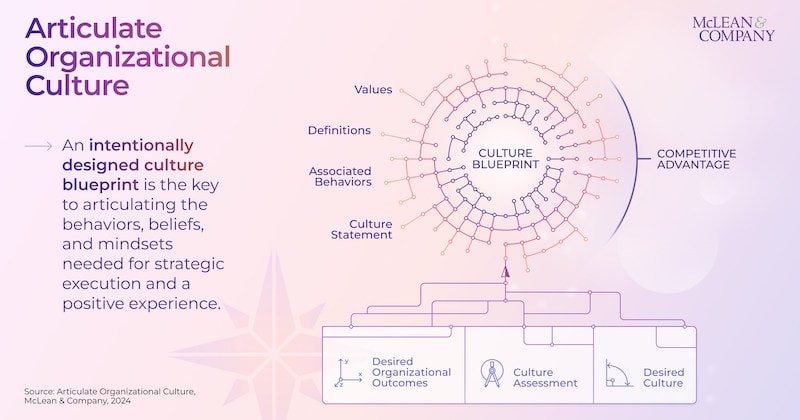
“Culture only becomes a lever for organizational performance when leaders move beyond posters and slogans to define what values look like in everyday behavior,” said Kelly Berte, practice lead, Human Resources Research & Advisory Services, at McLean & Company. “HR leaders who use data to understand the current state and co-create a culture that embeds the values culture into both core programs and everyday workplace practices are far better positioned to build workplaces where organizational strategy comes to life and employees truly thrive.”
McLean & Company’s Case Studies: Articulate Organizational Culture showcases detailed examples of successful cultural articulation, including the decisions and actions organizations take as they apply the process outlined in the firm’s blueprint. The process focuses on creating clarity and shared understanding and includes:
- Assessing the current culture through surveys, values assessments, and employee feedback to identify strengths and gaps.
- Co-creating a focused set of values and behaviors and documenting them in a culture blueprint that links directly to mission and strategy.
Embedding these elements into programs such as recognition, performance management, hiring, and leadership development ensures culture becomes part of everyday work, while ongoing measurement helps sustain momentum and accountability.