MADISON, Wis. – The Wisconsin Department of Natural Resources (DNR) reminds the public to plan ahead for summer travel by purchasing their Wisconsin state park and forest vehicle admission pass and making their camping reservations before they hit the road.
A Wisconsin state park and forest vehicle admission pass is required for all motor vehicles stopping in most state parks, forests and recreation areas. Purchase your vehicle admission pass online before arriving to help save time when entering Wisconsin State Park System properties.
Admission passes can be purchased online, at individual properties, from DNR service centers or when renewing your vehicle registration online or at self-service kiosks at Wisconsin Division of Motor Vehicle (DMV) locations.
Once a vehicle admission pass is purchased online, visitors can use the email confirmation as proof of purchase immediately and will receive a physical pass by mail. Visitors may print their email receipt and place it on the driver’s side dashboard so that it can be read through the windshield. Customers who don’t have a printer can write the order and pass details on a piece of paper to display.
Customers who ordered a pass online with their vehicle registration can also display the order details on their dash by printing their confirmation or writing the required details on a piece of paper, along with the phrase “Ordered via DOT.” Customers who purchase a 12-month admission pass during their DMV registration will receive a physical pass by mail with their vehicle registration stickers and Certificate of Registration.
For those looking to bike, horseback ride or inline skate, daily and annual state trail passes can also be purchased online.
Camping On Holiday Weekends
The DNR encourages all visitors to be courteous to their camping neighbors. Noise from a campsite should never create a disturbance or interfere with other people’s enjoyment of the park.
The DNR reminds visitors that not all occupied campsites look the same. Some campers may use a vehicle as their primary camping unit or plan to set up their belongings later in the day. If a campsite looks empty, this doesn’t always mean it’s unoccupied.
Campers are reminded to cancel their reservation if they are unable to make their trip. Reservations can be canceled online or by calling 888-WIPARKS. Cancelations made before 3 p.m. Central Time two days before the day of the reservation will be credited with a full refund of camping fees but not the reservation or cancellation fees.
Take The Road Less Traveled To A Hidden Gem
With over 20 million visitors annually, Wisconsin State Park System properties can be popular destinations on holidays and weekends. During the summer season, visitors may experience long lines to enter the park, limited parking availability and crowded trails and picnic areas.
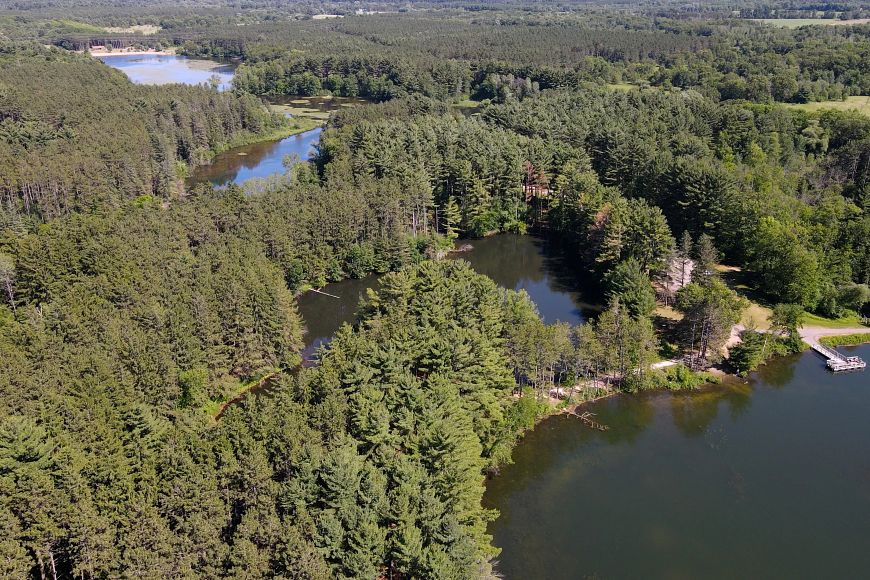
To make the most of the holiday, parkgoers are encouraged to explore lesser-visited state properties to avoid congestion at the most visited parks. With 50 state parks, 15 state forests, 44 state trails, several state recreation areas, wild rivers and flowages to discover, there are plenty of places to find adventure while avoiding the crowds.
Find a new Wisconsin state park, forest, trail or recreation area to explore with the DNR’s Find A Park tool.
The DNR Reminds You To “Know Before You Go”
- Most Wisconsin state parks, recreation areas, trails and forests are open from 6 a.m. to 11 p.m.
- Campers must make a reservation before setting up on any site. The campsite check-in is 3 p.m., and the check-out is 1 p.m.
- Familiarize yourself with the property layout and amenities such as restrooms, drinking water sources, trail distance and surface type and concessionaires.
- Ticks are out, and visitors should take precautions to prevent Lyme disease and other tick-born conditions.
- Most Wisconsin state parks, forests and other day-use areas do not have garbage or recycling bins. When you visit, you will need to take your garbage and recyclables home with you. We all play a vital role in taking care of our natural resources.
- Fireworks are prohibited on DNR-managed lands. Restricted areas include state parks, natural areas, forests and state-owned public hunting and fishing areas.