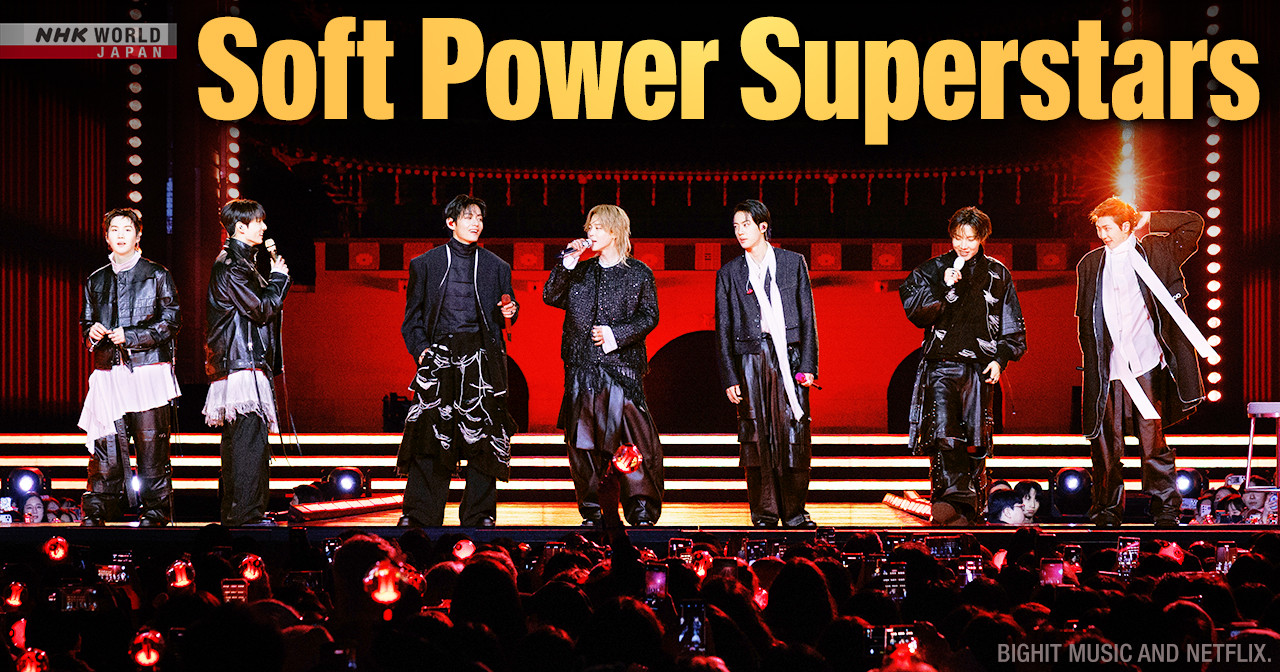
K-pop superstars BTS are back. The boy band’s seven members held a concert on Saturday for the first time in four years, performing new songs and sending their fans into raptures. The event could turbo charge South Korean culture’s already formidable global reach.
Crowds gather at Seoul’s Gwanghwamun Square for all sorts of events, from festivals to mass public protests. But it’s fair to say few have generated quite as much hysteria as BTS’ comeback.

Saturday’s concert coincided with the release of the band’s fifth full-length album, “Arirang,” which sold nearly 4 million copies immediately after going on sale. The crowd erupted as their K-pop heroes performed lead song “Swim” live for the first time. Classics including “Butter” and “Dynamite” triggered what surely must be one of the city’s biggest-ever singalongs.
Band leader RM added to the drama by performing on a stool. He had injured his leg the day before.

Calm before the K-pop storm
The atmosphere in Seoul was electric days before BTS had even taken to the stage. Huge billboards hinted at the spectacle to come as visitors from around the world poured in to the city.

Most hotels near the square were fully booked weeks in advance, and local restaurants braced for unprecedented demand. The Seoul city government even asked nearby businesses to open their restrooms and other facilities to the public on the day of the concert.

“During the COVID pandemic, when running a business was very difficult, their songs gave me a lot of comfort and hope,” said local Japanese restaurant owner Kim Seong-dae before the event. “The fact that they will hold this concert at Gwanghwamun is something I truly applaud.”
Kim added foreign languages to his menu and dutifully opened his restrooms to the crowds. He even decorated the tables with purple flowers in a nod to BTS’ signature shade.
Authorities cautious about safety
A total of 22,000 free “golden” concert tickets were available by lottery for a special seated zone. Many more people traveled to the area to watch on screens and soak up the atmosphere.

“We chose this year to come here because of the BTS comeback,” said one fan who traveled from Portugal. “We hoped to see the concert, but unfortunately we didn’t get tickets.”

Authorities in Seoul approached the event with caution. A fatal crowd crush in a commercial area of the city during Halloween celebrations in 2022 was at the forefront of their thinking — so too, a recent fire at a capsule hotel that injured 10 foreign tourists.
Subway trains bypassed stations near Gwanghwamun to prevent overcrowding. And more than 30 nearby buildings were closed for the day. Over 3,000 personnel were deployed to manage the crowds, while CCTV systems tracked the density of people in real time.

Exactly how many people showed up for the concert, which lasted only about one hour, is unclear. More than a quarter of a million were expected to gather around the venue. But in the end, government and police officials say the figure was far fewer, at more than 40,000. BTS’ agency, Hybe, put the number at 104,000.
A band destined for the global stage
But one thing is for sure: BTS have lost none of their appeal during their four-year hiatus.
The group debuted in 2013, and global stardom soon beckoned. Their hit single “Dynamite”, released in 2020, thrust them to the top of the US Billboard music charts, something no other South Korean artist had done before. They have also been nominated for a Grammy Award five times.

The group’s influence grew far beyond the music industry. BTS addressed the UN General Assembly in 2018 as part of UNICEF’s Love Myself campaign. And in 2022, US President Joe Biden welcomed all seven members to the White House as part of a push to tackle hate crime.

But K-pop’s biggest act was brought to a sudden halt that same year. Military service is mandatory for most men in South Korea, no matter how famous they may be. BTS’ eldest member Jin was drafted, and the rest soon followed.
K-pop gives South Korea cultural clout

But now, they’re back. Saturday’s concert was broadcast live to 190 countries in what was a major flex for South Korean culture.
“K-pop is a core growth engine for the nation,” says Sim Hee-chul, a professor of Entertainment Management at the Dong-ah Institute of Media and Arts.

The industry is valued at over 3 trillion won, or about 2.2 billion dollars, but Sim says K-pop’s true value is the way it propels other sectors, such as beauty, food and tourism.
“From a global perspective, K-pop looks much larger than it actually is,” he says. “It is a vital tool for leading our national brand.”
BTS kick off a world tour in April that includes concerts in Asia, Europe and the Americas.