Digitization needs raw materials. Networks, data centers and end devices are made of many valuable materials. Careful handling of these limited raw materials is both ecologically and economically necessary. For us, one thing is clear: we want to reduce e-waste and dependencies in the production and supply chain. Circularity is therefore one of the focal points of our corporate responsibility strategy.
Deutsche Telekom wants to make the entire value chain of our technologies and devices almost completely recyclable by 2030. To do this, we look at the entire life cycle of products: from design and use to reuse, recycling and recovery of materials.
Product design: A good start sets the wheels in motion
The course for recyclability is already set in product development. Design determines whether products are designed to be durable, energy-efficient, repairable, and made of materials that can be reused or recycled as much as possible at the end of their life cycle.
In the case of own-brand appliances, we can incorporate these requirements into product development in a particularly targeted manner. This applies to the equipment itself as well as to packaging and material selection. For example, the housing of all our routers, receivers and repeaters is made of at least 90% recycled plastic. Since the first generation, we have continued to improve the T-Phone, both technologically and ecologically. We also use as few and environmentally friendly materials as possible for packaging. In addition, we have banned single-use plastic in our packaging. In this way, we avoid unnecessary waste before it is generated.
Last, but not least, digitization can replace many physical products with digital variants or reduce the use of materials and resources in production and logistics. Virtual models, so-called digital twins, help, for example, to plan and control products or even entire factories more efficiently and real-time navigation can reduce fuel consumption by optimized routing of the vehicles.
Reusing reduces producing: take-back and refurbishment
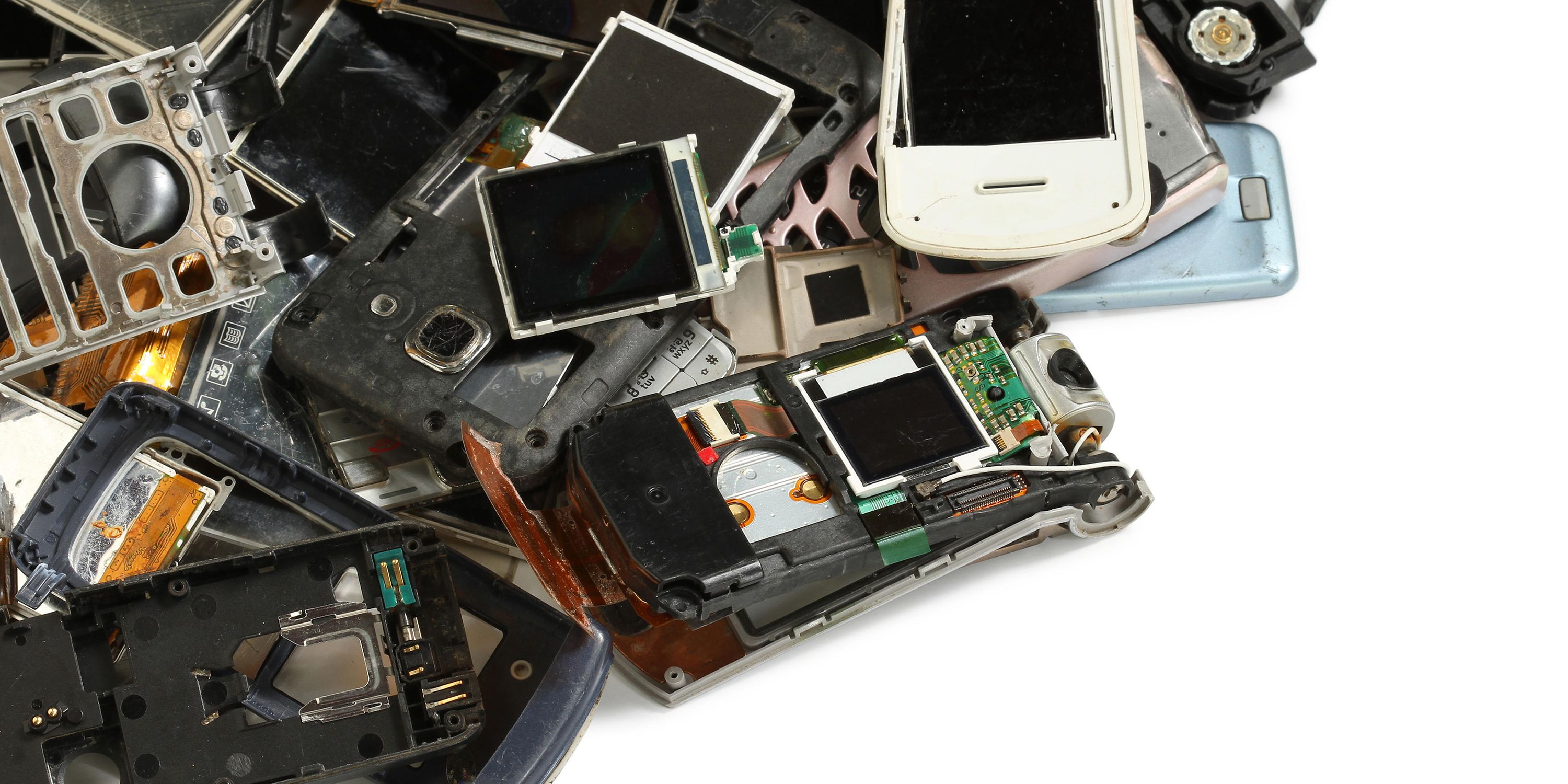
According to Bitkom, 86% of all Germans store at least one unused mobile phone or smartphone at home. For a functioning cycle, the processes must be designed in such a way that everyone can participate: Deutsche Telekom offers various options for private and business customers to use end devices for as long as possible. These include, for example, rental models for routers and media receivers, mobile phone buy-back programs, device-as-a-service solutions for business customers, where devices are provided, serviced and refurbished, or the mobile phone collection center. The mobile phone repair service and the portfolio of refurbished devices keep end devices in circulation for longer. In IT and network technology, we also work in-house to use functional elements for a long time, to process them and to increase the proportion of recycled materials such as copper, iron, aluminum or plastic.
Recovering valuable raw materials
At the end of the product life cycle, there are materials and devices that cannot be reused. Our goal is to avoid waste as much as possible and to recycle the waste generated in the best possible way – especially for electrical and electronic waste, we have achieved the goal of a 100% recycling rate since 2022. This means that no more electronic waste ends up in landfill.
Telco Circularity Score: Making Circularity Measurable
The circular economy can only be systematically improved if progress becomes measurable. That is why Deutsche Telekom has developed the Telco Circularity Score (TCS).
The TCS makes circularity measurable along the entire product life cycle in an industry-specific manner and thus supports the targeted management of our circularity activities. Among other things, it takes into account aspects such as product design and material use for waste prevention, reuse, recycling and key figures for waste disposal. We disclose the exact key figures of the TCS in our annual Corporate Responsibility Report.
In this way, we are creating a basis for transparently assessing progress and systematically developing the circular economy.
Circular economy brings added value
Circular economy helps to use raw materials and existing assets longer and keep valuable materials in the cycle. As a result, fewer resources have to be mined or produced. This reduces environmental pollution and conserves natural resources – important levers for operating within planetary boundaries in the long term.
In addition, the reuse and recovery of materials strengthen stabile supplies and makes companies less dependent on scarce raw materials, fluctuating prices or long delivery times.
In this way, the circular economy contributes to a resilient digital infrastructure and a sustainable future – in line with our vision: Act responsibly. Enable sustainability.