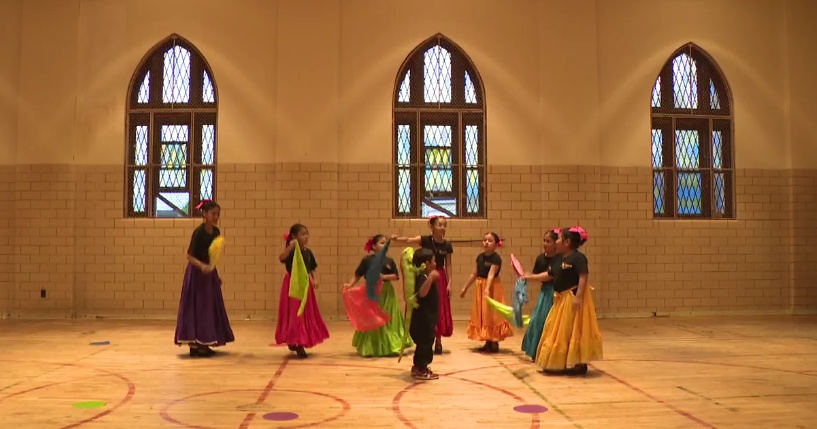
Every step, every color and every flip of the skirt tells a story. Danza means dance, and alegría means joy.
In Baltimore, the group Danza Alegría is using traditional Mexican folklórico dance, music and colorful costumes to help a new generation growing up in America stay connected to its roots.
“As an immigrant mom, I miss a lot of my culture, and I’m interested in my kids learning about their roots, and that’s why I teach dance in my community,” said Alexandra Gonzales, founder of Danza Alegría.
Gonzales began dancing Mexican folklórico at just 3 years old in Puebla, Mexico. What started as a lifelong love of dance has grown into a mission to preserve her heritage and share it with others.
That mission starts at home with her 15-year-old daughter, Melissa Colin.
“When my mom was teaching, I wasn’t originally dancing,” Colin said. “I saw her dancing, and as I saw her, I learned how to do the footwork and stuff.”
Now, six years after the group formed, Colin helps teach other Latino children about their culture, even as they grow up thousands of miles from their families’ homelands.
“My mom is from Mexico, and I’m from Mexico too, and I like to be in this culture because it teaches us how to dance,” said Alexandra, an 8-year-old dancer. “We’re with our friends, we can dance together, and that’s why I love my culture.”
Through regional dances, traditional music and vibrant costumes, students learn more than choreography. They learn about their families’ histories and how to carry those traditions into the future.
“Hopefully, we continue showing our roots,” said dancer Salma Ruiz. “Some of us are first generation. So we just want to continue showing everyone our culture and continue going through generation and generation.”
The next generation is already imagining a future in which they pass those traditions on to others.
“Maybe when I’m older I can teach little kids how to dance and all that stuff,” said 7-year-old dancer Andrea.
And the lessons extend beyond the stage.
Danza Alegría welcomes people from different backgrounds, using dance as a way to bring cultures together and build understanding.
“I love to share my culture and feel part of my country is with me,” Gonzales said. “Bringing with me how I feel proud of my country. I feel free to share it with other cultures here in the United States.”
For Gonzales and her dancers, culture isn’t just inherited. It’s shared, celebrated and passed down from one generation to the next.
You can find their performances on its website.