Transcript
TAMARA KEITH, HOST:
Immigration has been a motivating issue for Republicans for every election, going back years. But aggressive immigration tactics have shifted public opinion. So how is immigration playing in this year’s midterm campaigns? We’ve got some early answers.
(SOUNDBITE OF THE BIGTOP ORCHESTRA’S “TEETER BOARD: FOLIES BERGERE (MARCH AND TWO-STEP)”)
KEITH: It’s the NPR POLITICS PODCAST. I’m Tamara Keith. I cover politics.
XIMENA BUSTILLO, BYLINE: I’m Ximena Bustillo, and I cover immigration policy.
MARA LIASSON, BYLINE: And I’m Mara Liasson, senior national political correspondent.
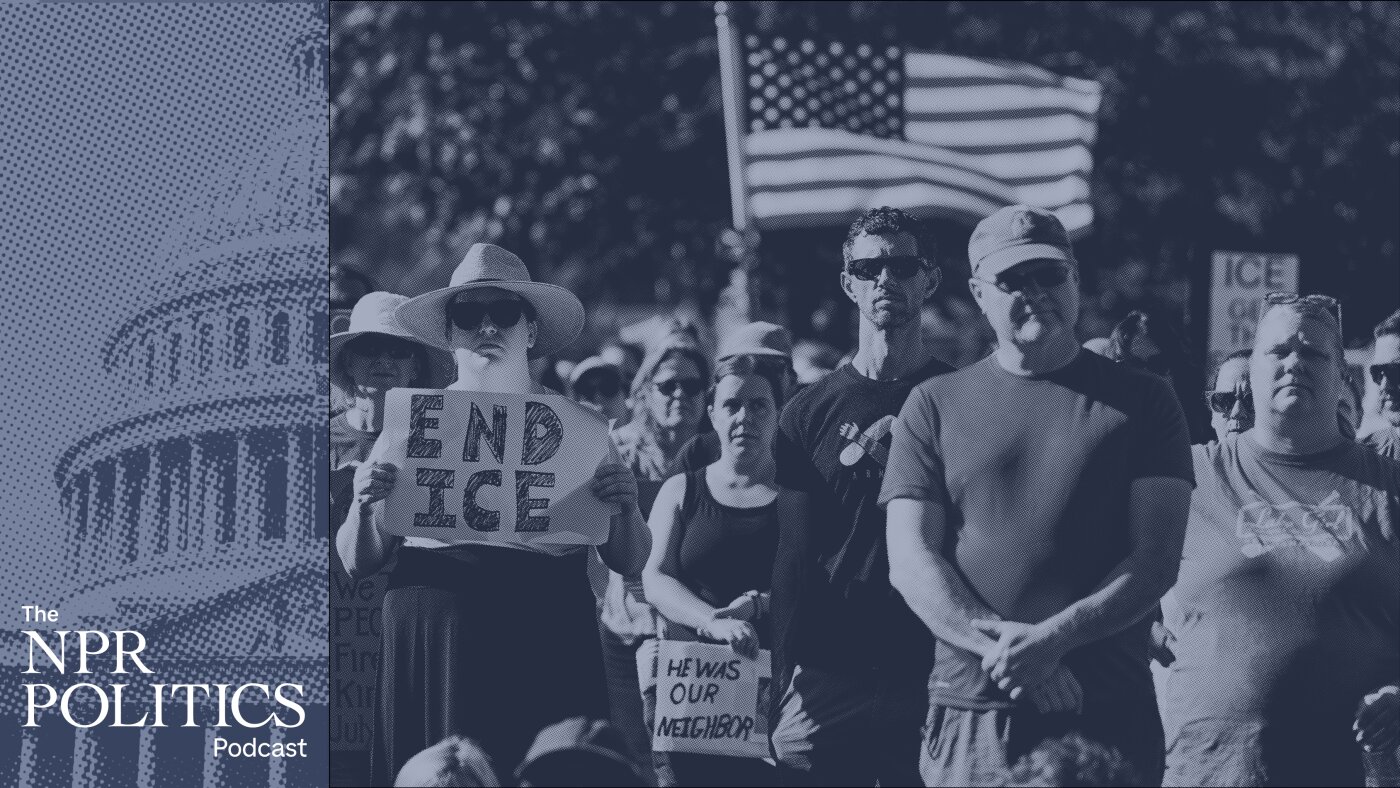
KEITH: Ximena, there have been two fatal shootings this month involving ICE officers, first in Texas, then last week in Maine. How have those incidents altered the conversation over immigration enforcement?
BUSTILLO: Right. It had been a few months since there had been some sort of direct interaction and clash of this kind pretty much since Minneapolis, which was in January of this year when two U.S. citizens were killed. Now, in this instance, both were – you know, both were men. Both were fathers. Both were people who were in vehicles at the time that they were shot both by Immigration and Customs Enforcement officers, neither was the target of the arrests. And so this has renewed conversations about the tactics, the training, the direction and directive that these ICE officers are being given to result in deaths of individuals who are not even the target of the arrests.
KEITH: And you mentioned it, but both of these incidents involve traffic stops, and that has gotten a lot of focus. And for a moment there, it seemed like there might have even been talk of a policy shift.
BUSTILLO: Yeah. There was a brief about 24 hours, maybe, if that, where there seemed to be directive coming from Homeland Security Markwayne Mullin to put a stop to all traffic stops. Now, it is important to note that traffic stops are extremely common when it comes to immigration arrests. Like, that is one of the primary ways, actually, that these arrests take place. And there had been a lot of controversy about the types of warrants that ICE was using to enter homes. And so, in order to not go to people’s homes or do a lot of door knocking where people might not answer, they were doing a lot more traffic stops. But to your point, right after it seemed like that directive was handed to pause, put a freeze on traffic stops, very quickly, the president came out and said that he did not like that and actually wanted them to restart that policy.
KEITH: Yeah, and he in this Truth Social post, wrote, we cannot give up one of ICE’s most important and effective crime fighting tools – traffic stops. So that was a very quick policy reversal.
BUSTILLO: Yes. And, you know, this comes at a time in which Mullin wanted to take ICE out of the headlines. Mullin has done, I think, a lot to, you know, make sure that the agency is still following through on this mass deportation promise. We are still seeing high, record numbers of people in immigration detention, which means they’re still detaining people, and they’re still processing people out for deportations. But you’re just not seeing the big surges on cities like we saw in Boston and Chicago, LA, Minneapolis, like, nearly a year ago.
LIASSON: Yeah. And also, the other thing that’s driving this is that we have reports that ICE has been given some very ambitious quotas for how many arrests they’re expected to make. And that’s also driving this, you know, one, 2,000 a day. And that’s why even though Mullin wanted ICE out of the headlines, these incidents are still happening because ICE is just as aggressive as ever, and now they have the added pressure of the White House telling them how many arrests they need to accomplish.
KEITH: In quick order.
LIASSON: In quick order, yeah.
KEITH: And, Ximena, in the policy realm, another issue that has come up in connection with these shootings is that the officers were not wearing body cams – body worn cameras. Didn’t the Department of Homeland Security, which oversees ICE and Border Patrol commit to having officers wear body cameras earlier this year, wasn’t there, like, a lot of money for that?
BUSTILLO: Yes and no. I mean, anyone can commit to trying to do anything, and that was essentially what former secretary Kristi Noem did after the two shootings in Minneapolis, was she said every officer and agent in Minneapolis would get one, keeping in mind that they very quickly did scale that back, just the number of people that were there, and that they would have an effort to do some sort of broader expansion nationwide. There has long been a lot of complaints from the agency that there just simply wasn’t the money for the body cameras. So Congress did fix that in a sense.
So in April, one of the spending packages did include $20 million just for body-worn cameras. Now, DHS then says that they were shut down, so yeah, maybe they got the money, but they couldn’t do the implementation. They couldn’t get the contracts out. They couldn’t do the training. Like, all these other things because they were shut down, they couldn’t do. Then they get another $31 billion for technology, which included body cameras, so not just body cameras, but Congress did lay it out. This was one of the things you can spend these billions on. And the thing to keep in mind here, though, is they are not mandating. There’s no law that says that ICE officers and Border Patrol agents have to be wearing them. And there’s not really a whole lot of a policy that mandates that either because the agency just hasn’t had enough to extensively require it.
LIASSON: To simplify the politics of this, the Democrats were pushing very hard for legislation that would require body cams, no face masks, judicial warrants to do certain kinds of entries into buildings. And that didn’t pass. So there is money for all these things if ICE wanted to do them. Democrats say since no requirement that any of those things get done, that’s why you see these incidents happening again and again where someone is killed, but there’s no video record because there’s no body cam. And that used to be the frontline of the immigration policy debate in Congress, whether you’re going to not necessarily abolish ICE but reform it by requiring ICE agents to wear body cams, have warrants and not have face masks.
BUSTILLO: And to Mara’s point, you know, the body camera requirement was pretty bipartisan. There are Republicans that, especially after these two shootings, have said they need to have body cameras. Like, there are plenty of studies that also show body cameras often, you know, justify the action of the law enforcement officer as well. So it really kind of benefits all the parties to have increased transparency.
Now, the latest that the White House and DHS has said is that about half of all field offices have them and they’re in the process of, you know, getting them out to the rest of everyone. I believe White House boarder czar Tom Homan said that the trainers are being trained on how to train officers to use the cameras. And so this is going to take a while. I mean, there are a lot of competing timelines. ICE Director David Venturella said that by the end of July, these would all be handed out. There’s another 60 day time frame that’s kind of floating around. So, you know, it’s going to take a while for everyone to fully get a functioning body camera, be using it in their day to day. Like, this is not going to happen in a matter of days.
KEITH: So let’s bring this to the realm of politics. Maine, where this most recent shooting took place, has a hotly contested U.S. Senate race. Incumbent Susan Collins is running for reelection, and Democrats are hoping to flip her seat. Has this shooting come up in that race?
LIASSON: Yes, it certainly has. Susan Collins, who is the chairman of the Senate Appropriations Committee, she funds DHS and ICE. Democrats are saying she bears a special responsibility for this because she voted for that bill, $70 billion for ICE without requiring body cameras, warrants and no face masks. Susan Collins, for her part, is trying to focus on Democrats who call for abolishing ICE because that’s not necessarily a popular position, but body cameras, warrants and no face masks are.
One of the things that has been really driving Democrats crazy in Maine is that Susan Collins called for an investigation of the shooting. She also said it was, quote, “extremely unfortunate,” and Democrats say this is her usual response. She never really pushed back against Trump unless it doesn’t matter, unless there’re already the votes. And they are trying to connect her with all the parts of the Trump administration that are unpopular. She is a Republican. She’s voted for most of them. But she’s trying to focus on the parts of the Democratic immigration agenda that are not popular, like abolished ICE. And that’s at least what the front-runner for the Democratic Senate Troy Jackson is calling for. He’s an abolished ICE guy.
KEITH: And that convention to decide who will be the party’s nominee is this weekend. Troy Jackson appears to have locked it up, and he is definitely in the progressive lane. And he joined protests against the ICE shooting immediately following it, along with some of the other Senate candidates.
LIASSON: I think the trick, really, in Maine is that as long as the shooting is front and center and that’s what people are thinking about, it’s bad for Collins. But if that quiets down and we’re back to these kind of slightly more abstract policy discussions, should we reform ICE or abolish it, then I think Collins is on firmer ground.
KEITH: Let’s take a quick break, and we will be back with more in a moment.
And we’re back. And, Ximena, you’ve been doing some really interesting reporting about how immigration is playing out in the midterms so far. And you went through a bunch of ads that have run in various congressional races. What did you find?
BUSTILLO: Yeah. So essentially, according to data that has been gathered by the firm AdImpact, Republicans, starting in January of this year through June, have spent way more money and ran way more ads related to immigration than Democrats. And this analysis includes ads that are exclusively about immigration or immigration enforcement or border security, and that’s all they talk about. It also includes ads where, you know, a candidate will laundry list items like healthcare, housing, the border, you know, inflation, like, the next thing. And so that gets counted in this analysis as well because it is one of items that candidates want to talk about.
KEITH: Yeah, I mean, one of the ads I watched, I don’t even know if they mentioned the word immigration, but the shot that ended the ad had the candidate standing in front of President Trump’s border wall.
BUSTILLO: Exactly, a lot of border security, a lot of imagery, and a lot of connections to various issues. And Republicans, in their advertising, really saw this as a way to connect between, you know, what the Trump administration has essentially given them, a slate of various policies to campaign on from, you know, going after alleged noncitizen voting to limiting birthright citizenship to securing the border, which is a very basic, you know, campaign point that has been a winner for Republicans. And then, Democrats primarily did focus on enforcement and kind of the recent funding that has gone to the agency.
KEITH: All right. Well, let’s hear a few of these ads.
(SOUNDBITE OF MONTAGE)
UNIDENTIFIED PERSON #1: A massive operation.
UNIDENTIFIED PERSON #2: Agents came with their guns drawn.
UNIDENTIFIED PERSON #3: A series of ICE raids took place today.
MICHAEL BENNET: Donald Trump’s war on immigrants is an attack on all our fundamental rights. I’m Michael Bennett.
UNIDENTIFIED PERSON #4: Nebraska needs a voice brave enough to take on Trump and his ICE thugs. Denise Powell, daughter of Cuban and Chilean immigrants.
KEVIN STEELE: I’m Kevin Steele, and I approve this message.
UNIDENTIFIED PERSON #5: Socialists, radicals, open border extremists – they’re coming back, and they’re coming for our president.
UNIDENTIFIED PERSON #6: She’s going to fight in Congress for you, to deport criminal aliens and lower our cost of living.
PRESIDENT DONALD TRUMP: This is a fantastic woman – Laurie Buckhout.
KEITH: And I guess it probably goes without saying, but the first two ads were from Democrats and the second two ads were from Republicans.
BUSTILLO: And, you know, the data collected by AdImpact does show that both of these issues are, you know, in the top three for both Republicans and Democrats. No. 1 issue – Donald Trump, right? Like, Donald Trump is obviously the No. 1 issue. People are either running for him or against him. And then, you know, immigration as a word is No. 2 for Republicans. And then for Democrats, you get healthcare, and then you get ICE.
KEITH: Wow. And Mar, I find this really interesting that Republicans are talking about immigration so much because in a way, the story coming from President Trump is that all of the problems of immigration that existed before he was president, they have been solved. The border is closed. People aren’t coming in. The message that Trump and Republicans have so effectively used in previous elections, like, there are caravans coming or the borders are open, now they can say, we solved that.
LIASSON: They can, but that’s not as motivating as a message that scares people, like you just heard in that ad. You know, our candidate is going to deport criminal aliens. The problem for the Republicans is this messaging works pretty well in primaries when you’re trying to motivate the base to vote for you and show that you’re the hardest-line hard-liner on immigration. But the question is whether this is going to work for them in a general election. Because what we’ve seen with the immigration issue is it used to be Trump’s No. 1 issue, polled very well, especially when the focus was on border security and deporting undocumented immigrants with criminal records. People were for that. But then when the discussion became about shootings of U.S. citizens, of undocumented workers who didn’t have a criminal record or were on their way to work or had been part of communities for 25, 30 years, then those numbers on immigration began to drop and his immigration agenda became unpopular, like almost every other part of his agenda.
So for a general election, especially in the small number of truly competitive districts, immigration might not work as well for Republicans in a general election. But right now we’re in primary season, and they are using the kind of same messaging about immigrants inundating our country, causing prices to go up. That’s a message that has worked for them in the past. The big question is – and we’ll be watching this, obviously – is it going to work when we switch to the general election?
KEITH: Right. And Ximena, your analysis was largely focused on primaries.
BUSTILLO: Yes. Oh, pretty much. You know, since we are about halfway through the primary season, nearly all the ads are about primaries. There are a few Senate races where, you know, you saw some Republicans already talking about the Democrat – thinking Alaska, thinking Ohio. But for the most part, it’s Democrats running against Democrats, Republicans running against Republicans on, like, each other’s records on the issue.
LIASSON: Although, Maine – you know, you have to put Maine in there. Maine is a special race, the only blue state in the country where there’s a Republican Senate incumbent up for reelection. And it also just happens to be a state where we had one of these ICE killings recently.
KEITH: And I think it’s important to explain – and, like, I think we can’t say this too many times – there are not very many competitive races come November, which means that in so many districts, the primary is the election. That messaging is the messaging that gets that person into Congress. In fact, according to the Cook Political Report with Amy Walter, there are only 18 house races that are true toss ups out of 435 that are on the ballot. Ximena, what about Democrats? How is their messaging in these ads? What did you see?
BUSTILLO: Yeah, so a lot of it, kind of, as I alluded to earlier, was a lot more focused on enforcement tactics, overreach there. You know, some ads even go as far as to say, we support deporting people with criminal records, but that’s not what this administration is doing. And then a lot of personal stories, a lot of leaning on someone’s personal immigration story or of their parents or of someone in their community.
KEITH: And how many Democrats are talking about eliminating ICE?
BUSTILLO: Not as many as you might think. So it is a message that does still exist, and we’ve seen this primarily in states like Illinois, Minnesota and Colorado and a few of the Dem-competitive races in New York. And so some Dems were really going after members of their own party, especially, you know, the first three states that I mentioned did see waves of target of ICE enforcement, you know? And so I think a lot of that really pushed more progressive candidates to lean into that message. But by and large, it not the unifying message of the Democratic Party.
But I think generally on the issue of immigration, that is where having a unified message can be a really big challenge for entire parties, because the way that immigration affects a border community or affects an urban area or affects a rural community can be completely different. And so both Democrats and Republicans are going to grapple with this, you know, instinct to, I think, have a unifying tagline. But that unifying tagline is probably not going to win you every single race, and it might lose you some races.
LIASSON: You know, I have to push back on this. They don’t need a unifying tagline. They’re being told, run your own race. They don’t need a national tagline on this issue. You’re going to have diversity because every time we have a midterm, the Democratic Party says, run your own race. There’s no national policy on these issues. And just – we’ve got to throw Maine in here again because Maine is a race where there is a Democrat, Troy Jackson, and he is an abolish ICE guy, and he has staked out a position that’s not necessarily going to be super popular in a general election. But I don’t think there’s pressure on Democrats to adhere to a national position on abolishing ICE. I don’t.
KEITH: Yeah, I don’t think that Ximena was saying that either.
LIASSON: Oh, oh.
BUSTILLO: I was saying what you were saying, Mara. I was saying, like, in fact, there probably is pressure for them to not say that.
KEITH: Yeah.
BUSTILLO: Like, there is probably more pressure for them to not say, abolish ICE and to say something like reform…
LIASSON: Oh, I thought you said they were looking for a message that would be, like, an overall unifying message for all Democrats.
BUSTILLO: I mean, yes, but the unifying message wouldn’t be abolish – like, OK. So there is an instinct for political parties to have a unifying message on policy issues.
LIASSON: Oh, see, that’s where you and I disagree. Yeah. That’s where we could disagree. OK.
BUSTILLO: But whether or not it is abolish ICE – it is probably not abolish ICE. More candidates, they’re going to turn to the lessons of 2018 when they did do that, and it did not work for them. But there are some progressives in states like Minnesota, Illinois, Colorado that saw increased enforcement that are pushing that envelope and are breaking with the mold.
KEITH: I can’t wait for you to come back and talk to us about their general election messaging in a couple of months and see where this lands. We’re going to leave it there for today. I’m Tamara Keith. I cover politics.
BUSTILLO: I’m Ximena Bustillo, and I cover immigration policy.
LIASSON: And I’m Mara Liasson, senior national political correspondent.
KEITH: And thank you for listening to the NPR POLITICS PODCAST.
(SOUNDBITE OF THE BIGTOP ORCHESTRA’S “TEETER BOARD: FOLIES BERGERE (MARCH AND TWO-STEP)”)
Copyright © 2026 NPR. All rights reserved. Visit our website terms of use and permissions pages at www.npr.org for further information.
Accuracy and availability of NPR transcripts may vary. Transcript text may be revised to correct errors or match updates to audio. Audio on npr.org may be edited after its original broadcast or publication. The authoritative record of NPR’s programming is the audio record.