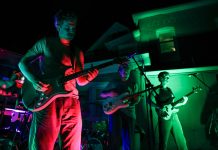
Faculty members of the Hayes School of Music performed Igor Stravinsky’s “A Soldier’s Tale” Tuesday, bringing the rarely performed work to the App State community.

The performance combined music, narration and theatrical storytelling in a work Stravinsky created in 1918 during a period of war, political upheaval and cultural change. The concert also offered a rare opportunity for faculty members to perform together.
Charlie Chadwell, assistant professor of saxophone who attended the concert said the collaboration was one of the most distinctive aspects of the performance.
“It’s special to have this many faculty working together in one department to put on one project,” Chadwell said.
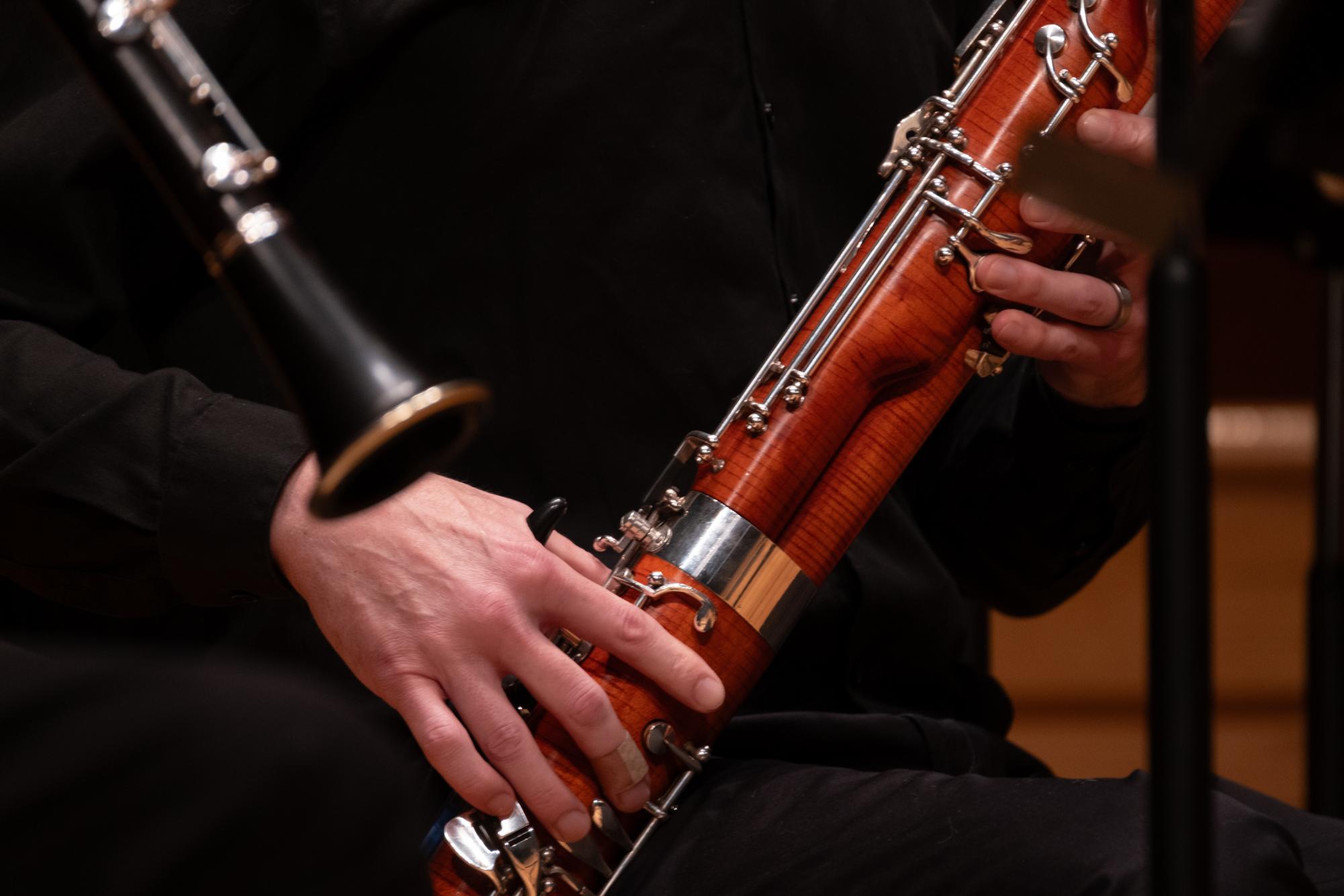
Chadwell said faculty members typically perform as soloists, duos or in small groups, making the larger collaboration unusual. The performance brought together faculty performers from across the department, including voice, strings, percussion, brass and woodwinds.
For Chadwell, who is in his first semester at App State, the performance was also an opportunity to hear many of his colleagues perform for the first time, and although he had studied the work before, he had never heard “A Soldier’s Tale” performed live.
He said his favorite part was watching the ensemble communicate with one another throughout the performance.
“It’s fun to hear the musicians also take motives and ideas and play off each other and just to see them working in synchrony,” Chadwell said.

(Noah Williford)
The performance was introduced by Jacob Kopcienski, assistant professor of musicology who discussed the historical circumstances surrounding Stravinsky’s composition of the work.
He said the piece emerged from the composer’s experiences during World War I and the political and cultural upheaval surrounding the Russian Revolution.
“A Soldier’s Tale” follows a soldier who encounters the devil and explores themes involving wealth, identity, loss and temptation. The work was designed as a portable theatrical production, combining music and storytelling in a format that could be taken to different communities during wartime.
Lisl Kuutti, community engagement specialist for Hayes School of Music who helped promote the concert, said the work is not commonly performed because of the difficulty involved in staging it.

(Noah Williford)
Kuutti had heard Stravinsky’s music before and had even performed some of his works, but Tuesday’s concert was only the second time she had heard “A Soldier’s Tale” performed live.
“I found it kind of hypnotic,” Kuutti said. “I was really in the story.”
Kuutti said the three dances performed in the work — the tango, waltz and ragtime — were her favorite part of the performance.
The combination of music and storytelling gave the audience a way to experience a work that has remained relevant more than a century after its creation.
For the faculty performers, it also provided an opportunity to collaborate across Hayes School of Music in a performance that is seldom seen onstage.