Filed
1:00 p.m. EDT
07.19.2026
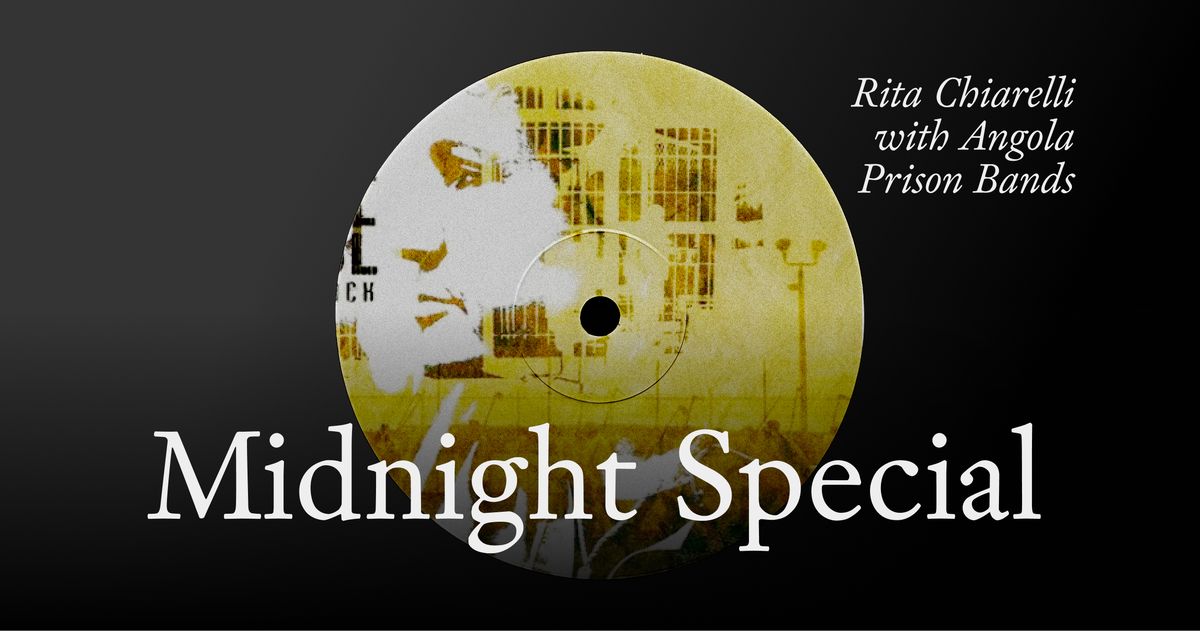
Standouts include a version of Lead Belly’s hit “Midnight Special” led by filmmaker Rita Chiarelli and an incarcerated band.
This essay is part of Redemption Songs, a limited-run newsletter that spotlights one song each week by incarcerated artists. Sign up now to get a new song each Sunday afternoon until September:
‘Music From the Big House’ Delivers Blues and Soul from Angola Prison
Listen if you like: Bonnie Raitt, Tedeschi Trucks Band, Gary Clark Jr.
Many years ago, at Louisiana State Penitentiary — better known as Angola Prison — I met a man who made ukuleles. He showed me how he had crushed legal documents into a kind of particle board and twisted trash bags into strings.
His name is Wayne Guidry, and I saw him again in the 2010 documentary, “Music from the Big House,” in which he briefly meets the Canadian blues singer Rita Chiarelli and tells her about how music helps him deal with his shame and despair. Guidry is serving a life sentence for killing a woman he was dating in 2003. “Sometimes I just sit at the piano and cry it out,” he tells Chiarelli, “but also, if you were to observe it, you’d see the development of hope.”
Chiarelli’s film is a great introduction to Angola, which is among the bleakest prisons in the country, but also home to a deep bench of ringers who play gospel, soul, and other genres in bands called Pure Heart Messenger, The Jazzmen and Little Country. The level of musicianship isn’t surprising when you consider the prison has lots of men from New Orleans, the birthplace of jazz, and is not far from the Mississippi Delta, the birthplace of the blues.
Like Sonny James and Kirk Franklin, Chiarelli didn’t just go into a prison to put on a show and get good PR for her own career. She helped the men put on a show for each other. When you hear her lead them in “The Midnight Special,” our selection for this week, it feels like you’re eavesdropping on the great time they’re having.
The film makes it clear how rare these good times are. “When you’re playing music it’s easy to forget where you are,” Chiarelli says to the camera, “but they’re still in prison, and it’s rough.” She visits cramped, dirty dorms where men have heartbreaking looks on their faces during mail call. Most of the men at Angola are serving life sentences and will die there. “Part of me says, ‘There’s victims too,’ and you have to remember that,” Chiarelli says in the film. “And then on the other hand there’s these guys who made one mistake… and it’s a real tear in my fiber, how to feel about all of this.”
Built on a former plantation, Angola is a longstanding symbol of American punitiveness, where men still do farm labor in the heat amid armed guards on horseback, when they’re not held for decades in solitary confinement. Recently, members of the Trump administration stood outside to announce that a wing at Angola, once known as “the dungeon,” would be used to house people detained by ICE.
But amid the decades of horror stories, music has always trickled out. At the Smithsonian’s website, you can hear a lot of blues and spirituals recorded by an academic named Harry Oster in the 1950s. Chiarelli’s choice to cover “The Midnight Special” with the men inside pays homage to how the song’s history is deeply enmeshed with Angola.
Huddie Ledbetter, also known as Lead Belly, in 1948. “Midnight Special” was one of his signature songs.
The song’s lyrics are all about hoping a lover will arrive on a late-night train to deliver the singer to freedom. It’s an old folk song, but it remains famous because of the version recorded at Angola in the 1930s by the blues singer known as Lead Belly. (The song did not, as one myth has it, help him get out of prison.)
Chiarelli got in with a film crew during the tenure of Warden Burl Cain. From 1993 to 2016, he became one of America’s most famous wardens, in part because he let in so many cameras and often appeared at the prison’s annual rodeo.
Cain oversaw a drop in violence, which he credited to new ministry programs. But he also faced plenty of abuse accusations, particularly for those who refused to be politically quiet or adopt his brand of evangelical Christianity. Court records reviewed by The New Yorker suggest he was particularly punitive towards members of the Black Panther Party.
Since Cain left, most of the administration-sanctioned music seems to be concerts by visiting Christian worship bands. We can only hope more scholars and performers like Chiarelli can secure access so we can hear more of the music being made by the Angola men themselves.
I still haven’t found a recording of Guidry’s ukuleles, but I remember the quiet plunk of the trash bag strings. When I met him, he told me he’d play them at night when others were sleeping. What came through to me in Chiarelli’s movie is that these guys aren’t asking to be forgiven by society for their crimes, much less adored as musical stars. They’re asking for a sliver of hope, and there’s no better metaphor than the single headlight of a train in the distance.
LINER NOTES:
Artist: Rita Chiarelli and All Bands | Song: “The Midnight Special” | Album: “Music from the Big House Soundtrack” | Year: 2011| Location: Recorded live at Louisiana State Penitentiary