Transcript
JEFF YANG: You guys know I’m a fan of big movies that are not afraid to be big movies, but I’m also a fan of small movies that are unafraid to be small movies. And my secret sweet spot is, actually, small movies that quietly are big movies. And that’s what this is.
[THEME MUSIC]
GLEN WELDON: The Korean film Possible Love recently hit Netflix. It’s the latest from Director Lee Chang-dong, whose previous film, Burning, we all really loved around here. In Possible Love, two couples living very different lives come together. Wealth and privilege meets working-class struggle, art meets commerce, as the film dissects how much a basic sense of self-worth is bound up with having a job and the toxic, pernicious effect that losing a job has on, well, pretty much everything. I’m Glen Weldon. And joining us today on NPR’s Pop Culture Happy Hour is my co-host, Aisha Harris. Hey, Aisha.
AISHA HARRIS: Hey, Glen.
WELDON: Also with us is Jeff Yang. He’s a cultural critic and author of The Golden Screen, The Movies That Made Asian America. Hey, Jeff. Welcome back.
YANG: Hey, guys. Great to be back.
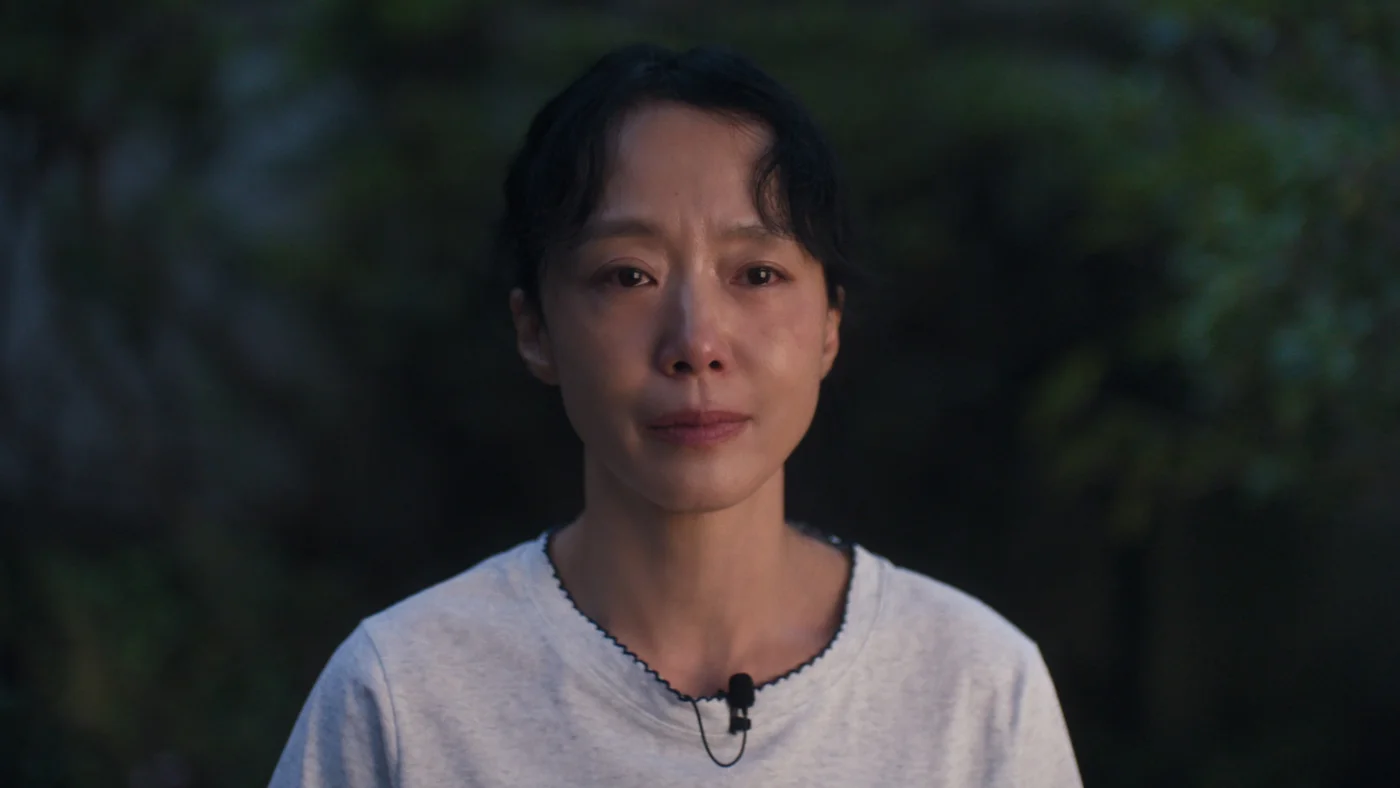
WELDON: Great to have you. In Possible Love, Cho Yeo-jeong plays Ye-ji, a documentary filmmaker making a movie about workers who’ve been laid off. She’s married to the very wealthy Sang-woo, who’s played by Zo In-sung. Ye-ji meets Mi-ok, whose husband is a welder who’s been laid off and left traumatized by violence associated with that departure. Mi-ok is played by Jeon Do-yeon. Her husband, Ho-seok, is played by Sul Kyung-gu. Ye-ji grows close to Mi-ok, but really wants to get the dour and taciturn Ho-seok to sit for an interview. As the film brings the two couples closer together socially, the stark differences in their financial and cultural lives fuel envy, resentment, distrust, and desire. Possible Love is streaming on Netflix. Now, Aisha, this was one of the movies you were looking forward to this fall. What’d you think?
HARRIS: Mm-hmm, yes, yes. I love it. This movie is just so rich, so layered. There’s so much going on here. Honestly, I want to see a triple feature of this, Park Chan-wook’s No Other Choice from last year, and You Can See Everything, [LAUGHS] because the way this movie kind of, like, takes elements of both of those films– like, you know, No Other Choice was dealing with the shame and the anxiety that comes from losing your job to corporate overlords, and all the modern labor issues that we’re dealing with today. But then You Can See Everything is, of course, like, really dissecting what it means to make a documentary and how a subject can get too involved. So, all that to say, I think what I loved the most about this movie is the fact that we learn so much about these characters. And I have to say, Mi-ok, Jeon Do-yeon, her performance as Mi-ok, she’s just so, like, fun and interesting and says so much about, like, what it means to challenge her existence as someone who is not as well-off and someone who has suffered the trauma of her husband– what he goes through, and what she presents to this wealthier couple. Like, her existence is very fascinating. And the way she plays with that is very interesting. So, I loved it. I can’t hear more about what you all think. But yeah, this is such a rich, rich movie.
WELDON: All right. Jeff, rich movie?
YANG: [LAUGHS] As rich as Sang-woo.
HARRIS: [LAUGHS]
YANG: I loved this movie, too. Oh, my god. You guys know I’m a fan of big movies that are not afraid to be big movies– you know, loud action films and supernova blockbusters. But I’m also a fan of small movies that are unafraid to be small movies. And my secret sweet spot is, actually, small movies that quietly are big movies. And that’s what this is.
WELDON: OK.
YANG: You know, it seems like a reflective and character-driven work, but somehow manages to address some of the most resonant and broadly impactful issues of our time. So, it’s right in that strike zone for me. And of course, the performances, Aisha, as you mentioned, just, they’re stunning. Lee Chang-dong, whose Burning is one of my favorite works of Korean cinema–
HARRIS: So good.
YANG: –maybe cinema in general–
HARRIS: Yeah.
YANG: –I think he really just matches the directorial brilliance of that film here. So, I’m OK if he makes a film, like, once every eight years, so long as they all turn out like this, you know? There is something really amazing going on here. I picked up the, obviously, You Can See Everything elements of this film. I also compared it in my mind to No Other Choice and Parasite. I think there’s a lot of people talking about those in the same conversation. But they’re also like K-dramas, like Squid Game and, right now on Netflix, also, Dead-End Job. No one is doing a better job talking about social inequity right now than Koreans are. So, yeah, this movie just– it just hits every beat for me.
WELDON: Great. OK, well, I’m going to confess to y’all, I’m still sitting with this. And so, this is why I’m so glad to have you both to talk to about it. Because, you know, sometimes I come into these sessions, and I don’t know what I’m going to say. And this is one of those times. So I’m going to need your help to kind of feel this out. I can say off the top that I like this. I didn’t like it as much as Burning. But I mean, I loved Burning, and–
HARRIS: Yeah.
WELDON: –maybe that’s an unfair comparison. But– and also, Burning had a lot of things that made it kind of Glen catnip. It was a psychological thriller. It had some really juicy genre elements that this doesn’t really have. That had a mystery at its center. This kind of does, but not really. And this felt to me like reading literary fiction, like a novel. And I gotta confess, sometimes when I’m reading literary fiction, it’s too smart for me and–
HARRIS: Ah.
WELDON: –too abstract, and when the writer is so careful to be circumspect and cagey that I just miss what’s going on. [LAUGHS] There is an Alice Munro short story called Open Secrets that I had to read twice, because the secret was not open to me.
[LAUGHTER]
WELDON: Because it ends with this gesture. One character makes a gesture, and you’re supposed to go, oh! And I went, what? So, that sometimes felt a little similar here, I mean, which surprised me, because so much of this movie is very plainly-stated. Like, this movie starts with a title card that reads, “Thou shalt not covet.” It’s like, oh, OK, movie.
[LAUGHTER]
WELDON: That feels, if anything, kind of hella didactic.
HARRIS: Yeah.
WELDON: And it makes you think you’re about to watch a morality play. And I guess, in a way, you are. And, you know, as you both touched on, the real villain in this film is how much a person’s identity is bound up with working. But I think the smartest thing about this film is only some people, right? Because Sang-woo is too wealthy to work. He leaves the day-to-day running of his business to someone else. And Ho-seok does not have that luxury. His work life entirely defined him. It defined his friend group. It defined pretty much everything about him. So, without it, you can see it’s poisoning everything. The anger and resentment inside him, it’s rotting him from the inside. But here’s where I revert to my basic self. This film is nearly three hours long.
HARRIS: Yes.
WELDON: And at that length, you sit there, watching it– I mean, if you’re me– interrogating certain scenes, if they feel a little less urgent. I will say, this film really starts coming together in memory, like, in my recollection of it. Like, in real-time, I might be watching a scene and not knowing where it’s going and feeling a little frustrated. There’s a scene where Ho-seok follows somebody in a car. And you’re like, is this The Rockford Files now? What’s going on here?
HARRIS: Yeah.
WELDON: And then, later in the film, all that gets tied in. The threads came together. And they came–
HARRIS: Right.
WELDON: –together in a really satisfying way. But say more about this film. Say more about the characters, what really connected with you.
YANG: So, I think one of the reasons why this film may feel a little opaque is that it’s a very Korean movie. And I say that as not somebody Korean, but I’m married to a Korean.
[LAUGHTER]
YANG: So I’m, like, stepping on minefields all the time when I talk about Korean culture. But so much of the tension in this movie, which is very palpable, is kind of rooted in a particular blend of rage and shame and the consequences of, like, pushing all that down into your gut. And yes, it is a cliché, but Koreans do talk a lot about this one cultural phenomenon, this sort of deeply Korean feeling known as han, right, which is very loosely something like a seething, bitter memory of past injustice. And this movie is like wall-to-wall han, right?
HARRIS: Yeah.
YANG: You have people who are like– you know, Ho-seok loses the use of his legs temporarily because he is just so paralyzed by fury. And another coworker talks about going to the ER after hearing his friends call Mikami while he’s in the bathroom. These are all sort of actual things. Like, in Korea, you can actually get sick from having too much han. It’s like a formal medical condition there. And so, seeing these traces there, they don’t read the same way, I think, from the perspective of a Western audience. But they do frame so much of why they flee from talking about the past or talking about the shame, really, of losing your job. And maybe that, Glen, is part of the reason why it feels like, huh, what’s going on here? And it takes a while for that to come into focus.
HARRIS: Yeah, I mean, I– I’ve heard of the concept of han before. And I think that’s such a great point here, Jeff. I also think, like, for me, what really latched on when I was watching this, I was so drawn in by two scenes in particular, both of them involving Mi-ok and Ye-ji. The first one comes early on, where Ye-ji is just starting to interview Mi-ok. And she’s just telling a story about her childhood. And then, in the middle of the story, like, all of a sudden, Ye-ji gets this look on her face. Like, ooh, I need to get this. And so, she interrupts her to say, like, can I go get my camera? And then when she goes to get the camera, Mi-ok does an image search of Ye-ji’s handbag because she’s curious about, like, how much does this cost? And then she sees how much it costs, and she’s like, oh. So there’s this, like, dynamic between the two where you have this one person who is, quote unquote, on the lower– like, she doesn’t have as much power, you don’t think, because she’s the subject. And the subject is that her husband lost his job. And they’re, obviously, not as wealthy. And so, you have, like, this weird imbalance, this power imbalance between director and subject, and also between wealthy director and not as wealthy subject. And I think what the movie does a really good job of is coming back to those beats every so often and it always feeling very natural. Because there’s another scene that happens later on where Mi-ok comments on the shirt that Ye-ji is wearing. And so, she’s like, you know, if you’re trying to relate to us, it’s not helping that you have this, like, very expensive shirt. And the way this film just sort of, like, really hits those notes of class differentials through the characters and through the way these characters evolve– like, is it slow? Yes. Is it a slow burn? Yes. But I think it all finds its way back. And by the time we get to the end, the brilliance, for me, of this movie is the fact that it ended in a way that I wasn’t expecting. I thought it was going to be a much bigger to-do. And it’s actually quite quiet and quite, like–
[LAUGHTER]
HARRIS: Even kind of optimistic, in a way, which is, like, you’re not expecting. And so–
WELDON: Yeah.
HARRIS: –that was what I was drawn to with this movie and why it worked so well for me–
WELDON: Huh.
HARRIS: –even with a three-hour runtime.
[LAUGHTER]
WELDON: Yeah, that’s a good point. We’ve got more thoughts about Possible Love after the break.
WELDON: Welcome back. The thing that I remember most about this movie is a scene where there’s a kind of support group for laid-off workers and their spouses. And–
HARRIS: Oh, yeah.
WELDON: –one woman says words to the effect of, I look back at that time, and I think I was too happy. Humans weren’t meant to be–
HARRIS: Yes.
WELDON: –as happy as I was. And that’s why I’m experiencing the misery now.
HARRIS: It’s karma, yeah.
WELDON: And on the one hand, I mean, that’s really on the nose. And it’s kind of cheating for a filmmaker to have a character just blatantly state their trauma to the camera, [LAUGHS] to the audience directly. On the other hand, damn it, that feeling is so real. That’s– I mean, it’s pathological. It’s unhealthy. But for many, many people, that line of thinking, that– dare I call it a belief system? I’m going to call it a belief system. This kind of feeling of, “I deserve this,” whether that’s a good thing you deserve or a bad thing, that’s done a lot of harm to humanity over the years. And it’s right there. And it felt– because of the performance, it felt so real. In the present timeline– and this kind of picks up on something you mentioned, Jeff– like, I wasn’t sure how to read some of the dynamics between the characters. I think we’re meant to see how Ho-seok’s depression has really soured his marriage to Mi-ok. But I couldn’t get a good read on Mi-ok– you guys did– specifically how the film wants me to see her, how the film is presenting her to us. Was she meant to be seen as someone who still loved her husband or as somebody who wanted out? Probably both. She talks very openly with the film crew about his drinking and his failures, which could read as passive-aggressive anger. But then, you know, she also talks about who he was when they met. And in a film that– you know, this is a film about many things, but one of the things it’s about is masculinity, right? And Mi-ok is, I thought, admirably upfront with Ho-seok about when he drinks–
HARRIS: Oh, yeah.
WELDON: –which is good. He should not drink and drive, right? But she confronts him about it in front of many, many other people, including other men. And I kept thinking, the film wanted me to feel a certain way about that. It’s like, oh, she shouldn’t do that. Well, yes, she should, right? Am I– this is what I mean. There’s layers I’m not picking up on.
YANG: Well, I mean, in a lot of ways, a big part of this film is about the lengths that men will go to, to avoid therapy, you know?
WELDON: Exactly.
YANG: It really is. There’s a toxic masculinity strain here. But the gender divide, I actually felt like the biggest signature of how the film addresses the difference between genders is, there’s sort of this running trope in the movie that pays off at the end a little bit, where Ye-ji and Mi-ok are kind of bonding over their shared experiences of seeing the moon, right? They both tell stories about seeing the moon. In the case of Mi-ok, it’s when she first met her husband, right, or first really connected with her husband. I mean, they’d been dating for a while and separated and came back together. The underlying vibe there is sort of, like, regardless of where you’re born or how you end up in life, you’re still standing under the same moon. You’re still staring up at the same moon. And that’s kind of portrayed as a very, almost, like, feminine way of thinking about universality. And later on in the movie, we see in one scene where Ho-seok and Sang-woo, the– Ye-ji’s billionaire husband, after this drunken night of revels the two couples have together, end up in the same bathroom. And they both end up peeing in the same bathtub side by side, laughing uproariously. And I’m like–
HARRIS: Yeah.
YANG: –well, that’s a gender divide, right? Women connect by looking at the same moon, men by peeing in the same tub, you know?
[LAUGHTER]
HARRIS: Yes. I mean, it’s funny because, like, I felt like the character of Mi-ok was so– so clearly drawn for me, and that this tension of, like– I thought she loved her husband, even though they’ve, obviously, been through tough times, and is trying to be supportive of him. But she also sees this as an opportunity. And then there’s just, like, this natural aspect of a lot of humans, which is, like, ooh, I get to be on camera? I get to, like, do these things? And the way that Mi-ok plays with that kind of discovery of, like, I like doing this, I like being on camera, I like that you’re interested in learning about me, it just speaks to a very, I think, natural obsession with being on camera that we all have. And so for me, like, I don’t think the film was trying to tell me, necessarily, that she is embarrassing her husband or that she doesn’t love him, just that she actually sees this as a way to help him. Like, doing the documentary is a way to help him. And in a way, it does wind up convincing him, eventually, to go to therapy and go to that support group we’ve already mentioned. So, yeah, I just– I thought she was quite clearly drawn for me. But I can also understand, Glen, how reading her is– she’s very complicated, fraught maybe.
WELDON: Yeah, yeah. One thing that I think the film really gets right is the privilege of the very wealthy, and how the very wealthy mix with those who are not very wealthy. At one point, Ye-ji invites Mi-ok and her husband to stay at Sang-woo’s estate on the coast. Now, she knows what seeing that kind of wealth will do to a man who is so torn up about not being the breadwinner anymore. She does it anyway.
HARRIS: Yeah.
WELDON: There’s so much dialogue– passing snippets of dialogue in those scenes where the wealthy couple is doing everything they can to kind of performatively downplay their wealth by saying things like, oh, we have someone come in and help us make meals. I have been to that dinner party.
HARRIS: So have I.
WELDON: I know that conversation.
HARRIS: So have I.
WELDON: It’s just really well-observed.
HARRIS: Yeah.
YANG: I kept on feeling like there was this looming threat of some sort of violent upheaval, some sort of explosion, right? And if you’ve seen Burning, and you know how that ends, you felt like, oh, my god, is this going to go there, right?
HARRIS: Or Parasite.
YANG: It doesn’t quite, exactly. There is a confrontation. It’s actually kind of played a little more comically than for any kind of thrills or horror. But I think, in some ways, the thing that unlocked the movie for me was actually– like, the opening text in the movie is a quote, you know, from the Ten Commandments, thou shalt not covet, right? And there’s a reason for that. This whole film was originally part of a project to remake Kieslowski’s Dekalog, a series of 10 films inspired by the Ten Commandments. But what I think Lee ended up doing was taking that phrase and thinking more about what coveting is, right? So what’s the difference between coveting things and loving them? And I think that what he kind of says here is that coveting is about reinforcing boundaries and closing things off and about getting things. It’s about sort of telling secrets and lies, just in order to aspire to things that don’t belong to you. And love is about opening up and giving. It’s about transparency, right? So this whole idea of Possible Love is, like, well, if covetousness, in a lot of ways, is the great ill of our modern society, maybe love is the antidote. I’d like to think that’s the hopeful idea within the film.
HARRIS: Yeah. I mean, I think that’s such a great point. I also think, to the point about coveting, it goes both ways, right? Because I think that the Ye-ji character very clearly wants to think of herself as, I am on the side of the workers. Like, she says at one point, when she’s presenting the movie, I think, for fundraisers or people who might help her fund the film, she says their voices deserve to be heard. So she has this very kind of, like, self-righteous, like, crusader kind of feeling to her. And at one point, you know, her husband is like, you can say all this stuff. You want Ho-seok to be the main character, but like, he’s not special. There’s so many people like him who are in the same position. Again, it’s that idea of, like, coveting. It’s not just about the less well-off coveting what the rich have. Like, there’s a sense of performativeness, to your point earlier, Glen, about, like, the rich or the wealthy also wanting to feel as though they’re not, quote unquote, “bad people,” and, like, they can offset their wealth by doing good. And that’s not really how it works, no matter how hard they try.
[LAUGHTER]
WELDON: All right. Well, as I hoped would happen, y’all have clarified many things about this film that weren’t as clear as they could have been to me, including, Jeff, the title. I didn’t understand what the title meant. Thank you. Thank you.
HARRIS: Yeah.
WELDON: I appreciate that.
HARRIS: No, I think that’s a great read.
WELDON: It’s a great read. I get it.
HARRIS: Yeah.
WELDON: All right. That brings us to the end of our show. Jeff Yang, Aisha Harris, thank you so much for being here.
HARRIS: Thank you.
YANG: Thank you.
WELDON: This episode was produced by JC Howard and Mike Katzif and edited by our showrunner, Jessica Reedy. And Hello Come In provides our theme music. Thank you for listening to Pop Culture Happy Hour from NPR. I’m Glen Weldon. And we’ll see you all next time.
[THEME MUSIC]
Copyright © 2026 NPR. All rights reserved. Visit our website terms of use and permissions pages at www.npr.org for further information.
Accuracy and availability of transcripts for NPR programming may vary. Transcript text may also be revised to correct errors or match updates to audio. Audio may be edited after its original broadcast or publication. The authoritative record of NPR’s programming is the audio record.
Please note that NPR platforms and products also include some programming produced by third parties; NPR cannot guarantee transcripts for that content and some transcripts may be produced using automated or other tools.