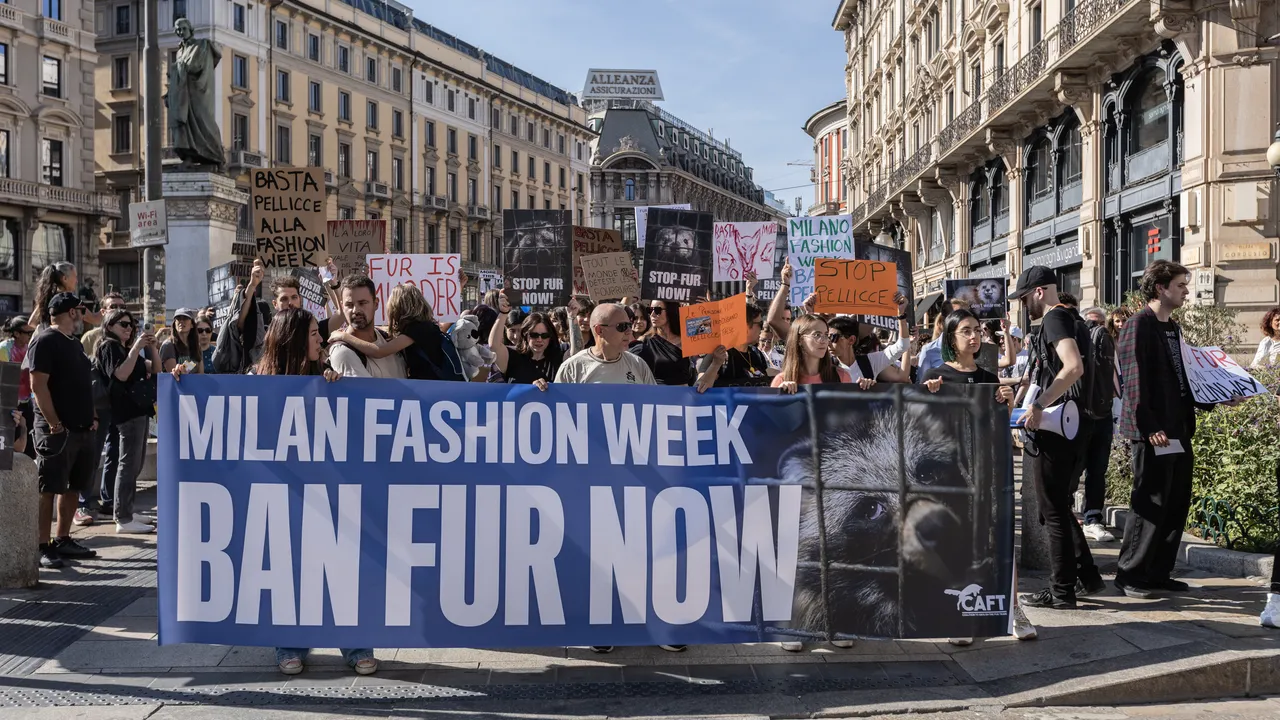
“It’s specifically Fendi,” an American volunteer, who said she flew in from Nebraska for the march, said. “We’re putting pressure for them to also ban fur on their runways.” Another woman with an American accent approached us. She asked if I worked at Vogue.
I used to, I said.
“Maybe you remember us, we campaigned against Vogue?”
Throughout 2025, CAFT, in a joint effort with PETA, campaigned fiercely against Vogue. Part of that effort included demonstrations outside of the homes of many of its senior leaders, including Mark Guiducci, now the global editorial director of Vanity Fair. The goal of the nine-month-long campaign was to force the publication to ban fur from its pages, presumably as a way to push LVMH, which owns Fendi, Berluti, and Loro Piana, to stop using fur. In October of last year, Condé Nast, the parent company of Vogue, Vanity Fair, and more, officially banned new animal fur across all its global editorial content and advertising. Kering, the rival luxury conglomerate to LVMH, went fur-free in 2022.
The mile-long march on Saturday, which departed some time after its announced start time at 2:30 p.m. and continued until it reached Porta Venezia, weaved past one of Fendi’s main retail destinations in the city. It was a reminder that Fashion Week does not happen in a bubble of ostentatious runway shows and high-profile celebrity appearances, but that it takes place, largely, where people live and work, with locals who complain about heavy traffic, neighbors who’d prefer to not see crowds outside their windows, and people who view fashion as a serious business and expect more from its leaders.