RTÉ has sought to project an image of itself in recent years as Ireland’s trusted news source, whether through the network’s “Truth Matters” campaign or Radio 1’s relentless self-identification as “your public-service media”.
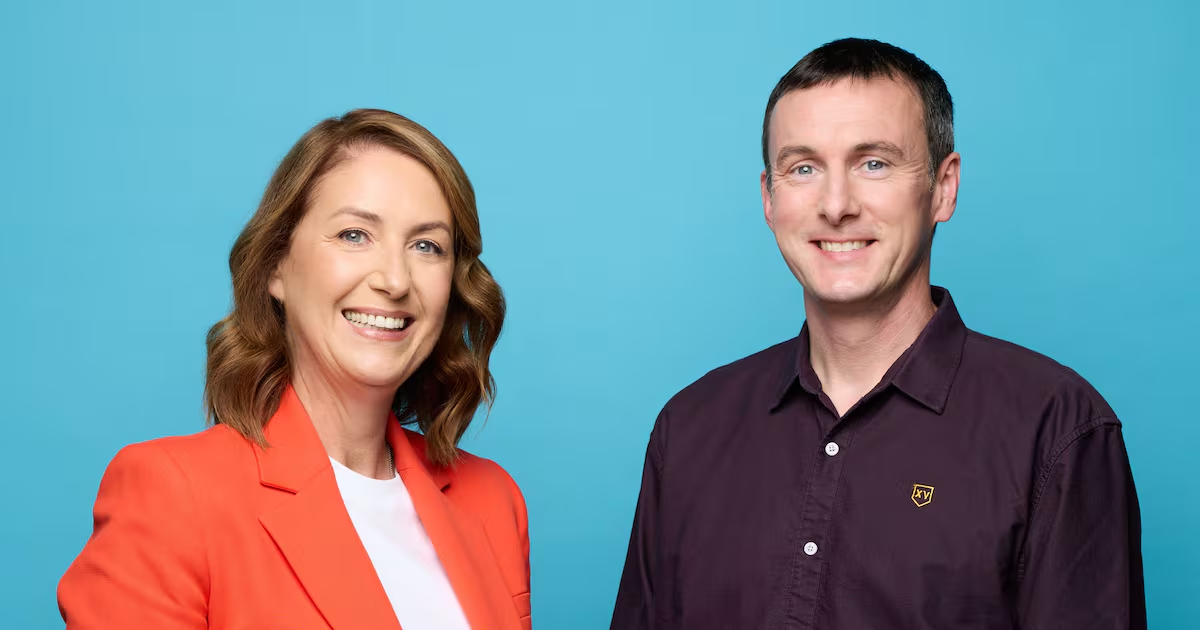
Given these constant assertions of integrity, the promise made by Colm Ó Mongáin on Tuesday’s Drivetime (RTÉ Radio 1, weekdays) may cause some alarm among Montrose mandarins. “Still to come, plenty more gossip,” Ó Mongáin cheerily offers by way of piquing listeners’ interest.
Reassuringly, the presenter isn’t actually peddling salacious hearsay but larking about after his item on the dynamics of gossiping. But by the time Ó Mongáin and his fellow host, Katie Hannon, have finished their discussion with the behavioural psychologist Pádraig Walsh one can’t help thinking that gossip and journalism may have more in common than the presenters would care to admit.
At the very least, Ó Mongáin’s characterisation of the sharing of juicy titbits has a familiar resonance. “It suggests someone is telling you something that’s a breach of confidence, that introduces an element of judgment into a conversation,” he says, in a description that could equally be applied to many a tabloid scoop.
Walsh, in turn, lays out the downsides of spreading tales: “If you get known as the gossip, that doesn’t boost your trustworthiness.” It’s an assertion that chimes uncomfortably with the negative perception that many people now have of “mainstream” media.
Either way, it’s hard to disagree with Hannon’s opinion on the spilling of spicy secrets, whether during a chat or in the media: “The more dangerous the gossip, the bigger the dopamine hit when it lands.”
The week’s news being what it is, however, Hannon and Ó Mongáin lack the requisite scandal to release those feelgood hormones. To their credit, the presenters cover the most dreadful stories without any emotive embellishment; they adopt a sober tone when reporting on the funerals of the murdered English family, in Waterford, or on the tragic deaths of the Bray couple whose two young children died in a fire in 2017.
Other topics are more prosaically sombre, as when Hannon hears Dr Denis McCauley of the Irish Coroners’ Society describe the growing backlog in postmortem services that may delay funerals. McCauley outlines how funding, contract and recruitment issues have led to a fall in the number of pathologists, with often upsetting consequences for the bereaved.
“Even as we speak, there are infants who die, and we don’t know the cause of death, being transported from Dublin to Cork,” McCauley says bluntly.
“That’s very distressing,” Hannon replies, sounding anguished and wondering if the situation has reached crisis point.
“It’s been a slow-motion car crash for a decade,” McCauley responds, his slightly jarring image nonetheless conveying the urgency of the problem. Difficult though the discussion is, it underlines that the Drivetime duo’s strength lies in facts, not rumour.
Not everyone can resist the urge to sensationalise, however. With the arson attack that killed the English family still sending shock waves, the crime journalist Paul Williams appears on The Hard Shoulder (Newstalk, weekdays) to tell its host Ciara Kelly why he wants a new offence of drug-related intimidation on the statute books.
Sounding naturally aghast at the appalling murders – “Four beautiful innocent people were buried yesterday” – Williams outlines the way intimidation over drug debts has become one of the most pervasive crimes in Ireland, along with the consumption of those drugs in the first place.
When Kelly asks if his proposed additional sanction will deter dealers, Williams is under no illusions – “They don’t give a damn” – but says the measure would at least put them in prison for longer. “The best way to describe them – and I don’t care about all this woke nonsense – is the scum of the earth.”
So pointless is his sideswipe about wokeness that it comes across as ridiculous rather than offensive and distracts from his main point. The atrocity has been met with revulsion across the political spectrum, after all, and drug dealers aren’t renowned for cultural sensitivity or progressive beliefs.
Williams returns to the theme, however, undercutting his sensible suggestion for an advertising campaign about the dangers of cocaine by dismissing ads about sunburn as more “woke nonsense”. Now that’s introducing an element of judgment.

Oliver Callan (RTÉ Radio 1, weekdays) displays a capacity for lurid revelations on Wednesday when he talks about a shadowy organisation called the Irish Murderesses.
Disappointingly, Callan hasn’t stumbled upon some sinister homicidal cabal; instead he’s talking about a WhatsApp group of women Irish crime writers who have contributed to a new anthology of “twisted tales”, entitled Fear. The host clearly enjoys his conversation with the volume’s editors, Sam Blake and Edel Coffey, with the two authors describing the origins of their group, as well as revealing their own personal phobias.
Callan also discusses literary matters of a “deep, meaningful” stripe on the same show when he interviews Frank Shovlin, who has just published a biography of John McGahern. Shovlin makes a convincing case for the late novelist as “one of the greatest prose stylists in the English language”, pointing to works such as The Dark, his banned 1965 novel, and Amongst Women, his 1990 bestseller.
But Shovlin also paints a complex portrait of the writer dubbed “Farmer John” on account of his rural Co Leitrim homestead. McGahern enjoyed working on his farm, he says, but also wrote every morning while teaching at universities for extended periods; Shovlin first met the novelist as a student in Galway. He also recalls their final encounter, shortly before McGahern’s death, in 2006, when he insisted on buying a round in foreboding terms: “I have more money than life.”
It’s a fascinating conversation, with the host asking about McGahern’s “secret son”, Joseph, born after a love affair in the 1960s. Callan’s guest describes how the writer played no part in his son’s life, but, having failed to track Joseph down for the biography, Shovlin doesn’t dwell on the matter.
“I think people’s privacy has to be respected,” he says. “That might sound strange coming from a biographer, but I think there has to be a limit to how far one goes.”
Sometimes there’s a fine line between truth and tittle-tattle.
Moment of the week

Anton Savage is long-time motor aficionado, but the host of Newstalk Breakfast (weekdays) knows cars and booze don’t mix, as he makes clear when discussing the Road Safety Authority’s ill-starred plan to install breathalysers in pubs.
Talking to Dr Sheila Gilheany of Alcohol Action, the host sounds perplexed about a scheme that implicitly undoes years of campaigning on the dangers of drinking and driving.
“If you are in a situation where you are checking whether or not you are over the limit, why is your car in the car park outside?”
It’s a fair point; little wonder the plan has been stood down. Still, Savage’s scornful summation of the proposal stands out: “One and a half million quid is a lot to spend on answering the question of golfers who want to see the effect of alcohol.” Fore!