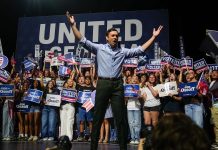
Politics has infiltrated every part of American life. This past weekend, Bad Bunny took a moment at the Grammy Awards to chant “ICE out,” turning pop culture into another battleground in a national debate. He’s set to perform this Sunday at the Super Bowl. Will his politics “infect” his performance? I’m sure the NFL wants to know.
Sadly, there is no partisan off switch anymore. Nowhere does politics feel more out of place than in sports. Even if everything is political, sports should be the one place we can breathe.
I’m a lifelong fan. I buy tickets to watch athletes compete, not to listen to lectures from multimillion-dollar coaches or players. Sports are entertainment: rivalries, skill, heartbreak, and triumph. It is one of the few places where strangers, regardless of political views, can high-five in the same row without exchanging party registration cards first.
Today, too many leagues treat the arena like a pulpit. Every night becomes a message. Every game becomes a cultural referendum. Fans who came for the spectacle get dragged into the same grinding debate they were trying to escape.
The modern template was established when Colin Kaepernick started kneeling during the national anthem in 2016. Supporters argued it highlighted injustice; critics viewed it as disrespect for the flag. Either way, it transformed the pregame ritual into a litmus test. When sports become a proxy political war, people don’t just disagree; they leave.
The NBA has proven the same rule with different characters. Coaches like the Warriors’ Steve Kerr blast political figures. Star players endorse candidates, weigh in on elections, and deliver moral judgments. Then the league learned, the hard way, that activism is not just divisive, it is expensive. When the China/Hong Kong controversy erupted in 2019, a Houston Rockets executive tweeted about freedom. The Chinese reacted by pulling the NBA off the air in China. The NBA freaked out. Apparently, certain politics are acceptable but others are “out of bounds,” especially if they offend a communist nation.
Polling suggests the public is tired of politics in sports. Many Americans may respect athletes for their abilities, but they do not want leagues or stars issuing political statements. Significant numbers dislike athletes opining on politics. That is not a fringe view; it is a consumer preference. Fans are not paying hundreds of dollars for seats, jerseys, and overpriced beer to be scolded at halftime.
Even the most devoted fan bases, regardless of their personal political views, snap when they sense a campaign is using “their” team as a billboard. The politics change; the resentment stays the same: stop hijacking the game.
Why does it persist? Virtue signaling and incentives. A political statement is easy content. It flatters the speaker. It earns applause in the right rooms and clicks online. It makes executives feel aligned with whatever the cultural “right side” is that week.
It also narrows the tent. Sports is a rare mass ritual where Americans of different backgrounds still share a common language: the score, the clock, and the comeback. Turn that environment into an ideological sorting machine, and the magic is destroyed.
The solution is not complicated. Athletes can have views. They can speak as citizens on their own time. But leagues should stop packaging politics as part of the product. Make the stands neutral ground again. Let the game be the game.
In a polarized country, that is not trivial. It is a public good. It unites. When sports are at their best, it is meritocracy in motion: wins earned through sweat, not sermons. It reminds us we can disagree about everything else and still cheer together when the moment is electric.
Here is the ask as we approach the Super Bowl: deliver competition, not catechisms. Coaches, diagram plays, not policies. Players, you’re paid to perform, not preach. Networks, stop fishing for outrage in postgame microphones.
Fans will vote with their remotes and their wallets until the leagues remember why people showed up in the first place. Bring back the spectacle. Keep politics off the sports field.
Matthew Klink is owner and president of the Los Angeles-based public affairs and political consulting firm, Klink Campaigns, Inc. Learn more at www.klinkcampaigns.com