
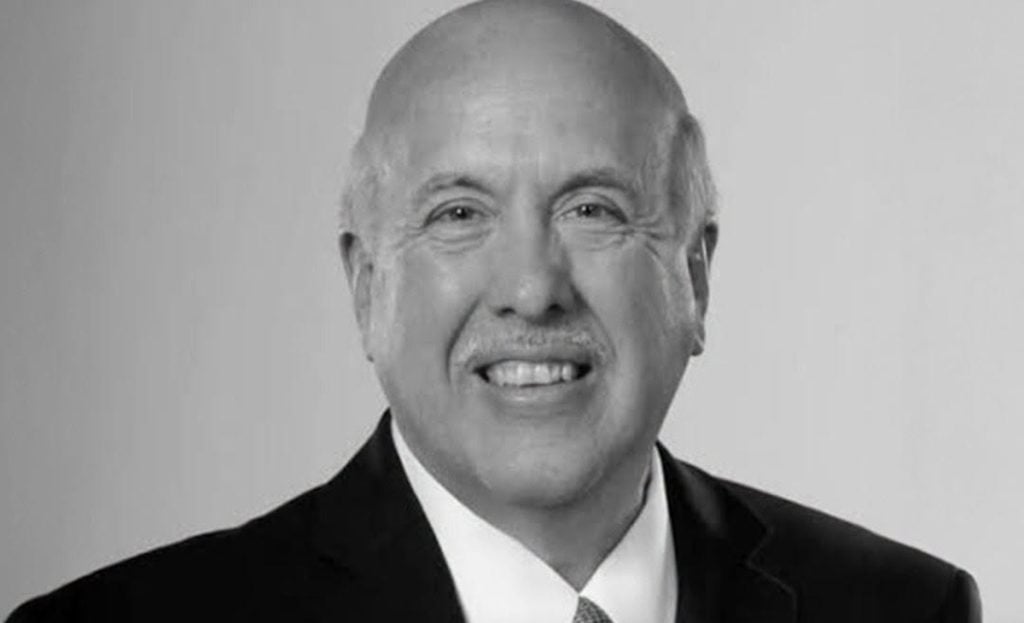
It probably didn’t help that he shared the name with an American President, overshadowing his legacy somewhat, and creating a disambiguation issue throughout his career. Nonetheless, he was one of those members of entertainment media who covered the stars, and by proxy, became a star himself. In the country music realm, it was the former American President that became the other Jimmy Carter, and the Jimmy Carter they knew was their trusted, yet often humerous source for country music and entertainment news.
Jimmy Carter didn’t become one of the most informed and connected journalists in country by being a sniveling brown noser, or by wooing performers for access, or by playing nice with the industry. He had a perspective and opinion, and was willing to share it when necessary. He never looked as himself as inferior to the performers, but as an equal and peer, while also knowing his place as a reporter. It was through his confidence, authoritative voice and perspective, a strong work ethic and general likability that he earned the respect of the performers, the public, and the industry alike.
Jimmy Carter passed away on Tuesday, October 13th at the age of 73, two days before what would have been his 74th birthday. Born in Montgomery, Alabama on October 15th, 1952, he was hanging out at his favorite local rock station at the age of 15 learning the ways of broadcast media. After graduating high school where he was voted the wittiest in his class, he attended Auburn University just as they were developing a campus radio station, WEGL-FM. He worked at other radio stations after graduation, and eventually landing a job with ABC TV Sports and the “Wide World of Sports” program.
His resume and media credentials were vast. He won an Emmy as the Executive Producer of WSMV-TV Channel 4 in Nashville. He worked as a news producer at NBC’s Birmingham, Alabama affiliate, and was an Executive Producer at the CBS Houston station for a stint as well. He worked in the realm of news, sports, children’s programming, and special reports. He interviewed A-list celebrities like Clint Eastwood and Kevin Costner. He covered space shuttle launches and civil rights matters. But in the end, country music was Jimmy Carter’s passion.
For NBC Channel 4 in Nashville, Carter worked as the station’s entertainment reporter, covering red carpets, black tie affairs, celebrations and solemn remembrances alike. He began in that position in the 1980s, and then after holding more executive roles for years, returned to the field from 2003 to 2018. During this time he was also a regular on the radio and entertainment TV, from the nationally-syndicated Crook & Chase, to WSM’s Coffee, Country, and Cody. On Crook & Chase, he became famous nationally not just for his interviews, but for his skits, costumes, and gags.
Beyond all the frivolity, people wanted to know what Jimmy Carter had to say, including many of the country performers themselves. And at times, Jimmy Carter didn’t hold back. In 2011 after Carrie Underwood got snubbed for ACM Award nominations, Carter told it like it was.
“You have to just say, ‘OK, these awards are what they are. They’re bragging rights, they’re an infomercial for the record label.’ And like I was told off the record yesterday…that Miranda Lambert got all those nominations because the record label had to decide. Are they going with Carrie Underwood this year, or Miranda Lambert? Both are on the same label. They figured it would help Miranda more than it would help the career of Carrie Underwood.”
As the media landscape shifted away from radio and TV broadcasts, Jimmy Carter began to be seen by the public less and less. But he took all his knowledge and contacts in the industry, and continued to be engaged. Many of his long-time fans followed him onto Facebook where he would regularly post his opinions and pontficiations. He taught music business, public relations, and artist management classes at Belmont University. “Jack of all trades and master of none I once heard. Not a bad description…” Jimmy Carter once said himself.
Jimmy Carter came from an era in media where integrity mattered above everything else, before the era of paid influencers and short-form social media video cuts, and politically-charged culture war baiting. He developed deep sources throughout the industry, had an ear and a nose for the stories that were most important, and how best to report on them. He understood what appealed to the public, but also knew how to create appeal for important topics within the public.
As Jimmy Carter passes, so does an era in entertainment media where authoritative voices are also passing away, as is a unique ability to use humor to get a point across and to let the public know that you don’t take yourself too seriously.
Jimmy Carter is survived by daughters Michelle, Sara and Mary Clark, three granddaughters, two grandsons, and a great grandson.
– – – – – – – – – – –
If you found this article valuable, consider leaving Saving Country Music A TIP.
Source link