
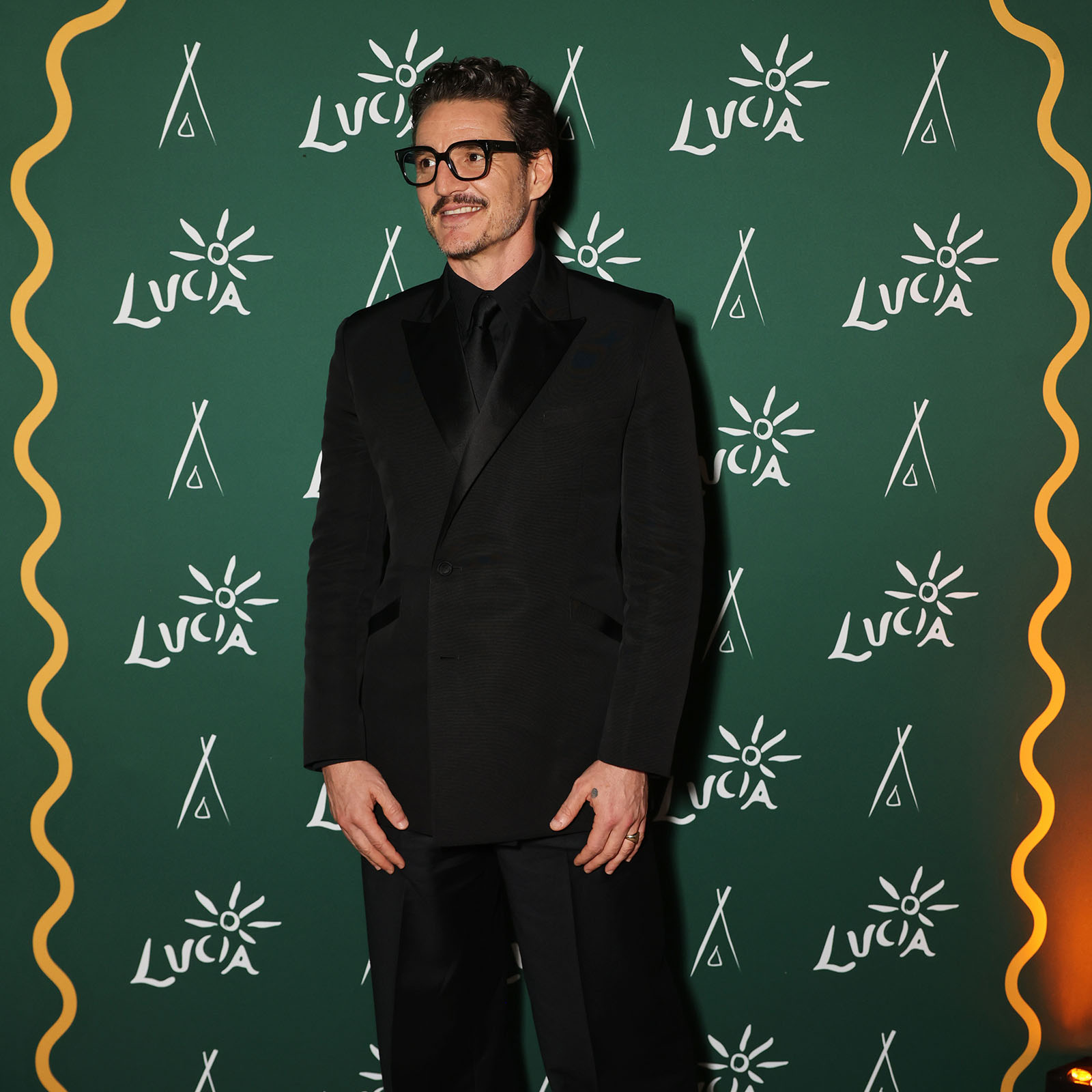
Over a three-decade career, she has worked for world-famous designers and dressed stars including Pedro Pascal, Zendaya and Margot Robbie. Here are her secrets to success

Growing up in northern England in the 1970s, Nafisa Tosh longed to wear jeans and T-shirts instead of the traditional shalwar kameez and itchy Abba-inspired dresses made by her mother. Things changed when, at eight years old, Tosh got her hands on her first copy of Vogue in a doctor’s waiting room.
“It just blew my mind,” she says. “I’d never seen clothes like that. They were so glamorous and elegant.”
Soon after, her best friend’s mother began to share issues of the magazine with Tosh, teaching her about the cadence of the autumn and spring collections and the fashion houses behind them. Tosh was captivated by classic French designers such as Chanel and Christian Dior.
Over the course of her three-decade-long career, she ended up working with both. Now 56, Tosh has carved out an enviable reputation in the fashion world, taking in-house positions with the legendary designer Alexander McQueen and preparing red-carpet outfits for celebrities including Bella Ramsey, Pedro Pascal and Will Sharpe.
Her chosen field of tailoring, however, is often overlooked. While fashion magazine photoshoots are routinely accompanied by a long list of credits, from stylists and makeup artists to manicurists, tailors have only recently started to be included. Many assume that their role is simply to make minor alterations to garments, but the reality is far more complex and creative.
“Sometimes I change absolutely everything and the only original thing is the label and the fabric — I’ve changed the neckline, I’ve taken in sleeves, I’ve reshaped it,” says Tosh, outlining how her skills can help to bring a designer’s vision to life.
Professor Andrew Groves, director of the Westminster Menswear Archive, agrees. “Tailoring gets treated as technical labour rather than creative intelligence, even though it often decides whether something succeeds or fails,” he says. “It is skilled work, but it sits outside the glamour economy of fashion media.”
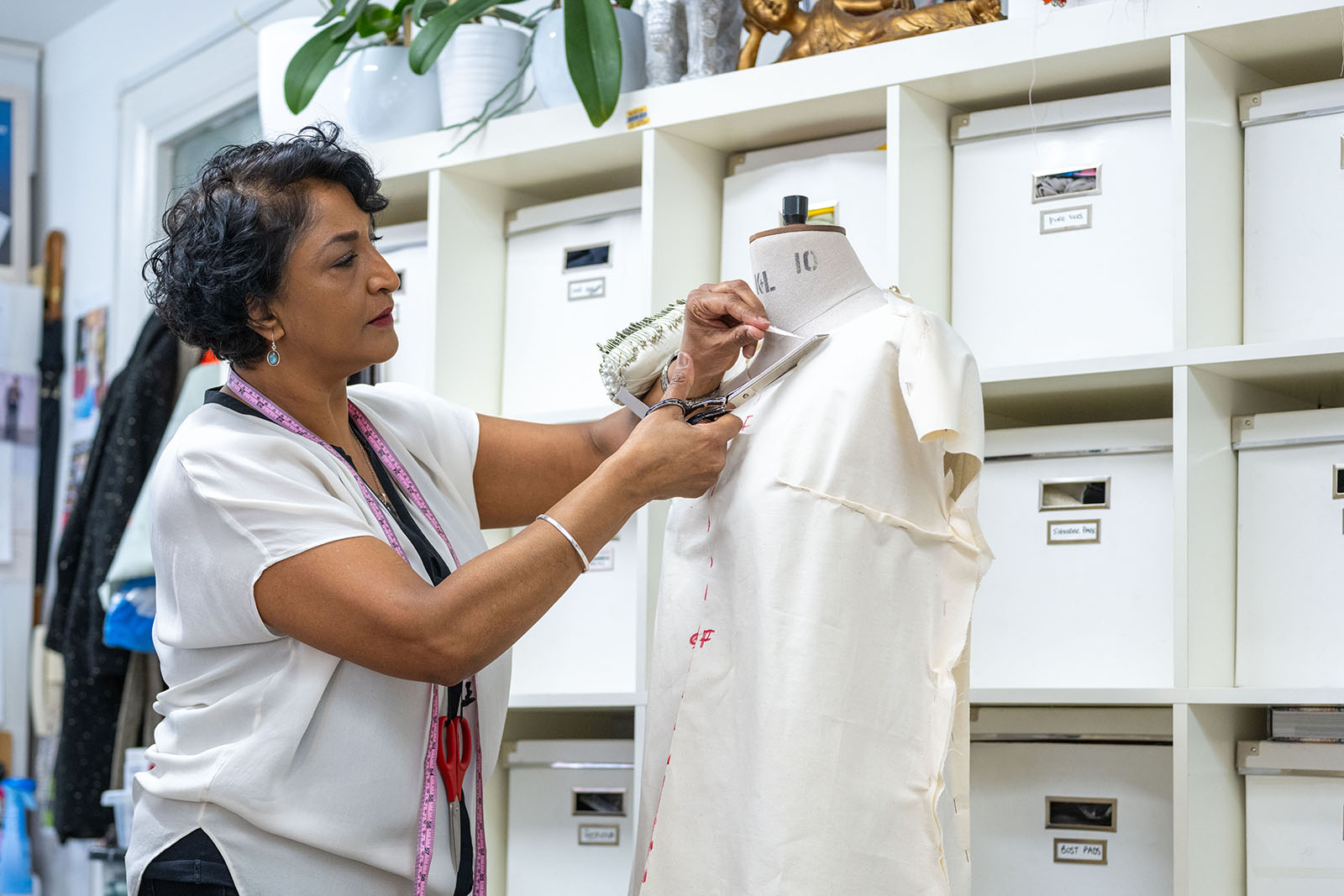
Tosh’s studio is a quiet sanctuary off a busy street in central London. In a long room a sewing machine sits at the far side of the entrance, flanked by a table for laying out garments and cutting patterns. Opposite is a shelf filled with white boxes labelled “silks”, “shoulder pads” and more.
Dressed in all-black chic, Tosh adjourns to a small kitchen to make us tea. While the kettle boils, I scan the Miu Miu campaign tears, Prada design sketches and family photos on the walls, alongside mannequins fitted with garments in various states of construction and reconstruction.
Perched on a step-stool, Tosh explains that her choice of career came as second nature. Her father was a tailor who moved to London in 1960 from Surat in western India, a city famed for its luxurious fabrics including fine muslin, silk and brocade. Determined to make bespoke suits on Savile Row, he was told during one interview that because he wasn’t white he would be allowed to work only in the part of the shop away from public view.
Tosh’s father refused and, instead, found a position with a Jewish tailor in Stamford Hill who took in work from some of the capital’s finest suit makers. Tosh only knew the man as Solly, but he eventually gave her dad the funds to start his own workshop, telling him to meet him every week after Jummah prayers to slowly pay off the debt.
“My dad gave him £10 every Friday until the loan was paid off, no interest,” says Tosh. “That’s how we did business in those days. We stuck together.”
After a fire destroyed his premises in the early 1970s, Tosh’s father moved across the country in pursuit of work — 16 times. While Tosh was born in London, she spent the majority of her childhood in the former textile manufacturing hub of Bolton, Greater Manchester. There, she unwittingly apprenticed under her dad, hand-stitching the hems of scarves while watching TV.
Tosh’s father hoped her older brother would follow him into the business, but had no such ambitions for his daughter. She, however, decided that she wanted to go to art college to study fashion.
“I was the difficult one — I was too tall, too dark-skinned, too opinionated,” she says. “They had literally no expectations of me, so how could I fail?”
In the end, Tosh attended Kirklees College in Huddersfield for a fashion design course. In 1996, she made her way down to London, finding agency work for mid-range brands such as Jaeger and Marks & Spencer. Being called into a different workshop every week was a challenge at first.
“I just could not find my way around London and was getting lost all the time,” Tosh says, laughing. “I had to overcome my fear of getting on the tube.”
Then an agency mix-up vaulted her into high fashion. A last-minute cancellation of a contract with River Island redirected her to a job at the studio of Elizabeth Emanuel, a designer most famous as half the duo behind Princess Diana’s wedding dress. Tosh was charged with creating prototypes of Emanuel’s designs. She found the work much more creatively fulfilling than what she had been doing for high-street brands. She also learned an array of couture techniques that she still uses today.
“A sample machinist can do everything,” explains Tosh. “She makes the pattern, she can cut it out, she can construct the garment.”
That experience opened up a new world to Tosh, including working at her first London Fashion Week in 2000. The adrenaline-fuelled immediacy of altering garments backstage minutes before a show felt like whiplash compared to the meticulous nature of her in-house work.
“It was hectic, it was stressful, lots of late nights. I loved it,” Tosh says.
Soon, she was working for high-profile designers including Jasper Conran and Giles Deacon, but had to take a full-time job with a commercial brand to secure a mortgage. After two years she quit suddenly on the Friday before Christmas, declaring — falsely — that she had secured a job at Alexander McQueen.
She had shocked herself with the lie and spent the weekend seeking distraction in holiday parties. Then, on the Sunday, another unexpected thing happened. A friend who worked with McQueen called her, asking if she was available for work.
“I really believe in having faith and putting it out there to the universe,” says Tosh.
Tosh began working for McQueen in early 2005 and lent her skills to collections including the Widows of Culloden (autumn/winter 2006) and Sarabande (spring/summer 2007), and pieces including the tartan dress worn by Sarah Jessica Parker to the 2006 Met Gala. She credits that period for boosting her reputation as both a skilled technician and a creative mind.
“Working for Lee set me up for life,” she says, using McQueen’s given name.
When she left McQueen two years later, Tosh threw herself into editorial and brand photoshoots, featuring in Vogue, Harper’s Bazaar, Esquire, and GQ. That on-set experience introduced a different rhythm to her work and posed a series of unique challenges.
One of her first shoots was a Dolce & Gabbana campaign featuring Scarlett Johansson and the model David Gandy lying on a bed. Unfortunately, Gandy’s position meant that his shirt kept riding up from his trousers. Tosh tried everything she could think of to solve the problem — stitching the buttons, using double-sided tape. Finally, the stylist told her that she would simply have to sew the shirt into his underwear.
“I was not prepared for that,” she says with a laugh.
Since then, Tosh’s career has included many memorable moments: from getting her first call from Chanel while in Paris with Rihanna on a shoot for French Vogue to constructing a dress from scratch for Lily Collins when garments for a makeup brand campaign got held up in customs.
Ingenuity, precision and coolness under pressure are why she is so valued by her clients and her diary is full all year round.
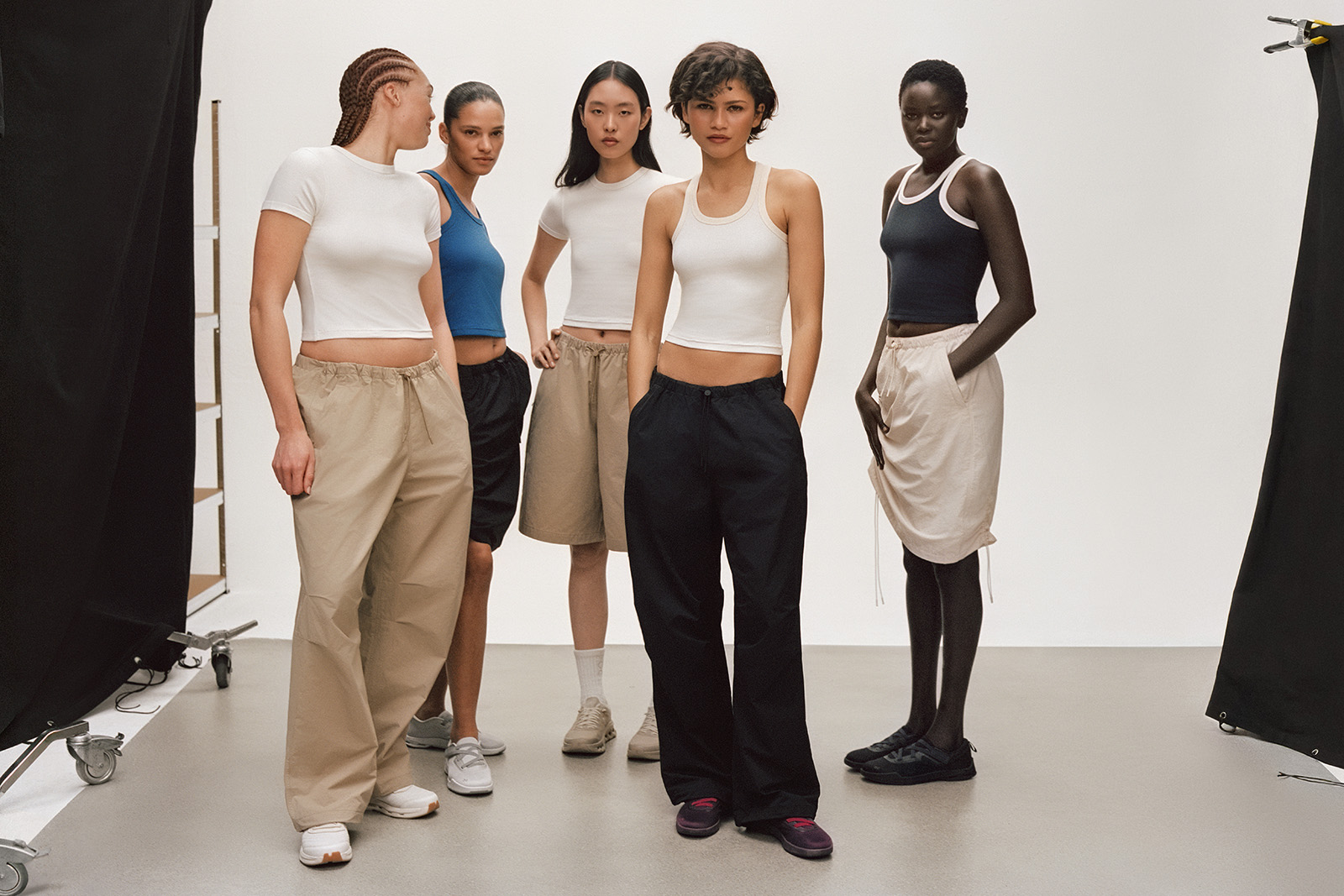
This year, she’s already worked on a shoot for Swiss athletic brand On with Zendaya, Alexander Skarsgård’s outfit for the Sundance premiere of Wicker and a vintage John Galliano coat for Margot Robbie, worn on the London stop of the Wuthering Heights press tour.
“Her precision on set is so impressive,” says Nikhil Mansata, a stylist who worked with Tosh on a May/June 2024 cover shoot for Vogue India with the actor Simone Ashley. “I also make a point to collaborate with other South Asian talents whenever possible. Sharing the same cultural references makes the creative process much more intuitive and seamless.”
Tosh is also passionate about keeping the craft of couture tailoring alive and passing her skills on to the next generation. To that end, she recently started working at Central Saint Martins. To illustrate how demanding the role can be she gives her students real-life examples, such as a recent job where she had less than a day to construct an outfit for the Charlie XCX mockumentary The Moment.
“I bought the fabric in the morning, then they sent me this bra that Charlie liked and I started customising it,” she said. “By six o’clock, it was all finished.”
Many of Tosh’s students are attracted to the perceived glamour of the job and the proximity to celebrity, but she tells them that true mastery can only be attained via time and hard work: learning new techniques, then repeating them so many times that they become automatic.
“I get so many kids every single day contacting me, saying, ‘I’d love to come and train with you, but I want to fast-track this,’” she says.
According to Tosh, you can’t. For her, there is no substitute for paying your dues by working with less storied brands, building a reputation, picking up skills that will stay with you for life and, crucially, learning from your mistakes.
“You can make them on cheaper fabrics,” she says. “By the time you get to work with someone like McQueen and they’re £1,000 a metre and woven by hand, you’re not going to.”